
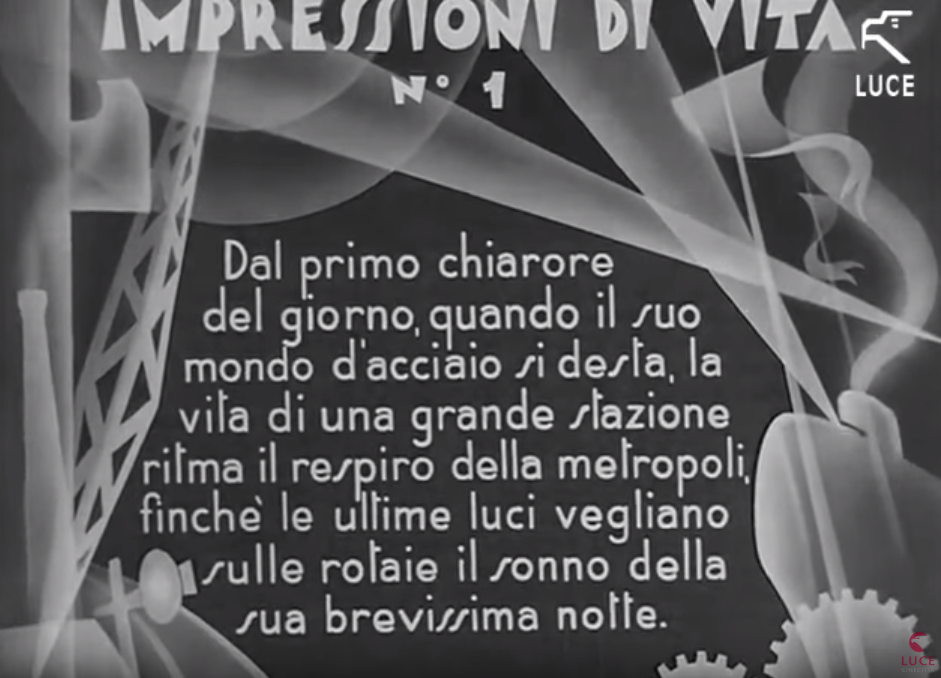
Ritmi di Stazione is a 1933 short film by Corrado d’Errico, an Italian director and screenwriter active in the interwar period. The work exemplifies d’Errico’s engagement with experimental filmmaking and city symphonies, genres that shaped his artistic practice in the late 1920s and early 1930s.
D’Errico emerged as a notable creative figure at the end of the 1920s through experimental plays and short films that drew on futurist and modernist sensibilities. Ritmi di Stazione belongs to this formative phase of his career, before he went on to direct feature-length films across adventure, comedy, and neorealist genres. His early work reflects the formal innovations of European avant-garde cinema of the period, experimenting with rhythm, montage, and the documentation of urban and industrial subjects.
About Corrado d’Errico
Corrado d’Errico (1902–1941) was an Italian screenwriter and film director who graduated from the Istituto Luce. Beyond his filmmaking practice, he worked as a journalist and held positions within Italy’s state media apparatus during the interwar era. Over his career, he directed eleven feature-length films and numerous shorts across multiple genres.
Details
- Director: Corrado d’Errico
- Year: 1933
- Format: Short film
- Genre: Experimental cinema, city symphony
On video
Frequently asked questions
Who was Corrado d’Errico?
Corrado d’Errico (1902–1941) was an Italian film director and screenwriter who studied at the Istituto Luce and became known for experimental plays and city symphonies in the late 1920s before directing feature films across multiple genres.
What kind of film is Ritmi di Stazione?
Ritmi di Stazione is a 1933 short film that exemplifies d’Errico’s work in experimental cinema and the city symphony form, exploring rhythm and urban subjects through avant-garde filmmaking techniques.
What was d’Errico’s career trajectory?
D’Errico began as a creator of experimental theater and short films in the late 1920s, then moved into feature-length filmmaking across adventure, comedy, and neorealist drama, while also working in journalism and state media roles.
Sources
- S1 — Pontiggia, Elena. Il Novecento Italiano. Abscondita, 2003. ISBN 978-88-8416-048-5.
- S2 — De Fusco, Renato. Storia del design. Laterza, 2002. ISBN 978-88-420-6623-1.
Spotted an error? Write to editorial@culturalheritageonline.com and we correct it the same day.


