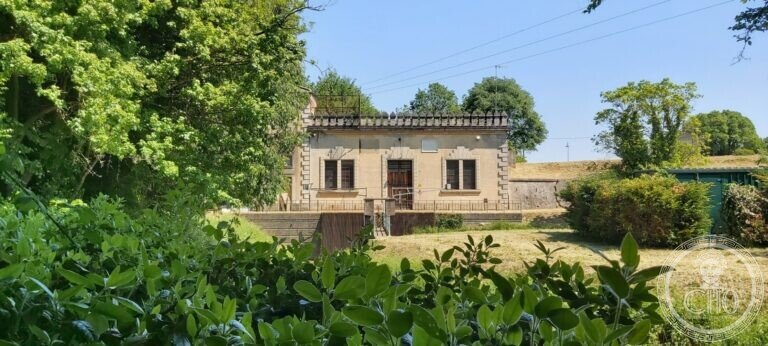
The origins of Europe’s largest open-pit asbestos quarry on Mount San Vittore.
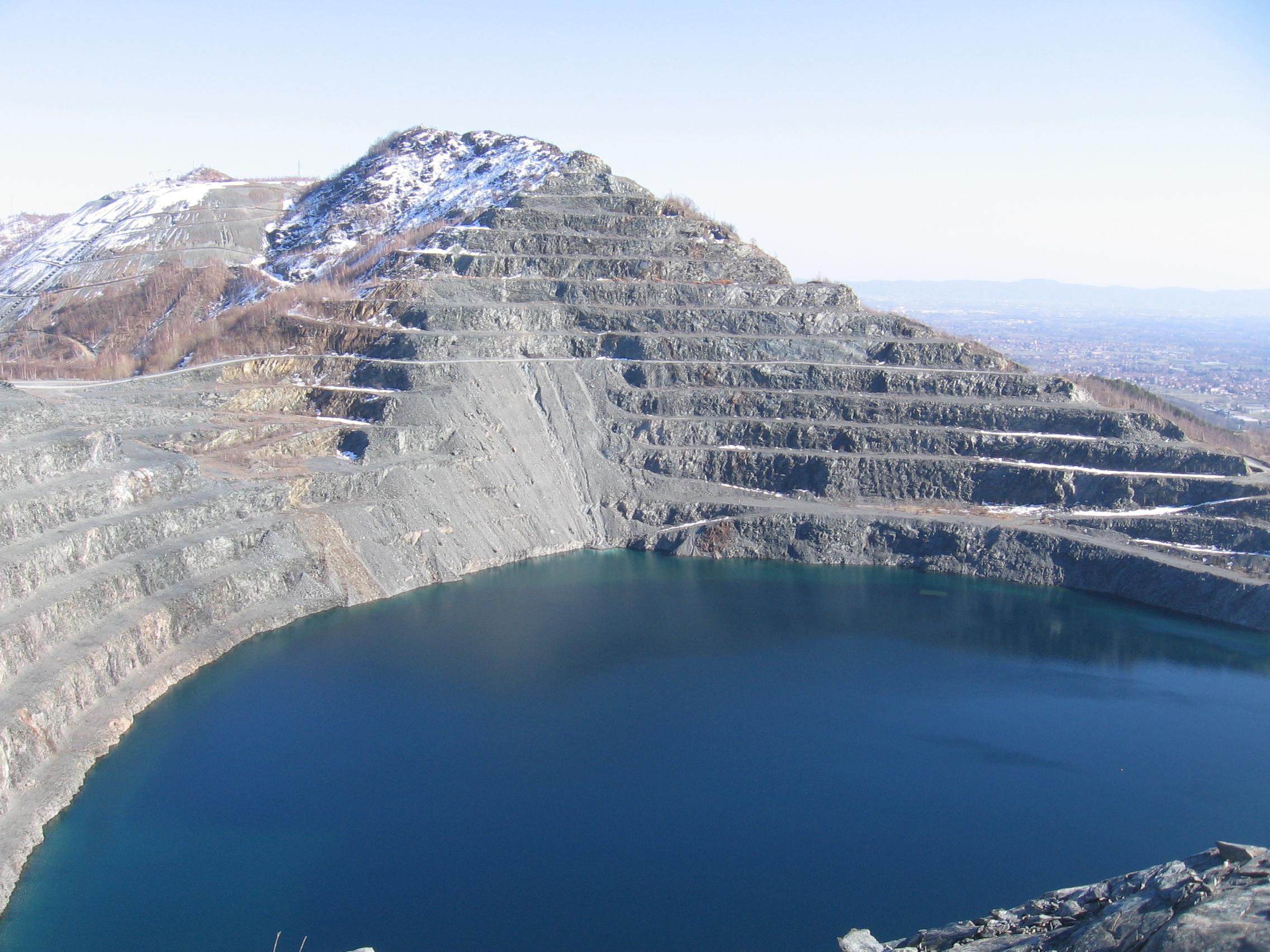
Formed in Milan in 1918 under the corporate title Società Anonima Cave di San Vittore, the mining venture on Mount San Vittore in Piedmont grew to operate the largest open-pit asbestos quarry in Europe, creating an immense industrial excavation across the Lanzo Valleys.
Corporate Foundation and Alpine Extraction
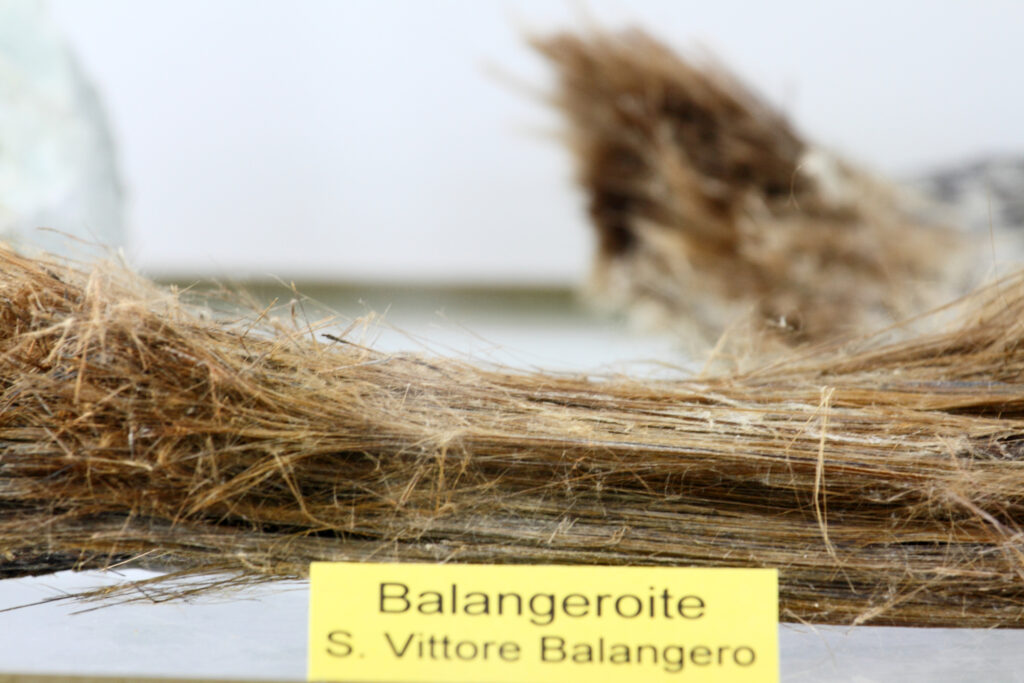
The enterprise was formally constituted on June 29, 1918, in Milan as the Società Anonima Cave di San Vittore, holding mining concessions on Mount San Vittore roughly 30 kilometres northwest of Turin. The concessions spanned the municipal territories of Balangero and Corio within the mountainous landscape of the Lanzo Valleys. Although the legal entity was established in 1918, extraction of asbestos rock did not begin until 1921, following three years dedicated to building access roads, heavy mechanical infrastructure, and the installation of the site’s initial crushing and sorting plant. The deposit was extraordinarily rich in chrysotile (white asbestos) interspersed with balangeroite, a rare asbestiform mineral unique to the local serpentinite formation. Over the interwar period, mechanized quarrying carved deep terraced benches into the mountainside, while massive heaps of sterile processing residue accumulated in the Fandaglia dump on the Corio flank of the mountain.
Peak Production and Industrial Transformation
The open-pit operation quickly expanded to become the primary domestic source of raw asbestos for Italy’s manufacturing industries. Extracted chrysotile fibers were processed for use in construction materials, particularly asbestos cement sheets and pipes, as well as automotive clutch and brake linings, industrial gaskets, and specialized fire-resistant textiles. The operation employed hundreds of miners recruited from surrounding alpine communities, including Balangero, Corio, and Coassolo, with epidemiological cohorts recording more than 1,100 workers across the mine’s operating history. Following state intervention under the Istituto per la Ricostruzione Industriale (IRI) during the interwar and postwar transitions, control shifted in 1950 to private shareholders Manifatture Colombo and Eternit. This led to the incorporation on March 29, 1951, of Amiantifera di Balangero S.p.A., which formally absorbed the original Cave di San Vittore in 1952. The quarry remained active until declaring bankruptcy and permanently closing in 1990 amid mounting epidemiological evidence of severe occupational and environmental health hazards, leading to its classification as a National Priority Remediation Site (SIN) in 1998.
Historic Site & Location
Historic Address: Località San Vittore, Balangero, TO, Italy
Sources
- S1 — Archivio di Stato di Torino, inventario del fondo «Società Amiantifera di Balangero» (id 270124), serie Libri sociali e Attività estrattiva — https://archiviodistatotorino.cultura.gov.it/soggetto_produttore/?id=270124
- S2 — ARPA Piemonte, «Amianto naturale in Piemonte. Cronistoria delle concessioni e dei permessi di ricerca mineraria», cap. 3.2 «Concessioni San Vittore e Amiantifera di Balangero» — https://webgis.arpa.piemonte.it/w-metadoc/thumbnail/AMIANTO/pdf_amianto_naturale.pdf
- S3 — Ministero dell'Ambiente e della Sicurezza Energetica, Relazione geologica e geotecnica, doc. VIA 421503, § 3.4 — https://va.mite.gov.it/File/Documento/421503
- S4 — Regione Piemonte, scheda Sito di Interesse Nazionale «Ex miniera di amianto di Balangero e Corio» — https://www.regione.piemonte.it/web/sites/default/files/media/documenti/2019-03/SIN%20BALANGERO.pdf
- S5 — Comune di Balangero, «L'Amiantifera di Balangero», portale istituzionale — https://www.comune.balangero.to.it/Guidaalpaese?IDPagina=54667&IDCat=8440
- S6 — Berta, Giuseppe. L'Italia delle fabbriche. Il Mulino, 2001. ISBN 978-88-15-25257-9.
Spotted an error? Write to editorial@culturalheritageonline.com and we correct it the same day.