
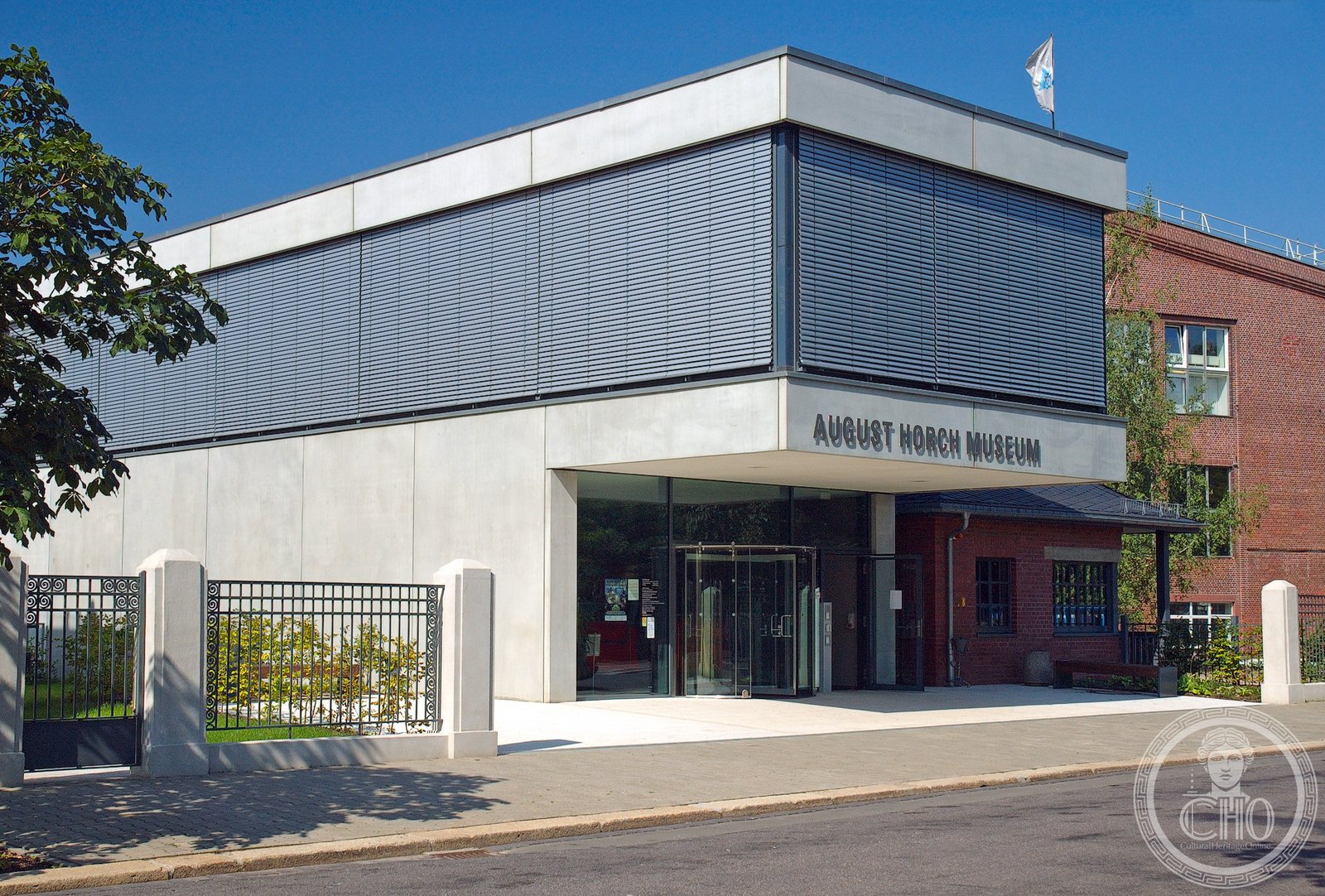
An automobile museum documenting a century of motorcar innovation in Saxony, from the founding of Audi to the Cold War Trabant and beyond.
At a glance
This museum occupies the historic factory where August Horch founded Audi Automobilwerke GmbH in 1910. It traces the rise and transformation of the brand across three distinct industrial eras: the early luxury marque, the wartime Auto Union conglomerate, and the post-war Volkswagen years.
History
August Horch established his automobile factory in Zwickau in 1910, launching what would become one of Germany’s most storied motor manufacturers. In 1932, Horch merged with Audi, DKW, and Wanderer to form Auto Union, a cartel designed to compete with larger rivals. After World War II, Auto Union relocated its operations to Ingolstadt, leaving Zwickau to manufacture the Trabant under East German state ownership during the Cold War. Following German reunification, Volkswagen acquired the site, which then reopened as a museum in 2004.
What you see
The museum is displayed within the original factory building, preserving the industrial character of the site. Exhibits progress chronologically through the facility, showcasing vehicles, manufacturing equipment, and technical documentation spanning from luxury pre-war automobiles to the utilitarian Trabant, concluding with modern Audi models.
Cultural significance
The museum illuminates a pivotal chapter in European automotive history and German industrial heritage. It documents how a single Saxony factory adapted across political upheaval—from imperial ambition through Nazi occupation to Cold War division and post-reunification integration. The Trabant section particularly resonates as a symbol of East German engineering and everyday life.
Key facts
- Location: Zwickau, Saxony, Germany (50.73°N, 12.48°E)
- Opened: 2004
- Factory established: 1910
- Operated jointly by Audi AG and the town of Zwickau
Practical information & getting there
The museum is situated within the original Audi factory in central Zwickau. For current opening hours, admission prices, and visitor facilities, consult the museum’s official website or contact the venue directly.
Sources & resources
Find it on the map
See this place and what’s around it →📷 Become a Cultural Heritage Online photographer
Share your photos of places: they stay published under your name as the author. The more they're seen, the more you get noticed — and soon a contest will reward the most appreciated photos.
Log in or sign up free to add a photoIs this page about you?
This page is read by travellers and heritage enthusiasts who find it on Google. Tell us how you are connected to this place and we will take it from there.