
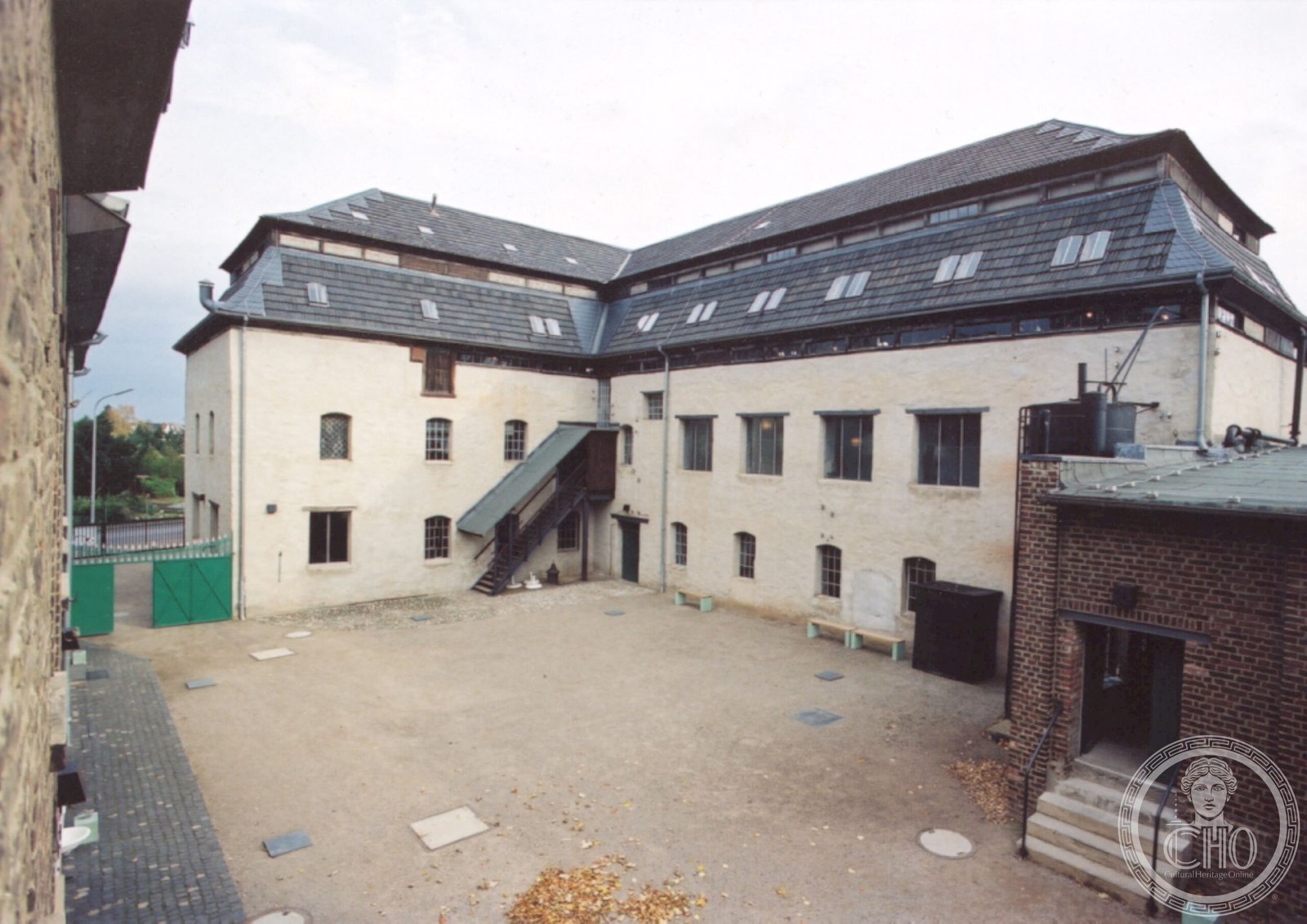
A fully operational textile mill preserved as a museum, showcasing the mechanical processes of cloth production from the early twentieth century.
At a glance
The Müller Cloth Mill is now part of the LVR Museum of Industry in Euskirchen, North Rhine-Westphalia. Its working machinery and equipment offer visitors direct encounter with the rhythm and methods of turn-of-the-century textile manufacturing.
History
The mill operated until its shutdown in 1961, at which point its physical state was essentially frozen. The site opened to the public as a museum in 2000, transforming a silent factory into a functioning educational space. The museum preserves the mill’s configuration and equipment exactly as they stood on the day production ceased.
What you see
Visitors encounter fully working machinery and equipment dating from around 1900. The mill’s layout and mechanical systems remain intact, allowing the production process to be understood through the machines themselves rather than through interpretation alone. The industrial architecture reflects the pragmatic design typical of nineteenth-century German textile mills.
Cultural significance
The Müller Cloth Mill documents the textile industries that shaped Rhineland commerce and employment. It holds designation as an ‘Anchor Point’ of the European Route of Industrial Heritage and serves as a central stop on the ‘Wool Route’, connecting visitors to the broader history of European textile production and trade.
Key facts
- Location: Euskirchen, North Rhine-Westphalia, Germany
- Coordinates: 50.6494, 6.8244
- Museum opened: 2000
- Mill operational until: 1961
- Part of: LVR Museum of Industry
- Designation: European Route of Industrial Heritage ‘Anchor Point’
Practical information & getting there
The Müller Cloth Mill operates as part of the LVR Museum of Industry. For current opening hours, admission fees, and detailed directions, consult the museum’s official website or contact the LVR directly before planning your visit.
Sources & resources
Find it on the map
See this place and what’s around it →📷 Become a Cultural Heritage Online photographer
Share your photos of places: they stay published under your name as the author. The more they're seen, the more you get noticed — and soon a contest will reward the most appreciated photos.
Log in or sign up free to add a photo