

Advertising Poster by Guido Cadorin, 1939
An advertising poster created by Venetian painter Guido Cadorin in 1939. Cadorin was a prominent Italian artist who exhibited internationally and taught at the Venice Academy.

Stefano Vigolo photographs and documents Italian architecture of the interwar decades — the years known in Italy as the Ventennio — from Rationalism and Art Déco to the buildings that fall between the guidebooks. He is a researcher of the period.
Contributions: 516 articles · 106 heritage places · 7 events · 12 itineraries · 89 photographs
Published on beniculturalionline.it, the Italian archive of this publication, online since 1998. They are being brought into Cultural Heritage Online.
An advertising poster created by Venetian painter Guido Cadorin in 1939. Cadorin was a prominent Italian artist who exhibited internationally and taught at the Venice Academy.

A magazine cover illustrated by Enrico Sacchetti in 1931. Sacchetti was one of Italy’s most celebrated caricaturists and advertising illustrators of the twentieth century.

An advertising poster designed by Marcello Dudovich for the Tripoli Trade Fair in 1927. The work exemplifies the graphic design principles of early twentieth-century Italian poster art.
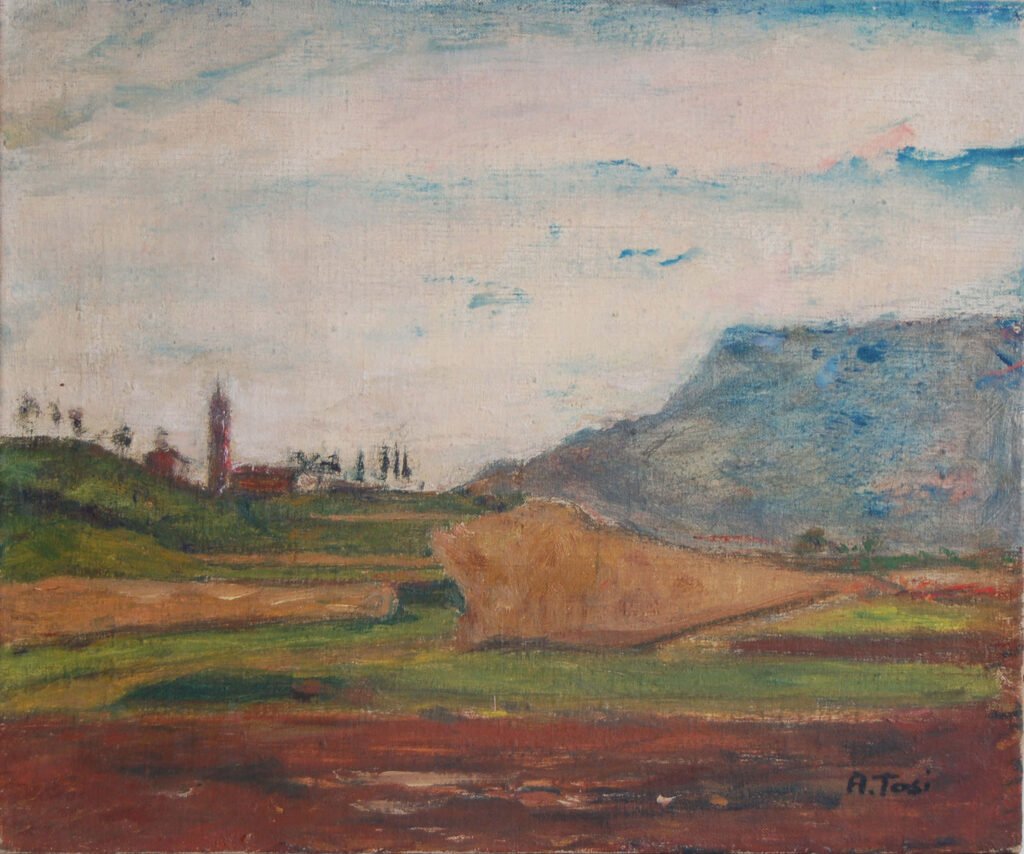
A painting of a small church by Italian landscape painter Arturo Tosi, created in 1935. The work exemplifies Tosi’s engagement with the Novecento Italiano movement during Italy’s interwar period.
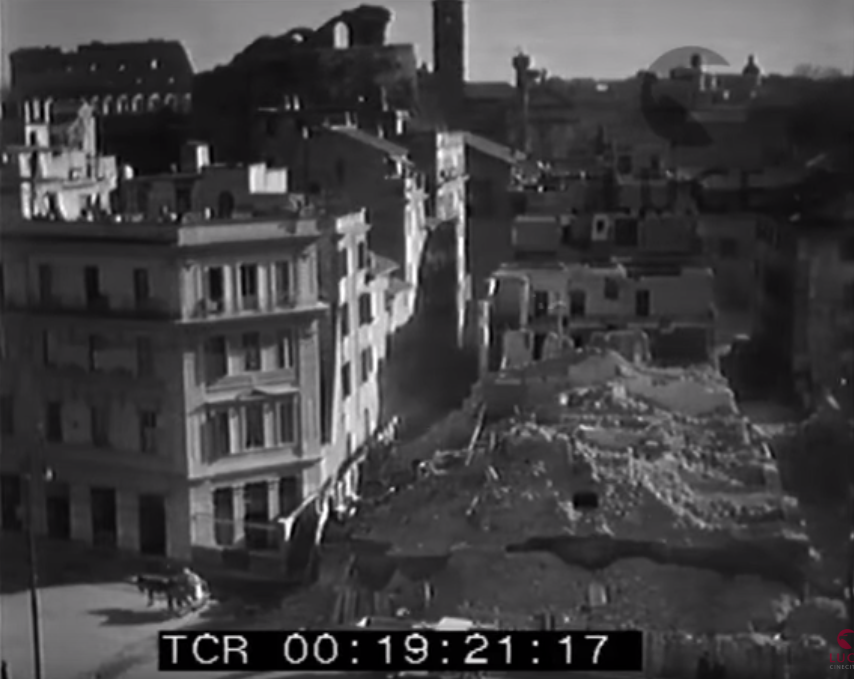
A thoroughfare built in 1932 to reveal Rome’s Imperial fora, this road connects Piazza Venezia to the Colosseum and exposes monuments previously buried beneath the city.
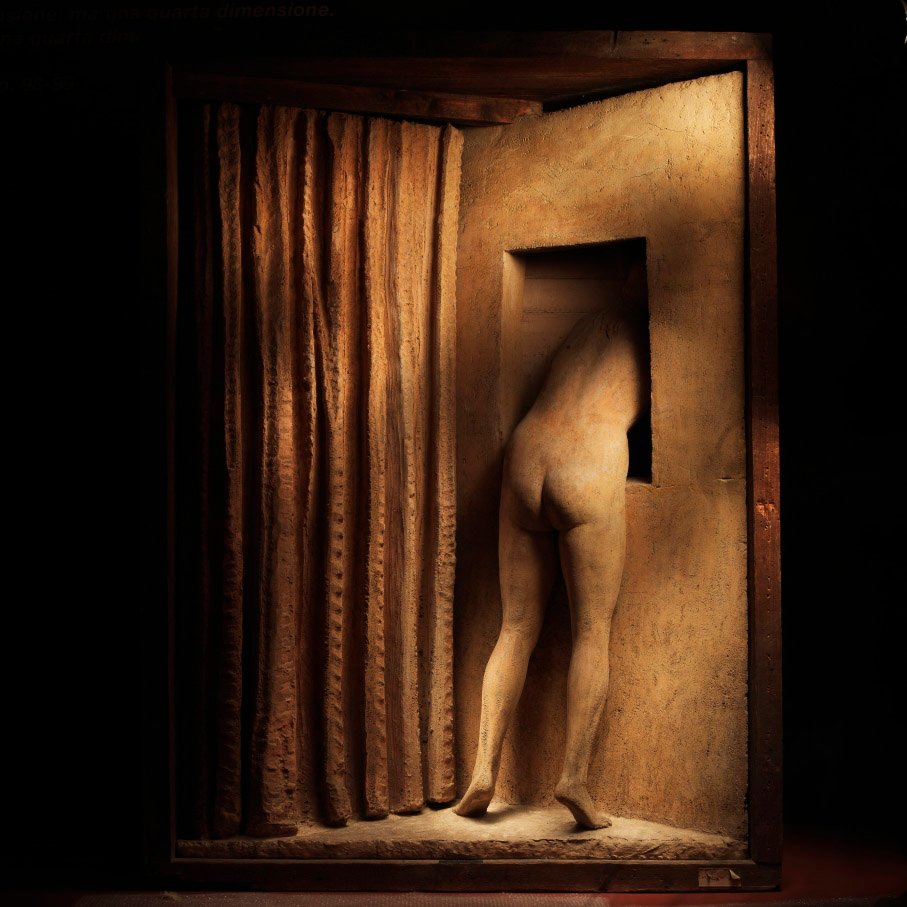
Arturo Martini’s La veglia, completed in 1932, exemplifies the Italian sculptor’s movement between modernism and classical form during the interwar period.
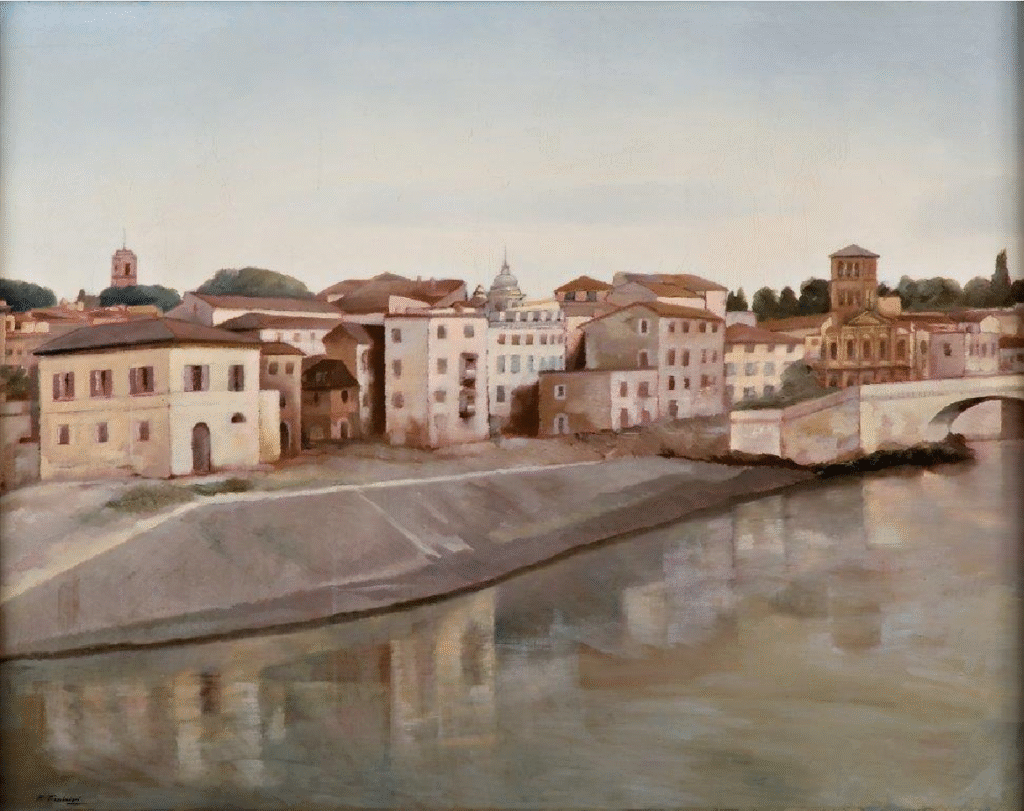
A painting of Rome’s Tiber Island by Italian artist Francesco Trombadori, executed around 1930. The work captures the historic island at the heart of the capital.
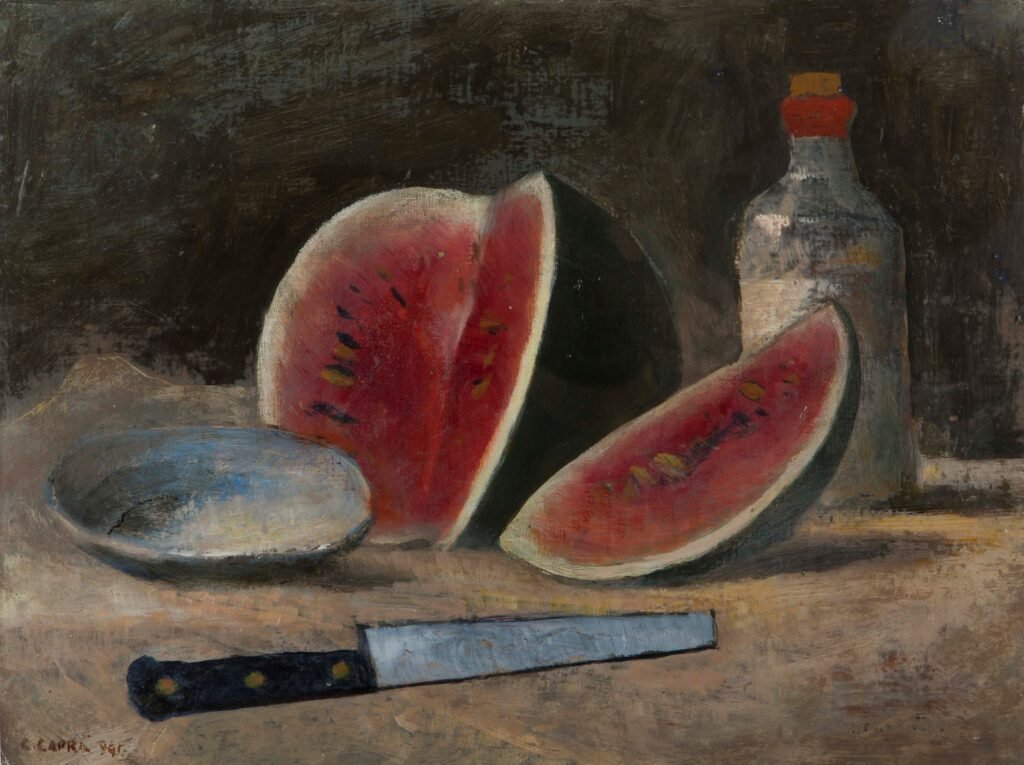
Cocomero is a painting by Italian artist Carlo Carrà from 1941. Created in the artist’s later career, it represents his continued engagement with form and composition.
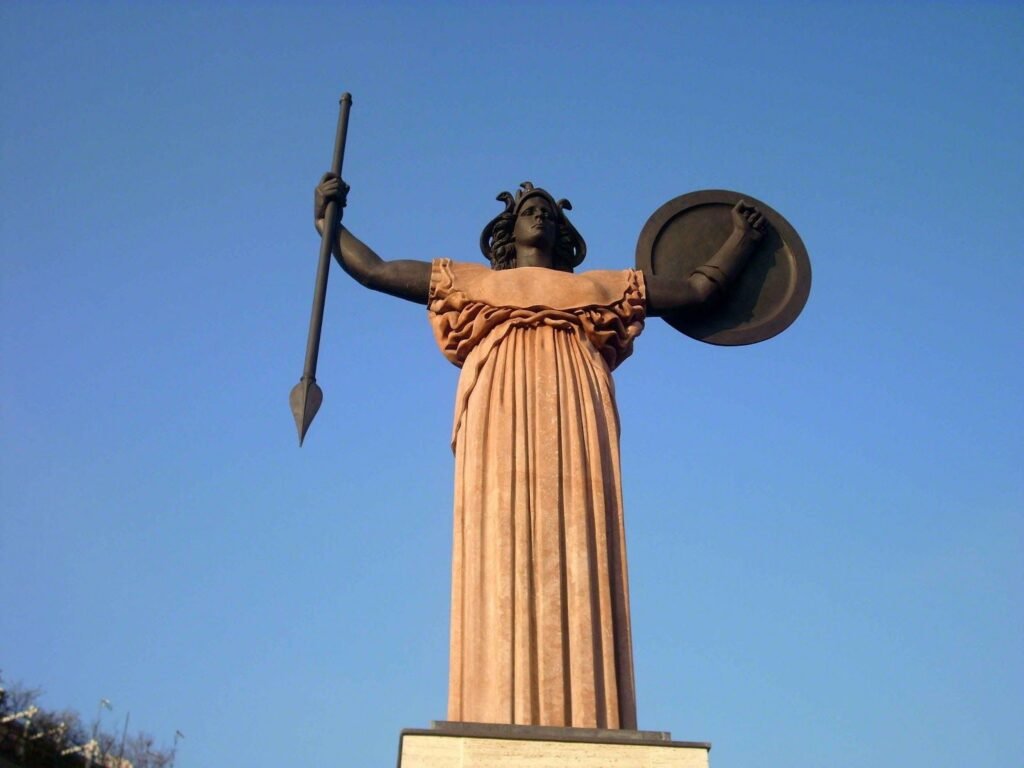
A monumental sculpture by Italian figurative artist Francesco Messina, erected in Pavia in 1938. The work exemplifies the Novecento movement’s classical approach to public sculpture.

An Italian advertising poster from 1924 by Ettore Mazzini. The work exemplifies early twentieth-century commercial design during Italy’s interwar period.