Paola Bonometti
Content Editor

Paola Bonometti

Paola Bonometti is a volunteer with the ABCO association and still contributes to it today.

Contributions: 1,022 articles

Author name: Paola Bonometti

Paola Bonometti is a volunteer with the ABCO association and still contributes to it today.

UNESCO Heritage Sites Near Aflaj Systems of Oman

UNESCO Heritage Sites Near Aflaj Systems of Oman

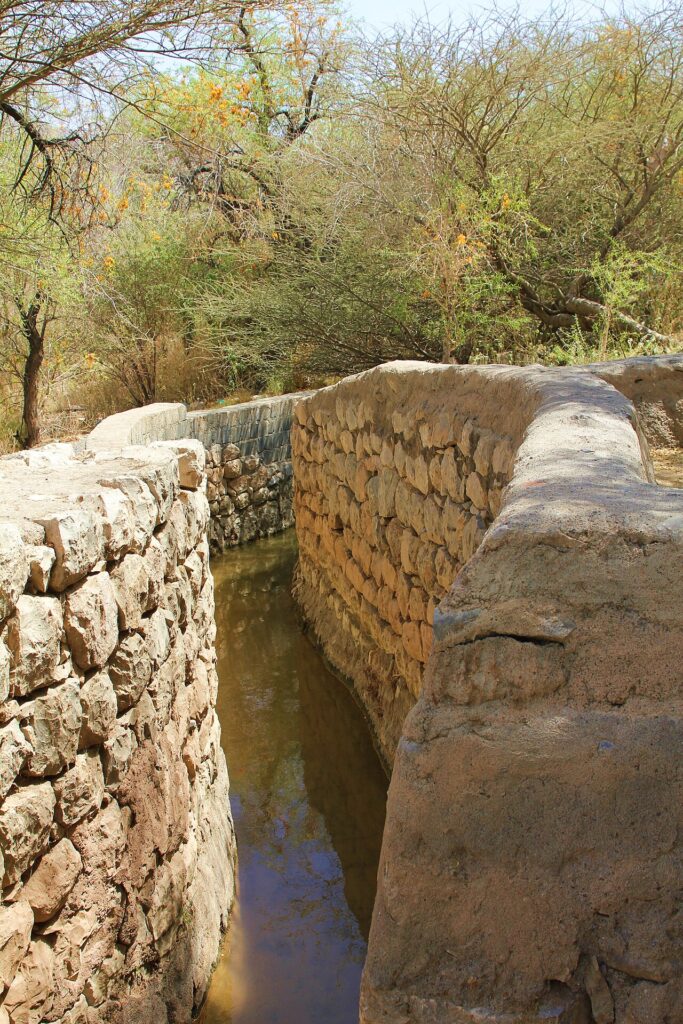
Oman’s approximately 3,000 active aflaj — gravity-fed underground irrigation channels — have watered desert settlements without pumps for at least 1,500 years. Five of these systems received UNESCO World Heritage inscription in 2006, each governed by communal water auctions that fund maintenance through time-share bidding measured by shadow-clock. The nearest separate UNESCO site, the Bronze Age City of Bat, lies 50 km north of Nizwa.
UNESCO Heritage Sites Near Elvas, Portugal

UNESCO Heritage Sites Near Elvas, Portugal

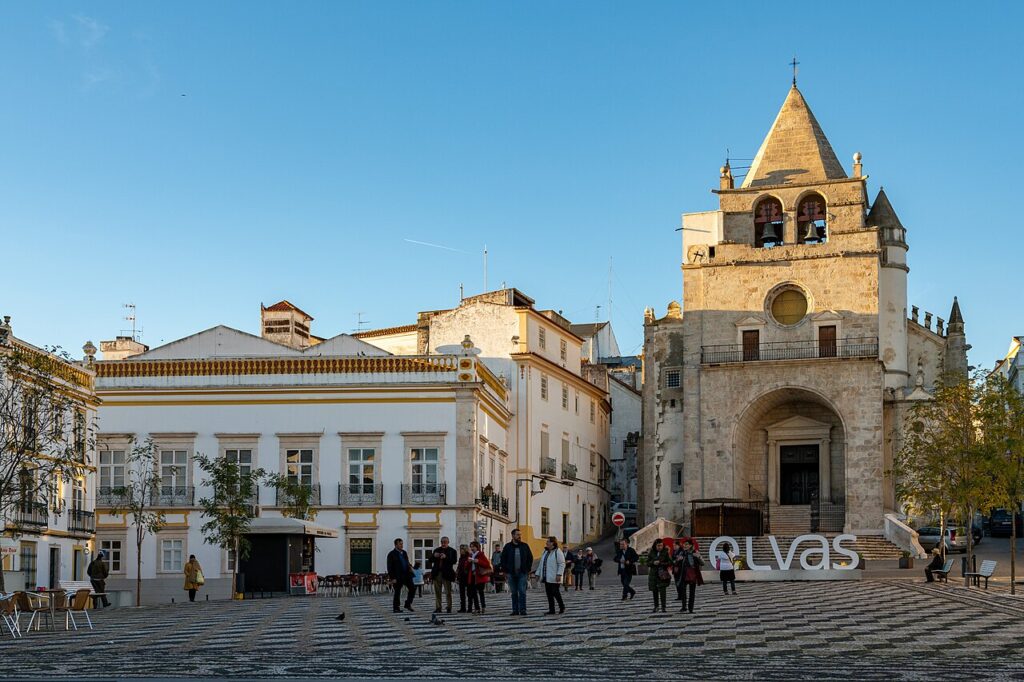
The Garrison Border Town of Elvas in the Portuguese Alentejo holds a UNESCO World Heritage inscription (2012) as the location of the world’s largest intact bulwarked fortification system. Built in stages from 1641 to 1792 using the trace italienne bastion method, Elvas withstood seven sieges during the Restoration War (1640-1668) and was never taken. The 843-arch Amoreira Aqueduct (1498-1622), 7.5 km long, kept the garrison supplied with water; the town also contains an extraordinary octagonal 16th-century church with a complete Baroque azulejo tile interior.

UNESCO Heritage Sites Near Ajanta Caves, India

UNESCO Heritage Sites Near Ajanta Caves, India

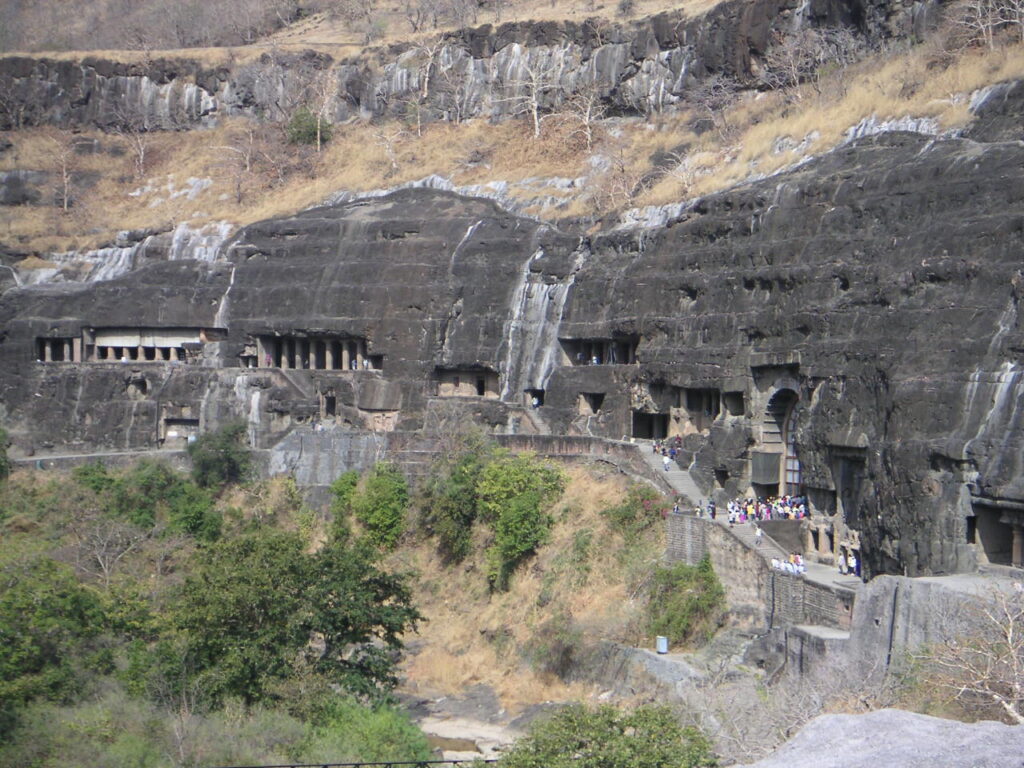
Ajanta is a UNESCO World Heritage Site of 29 Buddhist rock-cut caves in Maharashtra containing the finest surviving corpus of ancient Indian mural painting, executed in mineral pigments between roughly 200 BCE and 480 CE. Abandoned around 480 CE and overgrown for approximately 1,300 years, the caves were encountered in 1819 by a British officer hunting tigers, and the paintings — including the celebrated Bodhisattva Padmapani of Cave 1 — remain unmatched as evidence of early Indian pictorial art.

UNESCO Heritage Sites Near Laurisilva of Madeira

UNESCO Heritage Sites Near Laurisilva of Madeira

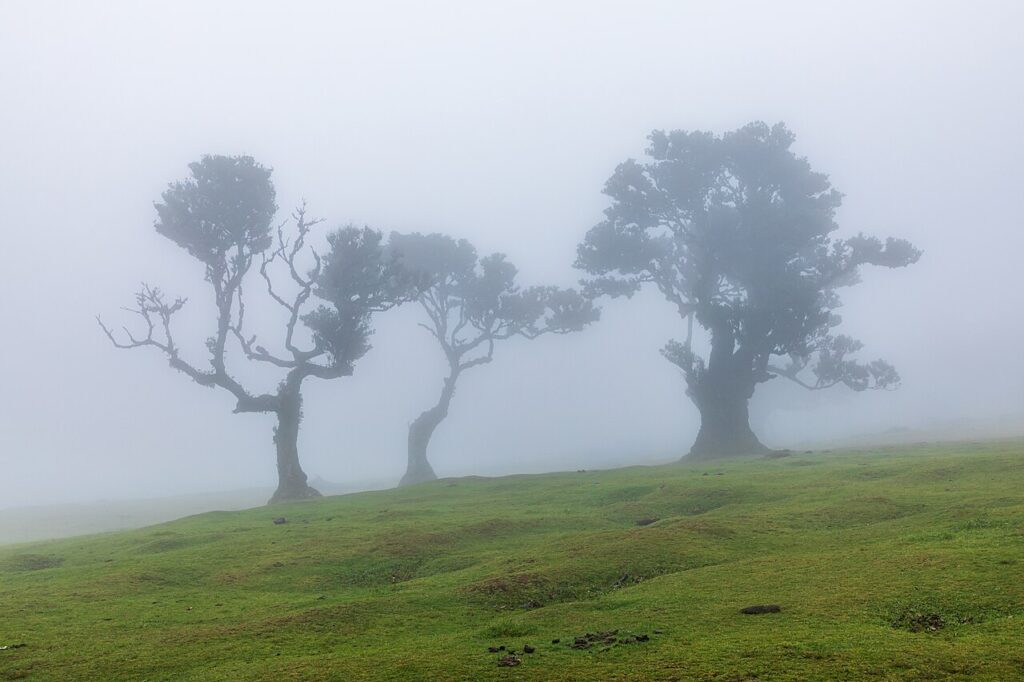
The Laurisilva of Madeira is a UNESCO World Heritage natural site (1999) protecting approximately 15,000 hectares of ancient laurel forest — roughly 90% of all surviving laurissilva on the planet. This relict ecosystem, a remnant of subtropical forests that covered southern Europe during the Pliocene epoch, is accessible via Madeira’s celebrated levada walking paths, which follow centuries-old irrigation channels through the moss-draped canopy. The Trocaz Pigeon, endemic to Madeira, disperses the seeds of the dominant Til trees and is the forest’s ecologically indispensable animal.

UNESCO Heritage Sites Near Ellora Caves, India

UNESCO Heritage Sites Near Ellora Caves, India

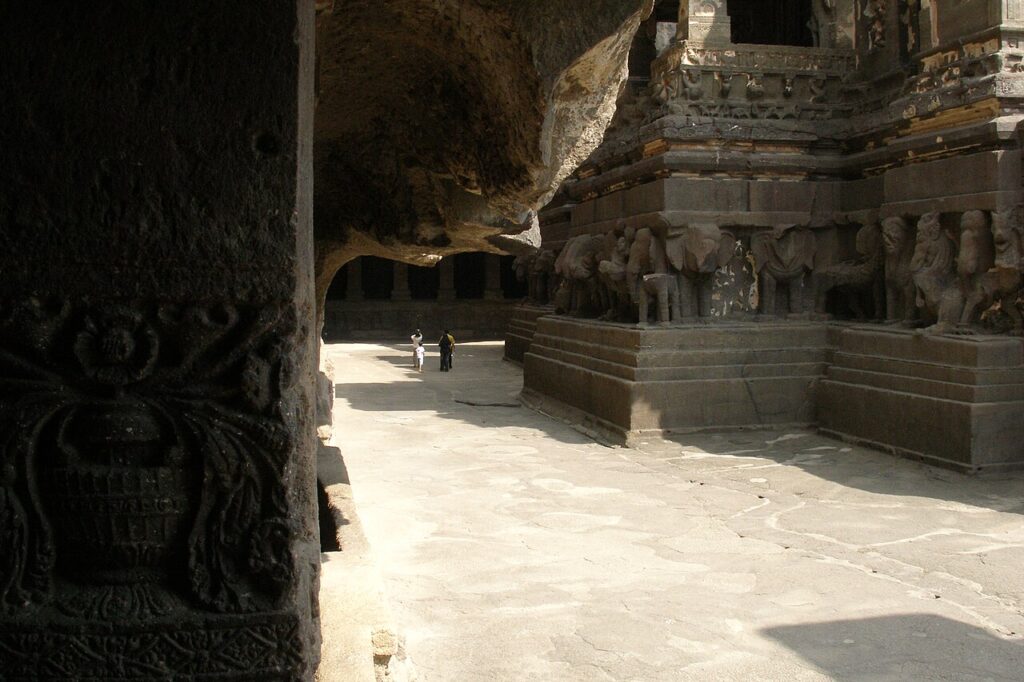
Ellora is a UNESCO World Heritage Site of 34 rock-cut temples, monasteries, and prayer halls carved from a basalt escarpment in Maharashtra between approximately 600 and 1000 CE, representing Buddhism, Hinduism, and Jainism in a single complex. At its centre, the Kailasa Temple — carved top-down from living rock by removing an estimated 276,000 tonnes of basalt — stands twice the footprint of the Parthenon and remains the largest monolithic rock-cut structure in the world.

A historic gate in the walls of Harar Jugol, Ethiopia — one of five gates in the 16th-century fortified wall surrounding the old city, UNESCO World Heritage Site

UNESCO Heritage Sites Near Harar Jugol, Ethiopia

Harar Jugol, UNESCO-listed since 2006, is a 16th-century walled city in eastern Ethiopia containing more than 80 mosques, the house where Rimbaud spent his trading years, and a nightly ritual in which wild spotted hyenas are fed by hand at the Fallana Gate. The 4.5-kilometre wall and its five gates enclose a living Islamic urban tradition that developed in near-isolation from the surrounding Ethiopian highlands for three centuries.

UNESCO Heritage Sites Near Fasil Ghebbi, Gondar

UNESCO Heritage Sites Near Fasil Ghebbi, Gondar

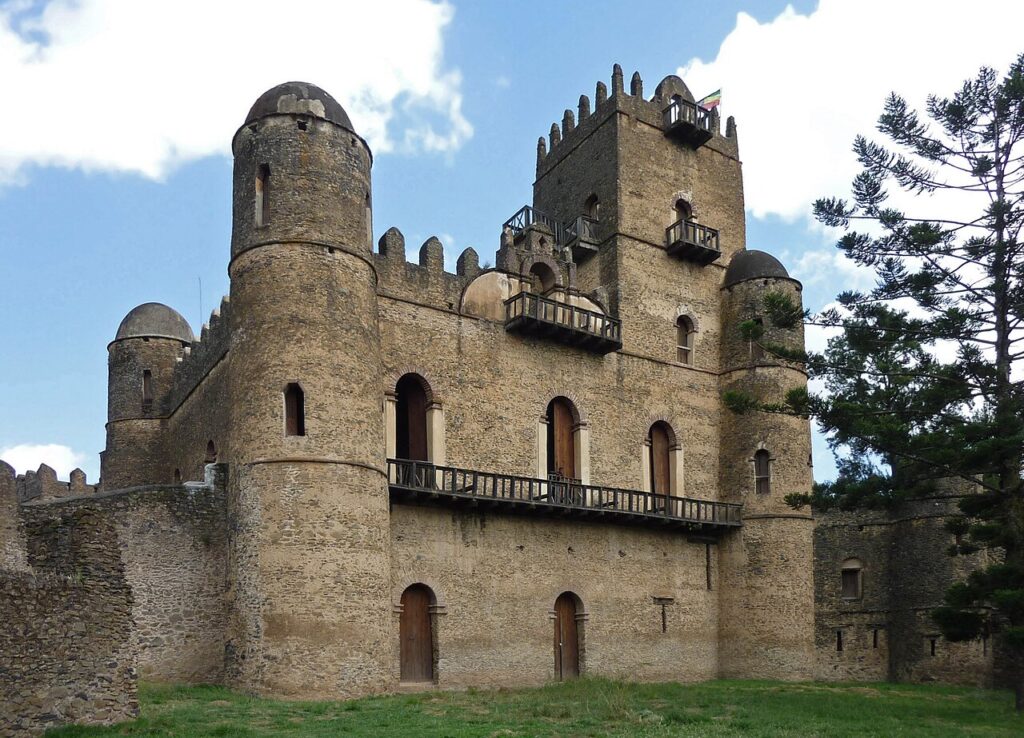
Fasil Ghebbi, UNESCO-listed since 1979, is a 70,000-square-metre royal compound in Gondar, Ethiopia, containing palaces built by six emperors between 1636 and the late 17th century — a fusion of Aksumite stonework, Portuguese Baroque, and Indian arch forms produced at the height of Ethiopian international trade. Fasilides’ Bath, 2 km from the main compound, is flooded once a year for the Timkat Epiphany ceremony attended by thousands of pilgrims.

UNESCO Heritage Sites Near Lalibela Churches

UNESCO Heritage Sites Near Lalibela Churches

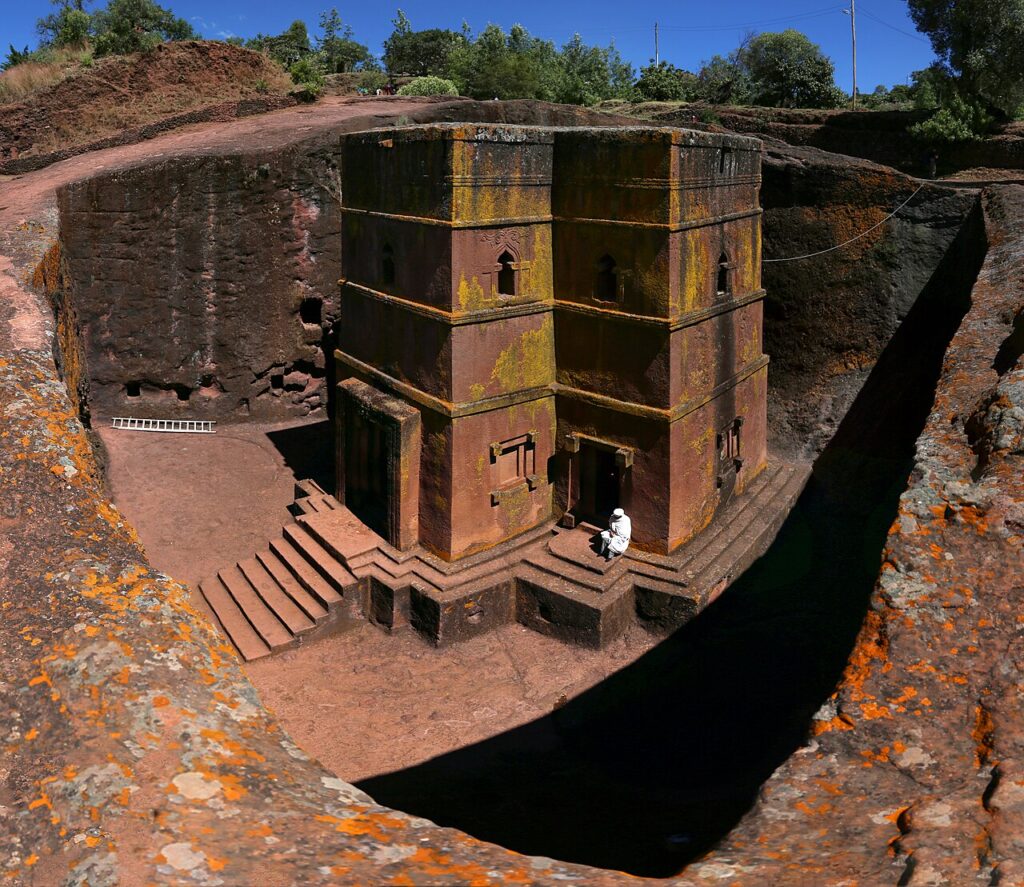
Lalibela’s eleven monolithic churches, UNESCO-listed since 1978, were carved directly from the volcanic bedrock of the Ethiopian highlands in the 12th and 13th centuries — each a single piece of rock hollowed out rather than assembled from quarried blocks. The site remains in daily liturgical use and draws tens of thousands of Orthodox pilgrims each year to a complex its builders designed as a New Jerusalem.

UNESCO Heritage Sites Near Aksum, Ethiopia

UNESCO Heritage Sites Near Aksum, Ethiopia

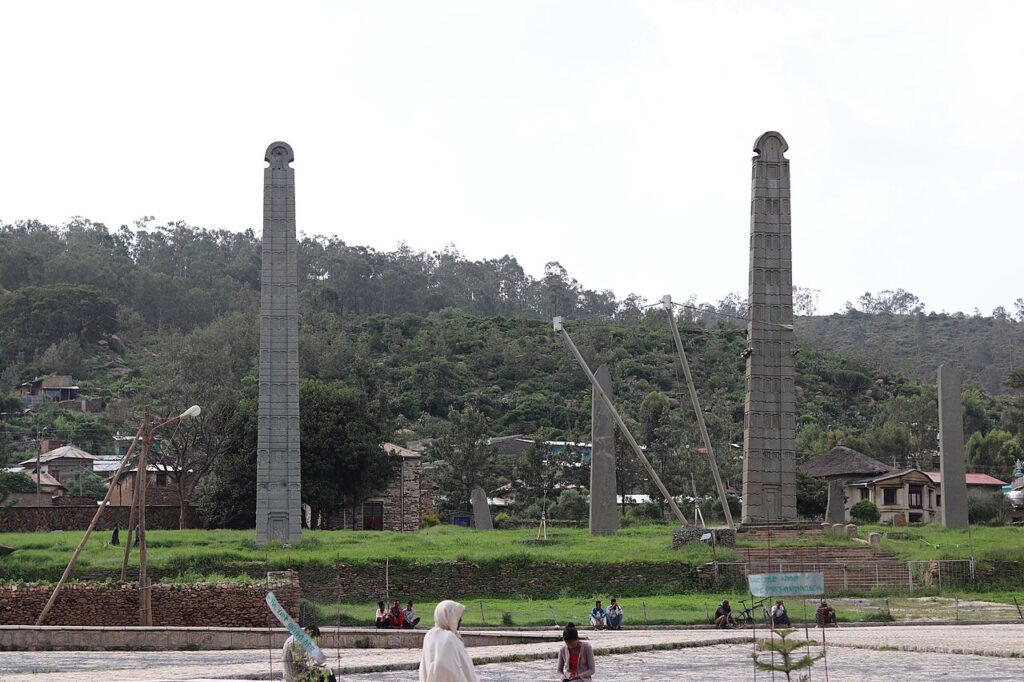
Aksum, UNESCO-listed since 1980, was the capital of an ancient empire that traded with Rome and India and adopted Christianity around 330 CE. The city holds roughly 120 granite stelae — including a 24-metre obelisk looted by Mussolini in 1937 and returned after 68 years — as well as the chapel that Ethiopian Orthodox tradition identifies as the resting place of the Ark of the Covenant.

UNESCO Heritage Sites Near Côa Valley, Portugal

UNESCO Heritage Sites Near Côa Valley, Portugal

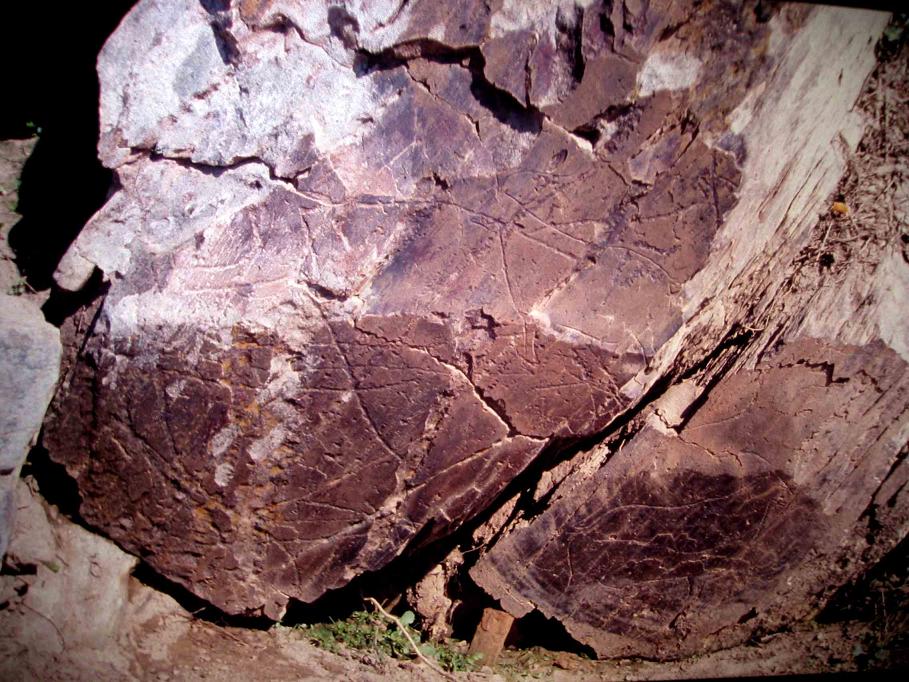
The Côa Valley Archaeological Park in northeastern Portugal protects the largest concentration of open-air Palaeolithic rock art in the world — approximately 1,200 engraved panels of horses, aurochs, and ibex carved into schist bedrock between 22,000 and 10,000 BCE. UNESCO-listed since 1998 and extended to include Siega Verde (Spain) in 2010, the site was saved from flooding after the cancellation of the Foz Côa dam in 1996 following an international campaign. Guided visits depart from the Museu do Côa in Vila Nova de Foz Côa; the Alto Douro Wine Region lies 80 km to the west.

Scroll to Top