
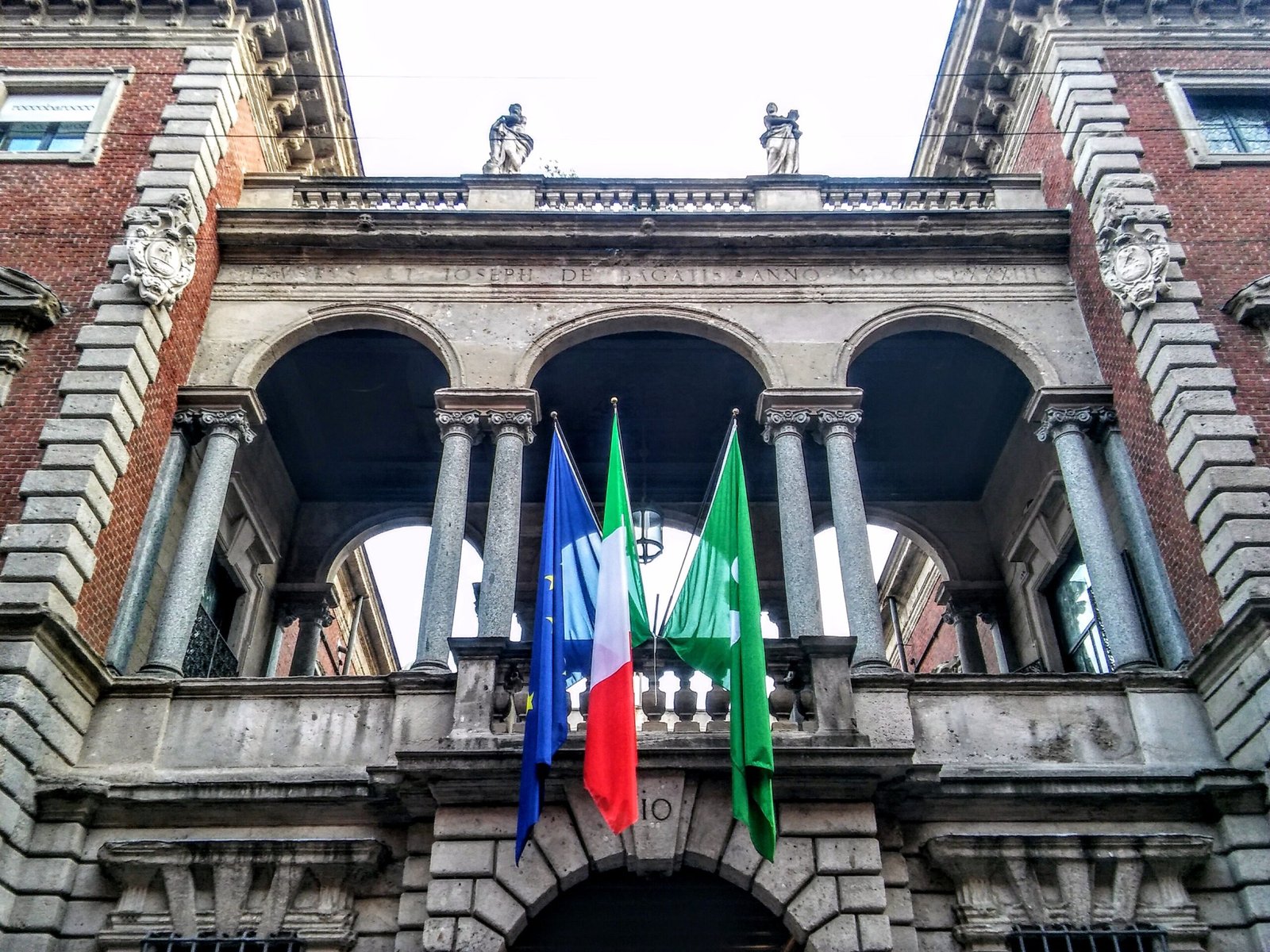
Two brothers in 1880s Milan decided to live as Lombard noblemen of the Renaissance, and built the house to match. It survives intact, with their collection, in the middle of the fashion district.
At a glance
The Museo Bagatti Valsecchi is a historic house museum on Via Gesù, between Via Montenapoleone and Via della Spiga. It is the home that the barons Fausto and Giuseppe Bagatti Valsecchi enlarged and decorated at the end of the nineteenth century in the style of a fifteenth- or sixteenth-century Lombard palace, and filled with Italian Renaissance art and decorative arts: maiolica, furniture, tapestries, metalwork, glass, ivory coffers, arms and armour, clocks, and paintings by Giovanni and Gentile Bellini, Giampietrino, Bernardo Zenale and Lorenzo di Niccolò. It counts among the best-preserved house museums in Europe and, since 2008, belongs to the Case Museo di Milano circuit.
Key facts
- Address: Via Gesù 5, 20121 Milano
- Coordinates: 45.4694809, 9.1949792
- Built: family palazzo enlarged and decorated in the late 19th century by Fausto and Giuseppe Bagatti Valsecchi
- Foundation: 1974, by the heirs; the palazzo was bought by the Lombardy Region in 1975
- Open to the public: since 1994
- Website: museobagattivalsecchi.org
History
Fausto and Giuseppe Bagatti Valsecchi, from Varedo north of Milan, conceived the project together: a house to live in, inspired by the noble palaces of the Lombard Quattrocento and Cinquecento, furnished with Renaissance works of art. To realise it they enlarged the family palazzo in Milan in the closing decades of the nineteenth century. What made the project unusual was its ambition to be a single harmonious whole, in which the building, the fixed decoration and the objects collected with such passion contributed equally to a Renaissance setting that is still inseparable from the collections. Where much nineteenth-century taste mixed periods freely, the brothers chose one, in step with the cultural programme of the young Italian monarchy after unification.
Their library, with the treatises of Serlio and Vitruvius beside contemporary journals and catalogues of European museums, shows how the house was designed. In 1974 the heirs set up a private foundation to open the collections to the public; the Lombardy Region bought the palazzo in 1975, and the museum opened in 1994. From its founding in 1998 until 2002 it was the seat of DEMHIST, the ICOM international committee for historic house museums.
What you see
The visit is a walk through the rooms as the brothers left them, with the collection in place rather than in cases. Among the paintings are Giovanni Bellini’s Santa Giustina of about 1475, Gentile Bellini’s Beato Lorenzo Giustiniani of about 1470 in its original frame, a Christ in Majesty by Giampietrino from the 1540s, saints by Bernardo Zenale of about 1507, panels by Lorenzo di Niccolò that once stood in the Medici chapel of Santa Croce in Florence, and four allegorical figures by Andrea Lilio. A lunette of the Madonna and Child is by a follower of Donatello.
Around them are the objects the brothers collected as furnishings: maiolica, carved furniture, tapestries, leather, glassware, coffers of ivory and pastiglia, European weapons and armour, clocks, and a few scientific and musical instruments. The two street fronts, on Via Gesù and Via Santo Spirito, carry the same Neo-Renaissance language in stone and terracotta.
Practical information
- Opening hours, tickets and temporary exhibitions are published on the official website; check before travelling.
- Allow about ninety minutes; the rooms are furnished and some are small, so avoid large groups.
- Part of the Case Museo di Milano circuit with the Poldi Pezzoli, Villa Necchi Campiglio and Casa Boschi Di Stefano.
Getting there
The museum is in the Quadrilatero della Moda, a five-minute walk from Montenapoleone (metro line M3) and ten minutes from San Babila (M1 and M4). Milan’s three airports are linked to the centre by train and bus; Linate is the closest.
Nearby
Sources
- Museo Bagatti Valsecchi, official website: museobagattivalsecchi.org
- Wikipedia (it): Museo Bagatti Valsecchi; Wikipedia (en): Bagatti Valsecchi Museum
- Coordinates verified on OpenStreetMap (Nominatim).
Find it on the map
See this place and what’s around it →Historical events at this place (2)
📷 Become a Cultural Heritage Online photographer
Share your photos of places: they stay published under your name as the author. The more they're seen, the more you get noticed — and soon a contest will reward the most appreciated photos.
Log in or sign up free to add a photoIs this page about you?
This page is read by travellers and heritage enthusiasts who find it on Google. Tell us how you are connected to this place and we will take it from there.