Partner ContentContent published in partnership with Paola Bonometti.
The crossing followed here is the one Caprice Bleu runs by private boat from Naples to Capri; the operator describes the route in its own words further down. Strabo believed Capri had once been joined to the mainland, and anyone who crosses the Gulf of Naples by water can see why the idea occurred to him. The island reads as a piece of the Sorrento peninsula that drifted off and stood up. For two thousand years the way to see it has been from the sea — and the stretch of water between Naples and Capri is not empty passage but one of the most documented pieces of coast in the Mediterranean.
The oldest approach to the island
Capri was imperial property before it was a destination. Suetonius records that Augustus, who wanted the island for himself, obtained it from Naples in exchange for Ischia; Tiberius later spent the last decade of his reign there, governing the empire from a rock in the bay. What survives of that period is not confined to the island itself. It begins on the Naples shore, a few minutes after leaving the harbour.
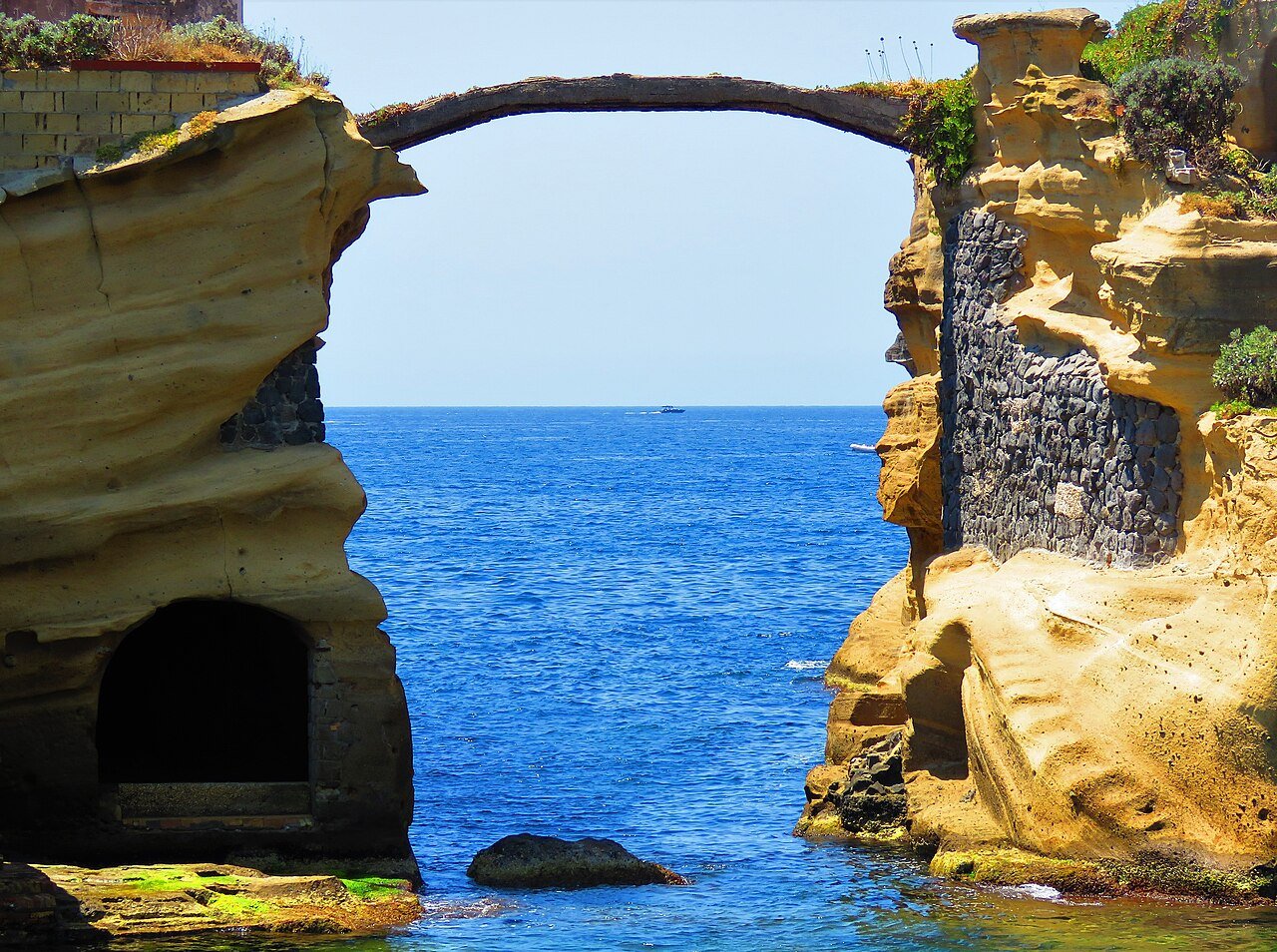
Off the cliffs of Posillipo lie the two rocks of the Isola della Gaiola, joined by a narrow natural arch. Beneath and around them sit the drowned edges of Pausilypon — the villa that Publius Vedius Pollio built in the first century BC and left to Augustus. Its quays, fishponds and nymphaea are below the waterline now, not because the sea rose but because the land moved: this is bradyseismic coast, and it breathes. The whole area has been the Parco Sommerso di Gaiola, a marine protected area, since 2002. Neapolitans call the larger islet l’isola maledetta, the cursed island, for reasons that have more to do with the twentieth century than with Rome.
That is the first fifteen minutes of the crossing. It is also the reason the approach by water is worth treating as part of the day rather than as transport — a point the following section, contributed by our partner, sets out from the operator’s side.
A private boat from Naples to Capri: the most beautiful approach to the island
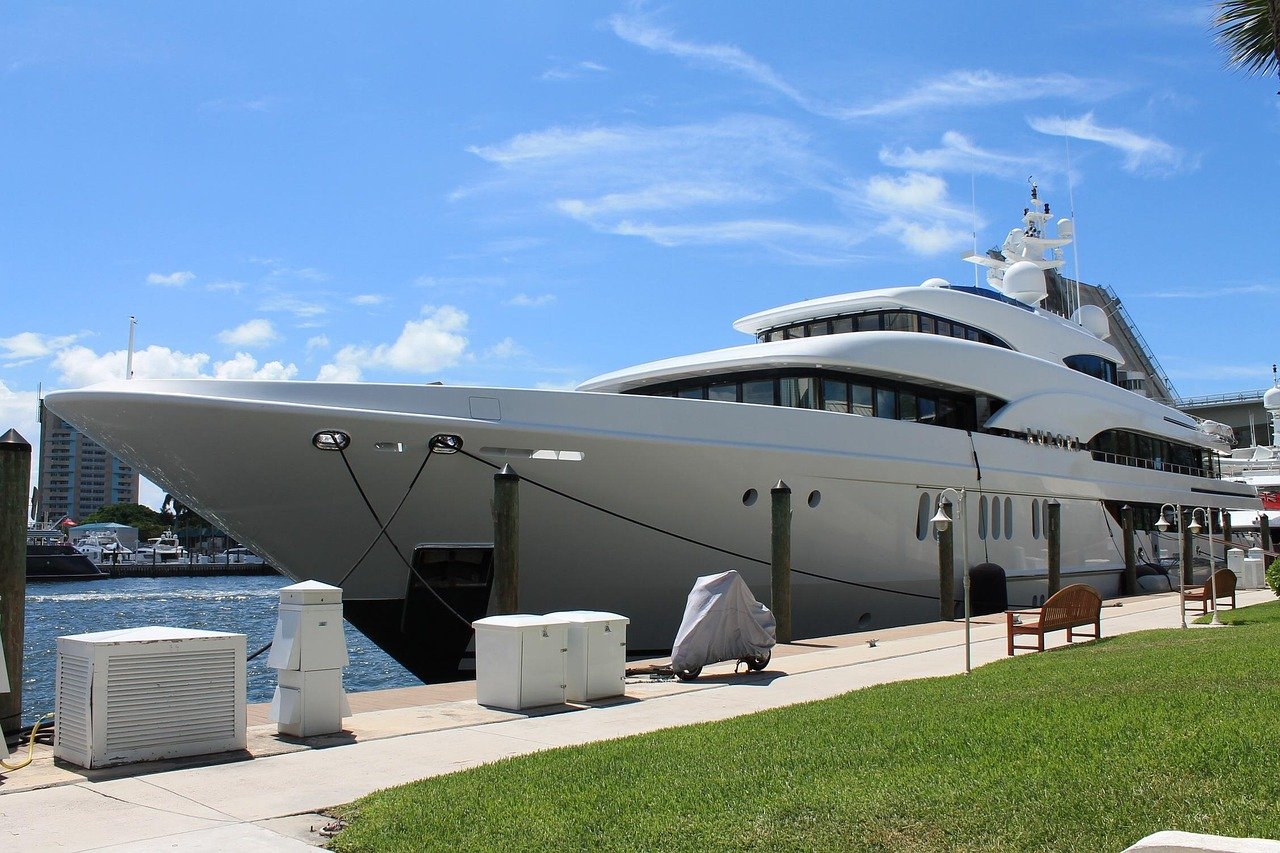
Ferries connect Naples and Capri several times a day, and for most visitors, that’s the default option without a second thought. But a private boat from Naples to Capri offers something the ferry simply can’t: control over the route, the pace and the moment you actually arrive at one of the most photographed coastlines in the world.
Why the crossing itself is part of the experience
A ferry treats the journey between Naples and Capri as a functional transfer, point A to point B, on a fixed schedule shared with a full boat of other passengers. A private crossing turns that same stretch of water into part of the day itself, with the option to slow down, take a wider route along the coastline, or simply enjoy open water without a rigid timetable dictating every minute.
Timing that matches the rest of the day
Rather than working around ferry departure times, a private boat departs when the group is ready, whether that means an early start to beat the crowds arriving at the island’s main port, or a leisurely late-morning departure that fits a more relaxed schedule.
A scenic route, not just a direct one
The most direct path between Naples and Capri isn’t always the most beautiful one. A private charter can take a route along the coastline, past dramatic cliffs and hidden coves that a scheduled ferry service, bound to efficiency, has no reason to include.
Arrival exactly where it makes sense
Rather than disembarking at the main, often crowded, port alongside every other ferry passenger, a private boat can arrive at a quieter point suited to the day’s plans, whether that’s a direct approach to a specific beach or a mooring point closer to where the group actually wants to start exploring.
Combining the crossing with time on the island
Many groups treat the boat trip itself as a first stop rather than a simple transfer, requesting a swim stop or a slow pass along the Faraglioni rock formations before continuing on to the island’s harbor. This turns roughly forty minutes of travel time into a meaningful part of the overall experience, rather than a logistical necessity to get through as quickly as possible.
Practical considerations worth planning for
Sea conditions can vary, and a good operator will discuss realistic timing and any weather-related adjustments ahead of the trip rather than leaving guests to guess. It’s also worth clarifying in advance how much time will be spent on the water itself versus time on the island, since this affects both the overall schedule and what to pack for the day.
Why this approach appeals to returning visitors
First-time visitors to Capri often default to the ferry simply because it’s the most visible option. Those who’ve made the crossing before, and want a different experience the second time around, frequently choose a private boat specifically because it transforms a routine transfer into one of the most memorable parts of the entire trip, a detail that a scheduled ferry service was never designed to offer.
The Faraglioni, and what is actually on them
The slow pass along the Faraglioni is the photograph everyone takes, and almost nobody looks at what is on the rocks. There are three principal stacks — the Faraglione di Terra, still attached to the island; the Faraglione di Mezzo, pierced by the arch boats pass through; and the Faraglione di Fuori, furthest out — with a fourth formation, the Monacone, behind them.
They carry Roman masonry. What it was for is unsettled. One reading makes it the tomb of Masgaba, the architect Augustus employed on Capri, though the evidence for that is thin and the attribution has never been firm. The competing readings are less romantic and more plausible: fish-salting tanks, or enclosures for rabbit husbandry — the practical apparatus of a Roman coastal estate. It is worth knowing before the boat turns, because it changes what you are looking at from scenery into a working landscape that happens to be beautiful.
Two towns, and the reason they never got on
The island is limestone, set between the Sorrento–Amalfi peninsula and the islands of Procida and Ischia, and cut through with sea caves. Two towns share it, Capri and Anacapri, and their long antagonism is not local colour. It grew out of geography — one town on the harbour side, one on the high ground above the cliffs — and out of competition for autonomy and resources under administrators sent from the mainland. Arriving by sea makes the division legible in a way the funicular does not: you see, in one view, why the two settlements looked outward in different directions.
If the crossing is the beginning of a longer route
The same water continues south. Positano and the Amalfi Coast — a UNESCO cultural landscape of terraces and lemon groves — are the natural extension of a day that starts in the Gulf of Naples, and they are equally a coast built to be read from the water rather than from the road above it.
Sources
- S1 — De Seta, Cesare. Capri: L'isola che c'è. Bompiani, 2000. ISBN 978-88-452-4412-4.
- S2 — Alisio, Giancarlo. Il Golfo delle Sirene: Architettura e paesaggio a Capri. Electa Napoli, 1998. ISBN 978-88-435-8712-4.
Spotted an error? Write to editorial@culturalheritageonline.com and we correct it the same day.