The Kaeng Krachan Forest Complex (กลุ่มป่าแก่งกระจาน), inscribed by UNESCO in 2021 as Thailand’s most recently designated UNESCO natural World Heritage site (and the third UNESCO natural site for Thailand, after Thungyai-Huai Kha Khaeng in 1991 and Dong Phayayen-Khao Yai in 2005), encompasses four interconnected protected areas — Kaeng Krachan National Park, Kui Buri National Park, Chaloem Phrakiat Thai Prachan National Park, and the Phet Kasem Reserved Forest — spanning approximately 4,628 km² of montane forest in Phetchaburi, Prachuap Khiri Khan, and Ratchaburi Provinces, along the Thai-Myanmar border in the southern Tenasserim Range. The Kaeng Krachan complex is the southernmost of Thailand’s three UNESCO forest complexes and represents the transition zone between the seasonal deciduous forests of central Thailand and the year-round humid forests of the Thai-Malay Peninsula — a position that gives it exceptional biodiversity value as the meeting point of the temperate Indochinese and tropical Sundaic biogeographic zones. The complex is centred on Kaeng Krachan National Park — established in 1981 and now, at approximately 2,915 km², the largest national park in Thailand by area — which encompasses the Kaeng Krachan Reservoir (the largest man-made reservoir in Thailand by area, approximately 46.5 km² at full supply level, formed by the 1966 dam on the Phetchaburi River and surrounded by forested hills that create a landscape of remarkable scenic beauty), the Panoen Thung plateau (approximately 1,207 m — the highest point in the park and the primary birdwatching destination, where the elevation and cloud-forest vegetation support high concentrations of montane bird species), and the camping areas of the park’s main campsite that are among the most popular in Thailand for the combination of elephant presence (Asian elephants frequently visit the campsite area), bird density (over 350 species recorded in the park), and accessibility from Bangkok.
Kaeng Krachan’s montane birds and southern Thailand heritage corridor Kaeng Krachan Reservoir · Panoen Thung plateau · Cha-am · Hua Hin · Bangkok — 0 to 230 km
The Kaeng Krachan Forest Complex’s designation as a UNESCO World Heritage site in 2021 was the culmination of a protracted nomination process — Thailand first submitted the nomination in 2011 and the IUCN (International Union for Conservation of Nature, the advisory body that evaluates natural World Heritage nominations) returned the nomination twice with concerns about the complex’s management of Karen indigenous communities living within the park boundary (the Karen (“Pga K’nyau”) people — also called Pgaz K’Nyau in their own language — have lived in the forest areas now included in Kaeng Krachan National Park for generations, and their presence, livelihoods, and legal land rights within the park boundary were a central issue in the UNESCO nomination review, particularly following the death in 2011 of Bilal Rakcharoen (“Billy”), a Karen rights activist who disappeared while in custody of park officials — a case that was still being investigated as a criminal case involving park officials at the time of the 2021 inscription). The 2021 inscription proceeded with specific conditions from the UNESCO World Heritage Committee regarding the management of the indigenous community issue, making the Kaeng Krachan inscription both a conservation achievement and a marker of the ongoing international tension between protected area conservation policies and indigenous land rights in Southeast Asian forests. For the visitor, the Kaeng Krachan complex offers the most significant birdwatching destination in the Gulf of Thailand coastal zone — the Panoen Thung plateau (accessible by 4WD vehicle from the main park entrance — approximately 3 hours on an unpaved mountain road) is one of Thailand’s premier birding locations, with access to montane species (Rufous-bellied Niltava, Silver-eared Mesia, Blue-winged Leafbird, various laughingthrush species) visible from the plateau viewpoints; while the lower Kaeng Krachan Reservoir area and its surrounding forest is the best location for large waterbirds (including Asian Openbill, Spot-billed Pelican at the reservoir edge) and the accessible elephant viewing areas where Asian elephants regularly visit the salt licks and water sources within sight of the campsite.
Practical information
Kaeng Krachan National Park is approximately 50 km west of Hua Hin (Prachuap Khiri Khan Province) and approximately 230 km south of Bangkok by Highway 4 (Phetkasem Road). From Bangkok: by bus or minivan to Hua Hin (approximately 3.5 hours), then songthaew or vehicle to the park entrance (approximately 50 km); or from Phetchaburi (approximately 40 km north of Hua Hin, also accessible by bus from Bangkok’s Sai Tai Mai terminal or by train). The park entrance is at the Kaeng Krachan dam/reservoir, where the visitor facilities and campsite are located. The park is open daily 05:00–18:00; national park entrance fees apply. Accommodation: national park campsites and bungalows (advance booking recommended, especially for weekends — the park is popular with Bangkok residents), plus private guesthouses and resorts near the park entrance area and in Hua Hin. The Panoen Thung plateau road (for birdwatching) requires a 4WD or truck (visitor vehicle driven by park staff — arrange at park headquarters) and advance booking; the road is closed during monsoon season approximately June–October when it becomes impassable. The Hua Hin/Cha-am coastal resort area (approximately 50 km east of the park entrance) provides the best base with highest accommodation quality and restaurant options. The park is best combined with the Hua Hin beach resort area for a mixed wildlife/beach Thai itinerary. Best birdwatching: November–May (dry season) for Panoen Thung montane species; year-round for the reservoir waterbirds. Elephant presence in the main camp area is highest in the dry season (December–May) when elephants concentrate near water sources.
Frequently Asked Questions
Why did it take so long for Kaeng Krachan to be designated a UNESCO World Heritage site?
The Kaeng Krachan UNESCO nomination process (2011–2021, ten years) was delayed by the most complex set of issues that any Thai UNESCO nomination has faced — combining ecological management concerns, indigenous rights disputes, and criminal allegations against park management — making it one of the most contested natural site nominations in the history of the UNESCO World Heritage programme. Thailand first nominated Kaeng Krachan in 2011. The IUCN advisory evaluation in 2011 recommended “deferral” (a technical UNESCO term meaning the nomination requires significant additional work before it can proceed to inscription) on two grounds: (1) boundary issues — the nomination boundaries needed revision to ensure the serial site (the four-component complex) was clearly defined and that the connectivity between components was scientifically documented; (2) community management issues — the IUCN evaluation noted that Karen indigenous communities living within the Kaeng Krachan National Park boundary had been the subject of forced evictions and destruction of their homes by park authorities since the 1990s, and that the nomination documentation did not adequately address how the Outstanding Universal Value of the site would be protected in a way that was consistent with the rights of the resident communities. The community issue became dramatically more acute in 2011 when Porlajee Rakcharoen (“Billy”), a Karen community leader and rights activist from the Ban Bang Kloi community inside Kaeng Krachan, disappeared on 17 April 2014 CE (not 2011 — the case evolved) while in the custody of park officials who had arrested him for illegally possessing wild honey in the park. His body was never found; an investigation in 2019 CE found calcined bone fragments and a stainless steel water bottle in the Kaeng Krachan area that DNA analysis confirmed as Billy’s remains, strongly suggesting he was killed while in custody. A criminal investigation charged a former park chief and other park officials in 2021 CE. The UNESCO World Heritage Committee inscription in 2021 (the 44th session, held in Fuzhou, China — later held online due to COVID) proceeded over the objection of several Committee members who cited the unresolved community rights issues as grounds for further deferral. The inscription was approved 10 votes to 7 (with three abstentions), with specific conditions requiring Thailand to: resolve the legal status of the Karen communities in the park, implement a community participation plan, and report to the World Heritage Committee annually on progress. The Kaeng Krachan inscription is thus one of the most controversial UNESCO natural site designations of recent decades, and the ongoing indigenous rights issues within the park boundary continue to be monitored by the UNESCO World Heritage Committee as a condition of the site’s inscribed status.
What is the ecological significance of the Kaeng Krachan site’s position between Indochinese and Sundaic biogeographic zones?
The Kaeng Krachan Forest Complex’s ecological value is partly determined by its geographic position as the southernmost of the three Thai UNESCO forest complexes and the northernmost extent of the “Sundaic” biogeographic zone — the island-influenced forest region of the Thai-Malay Peninsula, Sumatra, Borneo, and Java where the biota differs significantly from the “Indochinese” zone of mainland Southeast Asia (continental Thailand, Myanmar, Laos, Vietnam, southern China) to the north. The “Sundaic” biota are essentially island-evolved species assemblages that arrived on the Thai-Malay Peninsula via forest connections when sea levels were lower during glacial periods (the Sunda Shelf — the shallow continental shelf that underlies the present-day Gulf of Thailand, South China Sea, and Strait of Malacca — was exposed as land during the last glacial maximum approximately 18,000 years ago, connecting the Thai-Malay Peninsula continuously to Sumatra, Borneo, and Java, allowing fauna and flora exchange across what is now sea). The specific ecological significance of the Kaeng Krachan transition zone is: the park contains both Indochinese species (which reach their southern distributional limit here — for example, the Siamese fireback pheasant, the white-rumped shama, and the tiger) and Sundaic species (which reach their northern distributional limit here — for example, the banded pitta, the Malaysian pied fantail, and the Dusky Broadbill — species whose distribution centre is in peninsular Malaysia, Sumatra, and Borneo but which just reach Kaeng Krachan at the northern edge of their range). This “transition zone” character means that Kaeng Krachan has a higher total species count for birds, mammals, and plants than would be expected from a forest block of its size entirely within either biogeographic zone — the overlap of the two zones’ species pools creates the exceptional diversity. The total bird checklist for the Kaeng Krachan complex (approximately 460–480 species recorded, including migrants) is among the highest of any single site in Thailand and is the reason that Kaeng Krachan is consistently rated among the top birdwatching sites in Asia by the international birding community.
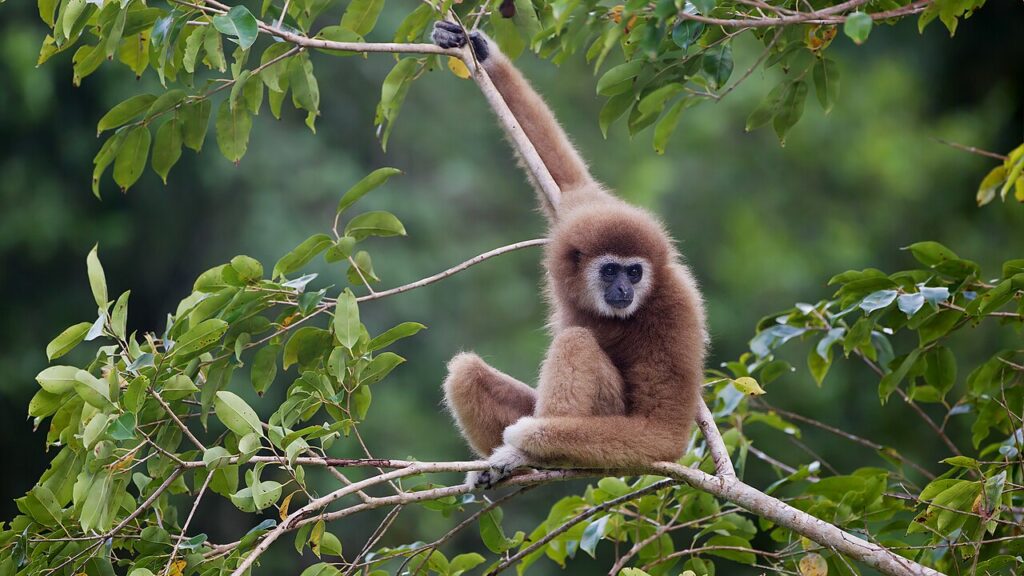
EXCERPT: Kaeng Krachan Forest Complex, UNESCO-inscribed in 2021 (Thailand’s third UNESCO natural site, 4,628 km² across four linked reserves), is the largest national park in Thailand — white-handed gibbons, Asian elephants, and 460+ bird species at the crossover between mainland Indochinese and peninsular Sundaic biogeographic zones, 3.5 hours from Bangkok near Hua Hin.
META: UNESCO World Heritage Sites near Kaeng Krachan Forest Complex Thailand: Dong Phayayen-Khao Yai Forest Complex 300 km northeast (UNESCO 2005), Thungyai-Huai Kha Khaeng Wildlife Sanctuaries 200 km north (UNESCO 1991) — Kaeng Krachan National Park birdwatching Thailand UNESCO 2021, Hua Hin Phetchaburi wildlife, white-handed gibbon lar gibbon elephant, Panoen Thung cloud forest birds, Karen indigenous rights UNESCO controversy.
Sources
- S1 — UNESCO World Heritage Centre — Kaeng Krachan Forest Complex (Ref. 1461) — https://web.archive.org/web/20230601000000/https://whc.unesco.org/en/list/1461/
- S2 — UNESCO World Heritage Centre — Statement of Outstanding Universal Value (Ref. 1461) — https://whc.unesco.org/en/list/1461/
Spotted an error? Write to the editors and we correct it the same day.