Two World Heritage sites lie within 500 kilometres of the Gusuku Sites and Related Properties of the Kingdom of Ryukyu as the crow flies: the Amami-Oshima Island, Tokunoshima Island, Northern part of Okinawa Island, and Iriomote Island site (30 km) and Yakushima (475 km). The Gusuku property itself was inscribed in 2000. It represents five hundred years of Ryukyuan history, from the 12th to the 17th century, through the ruins of castles on elevated sites and sacred places.
The World Heritage sites within reach of the Gusuku Sites
The distances below are straight lines between the reference points that UNESCO publishes for each property, measured to the nearest component of a serial site. They tell you what is close. They do not tell you how long the road or ferry takes, which depends on the island connections and the season.
| Site | Country | Distance | Inscribed | Type |
|---|---|---|---|---|
| Amami-Oshima Island, Tokunoshima Island, Northern part of Okinawa Island, and Iriomote Island | Japan | 30 km | 2021 | Natural |
| Yakushima | Japan | 475 km | 1993 | Natural |
The two nearest sites are natural, not cultural, and they frame the Ryukyu arc along its full length. The northern part of Okinawa Island shares the same landmass as the Gusuku ruins, while the other components stretch southwest towards Iriomote. Yakushima sits far to the north, where the palaearctic and oriental biotic regions meet, and is famous for its ancient Japanese cedar forest.
Nine components for one kingdom
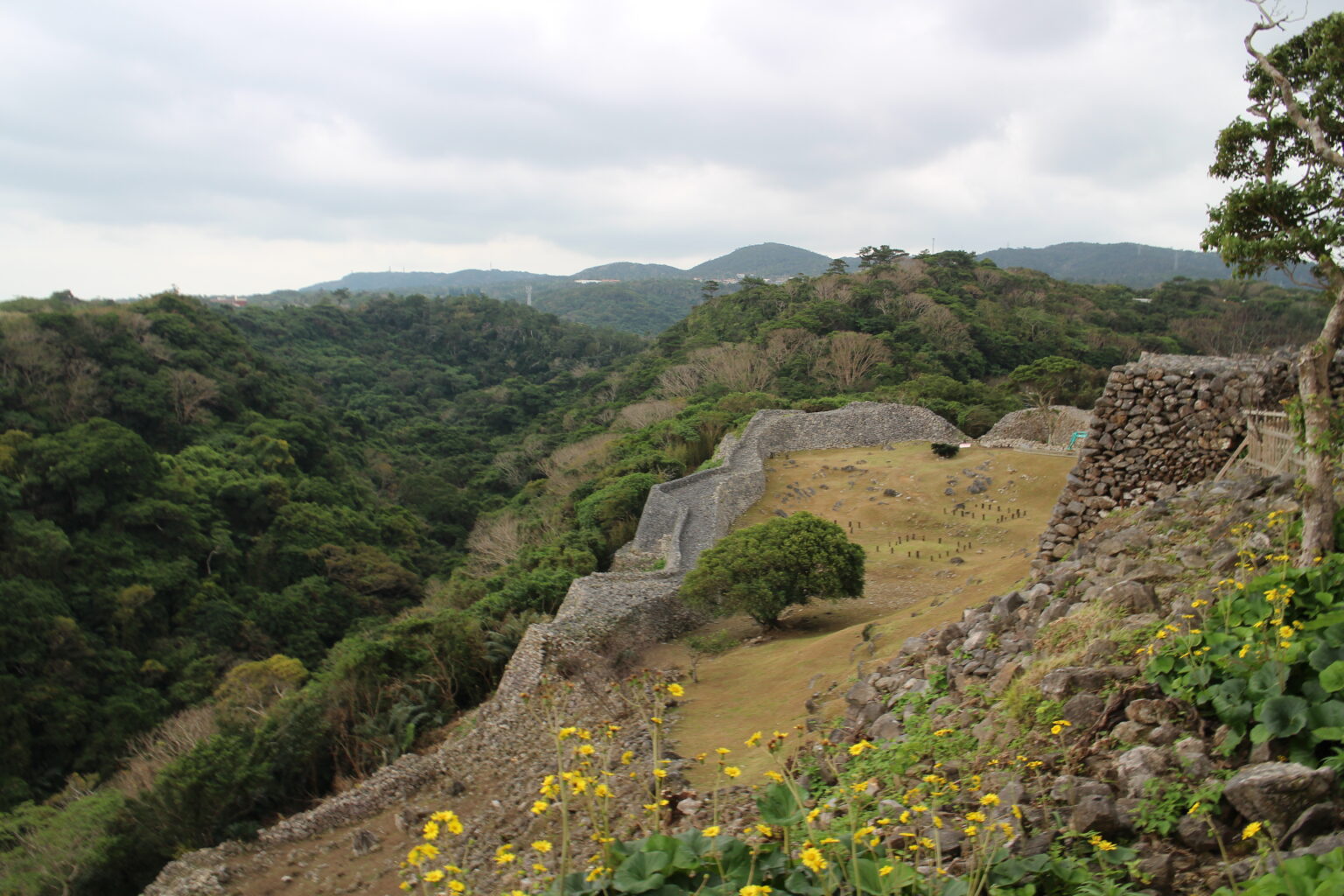
The property assembled under this title is not a single castle but a collection of nine component parts: five castles, two stone monuments and two cultural landscapes. They are scattered across Okinawa Island and together cover 54.9 hectares, with a buffer zone of 559.7 hectares. UNESCO chose them because they document the social and political structure of the Ryukyu Kingdom over five centuries, and because the sacred sites show an old form of nature and ancestor worship that continued into the modern age alongside other established world religions.
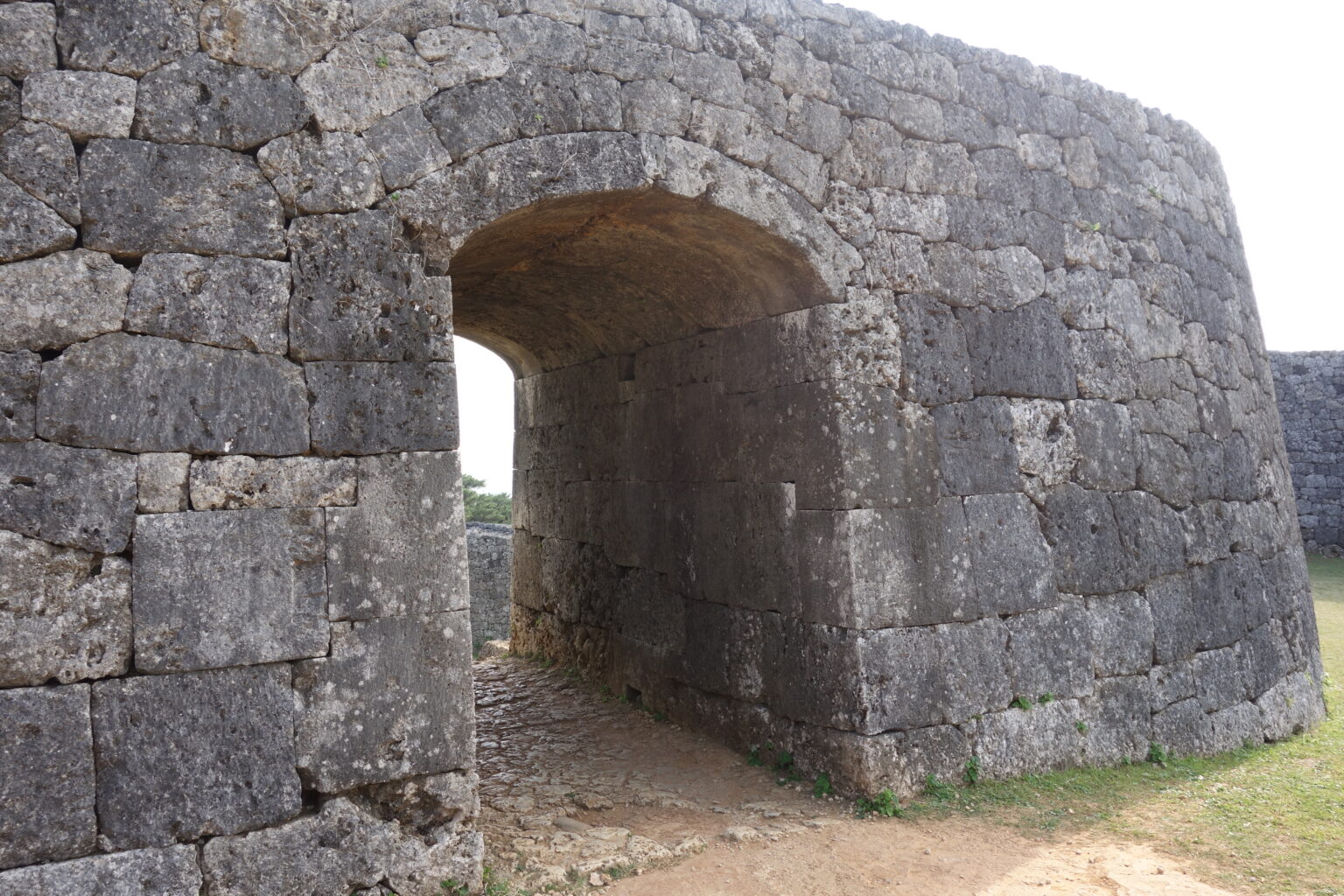
The name gusuku describes a process. In the 10th to 12th centuries, farming communities began to surround their villages with simple protective stone walls. From the 12th century onwards, powerful leaders called aji extended these structures, turning them into strongholds for their own households, and the word gusuku came to mean these formidable castles. The sites chosen for inscription are the outstanding representatives of a much larger group: more than three hundred gusuku sites and related assets remain in the Ryukyu islands.
How the property keeps its authenticity
Okinawa suffered considerable damage during the Second World War, and reconstruction has been part of the story of these sites ever since. The main hall of Shuri-jō was rebuilt using pre-war photographs and surveyed plans, and the work followed in detail what the wide-area excavations had revealed. UNESCO notes that in Japan the authenticity of form, design and materials remains very high because repair and restoration have been carried out under strict rules for more than a hundred years.
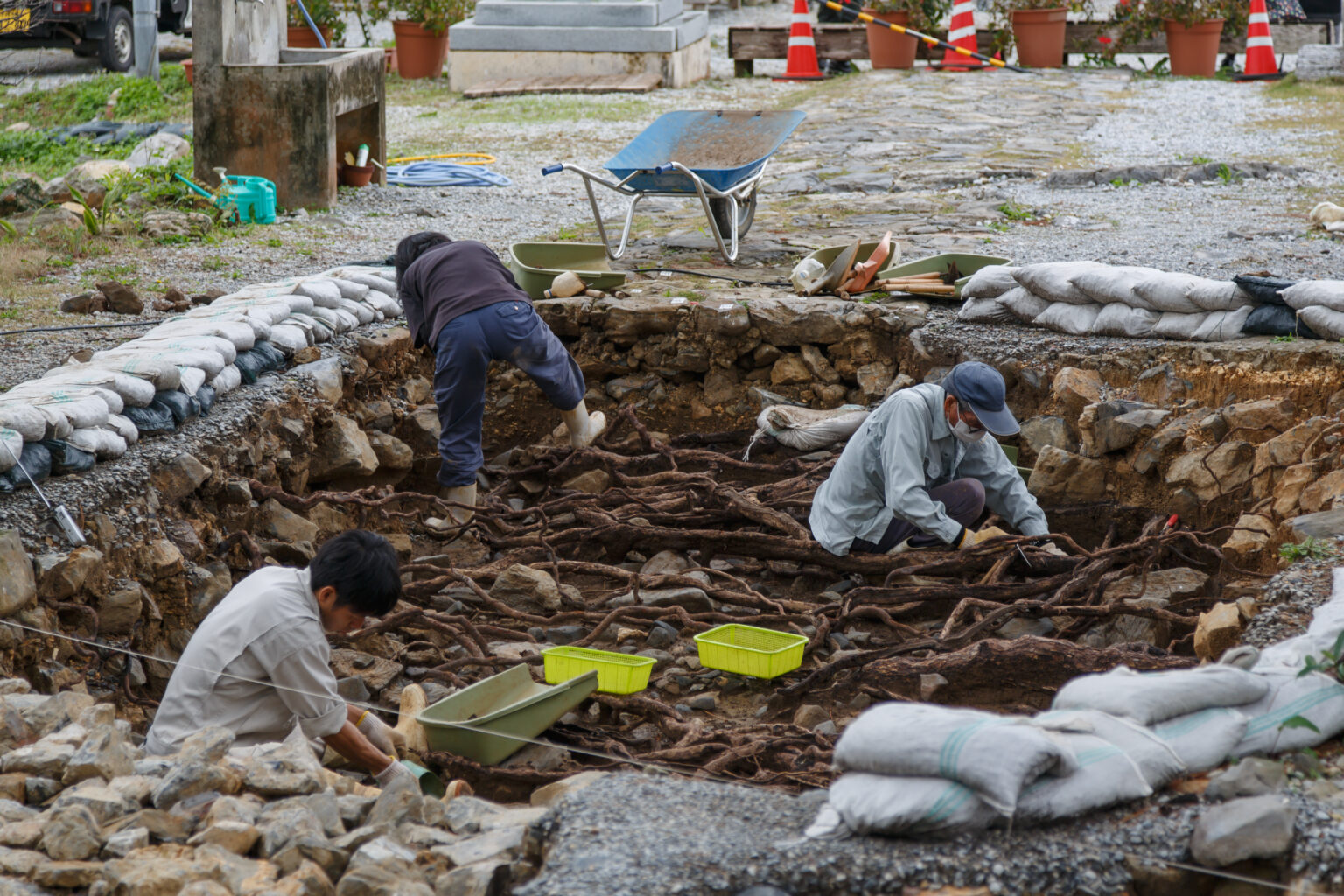
The authenticity of location has also been maintained. None of the component parts has been moved from its original site, and traces of buildings discovered through archaeological excavation have been preserved underground. When restoration takes place, layers of innocuous earth or sand are sometimes used to separate the original underground remains from the structure rebuilt above them. Shikinaen garden was restored using similar procedures to Shuri-jō, with the royal villa and garden recreated with great precision.
Criterion (vi) and the Ryukyu sacred places
One part of the justification stands apart from the architecture. Under criterion (vi), UNESCO recognised the Ryukyu sacred sites as an exceptional example of an indigenous form of nature and ancestor worship. Seifa-utaki and Sonohyan-utaki-ishimon are both inscribed components, and they preserve a religious tradition that continued alongside Buddhism and other established world religions. The sacred places provide what UNESCO calls mute testimony to that rare survival.
The management of the property reflects its mixed nature. Each component part is protected under the 1950 Law for the Protection of Cultural Properties, with a designation as a cultural property of importance, a historic site, or a place of scenic beauty. Ownership is divided between the Government of Japan, municipalities and in some cases private persons. A comprehensive management plan for the whole inscribed property was prepared in 2013 by Okinawa Prefecture together with the relevant municipal governments.
Frequently Asked Questions
Which UNESCO World Heritage sites are near the Gusuku Sites?
Amami-Oshima Island, Tokunoshima Island, Northern part of Okinawa Island, and Iriomote Island is 30 km away in a straight line. Yakushima is 475 km to the north. Both are natural World Heritage sites in Japan, and they frame the Ryukyu island chain from the subtropical south to the cedar forests of the north.
How many components make up the Gusuku World Heritage property?
Nine component parts make up the property: five castles, two stone monuments and two cultural landscapes. They are scattered across Okinawa Island and cover 54.9 hectares, with a buffer zone of 559.7 hectares. Each part is a protected cultural property or historic site under Japanese law.
What is a gusuku?
A gusuku began as a stone-walled farming settlement enclosure in the 10th to 12th centuries. From the 12th century onwards, powerful leaders called aji enlarged them into fortresses for their households, and the word came to mean these formidable castles. More than three hundred such sites remain across the Ryukyu islands.
Why are the Ryukyu sacred sites part of the World Heritage property?
Under criterion (vi), UNESCO recognised them as an outstanding example of an indigenous nature and ancestor worship tradition. This form of worship persisted into the modern age alongside other major world religions, and the sacred sites provide mute testimony to that rare survival, which the Committee considered exceptional.
Sources
- UNESCO World Heritage Centre — Gusuku Sites and Related Properties of the Kingdom of Ryukyu (inscribed 2000). https://whc.unesco.org/en/list/972/
- UNESCO World Heritage Centre — Amami-Oshima Island, Tokunoshima Island, Northern part of Okinawa Island, and Iriomote Island (inscribed 2021). https://whc.unesco.org/en/list/1574/
- UNESCO World Heritage Centre — Yakushima (inscribed 1993). https://whc.unesco.org/en/list/662/
- Japan National Tourism Organization — Gusuku Sites and Related Properties of the Kingdom of Ryukyu. https://www.japan.travel/en/world-heritage/gusuku-sites-and-related-properties-of-the-kingdom-of-ryukyu/
Spotted an error? Write to editorial@culturalheritageonline.com and we correct it the same day.