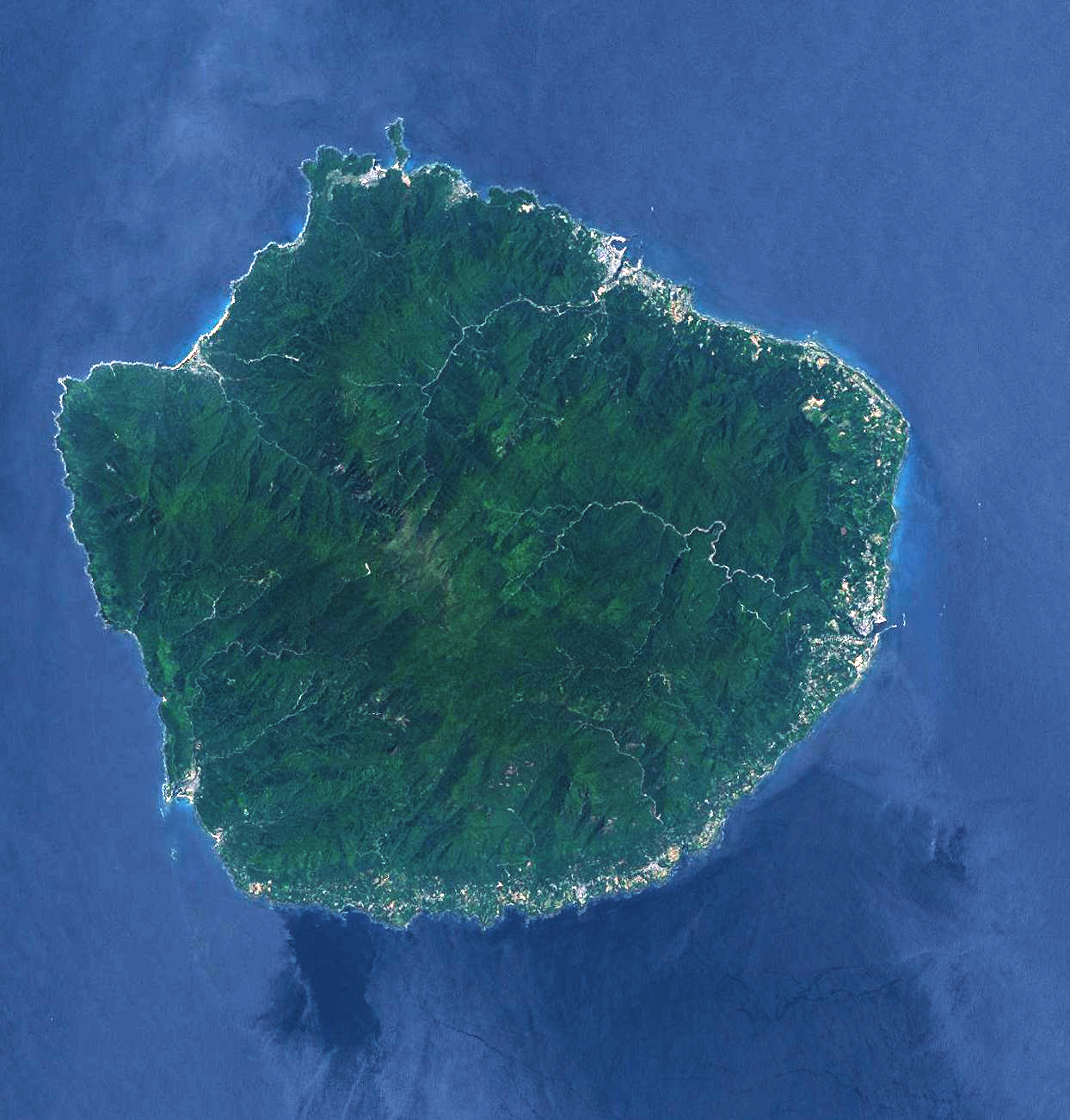
Yakushima is an island of approximately 500 km² in Kagoshima prefecture, Japan, located 60 kilometres south of the southern tip of Kyushu. It was inscribed as a UNESCO World Heritage Site in 1993 — the first natural UNESCO inscription in Japan — for its exceptional biodiversity, which includes ancient cedar forests in the high interior and subtropical coastal zones at sea level on the same small island. The interior peak, Miyanoura-dake, reaches 1,936 metres and is the highest point in southern Japan. The island receives some of the heaviest annual rainfall in Japan, and the combination of altitude, precipitation, and nutrient-poor granite geology has produced a forest of ancient cedars that includes individual trees estimated to be over 2,000 years old.
The Yakusugi Cedar Forest: Ancient Trees on Granite in Heavy Rain Kagoshima prefecture, 60 km south of Kyushu
Yakushima’s topography is extreme for its size. The island is roughly circular, approximately 25 kilometres across, and rises from sea level to 1,936 metres over a horizontal distance of less than 15 kilometres. The interior is a granite massif — old, hard, nutrient-poor rock — and the altitude creates a climate entirely distinct from the subtropical coast. Annual precipitation in the high interior ranges from 4,000 to 10,000 millimetres per year at altitude; local residents have a saying that it rains 35 days a month. The combination of heavy rainfall, cold temperatures, and poor granite soil produces the conditions that define the Yakusugi cedar forest.
The cedars growing above 1,000 metres altitude are known as Yakusugi — a compression of Yakushima and sugi, the Japanese term for Cryptomeria japonica, the Japanese cedar. Those below 1,000 metres are called ko-sugi (small cedar). The distinction is not a different species but a different growth environment: at high altitude, in poor soil and constant cold, the cedars grow extremely slowly. A slow-growing cedar produces annual growth rings packed very close together, and the resulting wood is dense, rich in resin, and highly resistant to rot. By convention, cedars over 1,000 years old are called Yakusugi; those under 1,000 years are Kosugi. The age threshold corresponds approximately to the age at which the slow growth conditions produce the characteristic wood density.
The Jōmon Sugi is the largest and oldest known Yakusugi. It was discovered in 1966 by a forestry worker named Akira Takeda. The tree’s trunk circumference measures approximately 16.4 metres at the base. Estimating its age precisely is not possible without taking a core sample from the centre — a process that would damage the tree — and so estimates are derived from ring counts on exposed surface roots and extrapolation. Published estimates range from approximately 2,000 years to 7,200 years. The range is wide because the core of a tree this large contains the oldest wood, and without direct ring counts from the core, the total age cannot be confirmed. The tree’s name links it to the Jōmon period of Japanese prehistory (approximately 14,000–400 BCE) — the name suggests an age extending back to that era, though this is unconfirmed.
Reaching the Jōmon Sugi requires a substantial hiking commitment. The standard approach from the Arakawa trailhead — the point to which a shuttle bus runs from the island’s main roads — involves approximately 22 kilometres of walking round-trip, with a total ascent of around 600 metres, and takes 8–10 hours. The route follows an old forestry rail line for much of its length, then climbs through the Yakusugi forest on a designated trail. Approximately 70,000 visitors per year made this journey in the 2010s, a figure that prompted access management measures including shuttle bus requirements and timed entry systems for the trailhead.
Studio Ghibli, Endemic Wildlife, and the Ecology of an Island With Two Climates Southern Japan, Osumi Islands group
In 1993, the same year Yakushima received its UNESCO inscription, filmmaker Hayao Miyazaki visited the island to research the ancient cedar forest for his film “Princess Mononoke” (Mononoke-hime), released in 1997. Miyazaki and the Ghibli production team spent time on the island studying the visual texture of the ancient forest — the density of the canopy, the shapes of the aged trunks, the carpets of moss that cover fallen trees and old stumps in the high interior. The resulting film is set in a Japanese forest of the Muromachi period (1336–1573), in which an ancient deity forest is being destroyed by an iron smelting operation. The ancient cedar sequences and the Forest Spirit’s domain in the film draw directly on the Yakusugi forest’s visual character. The Yakushima connection to the film has since become part of how the island is known internationally.
Yakushima’s ecological significance for the UNESCO inscription is grounded in its compression of multiple climatic zones within a small area. The subtropical coastal belt supports warm-climate vegetation typical of the Ryukyu island chain, including banyan trees and tropical ferns. Above the coastal zone, temperate broadleaf forest covers the middle slopes. Above approximately 1,000 metres, the Yakusugi cedar zone transitions into subalpine scrub as altitude increases. This stacking of climatic zones — subtropical at the shore, subalpine near the peak — on an island of 500 km² produces unusually high biodiversity for the land area involved.
Two animal subspecies are found only on Yakushima and are part of the ecological interest that supported the UNESCO inscription. The Yaku deer (Cervus nippon yakushimae) is a subspecies of the sika deer, smaller than mainland populations; it inhabits the forest from the coast to the high interior. The Yaku macaque (Macaca fuscata yakui) is a subspecies of the Japanese macaque; populations on Yakushima have been the subject of long-term behavioural research, including studies of social learning and tool use. Both subspecies evolved in isolation on the island and represent distinct evolutionary trajectories from their mainland relatives.
Loggerhead sea turtles (Caretta caretta) nest on the island’s beaches, particularly on the west coast. Yakushima’s beaches are among the most important nesting sites for loggerheads in Japan. The nesting season runs from approximately May to August; females come ashore at night to lay eggs, and hatchlings emerge in summer. Access to nesting beaches is managed during the season to reduce disturbance.
Practical information
Yakushima is reached by ferry from Kagoshima (southern Kyushu) or by flight. Hydrofoil ferries (Toppy and Rocket services) run from Kagoshima to Miyanoura port in approximately 2 hours; conventional ferries take approximately 4 hours and carry vehicles. Flights operate from Kagoshima Airport to Yakushima Airport (approximately 35 minutes) on JAL subsidiary routes; the airport is small and services are weather-dependent. Accommodation ranges from guesthouses and minshuku (family-run inns) in the port towns of Miyanoura and Anbo to remote mountain huts for hikers staying overnight in the interior. The standard Jōmon Sugi hiking route requires an early start: the shuttle bus from the Yakusugi Land parking area to the Arakawa trailhead begins operation in the early morning, and the trail is one-way during peak season. A full day should be allocated with no other activities. The island’s roads are limited and a rental car is recommended for visiting multiple sites including Shiratani Unsuikyō Ravine (a mossy cedar forest often cited as a Ghibli reference landscape), Yakusugi Land, and the coastal communities. Weather changes rapidly; rain gear is essential regardless of forecast.
Frequently Asked Questions
How old is the Jōmon Sugi cedar tree?
The Jōmon Sugi is the largest and oldest known cedar (Cryptomeria japonica) on Yakushima, but its precise age cannot be confirmed without damaging the tree. The standard method for determining a tree’s age — counting annual growth rings — requires a core sample from the centre of the trunk. Taking such a sample from the Jōmon Sugi would damage the tree’s heartwood, and the practice has not been authorised. Published age estimates are derived from ring counts on exposed surface roots and from extrapolation based on the tree’s trunk circumference (approximately 16.4 metres) and the known growth rates of high-altitude Yakusugi cedars. These methods produce a wide range: estimates in the published literature run from approximately 2,000 years at the low end to approximately 7,200 years at the high end. The name “Jōmon” invokes the Jōmon period of Japanese prehistory (approximately 14,000–400 BCE), implying an age that could reach into that era — but this has not been confirmed. The uncertainty is genuine and reflects the difficulty of aging very large, slow-growing trees without invasive methods. What is confirmed is that the tree is substantially older than 1,000 years (the threshold for the Yakusugi designation), that it is the largest known individual cedar on the island, and that it has survived in a high-altitude, high-rainfall environment that subjects it to frequent typhoons and heavy snow loading in winter.
What is the connection between Yakushima and the film “Princess Mononoke”?
Hayao Miyazaki and the Studio Ghibli production team visited Yakushima in 1993 to conduct visual research for “Princess Mononoke” (Mononoke-hime), which was released in 1997. The film is set in a mythologised Japanese forest of the Muromachi period (1336–1573), in which ancient forest deities conflict with humans who are destroying the forest through iron smelting. The visual design of the ancient deity forest in the film — particularly the home of the Forest Spirit (Shishigami) — draws directly on the Yakusugi cedar forest. Key visual elements include the densely mossy forest floor and fallen logs carpeted in bright green moss, the gnarled forms of aged cedar trunks thousands of years old, the filtered, diffuse light in a closed-canopy forest receiving very high rainfall, and the sense of extreme age in the forest structure. The connection is often referenced at the Shiratani Unsuikyō Ravine in the northern part of the island, a mossy cedar forest valley accessible by day trail that closely resembles the film’s forest environments. Miyazaki has confirmed the Yakushima research trip as formative for the film’s visual language, though the film’s narrative is not set on Yakushima itself but in a fictional inland location. The film became the highest-grossing Japanese film in history at the time of its release and remains one of the most influential works in Japanese animation.
How difficult is the hike to Jōmon Sugi?
The standard Jōmon Sugi hike is a full-day undertaking, generally rated as moderately strenuous. The most common route begins at the Arakawa trailhead, reached by a mandatory shuttle bus from a designated parking area at Yakusugi Land (private vehicles are not permitted on the trailhead road during the peak season, typically March through November). The round trip from the Arakawa trailhead to the Jōmon Sugi is approximately 22 kilometres and involves a total ascent of around 600 metres. Typical completion times for a healthy adult moving at a moderate pace are 8–10 hours round trip. The first section of the route — roughly half the outbound distance — follows the former Anbo Forest Railway track, a decommissioned narrow-gauge rail line on a gentle grade through the forest. This section is accessible and straightforward. The second section climbs steeply through the Yakusugi forest on a constructed timber-boarded trail. The Jōmon Sugi itself is viewable only from a designated viewing platform; direct approach to the tree is restricted. Hikers are advised to carry significant water and food, as there are no facilities on the trail. Starting the shuttle bus in the earliest available slot is recommended to allow sufficient time. Mountain huts are available at points along the route for those who wish to stay overnight and hike more slowly.