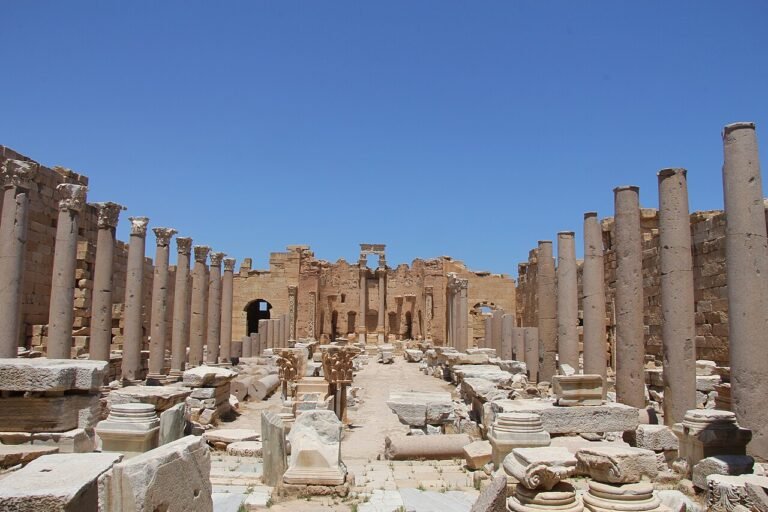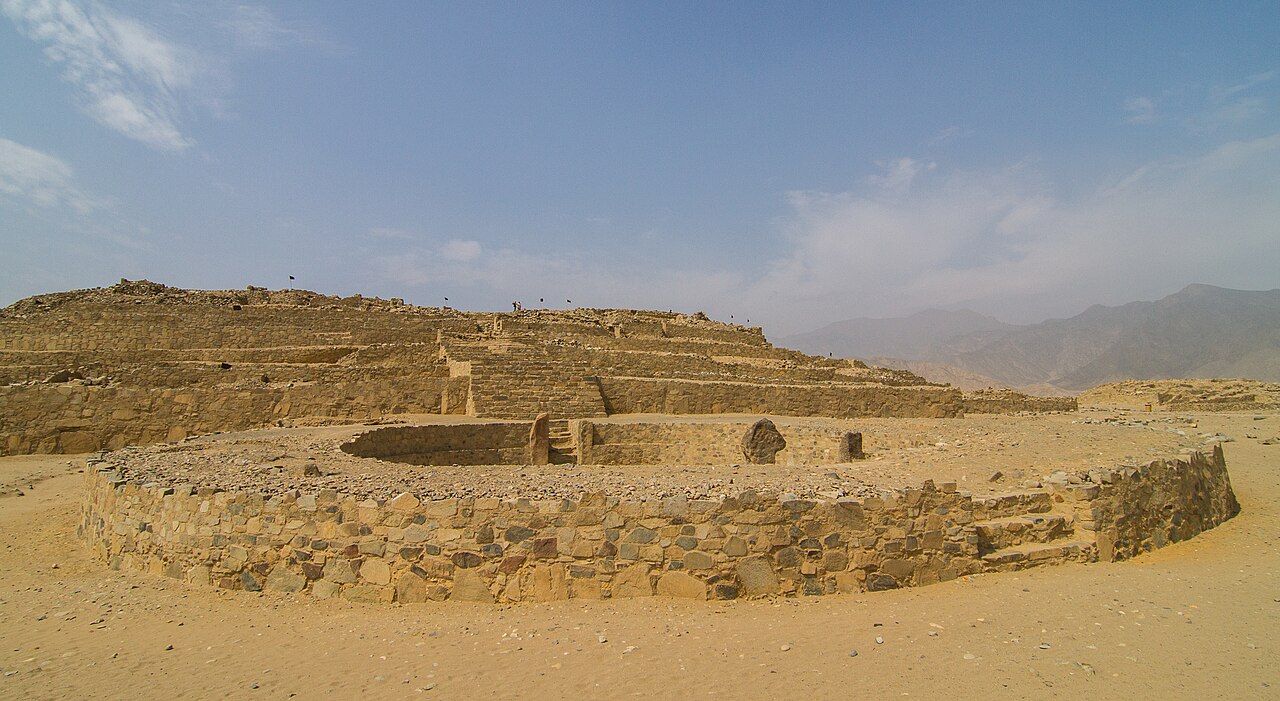
The Sacred City of Caral-Supe, inscribed in 2009, is the oldest city in the Americas — an urban complex in the Supe River valley of Peru that was built and occupied from approximately 2600 to 2000 BCE, contemporaneous with the pyramids of Giza and the cities of Mesopotamia, making it one of only six places in the world where urban civilization arose independently from a pre-agricultural base.
Caral-Supe: The Oldest City in the Americas Supe Province, Lima Region, Peru, 182 km north of Lima
The Sacred City of Caral-Supe (inscribed in 2009 under criteria (i), (ii), (iii), and (iv)) is the most significant archaeological site in South America and one of the most important in world archaeology — the capital city of the Norte Chico (Caral-Supe) civilization, which flourished in the river valleys of the North-Central Coast of Peru from approximately 3000 to 1800 BCE, contemporaneous with the early Old Kingdom of Egypt (2686–2181 BCE), the Harappan civilization of the Indus Valley (2600–1900 BCE), and the Early Dynastic period of Mesopotamia (2900–2350 BCE). Caral was the largest city of the Norte Chico civilization: its urban core covers approximately 66 hectares and contains 6 large platform mounds (the Pirámide Mayor, the largest, is 154 metres × 138 metres × 18 metres — comparable in volume to the Step Pyramid of Djoser in Egypt), 2 sunken circular plazas (used for communal gatherings and possibly astronomical observation), a large central plaza, residential quarters, and storage structures. The archaeological evidence (radiocarbon dates from 2627 ± 110 BCE on woven reed bags used to carry building stones) establishes Caral as contemporaneous with the earliest cities of the Old World — overturning a previously dominant assumption that urban civilization developed in the Americas approximately 1,000 years later than in the Old World.
Chan Chan and the Chimu Empire 🚌 ~6 hrs north to Trujillo
Chan Chan Archaeological Zone (inscribed 1986 under criteria (i), (ii), and (iii), on the World Heritage in Danger list since 1986) is 380 km north of Caral — the capital of the Chimu Empire (c. 900–1470 CE) and the largest pre-Columbian city in South America. Chan Chan (the name is Chimu for “resplendent sun” in Chimu language) covers an area of approximately 20 km² in the Moche Valley north of Trujillo, of which the monumental core (the cittadella compounds, or royal enclosures) covers 6 km². The city is built entirely of adobe (sun-dried mud brick) — the largest adobe city ever constructed — and consists of 10 royal compounds (each built for a successive Chimu ruler as his palace, administrative centre, and burial monument) surrounded by neighbourhoods for craftsmen, servants, and farmers. Each royal compound follows the same plan: a high perimeter wall (up to 9 metres), a series of courts, storage rooms, and a royal burial mound (huaca) containing the ruler’s mummified body with his wives, servants, and treasure. The Tschudi compound (the most restored) and the Huaca Esmeralda (partially excavated) are the two compounds open to visitors. The Chimu Empire was conquered by the Inca Emperor Tupac Inca Yupanqui in 1470 CE after a decade of siege warfare.
Practical information
Caral is 182 km north of Lima (3–4 hours by road). From Lima, take the Panamericana Norte (Pan-American Highway North) to the town of Supe (km 184), then 23 km up the Supe Valley on an unpaved road. There is no direct public transport to the site; most visitors go by organised tour from Lima (day trip, 8–9 hours total) or by private car. The site opens Tuesday–Sunday 9 a.m.–5 p.m.; entry fee approximately S/. 11. The site has a visitor centre with information on the excavations and the Norte Chico civilization. Chan Chan near Trujillo (6 hours north of Lima by bus on the Pan-American Highway, or 1 hour by domestic flight) is accessible by local taxi from Trujillo (10 km). Both sites are on the coast and can be hot in summer (December–March); the dry season (April–November) is the most comfortable for visiting. Acclimatization is not needed (both sites are near sea level).
Frequently Asked Questions
Is Caral-Supe a UNESCO World Heritage Site?
Yes. The Sacred City of Caral-Supe was inscribed in 2009 under criteria (i), (ii), (iii), and (iv) as the most outstanding expression of the development of an early urban civilization in the Americas. Peru has 13 UNESCO World Heritage Sites (as of 2024): Cusco (1983), Machu Picchu (1983), Chan Chan (1986), Huascarán National Park (1985), Manu National Park (1987), Río Abiseo National Park (1990, 1992), Lines and Geoglyphs of Nasca and Pampas de Jumana (1994), Historical Centre of Lima (1988, 1991), Caral-Supe (2009), Qhapaq Ñan (2014, shared), and the Sacred City of Caral-Supe (counted separately from Caral in some classifications).
What is the Norte Chico civilization and what made it distinctive?
The Norte Chico civilization (also called the Caral-Supe civilization) is the oldest known civilization in the Americas, flourishing from approximately 3000 to 1800 BCE in the coastal river valleys of North-Central Peru (Supe, Fortaleza, Huaura, Pativilca). It is distinctive among early civilizations in several important ways: (1) It arose in a coastal desert environment (the Peruvian littoral, hyperarid year-round) rather than the river-floodplain environments of Egypt and Mesopotamia, sustained by intensive irrigation agriculture in the river valleys and large-scale maritime fishing on the Pacific coast; (2) It shows no evidence of warfare or weapons in its archaeological record, in contrast to the militaristic states of Mesoamerica and the Near East; (3) It did not develop ceramics (pottery) — Caral is the only known complex civilization without ceramics; (4) It is the earliest known civilization to use the quipu (knotted string recording system, used by the later Inca and documented even earlier at Caral) as a medium of information storage. The Norte Chico civilization collapsed around 1800 BCE, possibly due to prolonged El Niño-driven drought, and was succeeded by the ceramic-using cultures of the Chavín horizon.
What is Chan Chan and why is it on the World Heritage in Danger list?
Chan Chan is the capital of the Chimu Empire (c. 900–1470 CE), the most sophisticated pre-Inca Andean state — the Chimu controlled 1,300 km of Pacific coastline and a population of approximately 500,000 at their peak. Chan Chan was inscribed in 1986 and placed on the World Heritage in Danger list in the same year, making it the longest-listed Danger site in the Americas. The dangers are twofold: (1) the adobe construction is extremely vulnerable to El Niño rainfall events (which have occurred repeatedly since 1983, damaging the wall reliefs and structural integrity of the ciudadela compounds); (2) urban development pressure from the expanding city of Trujillo. The Peruvian Ministry of Culture, in collaboration with UNESCO, has constructed protective canopies over the most important friezes and conducted extensive consolidation work since the 1990s; however, the fundamental vulnerability of mud-brick construction to rainfall in a desert city originally designed for a hyperarid climate means Chan Chan’s Danger status is unlikely to be resolved without addressing the El Niño problem systemically.
Sources
- S1 — Shady Solis, Ruth. Caral: La civilización más antigua de América. Proyecto Especial Arqueológico Caral-Supe, 2006. ISBN 978-9972-2575-0-6.
- S2 — Moseley, Michael E. The Incas and Their Ancestors: The Archaeology of Peru. Thames & Hudson, 2001. ISBN 978-0-500-28277-9.
Spotted an error? Write to editorial@culturalheritageonline.com and we correct it the same day.