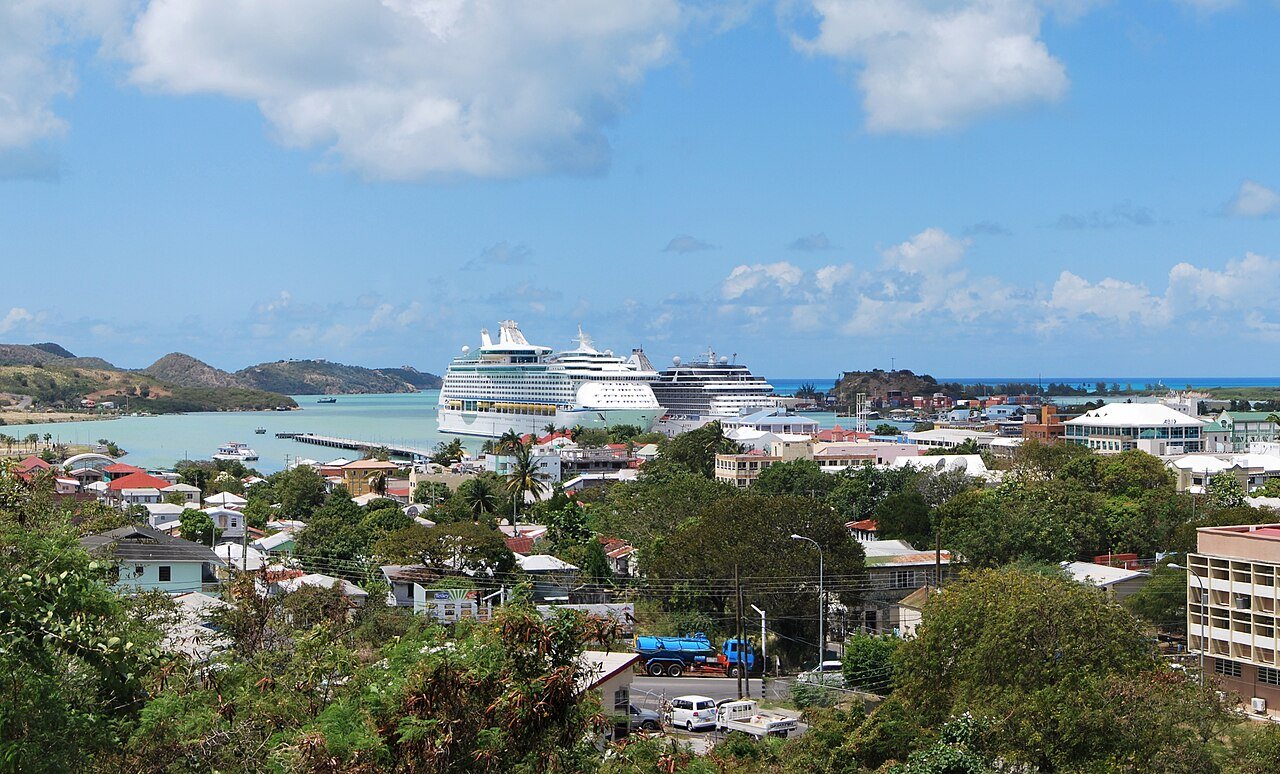
Antigua and Barbuda has no UNESCO World Heritage Sites. The most significant heritage site is Nelson’s Dockyard at English Harbour — an eighteenth-century British Royal Navy dockyard that is one of the best-preserved examples of its type in the world, on Antigua’s southern coast 20 km from the capital St John’s. Nelson’s Dockyard is on the UNESCO Tentative List. From Cultural Heritage Online.
Nelson’s Dockyard, English Harbour 20 km south of St John’s — 35 min by road
Nelson’s Dockyard at English Harbour is the only continuously operating Georgian naval dockyard in the world. Built between approximately 1743 and 1792, the dockyard served as the British Royal Navy’s principal base in the Eastern Caribbean for most of the eighteenth century — a critical strategic asset in the context of the near-constant warfare between Britain and France for control of the Eastern Caribbean sugar islands. Rear Admiral Horatio Nelson was based at English Harbour between 1784 and 1787 as a young captain, commanding the Leeward Islands Station; the dockyard was named in his honour after the Battle of Trafalgar (1805).
The dockyard complex includes the Boat House and Lumber Store (1778), the Officer’s Quarters (now the Admiral’s Inn hotel), the Sail Loft (now the Copper and Lumber Store hotel), capstans, columns of restored colonial-period buildings, and an extensive museum of Caribbean maritime history. The surrounding English Harbour area, including the well-preserved military fortifications of Shirley Heights (the artillery battery overlooking the harbour entrance, with panoramic views of the Grenadines), forms part of a larger heritage landscape that is regularly cited as one of the finest colonial maritime landscapes in the Caribbean. The site continues to function as a yacht charter and service harbour; the annual Antigua Sailing Week brings hundreds of racing yachts to English Harbour each April.
Fort James and St John’s Heritage
St John’s itself is protected to the northwest by Fort James (1739), a British colonial battery on a headland overlooking the entrance to St John’s Harbour, with cannon still in place. The St John’s Cathedral (Anglican, with its distinctive Baroque-style towers, completed 1847) is the most prominent building in the town. The Museum of Antigua and Barbuda, in the old colonial courthouse (1750), houses pre-Columbian artefacts from Arawak and Carib settlements on Antigua.
Getting there from St John’s: Nelson’s Dockyard is 20 km south of St John’s by road (approximately 35 minutes). Shirley Heights is a further 3 km uphill from the dockyard. Allow: Half day for Nelson’s Dockyard + Shirley Heights; full day if combining with a sail around Falmouth Harbour. Best for: Colonial naval heritage; Caribbean maritime history; panoramic views; sailing.
Frequently Asked Questions
Does Antigua and Barbuda have any UNESCO World Heritage Sites?
No. Antigua and Barbuda has no inscribed UNESCO World Heritage Sites. Nelson’s Dockyard at English Harbour has been on the national Tentative List for UNESCO consideration for several decades, and various nomination dossiers have been prepared, but the site has not been formally nominated to the World Heritage Committee. It remains one of the most frequently cited “deserving” sites not yet inscribed in the Caribbean.
Who was Horatio Nelson and what was his connection to Antigua?
Horatio Nelson (1758–1805), later Vice Admiral Viscount Nelson, served in Antigua as a young Royal Navy captain from 1784 to 1787, commanding the Leeward Islands Station from English Harbour. During his time in Antigua, Nelson — acting under the Navigation Acts — seized American merchant ships trading illegally with British Caribbean colonies after the American Revolution had ended British-American free trade. This action made him deeply unpopular with the local merchant community and resulted in legal proceedings against him that were eventually dropped. Nelson’s time in Antigua was described by him as miserable; he found the social isolation and the climate extremely unpleasant. He returned to wider fame at the battles of the Nile (1798), Copenhagen (1801), and Trafalgar (1805), where he was killed by a French sharpshooter. The dockyard was named in his honour after Trafalgar.
What is the significance of Shirley Heights?
Shirley Heights is a complex of fortifications and gun batteries built by the British on the ridgeline above English Harbour, designed to protect the naval dockyard from attack from the landward side and to give observers a commanding view of approaching ships from across the southern approaches. The main battery is named after Sir Thomas Shirley, the Governor of the Leeward Islands in the late eighteenth century, who oversaw a major expansion of the fortifications. Today, Shirley Heights is best known for its Sunday evening barbecue and steel band events, which draw tourists and locals alike to watch the sunset over the Grenadines — a panorama that, in clear conditions, extends south to Guadeloupe and north to Montserrat.
What is Antigua’s famous sailing heritage?
Antigua Sailing Week, held annually in late April/early May, is one of the world’s premier offshore regatta events, drawing approximately 100 racing yachts of all classes and approximately 1,500 sailors from 50+ countries to English Harbour and Falmouth Harbour. The event, which has been running since 1968, is considered one of the five most important offshore sailing regattas in the world (alongside events in Sydney, Newport, and the Caribbean circuit). The combination of English Harbour’s protected water, the consistent trade winds around the island, and the hospitality infrastructure developed around the dockyard make Antigua the centre of Eastern Caribbean charter and racing yacht culture.
Sources
- S1 — Dyde, Brian. A History of Antigua: The Unsuspected Isle. Macmillan Caribbean, 2000. ISBN 978-0-333-75169-5.
- S2 — Buisseret, David. The Fortifications of the Eastern Caribbean. Caribbean Books, 1996. ISBN 978-976-8051-14-1.
Spotted an error? Write to editorial@culturalheritageonline.com and we correct it the same day.