Two UNESCO World Heritage Sites lie within three hours of Sarajevo: the reconstructed Ottoman arch bridge of Mostar and the medieval stećci tombstone necropolises scattered across southern Bosnia. Both reward a dedicated day trip and together span nearly a thousand years of the region’s layered history. From Cultural Heritage Online.
Old Bridge Area of the Old City of Mostar 130 km southwest — 2 hr by road
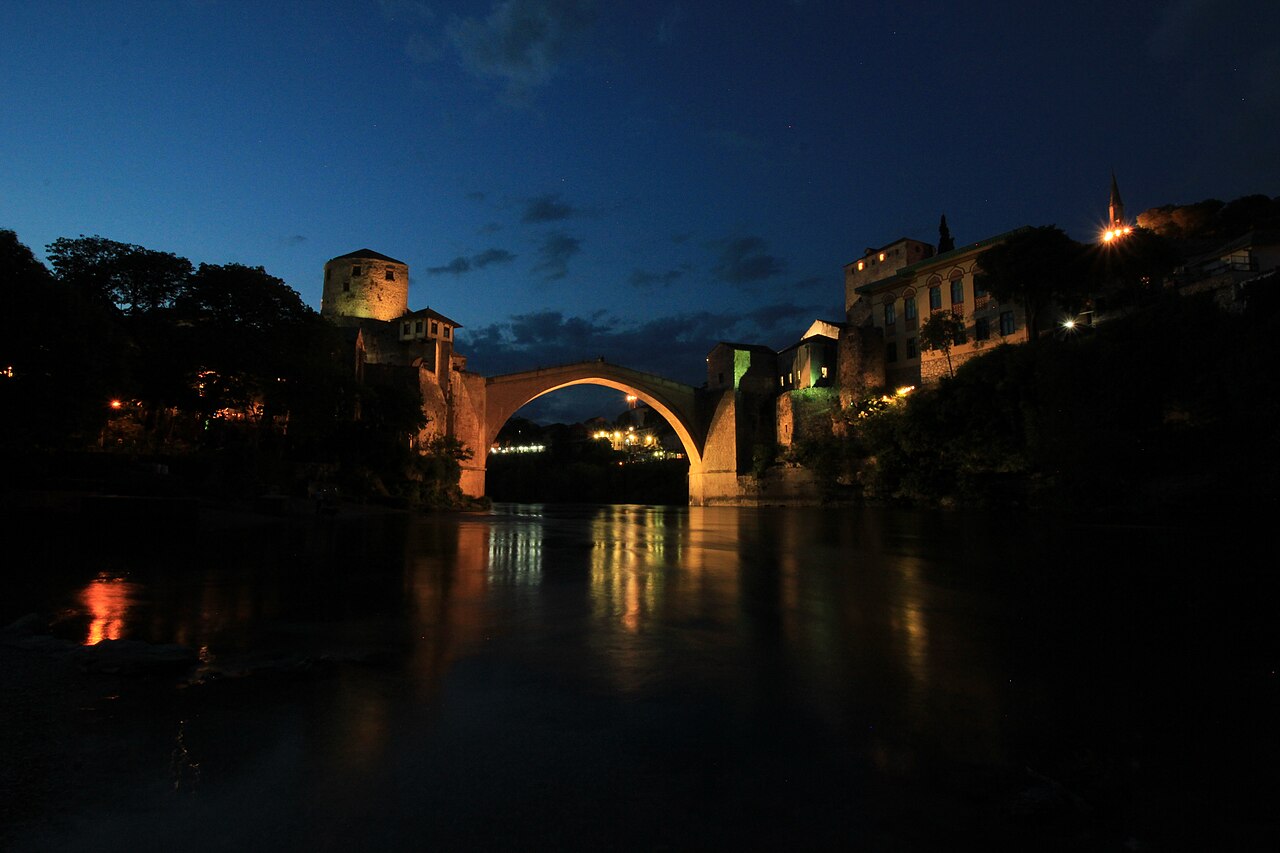
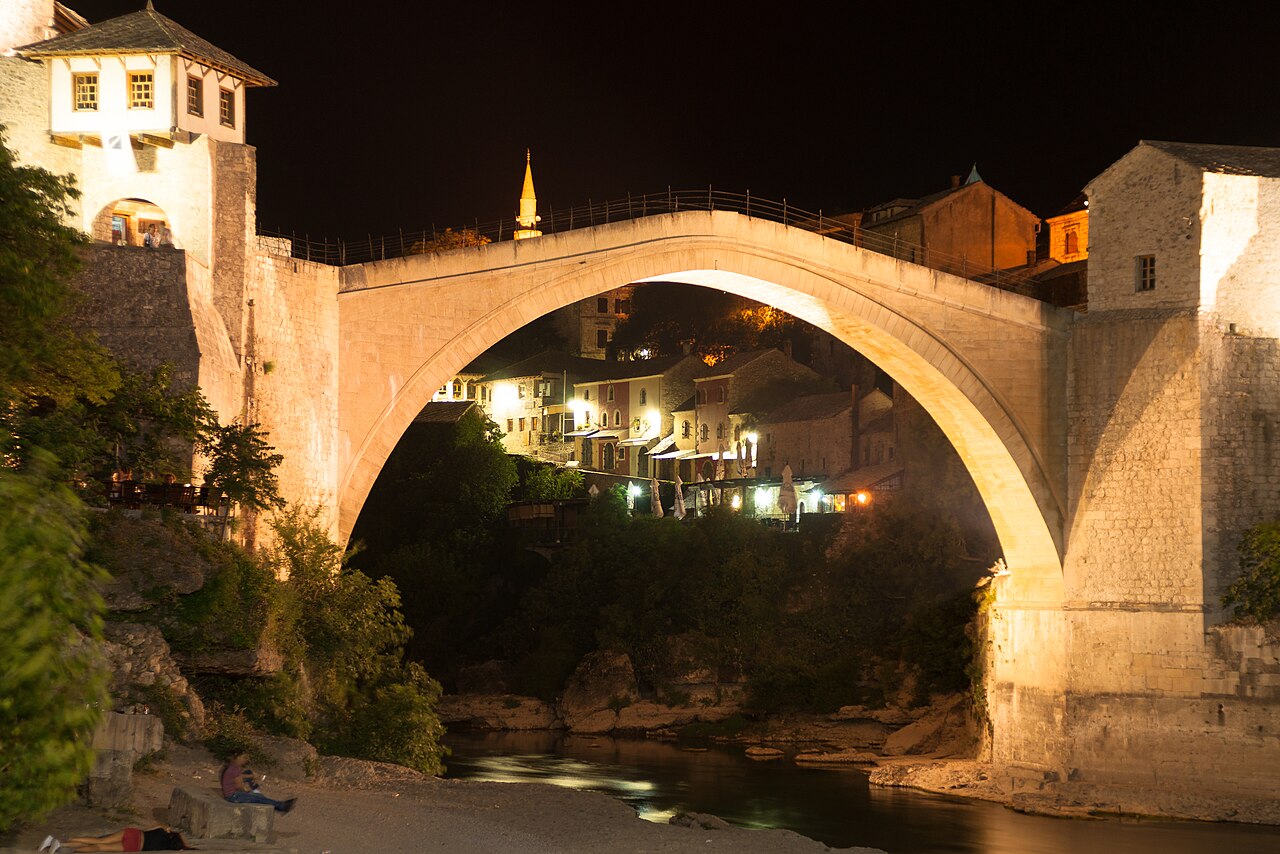
The single-span arch of Stari Most crosses the Neretva River at a height of 21 metres, its pale Tenelija limestone catching light in a way that shifts from cream to silver depending on the hour. The bridge was completed in 1566 under the Ottoman architect Mimar Hayruddin, a student of the great Sinan, and remained the widest man-made arch in the world at the time of its construction. At 29 metres across, it connected the Christian and Muslim quarters of the town and gave Mostar — whose name derives from the word for bridge keeper, mostar — its reason for existing.
On 9 November 1993, Croatian artillery deliberately destroyed the bridge during the Bosnian War. The collapse, watched by international observers, became a defining image of cultural destruction in wartime Europe. Reconstruction began in 2000 using stone quarried from the original source, traditional Ottoman tools, and techniques documented by specialists who had studied 16th-century bridge construction. The rebuilt bridge reopened on 23 July 2004 and was inscribed by UNESCO the following year — not only as a feat of historic engineering, but as a living symbol of post-conflict reconciliation.
The surrounding old town justifies equal time. Ottoman hans (inns), copper workshops, and the 16th-century Koski Mehmed Pasha Mosque crowd the Neretva gorge on both banks. The Tara and Helebija towers, former bridge guardhouses, anchor each end of the span. In summer, local divers leap from the bridge’s crown — a tradition of competitive diving that predates the war by decades and continues today.
Getting there: Regular bus services depart Sarajevo’s East Bus Station (Istočno Sarajevo) for Mostar throughout the day; journey time approximately 2 hours. Driving via the M17 motorway along the Neretva gorge is one of the finest road routes in the Balkans. Allow: A full day; plan 3–4 hours in the old town minimum. Best for: History travellers, architecture enthusiasts, and anyone interested in post-conflict heritage and reconstruction.
Stećci Medieval Tombstones Graveyards Radimlj/Boljuni near Stolac — 2.5 hr south; Olovo — 1 hr northeast
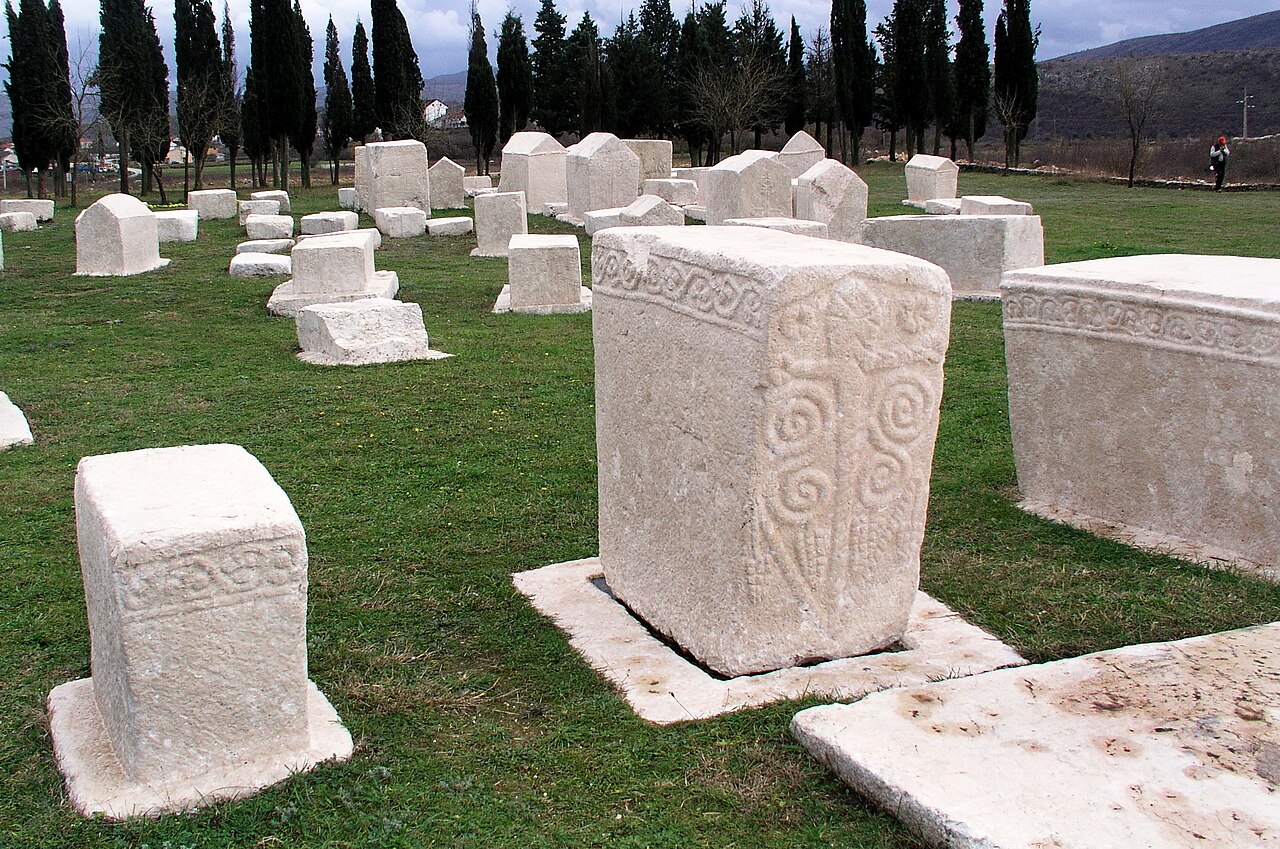
Across the hills and valleys of the western Balkans, approximately 70,000 monolithic tombstones known as stećci stand in necropolises that range from a handful of stones to several hundred. Carved from limestone and marble between the 12th and 16th centuries, they are unlike any funerary tradition in medieval Europe: their surfaces carry intricate relief carving — spirals, vine scrolls, solar discs, hunting parties, sword-bearing knights, and chain dances known as kolo — but almost no Christian iconography of the conventional kind.
The identity of those who built and were buried beneath stećci remains genuinely contested among historians. They are associated most closely with the medieval Bosnian Church, a distinct Christian tradition that operated independently of both Rome and Constantinople, and with the noble families — the Bosnian vlastela — whose power reached its peak in the 14th and 15th centuries. When the Ottoman expansion absorbed Bosnia in 1463 and Herzegovina in 1482, the tradition ended abruptly, leaving the tombstones as the most substantial physical legacy of a medieval state that otherwise left few standing monuments.
The closest sites to Sarajevo are the Radimlja and Boljuni necropolises near Stolac in southern Herzegovina — two to three hours by road and often combined with a visit to Mostar. Radimlja is among the largest stećci sites in Bosnia, with more than 133 tombstones; its carved human figures are unusually expressive by the standards of the tradition. The site at Olovo, northeast of Sarajevo by an hour, is smaller but more accessible for a half-day excursion. UNESCO inscribed 28 necropolises across Bosnia-Herzegovina, Croatia, Montenegro, and Serbia as a transboundary site in 2016.
Getting there: Radimlj and Boljuni near Stolac are best reached by car via the M6 highway south; public transport connections to Stolac are limited. Olovo is served by local buses from Sarajevo. Allow: 1–2 hours at the necropolis; combine Radimlj with a Mostar visit for a full-day southern Herzegovina loop. Best for: Medieval history specialists, travellers curious about pre-Ottoman Bosnian culture, and those who prefer sites without heavy tourist infrastructure.
Frequently Asked Questions
How many UNESCO World Heritage Sites are near Sarajevo?
Bosnia and Herzegovina has three UNESCO World Heritage Sites in total. Two are accessible as day trips from Sarajevo: the Old Bridge Area of Mostar (inscribed 2005), roughly 130 km to the southwest, and several sites within the transboundary Stećci Medieval Tombstones Graveyards inscription (2016), the nearest of which — Radimlj and Boljuni near Stolac — lie about 2.5 hours south. The third Bosnian UNESCO site, the Old Town of Jajce, is approximately 150 km northwest of Sarajevo.
Can I visit both Mostar and a stećci site in the same day?
Yes, with a car. The standard route heads south from Sarajevo to Mostar (2 hours), continues along the Neretva valley to Stolac (a further 45 minutes), visits Radimlj and Boljuni necropolises, and returns to Sarajevo via the same road. The round trip covers roughly 300 km and fits comfortably into a long summer day. The Olovo stećci site, northeast of Sarajevo, is a separate and shorter excursion — around 1 hour each way — and pairs less naturally with Mostar.
What is the best time of year to visit Mostar and the stećci sites?
May, June, and September offer the best conditions for both. Mostar’s old town becomes congested in July and August, and temperatures in the Neretva valley regularly exceed 38°C. The stećci necropolises are open-air sites with no shade, making summer heat a genuine consideration. Spring visits coincide with wildflowers across the Herzegovina karst; autumn light is exceptional for photography of the bridge.
Who built the stećci tombstones, and why did the tradition end?
Stećci are most closely associated with the medieval Bosnian Church, a Christian tradition that operated outside both Roman Catholic and Eastern Orthodox authority, and with the Bosnian nobility who funded elaborate carved tombstones for themselves and their families between roughly 1200 and 1500. The tradition ceased following the Ottoman conquest of Bosnia (1463) and Herzegovina (1482). Some communities converted to Islam; others were absorbed into Catholic or Orthodox practice. The stećci were left in place, though many were later repurposed as building material or boundary markers. The carvings that survive — knights, dancers, celestial symbols — remain the primary window into a culture that left almost no written record.