
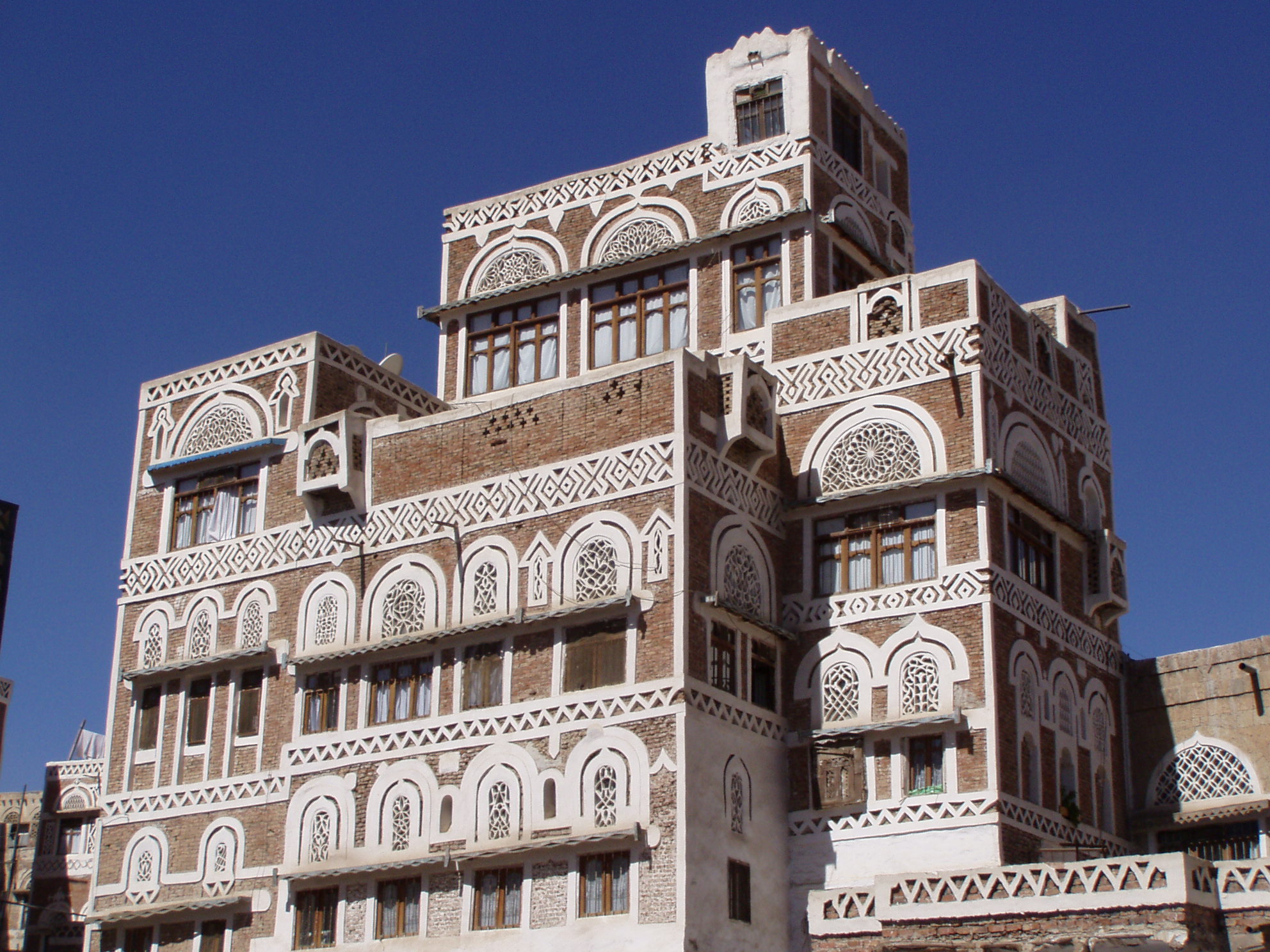
Yemen holds four UNESCO World Heritage Sites, all of them on the List of World Heritage in Danger since 2015 following the outbreak of civil war. Three can be reached from Sana’a: the inscribed Old City within the capital itself, the extraordinary vertical city of Shibam 470 km to the east, and the medieval scholarly centre of Zabid to the southwest. From Cultural Heritage Online.
Important notice: Yemen has been in a state of civil war since 2015. All UNESCO-listed sites in the country are on the Danger List and have sustained significant damage from conflict. Travel to Yemen is not recommended by most governments. The information below describes these sites as they existed before and during the conflict; conditions on the ground change frequently. Always consult your government’s travel advisory before planning any visit.
Old City of Sana’a Within the city — no travel required
The Old City of Sana’a is one of the oldest continuously inhabited urban settlements on earth, with occupation documented for more than 2,500 years. UNESCO inscribed it in 1986 as an outstanding example of a traditional Arab-Islamic urban landscape; it was added to the Danger List in 2015. The inscribed area contains more than 100 mosques, 12 hamams (bathhouses), and approximately 6,500 multi-storey tower houses — a density of traditional architecture found nowhere else in the world in comparable concentration.
The defining building type is the Yemeni tower house: four to eight storeys of rammed earth and stone, crowned by a qamariyya — a semicircular stained-glass window that filters afternoon light into the diwan reception room below. At the very top sits the mafraj, a windowed room traditionally used for social gatherings and the afternoon qat-chewing sessions that structure Yemeni social life. The exteriors are decorated with fired-brick friezes and intricate stucco geometric patterns, giving the skyline a texture unlike anything in the wider Islamic world. The Great Mosque of Sana’a, built during the Prophet Muhammad’s lifetime in the 7th century and partly rebuilt in the 7th–9th centuries, is among the earliest mosques in Islam still standing. Bab al-Yemen, the 16th-century Ottoman Gate of Yemen, remains the principal entrance to the old city and one of the most recognisable monuments in the Arabian Peninsula.
Since 2015 the Old City has suffered documented damage from airstrikes, including the collapse of historic tower houses in the northern neighbourhoods. The Suq al-Milh (Salt Market) and the medieval samsaras (caravanserais) continue to function in part, but the full extent of structural losses is not yet comprehensively assessed. UNESCO and several partner organisations have conducted emergency documentation and stabilisation work where access has allowed.
Getting there: The Old City is within Sana’a; the main gate, Bab al-Yemen, is the standard entry point on foot from the modern city. Allow: Half a day minimum for the market district; a full day to reach the principal mosques and hamams. Best for: Travellers with a specific interest in Islamic urban history and vernacular architecture who have obtained appropriate security clearance and guidance.
Old Walled City of Shibam 470 km east — 1 hr domestic flight to Seiyun, then road
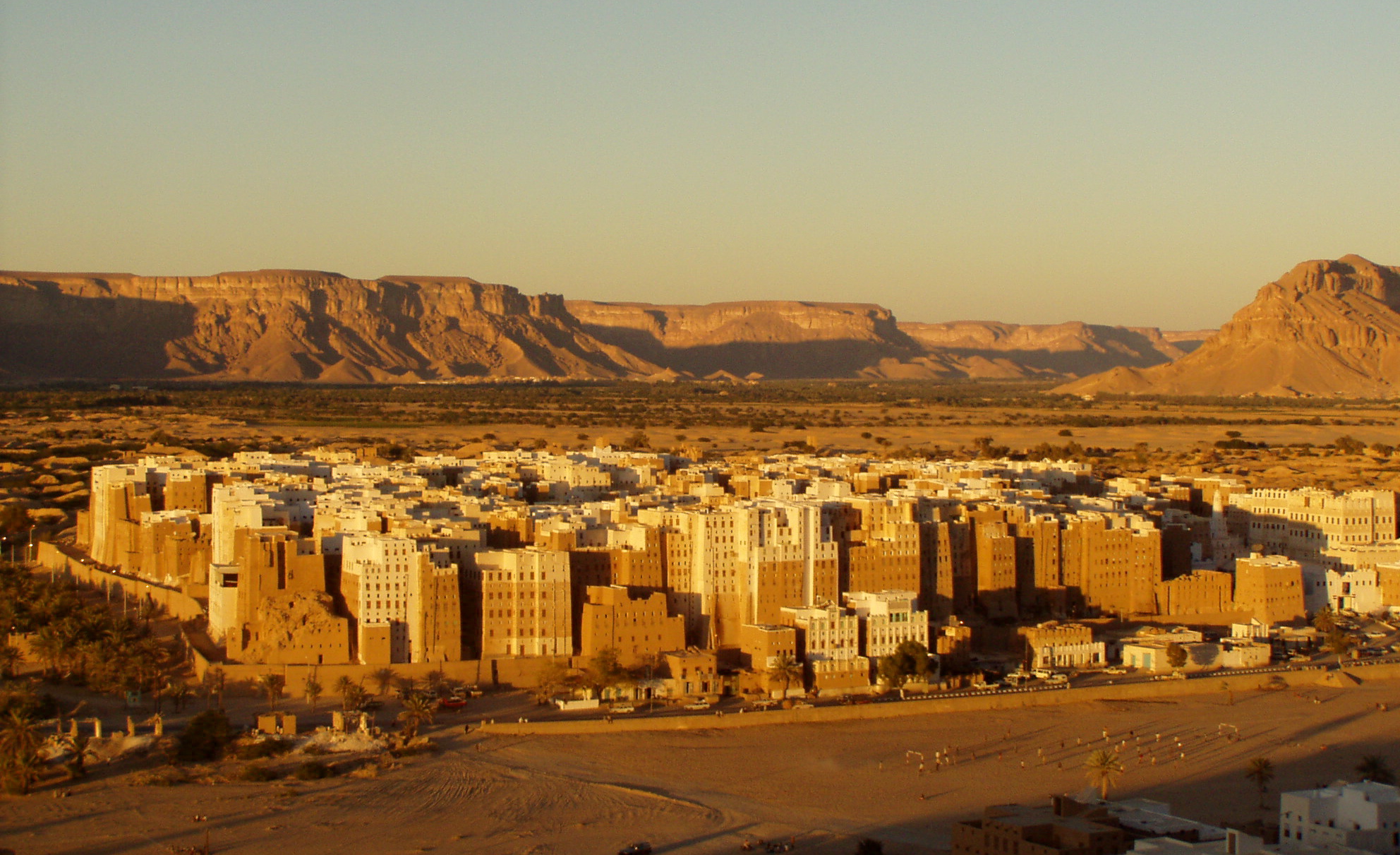
Shibam was inscribed in 1982 — four years before Sana’a — and occupies a singular position in architectural history: it is the world’s oldest surviving example of urban planning based on high-rise construction. Set in the flat floor of the Hadhramaut Valley, the city’s approximately 500 mud-brick tower houses rise between five and eleven storeys, the tallest reaching 30 metres. The entire settlement is contained within a rectangular fortification wall, and from the surrounding desert the silhouette is genuinely startling — a concentrated vertical skyline that led 20th-century visitors to christen it the ‘Manhattan of the Desert’, a comparison that obscures more than it reveals but captures the visual shock.
The towers were not built for aesthetics. Shibam’s merchant class accumulated wealth from the frankincense trade and from its position on caravan routes crossing southern Arabia; the height of the towers was a direct defensive response to the threat of Bedouin raids. Building upward concentrated the population within the walled perimeter and kept the most valuable rooms — and the most vulnerable inhabitants — out of reach of attackers who could breach the outer wall but not easily climb under fire. The logic produced one of the most remarkable built environments anywhere on earth. Construction dates primarily to the 16th century, though the settlement itself is considerably older; the current walled form is largely a product of the town’s commercial peak.
Shibam has been on the Danger List since 2015. Mud-brick construction is intrinsically fragile and requires constant maintenance, a cycle disrupted by conflict and the displacement of the resident population. Deterioration has accelerated since the outbreak of war; the towers are under stress from neglect as well as from direct damage.
Getting there: Domestic flight from Sana’a to Seiyun airport (approximately 1 hour), followed by a road transfer to Shibam (approximately 20 minutes). Pre-war, road journeys from Sana’a took 12–14 hours. Allow: Half a day in the walled city; plan for an overnight in Seiyun if combining with other Hadhramaut sites. Best for: Architecture specialists, historians of the Islamic world, and travellers with strong logistical support on the ground.
Historic Town of Zabid 260 km southwest — 4 hr by road or 45 min domestic flight via Hodeidah
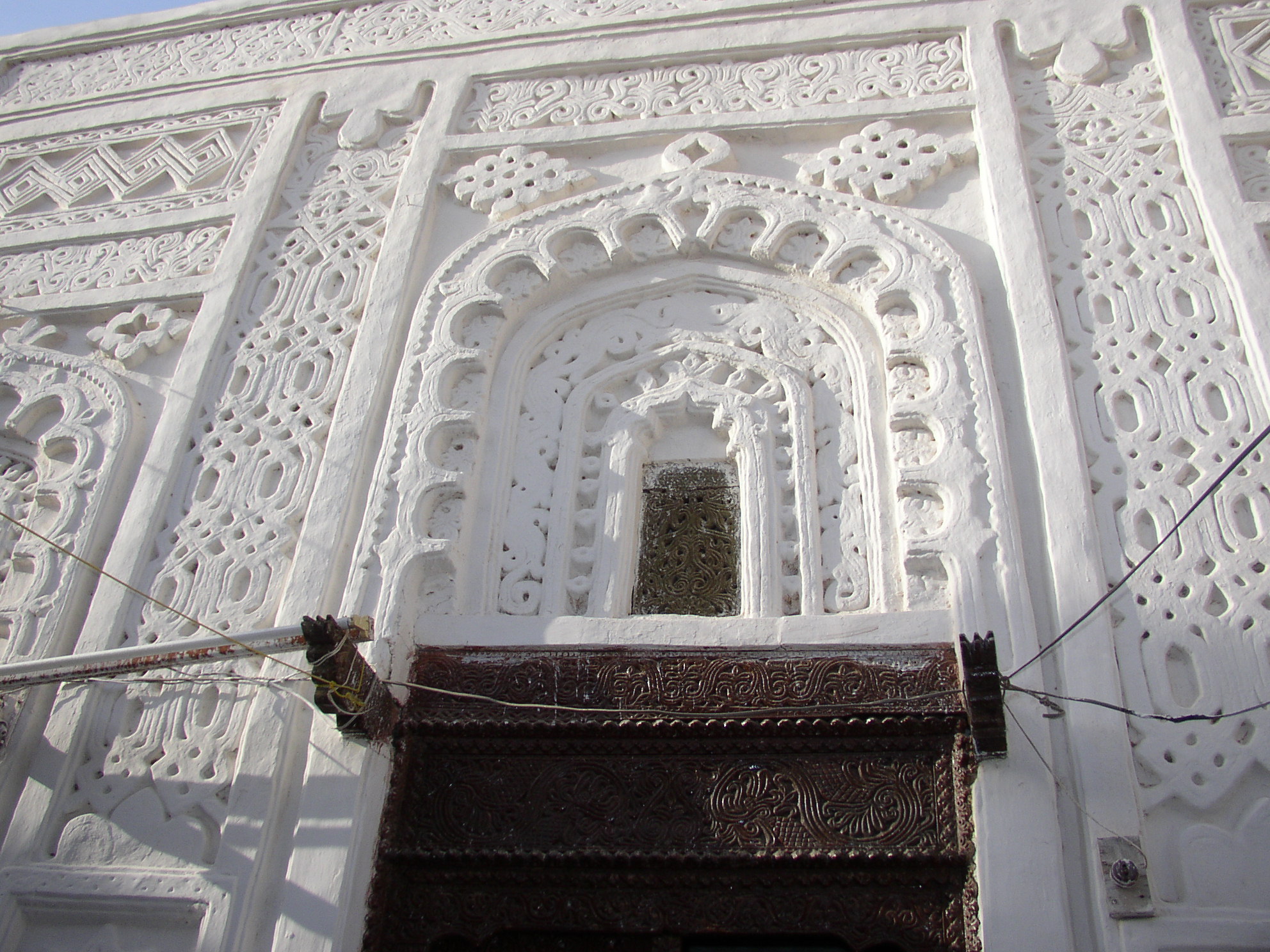
Zabid was inscribed in 1993 and entered the Danger List in 2000 — fifteen years before the civil war made its situation critical — primarily because of the replacement of traditional brick buildings with concrete construction. Situated on the Tihama coastal plain southwest of Sana’a, it was for several centuries one of the most important cities in the Islamic world. Between the 13th and 15th centuries the University of Zabid drew scholars from across the Muslim world, contributing significantly to the transmission of mathematics, astronomy, and Islamic jurisprudence. The city is also credited with introducing coffee cultivation to the wider world through its position on trade routes connecting the Yemeni highlands with the Red Sea port of Hodeidah.
Zabid’s built fabric is distinguished by a red-brick tradition found nowhere else in Yemen. The older residential architecture uses fired brick in decorative configurations that differ markedly from the stone-and-rammed-earth vocabulary of Sana’a and the mud-brick towers of Shibam, giving the Tihama coastal tradition its own distinct visual character. The historic mosque network — Zabid contains dozens of mosques within a compact urban core — reflects the city’s role as a centre of religious education over many centuries.
The Hodeidah governorate, through which the main road to Zabid passes, saw some of the most intense fighting of the Yemeni civil war between 2018 and 2019. The town itself has sustained damage; access and security conditions vary.
Getting there: Road via Hodeidah (approximately 4 hours pre-war) or domestic flight to Hodeidah followed by road transfer. Allow: Half a day in the historic town. Best for: Islamic history specialists and those with a specific interest in medieval centres of learning.
Frequently Asked Questions
How many UNESCO World Heritage Sites are near Sana’a?
Yemen has four UNESCO World Heritage Sites in total, all of them on the List of World Heritage in Danger since 2015. Three are reachable from Sana’a: the Old City of Sana’a (inscribed 1986, within the city itself), the Old Walled City of Shibam (inscribed 1982, 470 km east via domestic flight to Seiyun), and the Historic Town of Zabid (inscribed 1993, 260 km southwest via Hodeidah). The fourth site, the Socotra Archipelago (inscribed 2008), is a remote island group in the Arabian Sea and is not typically combined with a Sana’a itinerary.
Is it currently possible to visit UNESCO sites in Yemen?
Most governments advise against all travel to Yemen due to the ongoing armed conflict. Sana’a and the Hadhramaut region (where Shibam is located) have experienced different phases and intensities of fighting, and conditions change. Journalists, researchers, and aid workers do enter Yemen through specific channels with security arrangements; independent tourism is effectively not possible. Anyone considering a visit for professional or research purposes should consult their government’s current travel advisory, engage experienced local fixers, and check with organisations such as ASOR Cultural Heritage Initiatives for updated site-condition assessments.
What is the best historical period to understand when visiting these sites?
The three sites represent distinct chapters of Yemeni and Islamic history. Sana’a’s Old City reflects the full arc of Arab-Islamic urbanism from the 7th century onward, with the Great Mosque as the anchor of that history. Shibam is primarily a 16th-century city at its current form, shaped by the frankincense and spice trade of that era. Zabid is most legible through the lens of the medieval Islamic scholarly tradition, particularly the 11th–15th centuries when its university held influence across the Muslim world. A visit connecting all three requires moving across very different geographies — highland plateau, desert valley, and coastal plain — as well as across roughly a thousand years of history.
What makes Yemeni tower house architecture unique?
The Yemeni tower house has no close equivalent elsewhere in the Islamic world. Its distinguishing features — the multi-storey rammed-earth and stone construction, the fired-brick decorative friezes, the stucco geometric ornament, the qamariyya stained-glass lunette window, and the mafraj roof room — evolved in the specific conditions of the Yemeni highlands: a mountainous terrain that rewarded vertical construction, a merchant culture that valued both security and display, and a craft tradition capable of extraordinary ornamental precision. Shibam’s mud-brick towers in the Hadhramaut lowlands represent a parallel but distinct tradition shaped by different materials and a different threat environment. Together they demonstrate a range of high-rise vernacular building unmatched in pre-modern architecture.

.jpg)
_(2286391487).jpg)
