The Democratic Republic of Congo holds five UNESCO World Heritage Sites, all inscribed on the List of World Heritage in Danger — a measure of both the country’s extraordinary biodiversity and the armed conflict that has threatened it for decades. Three of those sites lie in the country’s northeast, accessible from Kinshasa by domestic flight. From Cultural Heritage Online.
Garamba National Park ~1,400 km northeast — 3 hr domestic flight to Isiro, then road
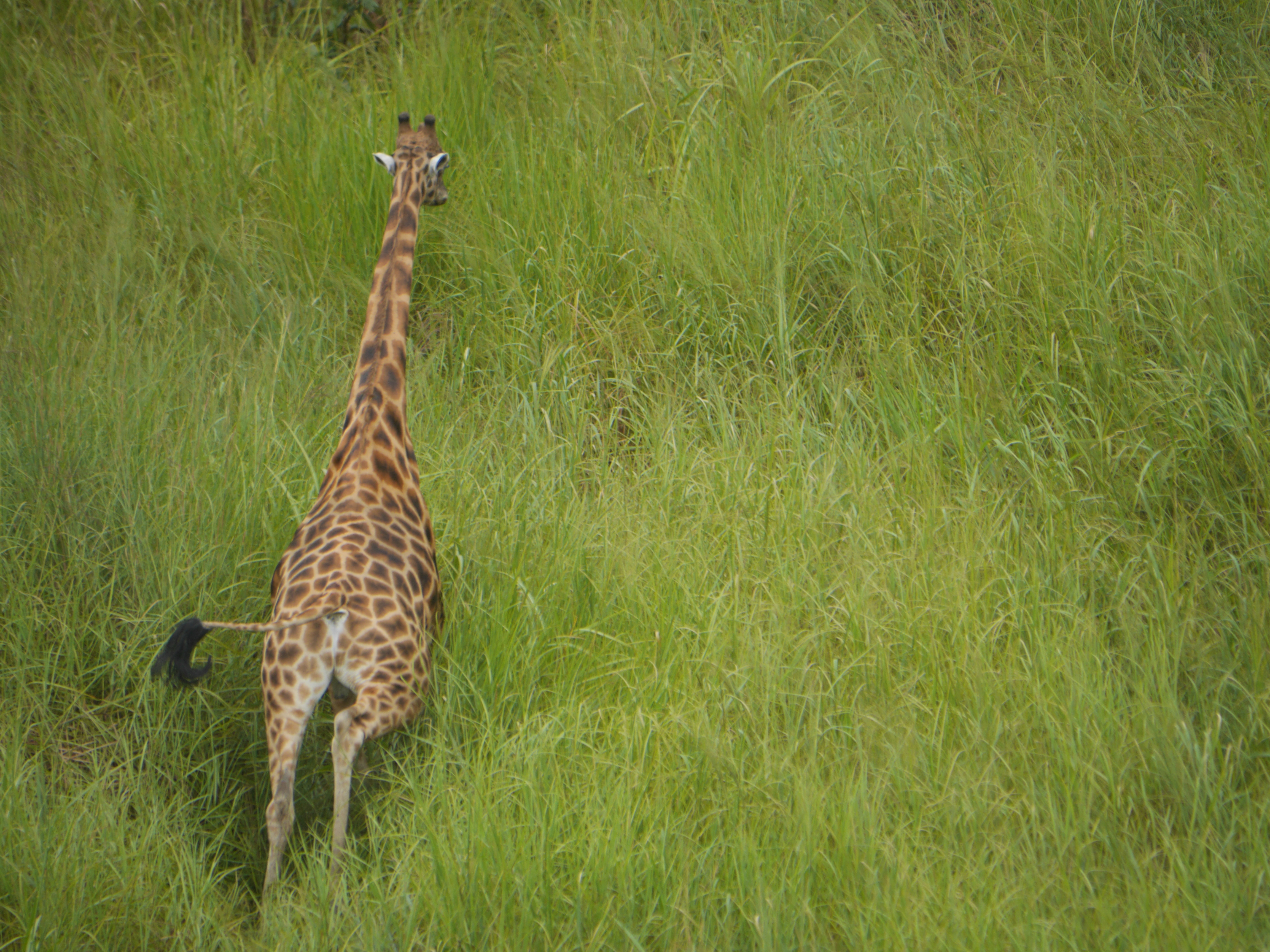
Garamba is one of Africa’s oldest protected areas, established as a national park in 1938 by Belgian colonial authorities and inscribed as a UNESCO World Heritage Site in 1980. The park covers 4,920 square kilometres of open savannas, gallery forests, and grasslands in Orientale Province — a landscape distinct from the equatorial rainforest that covers most of the country.
The park’s inscription centred on the northern white rhinoceros (Ceratotherium simum cottoni), a subspecies that once numbered in the thousands across central Africa. Chronic poaching and instability reduced Garamba’s population to a handful of individuals; the last confirmed sighting in the park was in 2006. The subspecies is now functionally extinct in the wild, with the final living individuals held in captivity at Ol Pejeta Conservancy in Kenya. What remains in Garamba includes the last significant wild population of the Congo giraffe, forest elephants, hippopotamuses, and chimpanzees — species that conservationists and park rangers continue to defend under difficult conditions.
Garamba was placed on the Danger List in 1984, making it one of the earliest sites to receive that designation. Decades of armed conflict involving multiple non-state groups have made the park a front line for wildlife rangers, several dozen of whom have been killed in the line of duty since the 1990s. The park remains managed by African Parks, an NGO that took over operations in 2005, and conservation work continues despite the security challenges.
Getting there: Domestic flight from Kinshasa (N’Djili Airport) to Isiro, approximately 3 hours, then road transfer to the park. No scheduled commercial service operates to Isiro; charter flights through humanitarian or NGO operators are the practical option. Allow: A minimum of five days including travel. Best for: Conservation professionals, journalists, and researchers with verified institutional affiliation and security clearance — independent tourism is not currently viable.
Okapi Wildlife Reserve ~1,500 km northeast — domestic flight to Bunia, then road into Ituri Forest
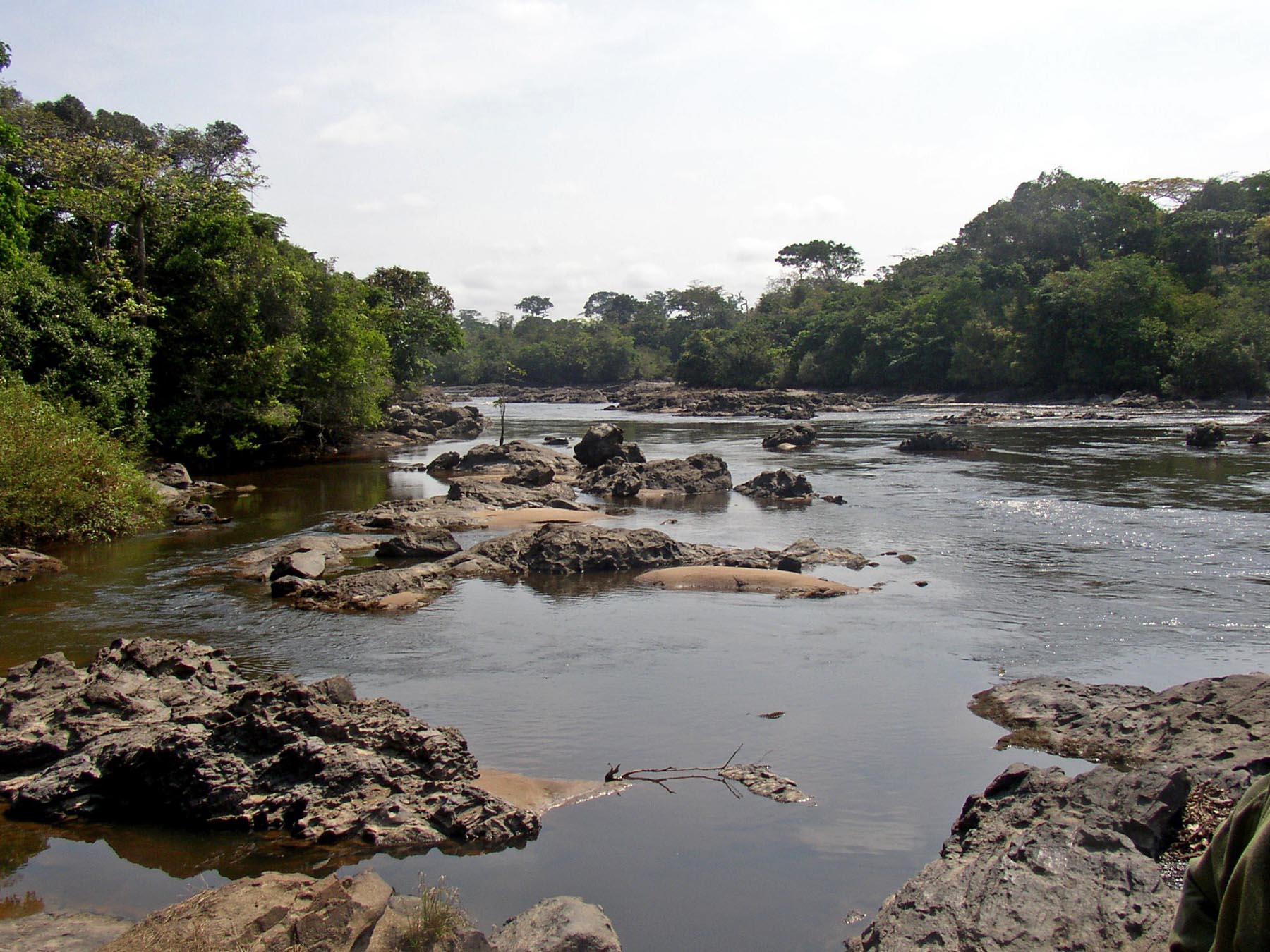
The Okapi Wildlife Reserve protects 13,726 square kilometres of the Ituri Forest, a vast lowland rainforest in northeastern DRC that ranks among the most biodiverse environments on the continent. The reserve was inscribed in 1996 and placed on the Danger List the following year. Its central town, Epulu, serves as the base for the Okapi Conservation Project, which has operated continuously since 1987.
The okapi (Okapia johnstoni) is the site’s defining species: a large, forest-adapted relative of the giraffe with a dark chestnut coat and zebra-striped hindquarters. Unknown to Western science until 1901, it remains one of the least-studied large mammals in Africa. The Ituri Forest holds the world’s only significant wild okapi population. The reserve is equally important for primates — chimpanzees, bonobos, and thirteen other primate species are present — and for the Mbuti people, who have lived in the Ituri as hunter-gatherers for millennia and whose land rights and cultural practices are formally recognized within the reserve’s management framework.
Armed groups attacked the Epulu station in 2012, killing rangers and destroying the okapi captive facility. The station has since been rebuilt and operations resumed, though access remains constrained by ongoing instability in parts of Ituri Province. The Wildlife Conservation Society and the Institut Congolais pour la Conservation de la Nature (ICCN) manage the reserve jointly.
Getting there: Domestic flight from Kinshasa to Bunia (approximately 2.5 hours), then road south through Mambasa to Epulu — a journey of roughly 4 to 6 hours on unpaved roads depending on season and road conditions. Allow: At least five days. Best for: Researchers, conservation journalists, and NGO staff. Check current security advisories from your country’s foreign ministry before any travel to Ituri Province.
Virunga National Park ~2,000 km northeast — 2 hr domestic flight to Goma
Virunga is Africa’s oldest national park, gazetted in 1925 under Belgian administration as Parc National Albert. It was inscribed as one of the DRC’s first UNESCO World Heritage Sites in 1979, covering approximately 7,800 square kilometres along the country’s eastern border with Uganda and Rwanda. The park spans an exceptional range of habitats — from lowland swamps along the Semliki River and savanna flats to the high-altitude slopes of the Rwenzori Mountains and the active craters of the Virunga Massif, which includes Nyiragongo, one of the world’s most active volcanoes.
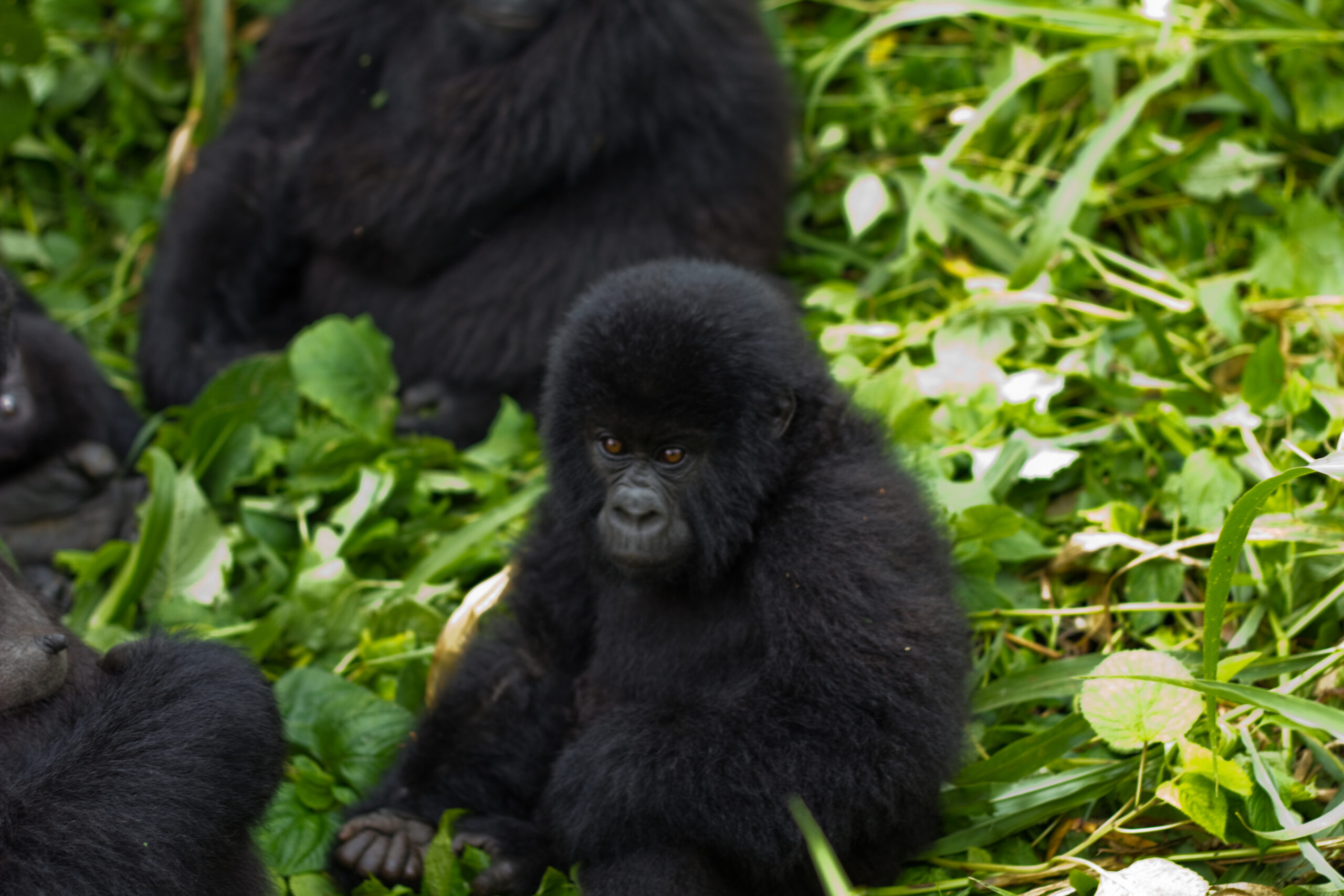
The park holds roughly one-third of the global population of mountain gorillas (Gorilla beringei beringei), which was estimated at approximately 1,000 individuals across the Virunga range as of the most recent surveys. Habituated gorilla families have been the foundation of community tourism in the area for decades, though operations have been repeatedly suspended due to armed conflict. The park also supports chimpanzees, forest elephants, a large hippopotamus population on Lake Edward, and the only tree-climbing lions recorded in Africa.
Virunga was placed on the Danger List in 1994. The M23 insurgency and other armed groups have fought across the park, and over 200 rangers have been killed since 1996 — the highest death toll for park rangers anywhere in the world. The park’s managing authority, the Institut Congolais pour la Conservation de la Nature, suspended all tourism in 2018 following a ranger ambush and kidnapping incident; access has varied since then depending on the security situation near Goma. The humanitarian and conservation communities present in Goma make it the most logistically accessible of the three northeastern parks.
Getting there: Fly Kinshasa (N’Djili) to Goma on CAA or Fly Congo, approximately 2 hours. Goma is a functioning city with hotels and services. Park access from Goma depends entirely on current conditions — verify with ICCN and the Virunga National Park office before travel. Allow: A minimum of four days from Goma if access is open. Best for: Experienced travellers with high risk tolerance and flexibility; journalists and researchers with NGO coordination support.
Frequently Asked Questions
How many UNESCO World Heritage Sites are near Kinshasa?
The Democratic Republic of Congo has five UNESCO World Heritage Sites in total, all on the List of World Heritage in Danger. Three — Garamba National Park, the Okapi Wildlife Reserve, and Virunga National Park — lie in the country’s northeast and are accessible from Kinshasa by domestic flight, though distances range from 1,400 to 2,000 kilometres and security conditions require careful planning.
Is it currently safe to visit Virunga, Garamba, or the Okapi Reserve?
All three parks are in areas affected by armed conflict, and standard tourist access as understood in other UNESCO destinations does not apply. Virunga is the most accessible because Goma is a functioning urban centre with regular flights, but park entry depends on current conditions. Garamba and the Okapi Reserve require coordination with managing NGOs (African Parks and WCS respectively) and current security assessments. Check your government’s official travel advisory before planning any travel to eastern or northeastern DRC.
When is the best time of year to travel to northeastern DRC?
The northeast has two dry seasons: June to August and December to January. The longer June–August dry season generally offers the best road conditions and the easiest access to forest parks, which become very difficult to traverse during the October–November and March–May wet periods. Flights operate year-round to Goma and, less regularly, to Bunia and Isiro, but road conditions post-rainfall significantly affect ground transfers.
What is the significance of the northern white rhinoceros in Garamba’s UNESCO inscription?
Garamba was inscribed partly because it held the world’s last viable wild population of the northern white rhinoceros (Ceratotherium simum cottoni). That population was eliminated by poaching and conflict — the last individual was seen in the park in 2006. Today the subspecies survives only in captivity at Ol Pejeta Conservancy in Kenya, where two females remain under 24-hour armed guard. Garamba’s inscription thus documents both a conservation achievement and one of the most prominent extinction events of the late twentieth century.