
Panama has two UNESCO World Heritage Sites accessible from its capital: the Spanish colonial fortifications at Portobelo and Fort San Lorenzo on the Caribbean coast, and the vast marine wilderness of Coiba National Park in the Pacific. Both reward the effort of reaching them. From Cultural Heritage Online.
Fortifications on the Caribbean Side of Panama: Portobelo-San Lorenzo 100 km north — 2 hr by road
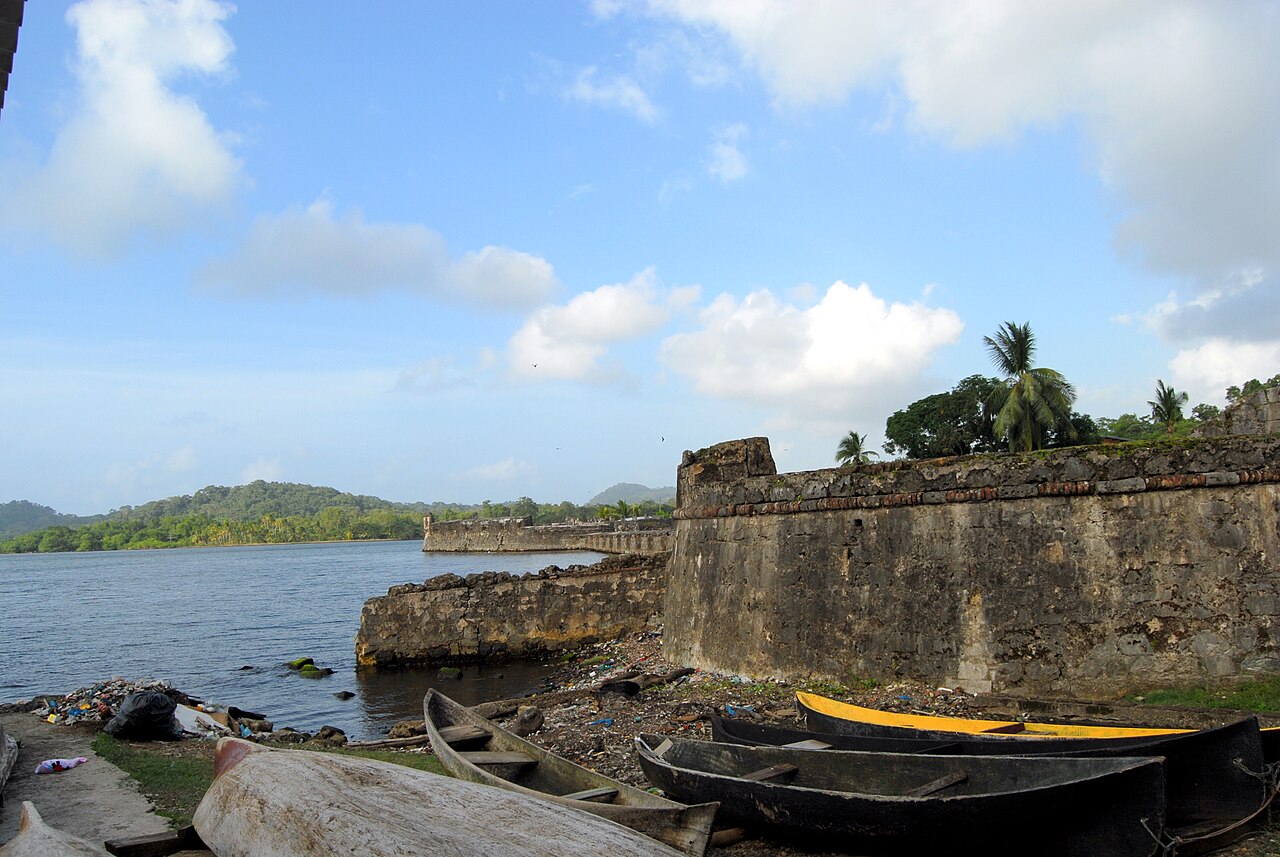
Portobelo sits at the end of a deep natural bay on Panama’s Caribbean coast, ringed by low jungle-covered hills and the stone walls of three Spanish colonial forts. The bay is nearly landlocked — an ideal anchorage that the Spanish recognized immediately when Rodrigo de Bastidas first charted it in 1501. When the town was formally established in 1597, it became the Caribbean terminus of the Camino Real, the overland mule track across the isthmus along which silver mined in Peru was carried to waiting treasure fleets. At its peak, Portobelo’s annual fairs drew merchants from across the Spanish empire, making it one of the wealthiest ports in the Americas.
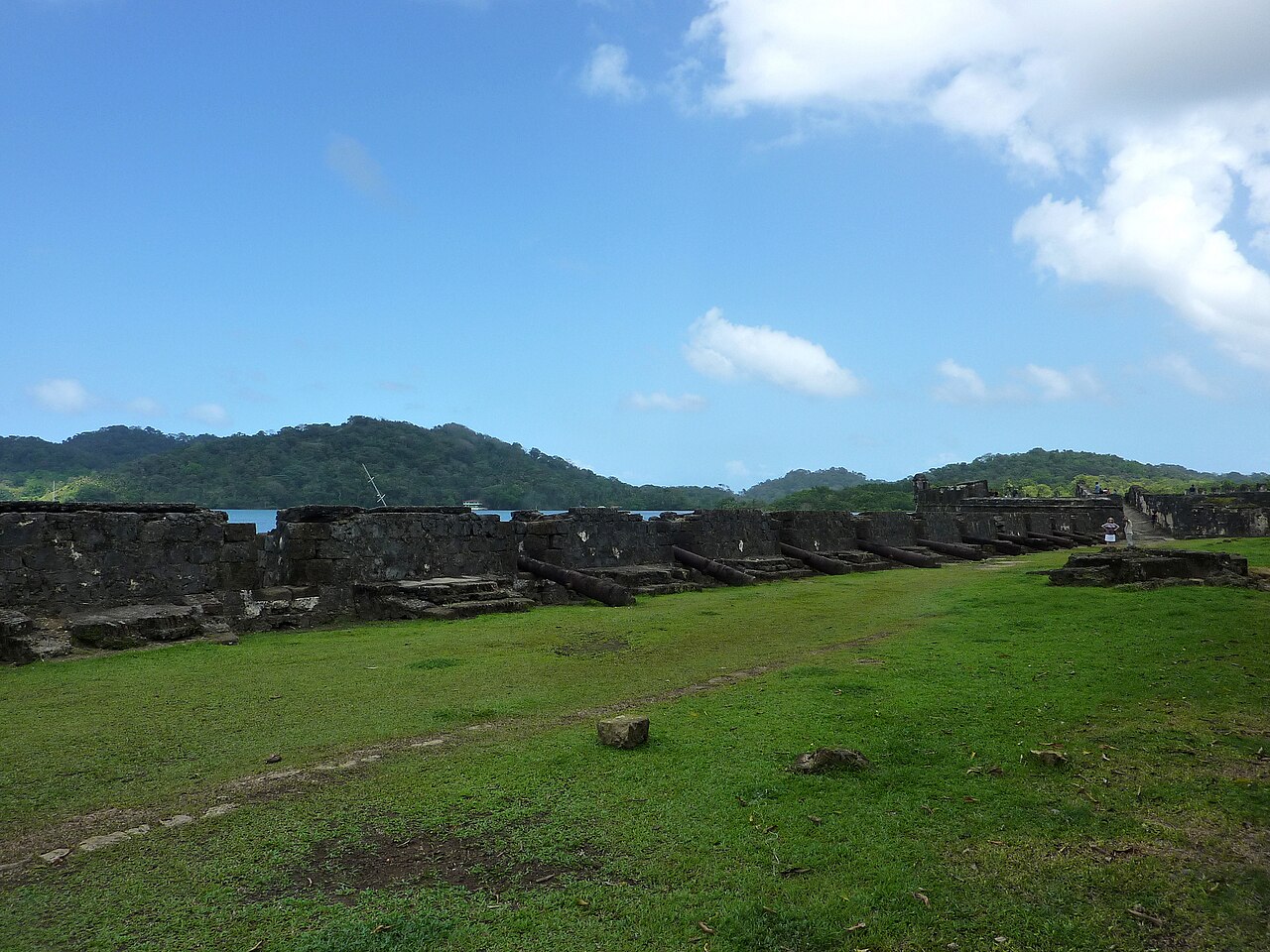
That wealth made it a target. Francis Drake anchored off Portobelo in 1596, already ill, and died in the bay before he could attack. Henry Morgan sacked the town in 1668, marching his buccaneers overland from the Pacific side in one of the most audacious raids of the Caribbean wars. British Admiral Edward Vernon captured the fort in 1739 with only six ships — a victory so decisive it was commemorated in the name of London’s Portobello Road. The surviving fortifications respond to each of these episodes: Fort San Jerónimo (rebuilt in its current form in 1753) commands the inner bay, Fort San Fernando guards the bay entrance from across the water, and Fort Santiago de la Gloria anchors the western shore. Together they form one of the most complete ensembles of Spanish military baroque architecture in the Americas, inscribed by UNESCO in 1980.
The town itself is small, its 17th-century grid still legible beneath the modern settlement. The church of San Felipe houses the statue of the Black Christ, a darkened cedar figure venerated throughout Panama. Every October 21st, pilgrims travel from across the country for the Festival del Cristo Negro, many completing the final kilometres on their knees. The inscription also covers Fort San Lorenzo, 60 kilometres east at the mouth of the Chagres River — the site of Morgan’s 1670 assault on Panama Viejo. San Lorenzo sits on a bluff above the jungle and the river mouth, largely unrestored and correspondingly atmospheric.
Getting there: Drive or take a bus from Panama City via Sabanitas on the Transistmica highway to Portobelo (approx. 2 hours). Fort San Lorenzo requires a separate day trip via the town of Colón and is accessible by car or taxi. Allow: A full day for Portobelo; a second day for San Lorenzo. Best for: History travellers, architecture enthusiasts, and anyone with an interest in the colonial Atlantic economy.
Coiba National Park and its Special Zone of Marine Protection 450 km southwest — 1.5 hr flight or boat from Santa Catalina
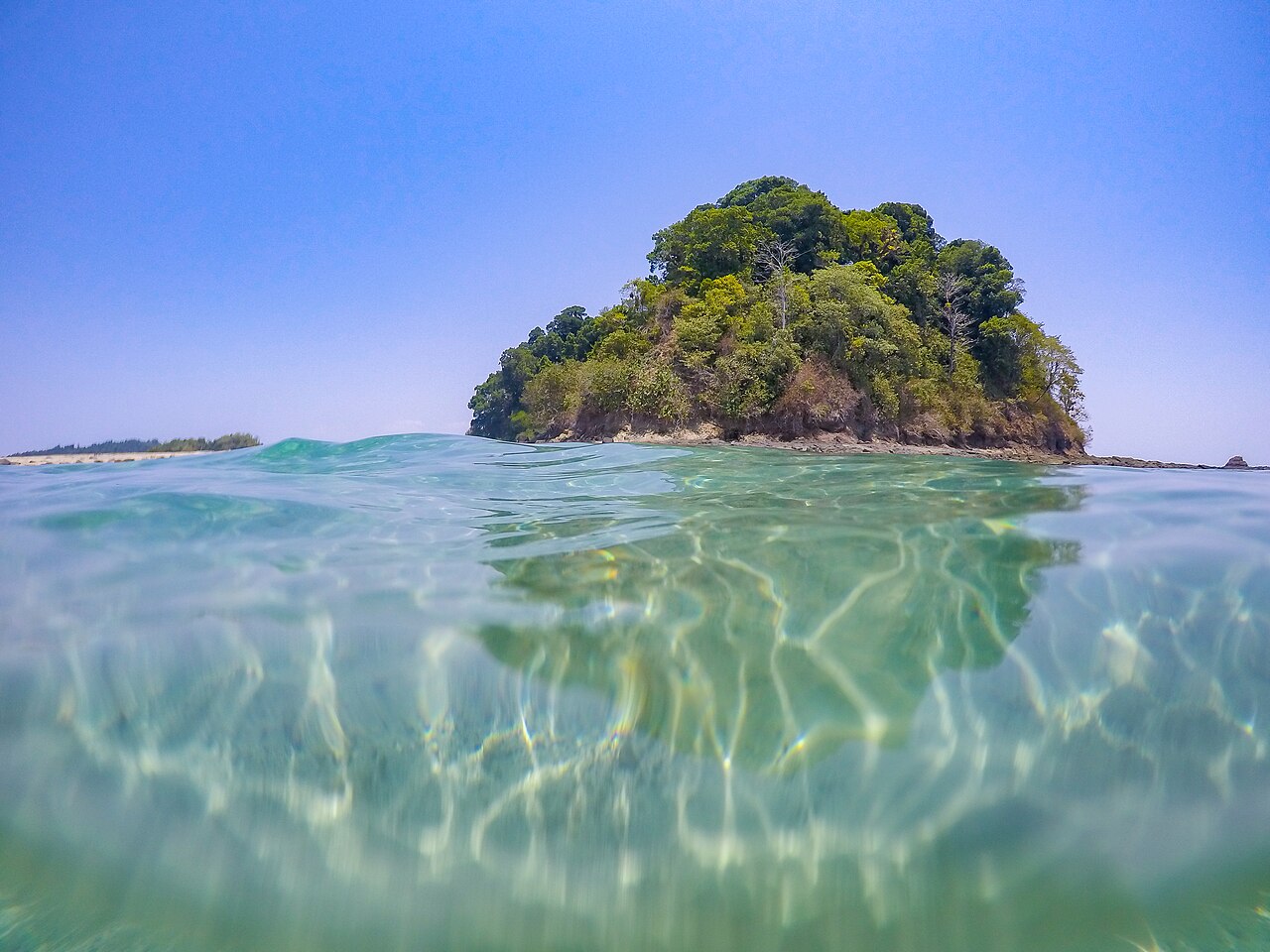
Coiba is the largest island in Central America and, by most measures, one of the best-preserved stretches of Pacific coastal forest and marine habitat anywhere in the hemisphere. Its survival is the result of an accident of history. From 1919 to 2004, the island served as Panama’s most feared penal colony — a place so isolated and so notorious that the surrounding waters, patrolled to prevent escape, were left untouched for eighty-five years. When the prison closed and the island transitioned to national park status, scientists found an ecosystem in a condition rare elsewhere on the Pacific coast: intact coral reefs, undisturbed forest, and populations of species that had disappeared from the mainland decades earlier.
The marine environment around Coiba sits at the convergence of the Panama Bight, where the warm Panama Current meets cold upwellings from depth. This nutrient mixing supports exceptional biodiversity: over 760 fish species, humpback whales that use the bay as a calving ground from July to October, whale sharks, manta rays, and multiple species of hammerhead sharks schooling in numbers rarely seen elsewhere in the Pacific. The reefs contain roughly 33 coral species and form one of the most significant coral systems in the Eastern Pacific — particularly important given the bleaching pressures that have reduced reef cover across the region. UNESCO inscribed the site in 2005.
Coiba Island itself retains 80 percent of its original forest cover. The scarlet macaw, extirpated from most of Panama, survives here in a stable population. Hiking trails from the ranger station at Granito de Oro lead into the interior, where the silence and the scale of the trees make the island’s long quarantine feel almost tangible. Access is managed by the Panamanian environmental authority (MiAmbiente), and visitor numbers are controlled to limit impact on the ecosystem. The former prison buildings still stand near the ranger station, a concrete reminder of the island’s other history.
Getting there: Fly from Panama City to Santiago or David, then transfer to Santa Catalina by road (approx. 3-4 hours total). Boat tours from Santa Catalina to Coiba take 45-90 minutes depending on conditions. Most visitors go on guided day tours; multi-day camping requires advance permits from MiAmbiente. Allow: Minimum one full day on the island; two days for serious diving or hiking. Best for: Divers, wildlife photographers, marine biologists, and travellers seeking genuinely remote Pacific wilderness.
Frequently Asked Questions
How many UNESCO World Heritage Sites are near Panama City?
Panama has two UNESCO World Heritage Sites. The Fortifications on the Caribbean Side of Panama (Portobelo-San Lorenzo), inscribed in 1980, lie approximately 100 kilometres north of Panama City. Coiba National Park and its Special Zone of Marine Protection, inscribed in 2005, is roughly 450 kilometres to the southwest. Both are reachable within a day’s travel from the capital, though Coiba requires a flight or an extended road journey.
Can I visit both UNESCO sites on the same trip from Panama City?
Yes, but they are in opposite directions and require separate days. Portobelo is most practical as a day trip from Panama City by road. Coiba demands at least one overnight away from the capital — ideally based in Santa Catalina — given the distance and the need to arrange permits and boat access. Combining both sites makes most sense on a week-long itinerary through Panama.
What is the best time of year to visit Portobelo and Coiba?
Panama’s dry season runs from December through April, and this is the most comfortable time to travel to both sites. The Caribbean coast around Portobelo receives more rainfall year-round than the Pacific side, but road access is unaffected. For Coiba, the dry season brings calmer seas and better visibility for diving. Humpback whale activity peaks between July and October, meaning a wet-season visit to Coiba can be worthwhile for marine wildlife despite rougher boat crossings.
Why did Portobelo matter so much in the Spanish colonial era?
Portobelo was the point where the entire wealth of Spanish South America passed through the Atlantic gateway. Silver and gold extracted from mines in Peru and Bolivia was shipped north to Panama City, then carried overland across the isthmus on the Camino Real to Portobelo, where it was loaded onto fleets for the crossing to Seville. For roughly two centuries, the town’s annual trade fairs were among the most valuable commercial events in the world — a concentration of wealth that made the bay’s fortifications essential and made the town itself an irresistible target for pirates and rival imperial powers.


.jpg)