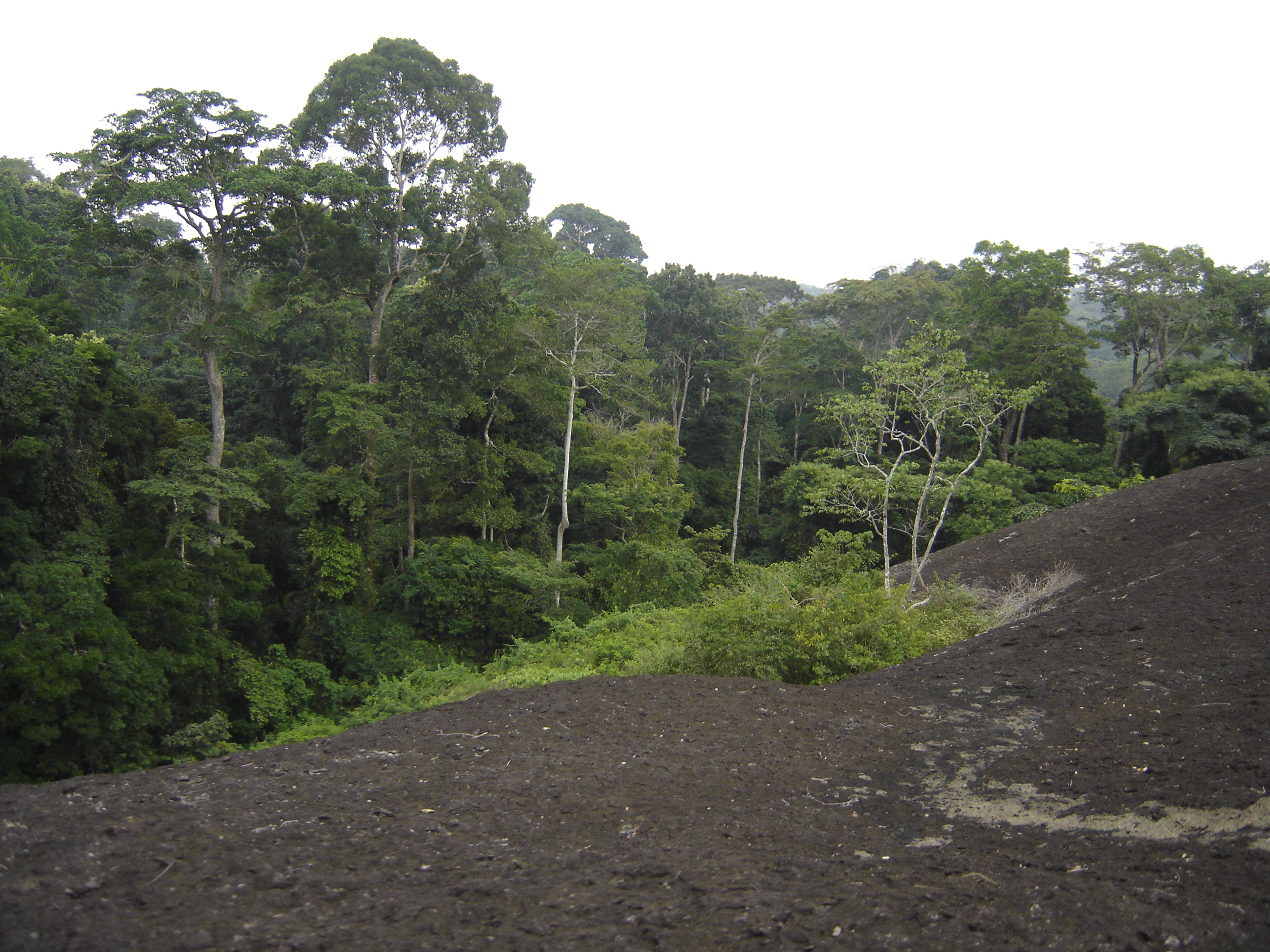
Cameroon holds one of Central Africa’s great intact rainforest ecosystems within a UNESCO World Heritage Site reachable from Yaoundé in a single day. The Dja Faunal Reserve — 526,000 hectares enclosed almost entirely by the Dja River — offers one of the continent’s most serious encounters with equatorial forest and its wildlife. From Cultural Heritage Online.
Dja Faunal Reserve 200 km southeast · 4–5 hr by road
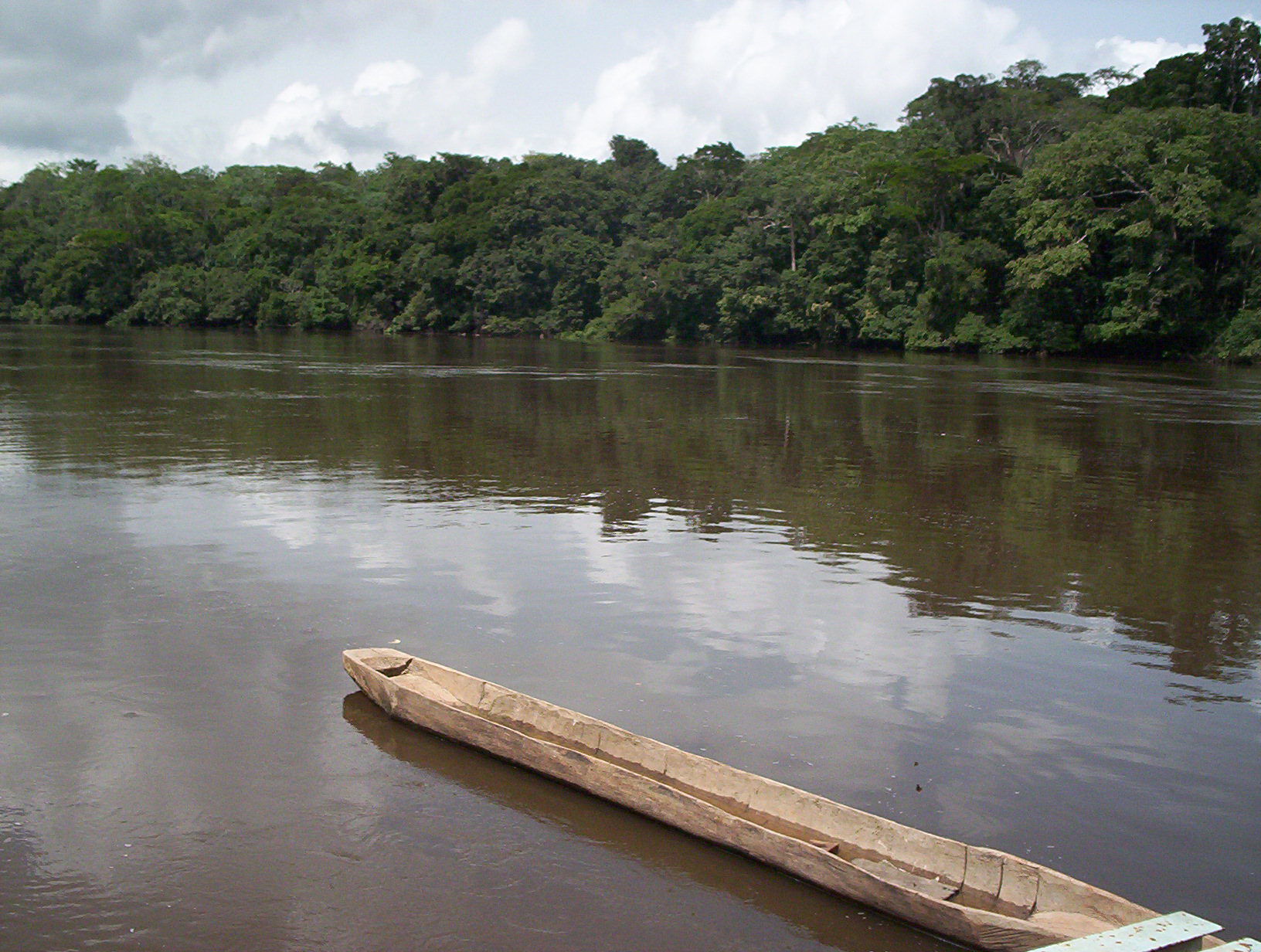
The Dja Faunal Reserve was inscribed on the UNESCO World Heritage List in 1987, recognised for its exceptional biodiversity and the near-pristine condition of its tropical forest ecosystem. The Dja River — a broad, slow-moving waterway — traces the boundary of the reserve for almost its entire perimeter, creating a natural enclosure that has protected the interior from large-scale encroachment. At 526,000 hectares, it ranks among the largest and best-preserved lowland rainforest blocks in Central Africa.
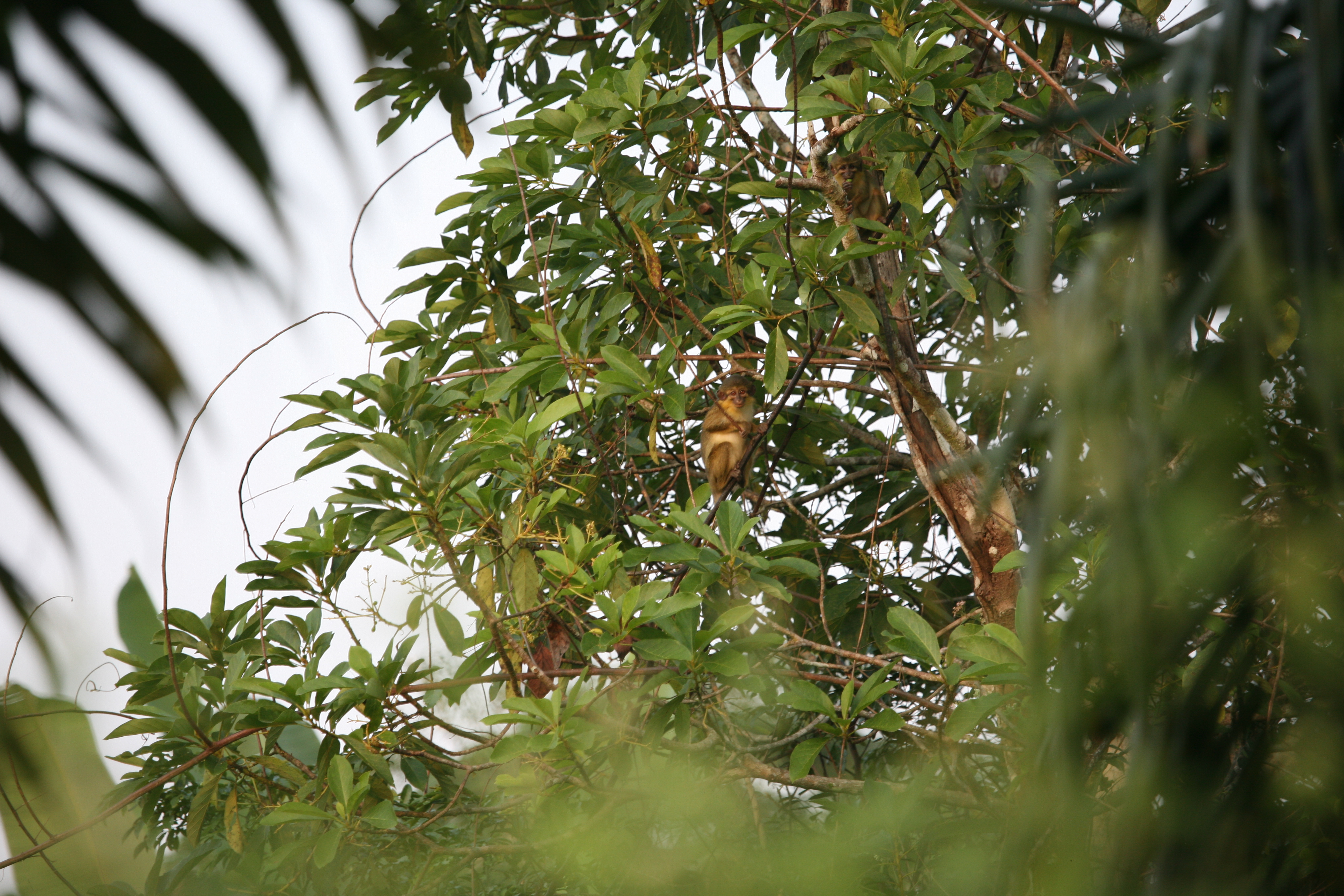
The reserve supports 107 mammal species, a figure that places it in the top tier of African protected areas by megafaunal diversity. Forest elephants move through the interior in family groups. Western lowland gorillas and chimpanzees are both present, though encounters require patience and experienced local guides. Bongos — the large, striped forest antelope — share the understorey with giant pangolins and African forest buffalos. The forest also harbours 320 bird species, drawing ornithologists in search of forest specialists rarely found outside intact primary rainforest. A northern talapoin population adds to the reserve’s primate count, one of the highest in any single protected area on the continent.
The Baka people — a semi-nomadic hunter-gatherer group with deep historical ties to these forests — continue to live within the reserve and maintain traditional land-use practices. Their ecological knowledge is central to conservation management at Dja, and responsible visit operators involve Baka guides in forest excursions. The administrative gateway to the reserve is the town of Somalomo, where the management station is located and where most guided entries begin. The road from Yaoundé passes through Mbalmayo and Sangmélima before reaching Somalomo; the final stretch can require a four-wheel-drive vehicle, particularly in the rainy seasons (April–June and September–November). Entry is managed by the Cameroonian Ministry of Forests and Wildlife, and permits must be arranged through the reserve office.
Getting there: Drive from Yaoundé via Mbalmayo and Sangmélima to Somalomo; approximately 200 km, 4–5 hours depending on road conditions. A 4WD vehicle is advisable year-round and essential during rainy season. No regular public transport reaches Somalomo directly; shared taxis to Djoum or Sangmélima are available, followed by local transport. Allow: A minimum of two nights based in Somalomo to justify the journey; three or more nights if tracking gorillas or doing deep-forest transects. Best for: Wildlife photographers, primate researchers, serious naturalists, and travellers with experience in remote equatorial environments.
Further afield: Sangha Trinational
Cameroon’s second UNESCO site, the Sangha Trinational (inscribed 2012), lies approximately 400 km east of Yaoundé, extending across the borders of Cameroon, the Republic of Congo, and the Central African Republic. This trans-boundary reserve protects a vast corridor of Congo Basin forest and is one of the most important sites in Africa for forest elephants, western lowland gorillas, and bongos. Access from Yaoundé is substantially more complex — typically via Bertoua and Yokadouma — and requires advance logistical planning. It is best combined with the Dja as part of an extended southern Cameroon itinerary rather than as a standalone day trip.
Frequently Asked Questions
How many UNESCO World Heritage Sites are near Yaoundé?
Cameroon has two UNESCO World Heritage Sites. The Dja Faunal Reserve (inscribed 1987), approximately 200 km southeast of Yaoundé, is the site most accessible from the capital. The Sangha Trinational (inscribed 2012), a trans-boundary reserve shared with the Republic of Congo and the Central African Republic, lies around 400 km to the east and requires more substantial logistical planning to visit.
How do you get from Yaoundé to the Dja Faunal Reserve?
The standard route from Yaoundé runs south via Mbalmayo and Sangmélima to the town of Somalomo, which serves as the main entry point to the reserve. The drive covers approximately 200 km and takes 4–5 hours by road, with the final section best handled in a 4WD vehicle. There is no direct public transport; most visitors arrange a private vehicle or hire a driver in Yaoundé. Entry permits are issued at the reserve management station in Somalomo under the authority of the Cameroonian Ministry of Forests and Wildlife.
When is the best time to visit the Dja Faunal Reserve?
The dry seasons — December to February and July to August — offer the most reliable road conditions and easier wildlife tracking, since reduced vegetation and firmer ground make forest movement more practical. The rainy seasons (April–June and September–November) can make the Somalomo approach road difficult without 4WD, but the forest is visually richer and some researchers prefer this period for specific botanical and entomological work. Birding is productive year-round, with some resident species more vocal and visible during the early dry season.
What is the cultural significance of the Dja Reserve beyond its ecology?
The Dja Faunal Reserve is not solely a wildlife sanctuary — it is also a living landscape for the Baka, one of Central Africa’s oldest documented hunter-gatherer peoples. The Baka have inhabited these forests for millennia, developing sophisticated ecological knowledge of plant use, forest navigation, and seasonal animal movements. UNESCO’s inscription recognised the integrity of the ecosystem in part because traditional Baka land-use practices have historically been low-impact and spatially distributed. Contemporary conservation management at the Dja continues to engage Baka communities as guides and knowledge-holders, a relationship that distinguishes the reserve from purely exclusionary protected-area models.
Sources
- S1 — DeLancey, Mark Dike, et al. Historical Dictionary of the Republic of Cameroon. Scarecrow Press, 2010. ISBN 978-0-8108-5824-4.
- S2 — Gartlan, Steve. Cameroon: Environmental Status and Issues. IUCN, 1989. ISBN 978-2-88032-984-6.
Spotted an error? Write to editorial@culturalheritageonline.com and we correct it the same day.