Nigeria’s three UNESCO World Heritage Sites stretch from a forest sanctuary of living Yoruba religion 240 kilometres from Lagos to a remote chieftaincy landscape in the Mandara Mountains — each demanding travel, each rewarding it with encounters found nowhere else on earth. From Cultural Heritage Online.
Osun-Osogbo Sacred Grove 240 km northeast · ~3.5 hr by road
On the southwestern edge of Osogbo, the Osun River moves through one of the last large sacred forests remaining in Yorubaland. The canopy is dense enough to silence the surrounding city within a few steps — dappled light falls on stone shrines half-swallowed by roots, iron staffs planted in soft earth, and painted concrete figures that seem to grow out of the undergrowth rather than having been placed there. UNESCO inscribed the grove in 2005 as an outstanding example of a sacred forest that communities have continuously maintained as a place of worship and cultural identity.
What distinguishes Osun-Osogbo from other sacred groves is the presence of hundreds of sculptures and architectural works commissioned and partly created by the Austrian artist Suzanne Wenger, who settled in Osogbo in the 1950s and converted to Yoruba religion, taking the name Adunni Olorisa. Working with local artists over decades, she rebuilt or created shrines to Osun — the Yoruba goddess of water, fertility and love — alongside traditional sacred objects that had stood for generations. The result is a collision of material languages: Yoruba symbolism and European modernist form sharing the same mossy ground, neither fully explaining the other.
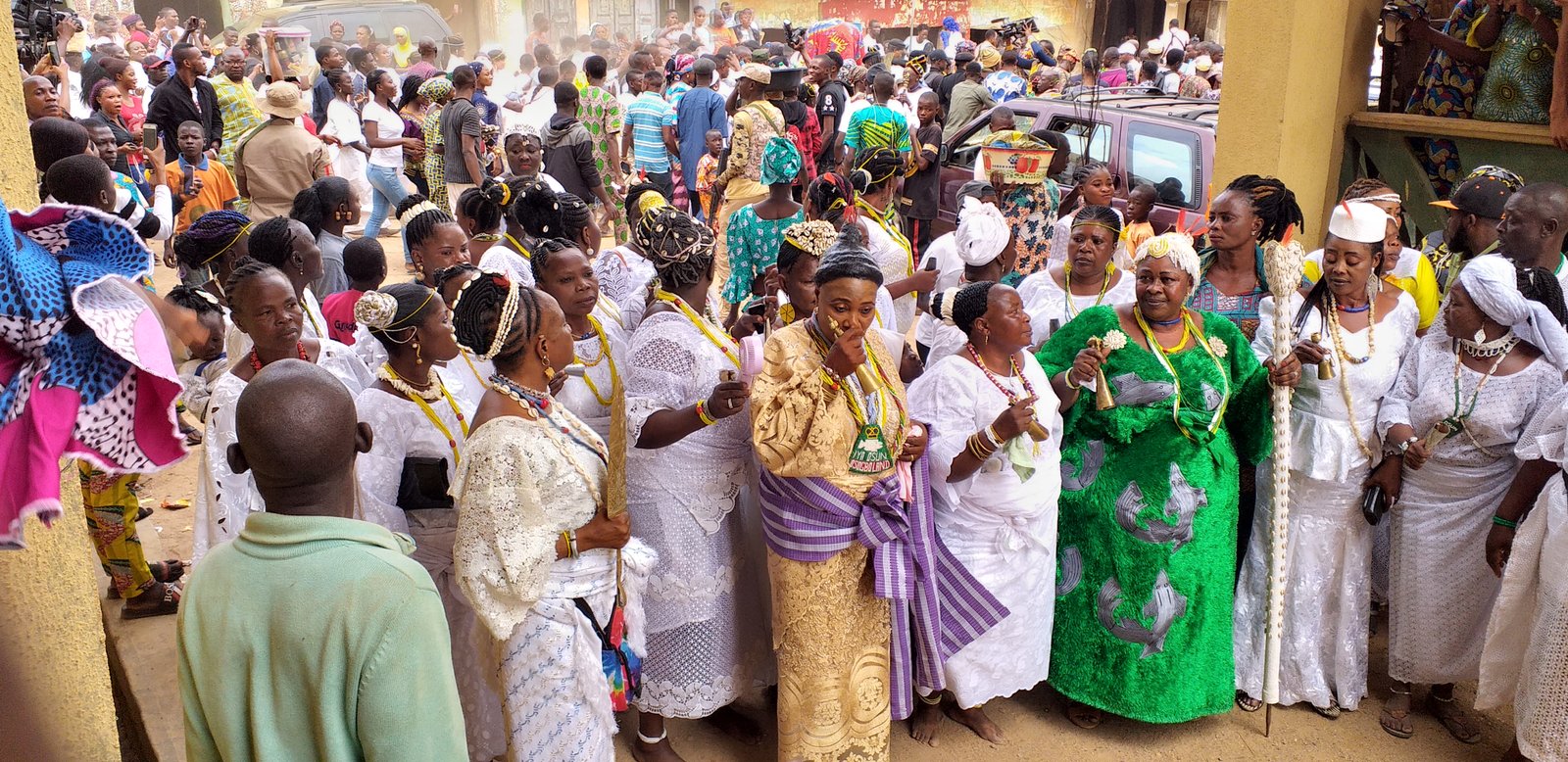
Every August, the Osun-Osogbo festival draws tens of thousands of devotees and visitors. The procession to the river is dense and sonorous — drums carry across the water, the air smells of incense and palm oil, and the Arugba (a virgin priestess) carries a sacred calabash on her head through the crowd. Outside festival season the grove is quieter, and the shrines reward slow, close attention: texture accumulates — carved wood worn smooth by decades of touch, glazed ceramic faces catching the forest light, rusting iron votives laced with kola nut stains.
Getting there: Lagos to Osogbo by road via the Lagos–Ibadan Expressway and Osogbo Road, approximately 3.5 hours; shared taxis and buses depart from Ojota Motor Park. Allow: Half a day minimum; a full day if visiting during festival season. Best for: Travellers interested in living religious traditions, contemporary African art, and sacred landscapes.
Sukur Cultural Landscape ~1,000 km northeast · domestic flight + 3 hr road
On a high plateau in the Mandara Mountains of Adamawa State, close to the Nigerian–Cameroon border, the Sukur Cultural Landscape has been shaped over centuries by the Sukur people and their Hidi (paramount chief). UNESCO inscribed it in 1999 — Nigeria’s first World Heritage Site — recognising the extraordinary integration of a living chieftaincy system with a working agricultural and industrial landscape. The Hidi’s palace crowns a hill above the settlement; below it, stone-paved paths connect terraced fields and domestic compounds in an arrangement that has barely changed in form for hundreds of years.
The terraces themselves are the most immediate spectacle: long, even steps of dry-stone walling that climb the mountain flanks and hold back soil for cultivation, built and maintained without mortar over generations. The paths between them are worn into the rock by centuries of foot traffic. Scattered through the landscape are the remains of iron-smelting furnaces — the Sukur were prolific iron producers who traded their output across the region — and these ruined structures give the site a second historical dimension alongside the living agricultural one. Stone is everywhere: underfoot, in walls, in the compound architecture, giving the whole landscape a weight and density unusual even in the mountains.
Sukur rewards visitors who approach it as a landscape to walk rather than a monument to photograph. The Hidi’s compound still functions as a centre of political and ritual authority; local guides explain the protocols around approach and the significance of individual sites within the settlement. Reaching the plateau requires planning — Adamawa State is remote and the final road from Mubi or Madagali to Sukur is rough — but the isolation is part of what has preserved both the physical fabric and the social structure of the site.
Getting there: Fly Lagos to Yola (Adamawa State capital), then approximately 3 hours by road north to the Madagali area; local guides are essential and arrangeable in Yola. Alternatively via Mubi for those already in northeastern Nigeria. Allow: Minimum two days on-site; plan for three nights including transit. Best for: Travellers seeking off-grid cultural immersion, architectural heritage, and pre-colonial African landscapes.
Frequently Asked Questions
How many UNESCO World Heritage Sites are near Lagos?
Nigeria has two UNESCO World Heritage Sites reachable from Lagos: the Osun-Osogbo Sacred Grove (inscribed 2005), approximately 240 km northeast by road, and the Sukur Cultural Landscape (inscribed 1999), around 1,000 km northeast in Adamawa State. A third candidate of exceptional significance — Sungbo’s Eredo near Ijebu-Ode, a 1,000-year-old earthen embankment system roughly 90 km from Lagos — is under nomination consideration but not yet inscribed.
How do you visit the Osun-Osogbo Sacred Grove from Lagos?
The most practical route is by road: shared taxis and express buses depart from Ojota Motor Park in Lagos heading to Osogbo, covering the 240 km in approximately 3.5 hours depending on traffic around Ibadan. Private hire is more comfortable. The grove lies on the edge of Osogbo town and is easily reached by tricycle or taxi from the motor park. Entry to the grove is managed by the Osun-Osogbo Grove Management Committee; a guide is included in the admission fee and is strongly recommended for context. If your visit coincides with the Osun-Osogbo festival in August, book accommodation well in advance — rooms in Osogbo fill weeks beforehand.
Is there a best time of year to visit both sites?
The Osun-Osogbo Sacred Grove is open year-round, but the annual festival in August transforms the experience entirely — the grove and surrounding town become a major pilgrimage and cultural gathering. If you want the shrines in contemplative quiet, visit between October and March (dry season). The Sukur Cultural Landscape is most accessible in the dry season (November to April), when the mountain roads are passable; the rainy season makes the final approach to the plateau difficult. Combining both sites in a single trip is logistically challenging given the 800 km between them; most visitors treat them as separate journeys.
Who built the shrines in the Osun-Osogbo Sacred Grove?
The grove has been sacred to the Yoruba for centuries and contains traditional shrines and sacred objects maintained by local priests and priestesses across many generations. From the 1950s onward, the Austrian artist Suzanne Wenger — who converted to Yoruba religion and took the name Adunni Olorisa — collaborated with Osogbo artists to restore deteriorating shrines and create new sacred structures. Her work did not replace traditional forms but added to them, producing a layered sacred landscape where Yoruba iconography and a distinctly modern sculptural sensibility coexist. Wenger lived in Osogbo until her death in 2009; the house she built there, the Adunni Olorisa Shrine, remains one of the most striking buildings in the grove.