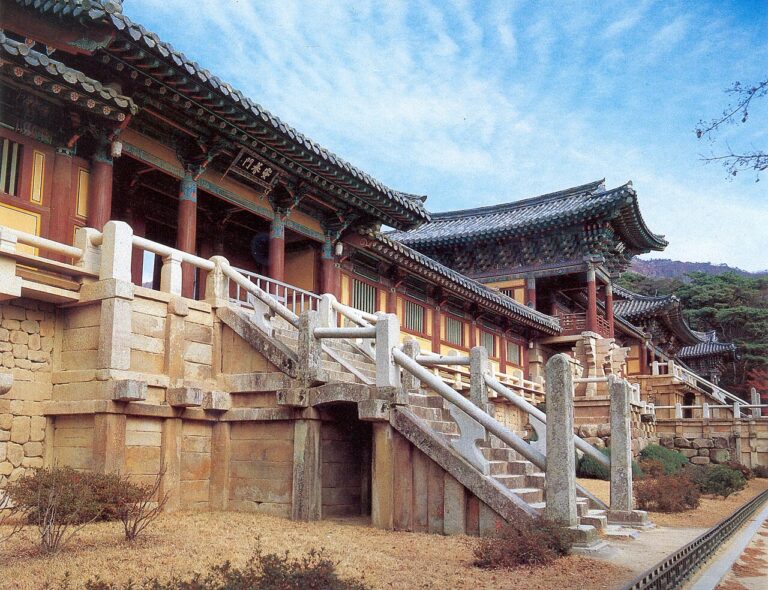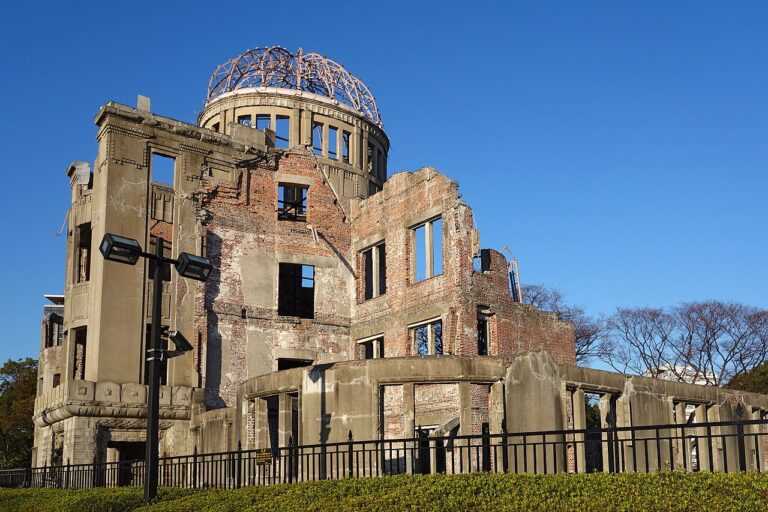
Bangladesh holds three UNESCO World Heritage Sites — a medieval mosque city, a vast Buddhist monastery complex, and the world’s largest mangrove forest — all reachable from Dhaka in a single day’s travel or a short overnight trip. Each site belongs to a different civilisation and a different century, yet together they form one of the most concentrated heritage routes in South Asia. From Cultural Heritage Online.
Historic Mosque City of Bagerhat 180 km southwest — 3.5 hr by road
In the early 15th century, a Turkish general named Khan Jahan Ali arrived in the Bengal delta with an army, a vision, and enough ambition to build an entire city from brick. The result was Bagerhat: a planned urban settlement studded with mosques, tombs, and water tanks that still hold water six centuries later. UNESCO inscribed it in 1985 as an outstanding example of pre-Mughal Islamic architecture.
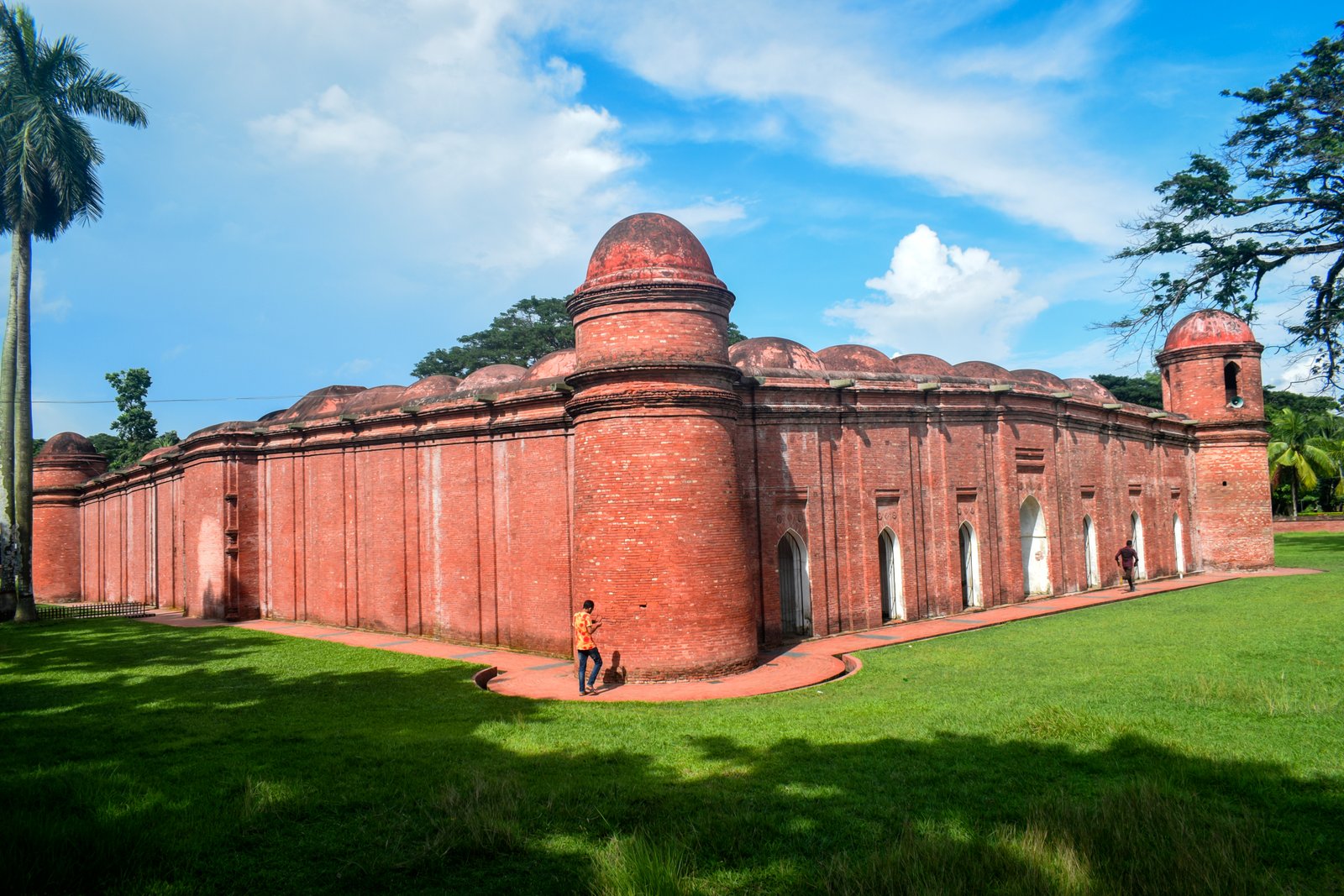
The centrepiece is the Shat Gombuj Mosque — the Sixty Dome Mosque — which dominates a clearing of trimmed grass at the edge of the old city. Step inside and the interior resolves into a forest of 60 stone columns supporting as many vaulted bays, each one slightly different in the way afternoon light catches the terracotta surface. The building is long and low, its proportions closer to a cathedral nave than any later Mughal mosque, and the silence inside absorbs the sound of buses and rickshaws idling outside completely. Nearby, the Singair Mosque stands alone in a field, its single dome almost domestic in scale beside the giant neighbour. The tomb of Khan Jahan Ali, sheltered by old trees and surrounded by a pond where sacred crocodiles still move in slow arcs, closes the circuit of the main monuments.
Bagerhat is not a ruined ghost town. People live, farm, and pray among these structures, which gives the site a lived-in quality absent from more managed heritage parks.
Getting there: Direct bus from Dhaka’s Gabtoli terminal to Khulna (3 hr), then local bus or auto-rickshaw to Bagerhat (45 min). Private car from Dhaka takes approximately 3.5 hr. Allow: Half a day covers the main monuments; a full day includes smaller outlying mosques. Best for: Travellers interested in Islamic architecture, medieval urban history, and off-circuit heritage.
Ruins of the Buddhist Vihara at Paharpur 200 km northwest — 4–5 hr by road
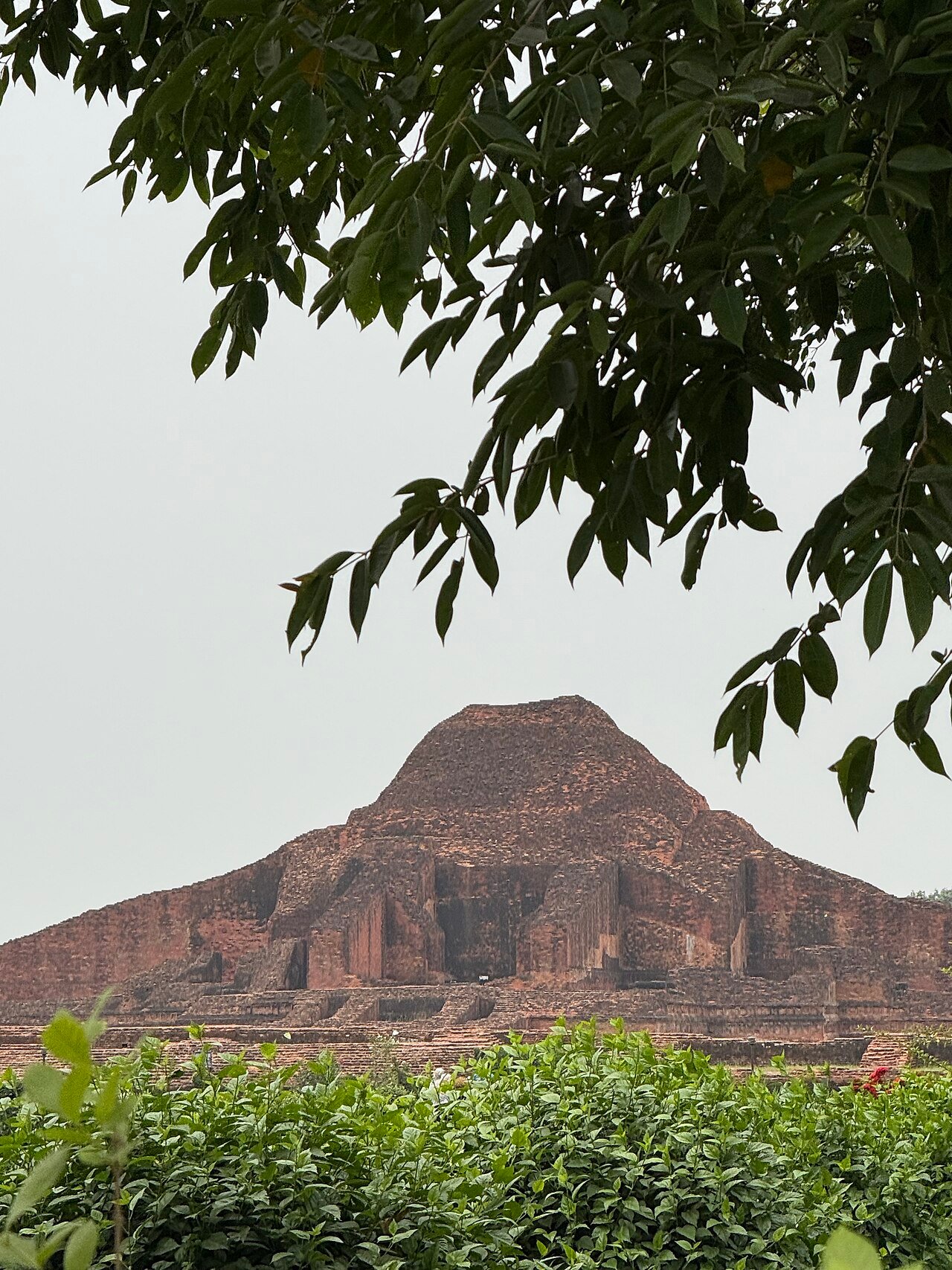
The Pala dynasty built Somapura Mahavihara in the 8th or 9th century and made it one of the great centres of Buddhist learning south of the Himalayas. Scholars and monks travelled here from Tibet, China, and the whole of Southeast Asia. The monastery eventually fell to fire and was buried under the Bangladesh plain for centuries before excavations began in the 19th century. UNESCO inscribed it in 1985.
What you find today is a vast rectangular courtyard — roughly 300 metres on each side — lined by 177 monks’ cells arranged in a continuous perimeter wall. From ground level the scale is hard to read, but climb the partially restored central cruciform temple and the geometry of the whole complex becomes legible: cell after cell stepping away in both directions, the brickwork dark red and rough to the touch, each threshold worn smooth by restoration workers and curious visitors in equal measure. The archaeological finds here complicate any simple label of “Buddhist site”: terracotta plaques show Hindu deities, and Jain imagery appeared in the same soil layers, suggesting that the monastery functioned as a meeting point for multiple traditions rather than a strictly sectarian institution.
The small on-site museum holds the better sculpture finds and provides context for the confusing topography of the ruins. The flat, open countryside around Paharpur — rice paddies and mustard fields stretching to the horizon — makes for a striking contrast with the density of the ruins inside the compound walls.
Getting there: Bus from Dhaka to Joypurhat or Rajshahi, then local transport to Paharpur (total 4–5 hr). Private car recommended for comfort and flexibility. Allow: Half a day including the museum. Combine with Rajshahi city for a full overnight trip. Best for: History and archaeology enthusiasts; photographers drawn to texture and geometric repetition.
The Sundarbans ~280 km southwest via Khulna — 2–3 day tour minimum
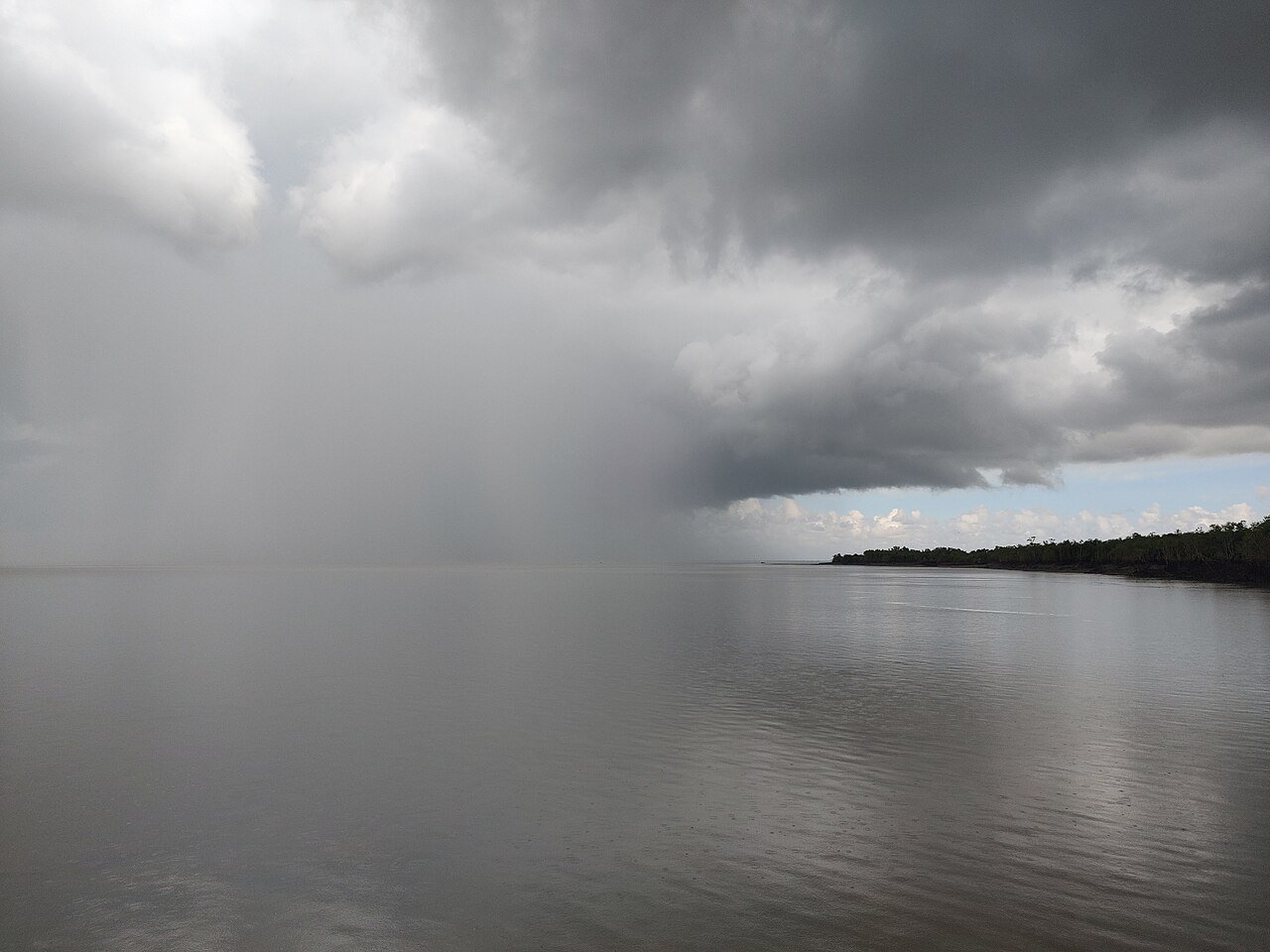
The Sundarbans sprawl across roughly 10,000 square kilometres of tidal channels, mudflats, and mangrove islands shared between Bangladesh and India. UNESCO inscribed the Bangladesh section in 1997 for its exceptional biodiversity and for being the only place on earth where Bengal tigers have fully adapted to a saltwater, semi-aquatic existence. These are swimming tigers — animals that routinely cross open channels between islands, something the species does nowhere else.
Access is by launch from Mongla, the port town near Khulna, and the approach sets the tone for the whole experience. As the vessel moves deeper into the delta, the bank of vegetation closes in on both sides: mangrove roots arch into the water, kingfishers move between branches in short electric bursts of blue, and the smell shifts from river mud to something saltier and more complex. Spotted deer browse the mud at low tide. Irrawaddy dolphins — rounded, pale, oddly serene — surface and disappear in the channels. Saltwater crocodiles bask on exposed roots near midday. Tiger sightings during a standard two-to-three-day cruise are possible but not common; the forest is large and the animals are not performing for visitors.
The experience of the Sundarbans is fundamentally about scale and density. The forest does not reveal itself — it closes around you, and the awareness that a large predator may be watching from any of those shadowed banks is not a background fact but a constant presence. Most tours operate from Khulna on dedicated houseboats with guides, meals, and permits included.
Getting there: Bus or train from Dhaka to Khulna (3.5 hr by bus, 5 hr by train), then 2 hr by road or boat to Mongla, then boat into the forest. Allow: Minimum 2 nights on the water; 3 nights gives a fuller sense of the interior. Best for: Wildlife travellers, nature photographers, anyone interested in delta ecology and conservation.
Frequently Asked Questions
How many UNESCO World Heritage Sites are near Dhaka?
Bangladesh has three UNESCO World Heritage Sites, all reachable from Dhaka: the Historic Mosque City of Bagerhat (inscribed 1985), the Ruins of the Buddhist Vihara at Paharpur (1985), and the Sundarbans (1997). Each sits within a day’s travel of the capital by road, bus, or a combination of road and boat.
How do you visit Bagerhat from Dhaka?
Take a direct bus from Dhaka’s Gabtoli terminal to Khulna (approximately 3 hours), then a local bus or auto-rickshaw to Bagerhat (45 minutes). By private car the journey from Dhaka takes around 3.5 hours. The main monuments — Shat Gombuj Mosque, Singair Mosque, and the tomb of Khan Jahan Ali — can be covered in half a day, making Bagerhat workable as a day trip combined with a Khulna overnight stay.
Can you combine Bagerhat and the Sundarbans in one trip?
Yes, and this is the standard itinerary for the southwest. Both sites are accessed via Khulna, so a logical three-to-four-day trip visits Bagerhat on arrival (day one), then joins a Sundarbans boat tour from Mongla for two or three nights on the water before returning to Dhaka. Paharpur, being in the northwest, requires a separate trip and does not combine easily with the Khulna sites. October to February is the best season for both: the monsoon has cleared, temperatures are manageable, and wildlife is active in the Sundarbans.
Why is Paharpur considered one of the most important Buddhist sites in South Asia?
Somapura Mahavihara at Paharpur was, at its peak in the 8th–9th centuries, one of the largest Buddhist monasteries south of the Himalayas and a major centre of Mahayana learning that attracted monks and scholars from Tibet, China, and Southeast Asia. Its cruciform central temple and 177-cell courtyard plan directly influenced later Buddhist architecture in Burma, Java, and Cambodia — the design travelled along trade and pilgrimage routes to shape monasteries thousands of kilometres away. The site also yielded artefacts linked to Hindu and Jain practice, evidence that the monastery functioned as an intellectually open institution at the crossroads of multiple religious traditions.
Sources
- S1 — Ahmed, Nazimuddin. Discover the Monuments of Bangladesh. University Press Limited, 1984. ISBN 978-984-05-1059-7.
- S2 — Eaton, Richard M. The Rise of Islam and the Bengal Frontier, 1204–1760. University of California Press, 1993. ISBN 978-0-520-20507-9.
Spotted an error? Write to editorial@culturalheritageonline.com and we correct it the same day.