
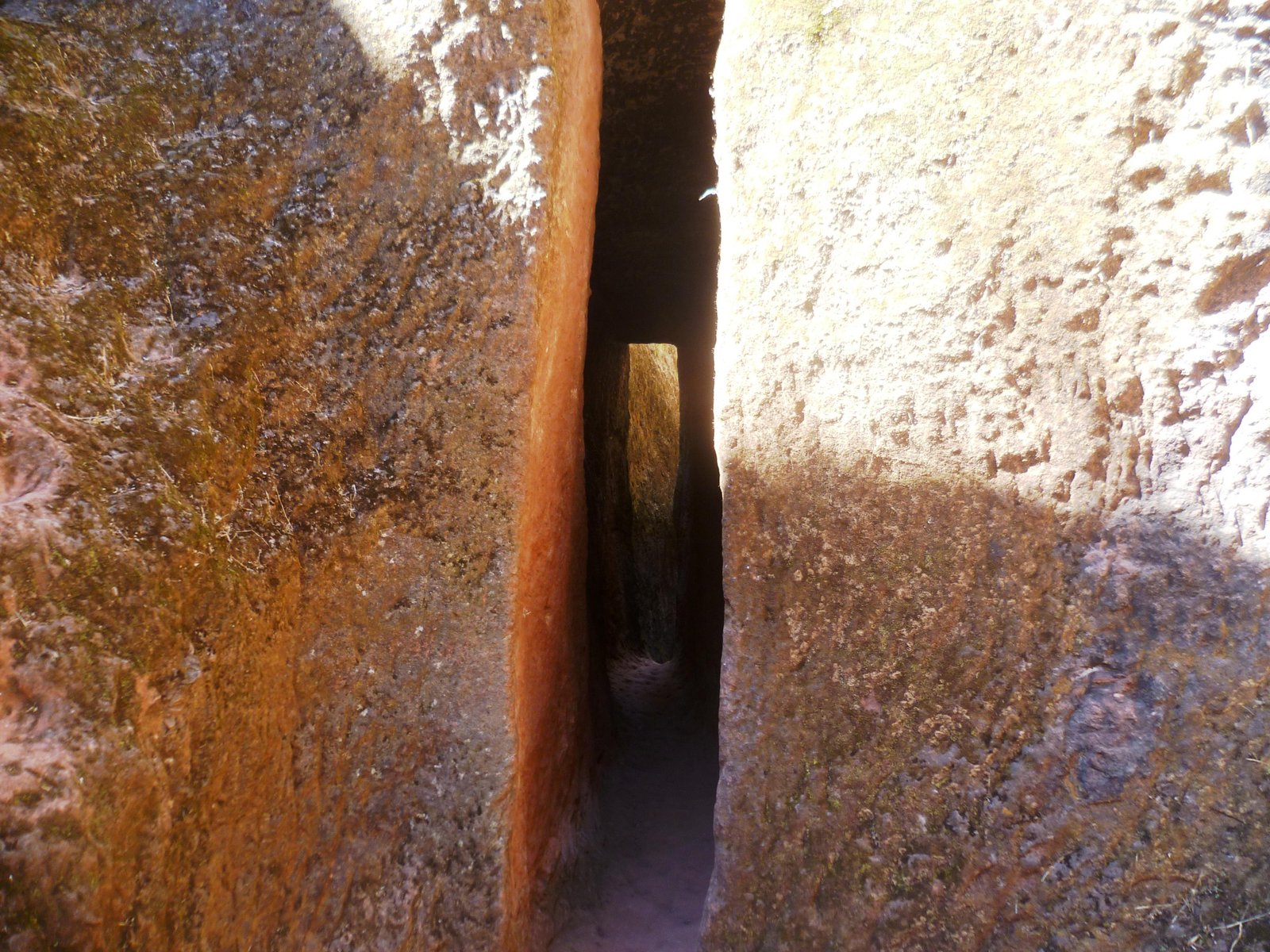
Ethiopia holds nine UNESCO World Heritage Sites, two of them reachable from Addis Ababa by road in under four hours: the enigmatic stelae field at Tiya and the paleoanthropological site in the Lower Valley of the Awash where Lucy was found. A domestic flight opens four more, including the living rock churches of Lalibela and the medieval castle enclosure at Gondar. From Cultural Heritage Online.
Tiya 90 km south — 1.5 hr by road
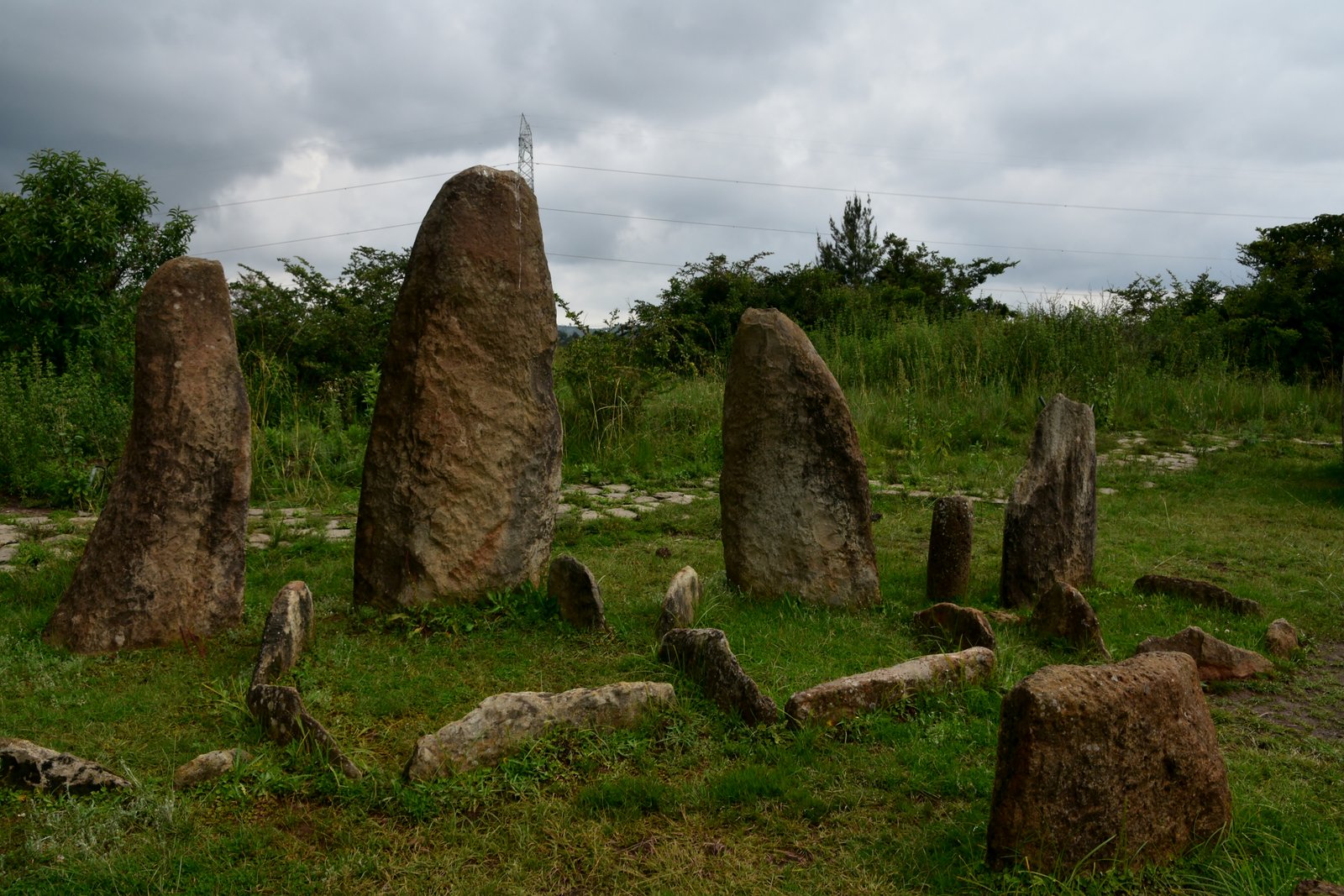
Tiya is the largest of approximately 160 archaeological sites scattered across the south-central Ethiopian valley, and its 36 standing stones form one of the most unsettling landscapes in the country. Inscribed by UNESCO in 1980, the site belongs to a culture that flourished between the 12th and 14th centuries CE. No text survives to name them.
The stelae themselves rise from the earth at irregular angles, some barely reaching shoulder height, others over two metres tall. The carved symbols — a sword, a stylised human figure, abstract geometric forms — appear repeatedly across the stones, yet no scholar has fully decoded their meaning. The engravings are shallow and precise; run a finger along the edge of one and the basalt feels almost polished, worn smooth by seven centuries of rain and wind. Beneath most stones are burial chambers, suggesting a funerary function, but the ritual context remains open.
The site sits on a gently sloping field with views south toward low hills. There are no crowds, no entry queues. A small local museum provides measured archaeological context without overclaiming. Tiya rewards anyone prepared to stand in front of something genuinely unknown and feel the weight of that uncertainty.
Getting there: Drive south on the A7 toward Butajira; Tiya is well signposted. No public bus goes directly — shared minibuses from the Mercato terminal reach Butajira (2 hr), from where tuk-tuks cover the last 7 km. Allow: Half a day including the drive. Best for: Archaeology enthusiasts, travellers with a tolerance for ambiguity, photographers drawn to unmediated antiquity.
Lower Valley of the Awash 250 km northeast — 3–4 hr by road
In November 1974, paleoanthropologist Donald Johanson and his team were working a gully near the village of Hadar in the Awash Valley when they spotted a fragment of arm bone. Over the next three weeks, they recovered 40 percent of a female skeleton, 3.2 million years old. They named her Lucy. The discovery changed the understood timeline of human evolution.
The Lower Valley of the Awash, inscribed in 1980, is not a museum. It is an active field site in the Afar Depression, one of the lowest and hottest places on Earth. The landscape is a stripped-back geology lesson: pale sedimentary layers stacked in eroded gullies, basalt outcrops darkened by the sun, a flat scrubland that shimmers in the midday heat. Lucy’s original bones are held at the National Museum in Addis Ababa — a cast in the display case, the real fossil in a vault — but the museum visit makes a logical bookend to the valley trip.
Ongoing excavations since 1974 have yielded fossils of at least nine hominid species, making the valley the single most productive early-human site on the planet. Hadar itself is not open to casual visitors without a research permit, but the broader Awash Valley — including Awash National Park near Metehara — is accessible and gives the geological context for what was found here.
Getting there: Drive northeast on the A1 via Adama (Nazret) and Awash town. The road is paved throughout. Arrange permits through the Authority for Research and Conservation of Cultural Heritage (ARCCH) in Addis Ababa before travelling. Allow: Full day or overnight in Awash town. Best for: Scientists, human origins enthusiasts, visitors who want to combine heritage with Awash National Park wildlife.
Rock-Hewn Churches of Lalibela 700 km north — 1 hr 20 min flight
Lalibela’s eleven churches were carved downward into volcanic tuff on the orders of King Lalibela in the 12th and 13th centuries — the entire structure removed from a single piece of living rock, walls, windows, columns and all. The builder’s name became the town’s name. Inscribed in 1978, these are not ruins. Priests chant inside them daily.
Bet Giyorgis, the most celebrated of the eleven, is a freestanding cube 15 metres deep in a shaft cut from the plateau. The exterior is carved with a pattern of Greek crosses in relief, each nested inside the other. Standing at the pit’s edge and looking down, the scale takes a moment to process: what reads from photographs as a small decorative object is, in person, as tall as a four-storey building. The interior holds a single sanctuary, lit by oil lamps, where the air smells of frankincense and old stone.
Ethiopian Airlines flies daily from Addis Ababa Bole International to Lalibela Airport. Ethiopian Christmas (Gena, January 7) and Timkat (Epiphany, January 19) draw tens of thousands of pilgrims; visit outside these dates for easier access to the interiors, though the pilgrimage period is itself a significant spectacle.
Getting there: Ethiopian Airlines daily flight, approximately 1 hr 20 min. The airport is 23 km from the churches; taxis available. Allow: Two full days minimum to visit all eleven churches without rushing. Best for: Travellers interested in living religious heritage, architectural history, Ethiopian Orthodox Christianity.
Fasil Ghebbi, Gondar 740 km north — 1.5 hr flight
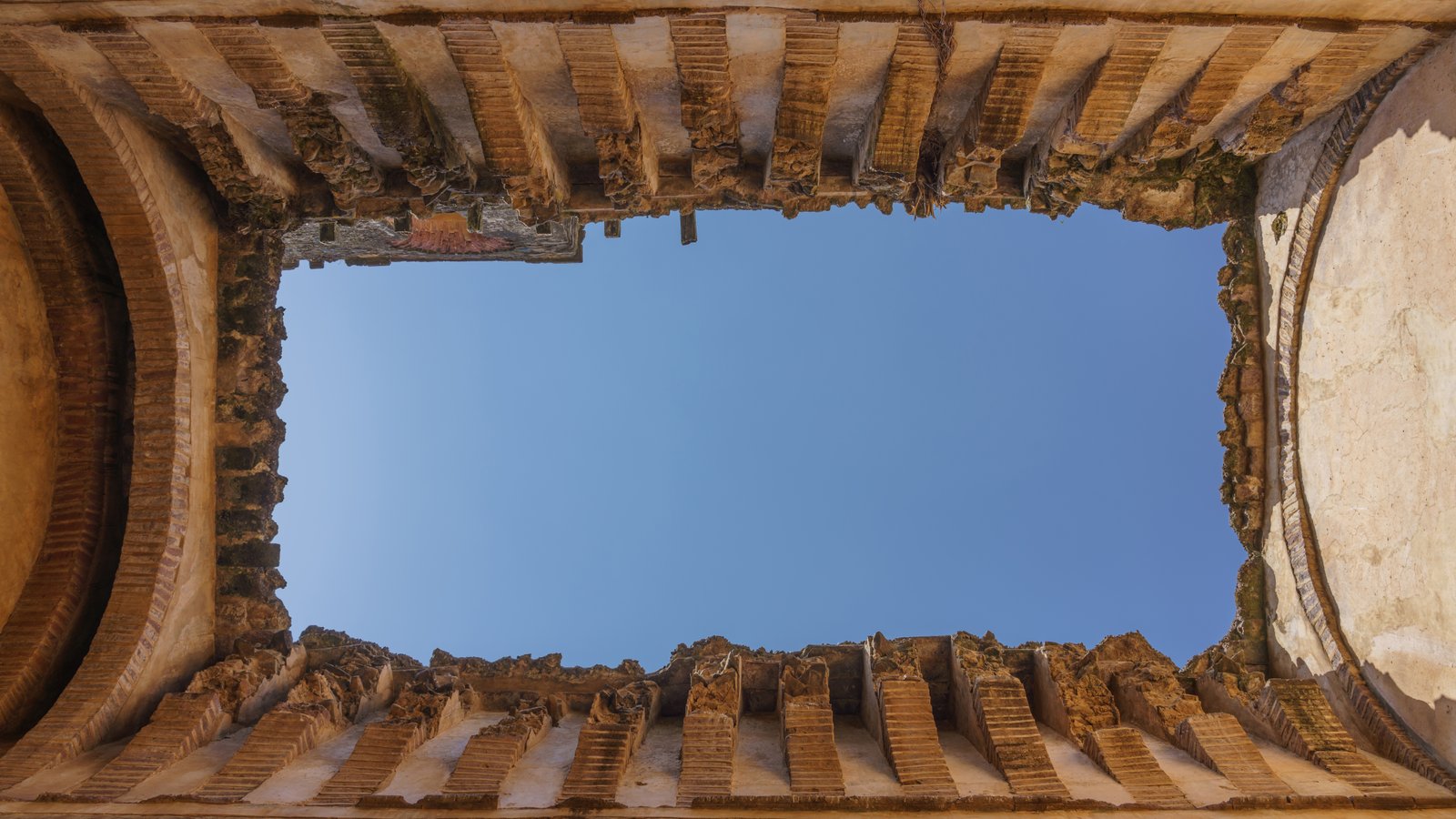
Between 1632 and the late 17th century, six successive Ethiopian emperors built their palaces inside a single walled compound on a hill above Gondar. The result — inscribed in 1979 as Fasil Ghebbi — is a complex of stone castles that bears little resemblance to anything else in sub-Saharan Africa. Indian, Portuguese and Moorish architectural influences reached the Ethiopian highlands through Jesuit missionaries and trade routes, and their traces appear in the arched doorways and battlemented towers of Fasilides Castle, the compound’s oldest and most intact structure.
The enclosure covers roughly 70,000 square metres. Fasilides Castle dates to 1640 and its interior still holds the iron chains used to secure the castle gates. The compound also includes a library building, a chancellery and the ruins of later palaces, each generation’s work layered against the last. Stone walls stand twelve metres high in places; the texture of the masonry is rough-hewn and direct, without decorative smoothing.
Getting there: Ethiopian Airlines flight to Gondar, approximately 1.5 hr. The Fasil Ghebbi compound is in the town centre, walkable from most hotels. Allow: Half a day for the enclosure; add a full day for Gondar’s other sites, including the Debre Birhan Selassie church with its famous painted ceiling. Best for: History travellers, those interested in Afro-European architectural synthesis, anyone combining the site with Simien Mountains trekking.
Harar Jugol 525 km east — 1 hr flight
Harar is the fourth holiest city in Islam, and its old walled quarter — Jugol — holds 82 mosques within an area that can be walked end to end in twenty minutes. Inscribed in 2006, Jugol’s lanes are too narrow for vehicles; the town plan dates to the 16th century, when Emir Nur ibn Mujahid built the current walls. The architecture is distinctly Harari: two-storey houses with inward-facing reception rooms lined with baskets, decorated panels and hanging household objects in arrangements specific to each family.
The city is also a living trade junction between the Ethiopian highlands and the Somali lowlands. In the market near the Shoa Gate, you can find everything from khat bundles to hand-woven cotton cloth to the distinctive Harari basketwork used as dowry gifts. The smell of roasted coffee — Harar is one of Ethiopia’s historic coffee-growing regions — threads through most of the walled quarter. After dark, local men feed raw meat to spotted hyenas at two fixed spots on the city’s edge; it has been done here for generations.
Getting there: Ethiopian Airlines flight to Dire Dawa (nearest major airport, 50 km from Harar), approximately 1 hr, followed by a 1 hr taxi or bus to Harar. Direct flights to Harar’s smaller airport also operate. Allow: Two days to walk the old city at a pace that allows conversation and stops. Best for: Travellers interested in Islamic heritage, urban anthropology, coffee history, and East African trade culture.
Aksum 1,000 km north — 2 hr flight
The Aksumite Empire controlled trade between the Roman world and India from roughly the 1st to 8th centuries CE. At its height Aksum was one of four major powers on earth, alongside Rome, Persia and China. The city’s stelae — obelisk-like granite monoliths, some over 20 metres tall — were quarried and erected as funerary markers for the royal court. The tallest standing stele in the main field is 23 metres high and weighs 160 tonnes.
Inscribed in 1980, the site includes royal tombs, the ruins of a palace attributed to the semi-legendary Queen of Sheba, and the Church of Our Lady Mary of Zion, which Ethiopians believe holds the Ark of the Covenant. The obelisk returned from Rome in 2008, after Italy removed it as war plunder in 1937; its reinstallation took two years and required the road through Aksum to be widened. The granite of the main stelae is grey and finely grained; up close, the carved false windows and door panels remain sharp after nearly two millennia.
Getting there: Ethiopian Airlines flight to Aksum, approximately 2 hr. Airport is 6 km from the town centre. Allow: Full day minimum; two days recommended to include the outlying sites. Best for: Ancient history travellers, those interested in early Christianity and the Ark of the Covenant tradition, numismatic and coinage history.
Frequently Asked Questions
How many UNESCO World Heritage Sites are near Addis Ababa?
Ethiopia has nine UNESCO World Heritage Sites in total. Two are within road distance of Addis Ababa: Tiya (inscribed 1980), a field of engraved standing stones 90 km south, and the Lower Valley of the Awash (1980), the paleoanthropological site where Lucy was discovered, 250 km northeast. Four more — Lalibela (1978), Fasil Ghebbi in Gondar (1979), Harar Jugol (2006), and Aksum (1980) — require a domestic flight of one to two hours.
How do you visit the rock-hewn churches of Lalibela, and what should you see first?
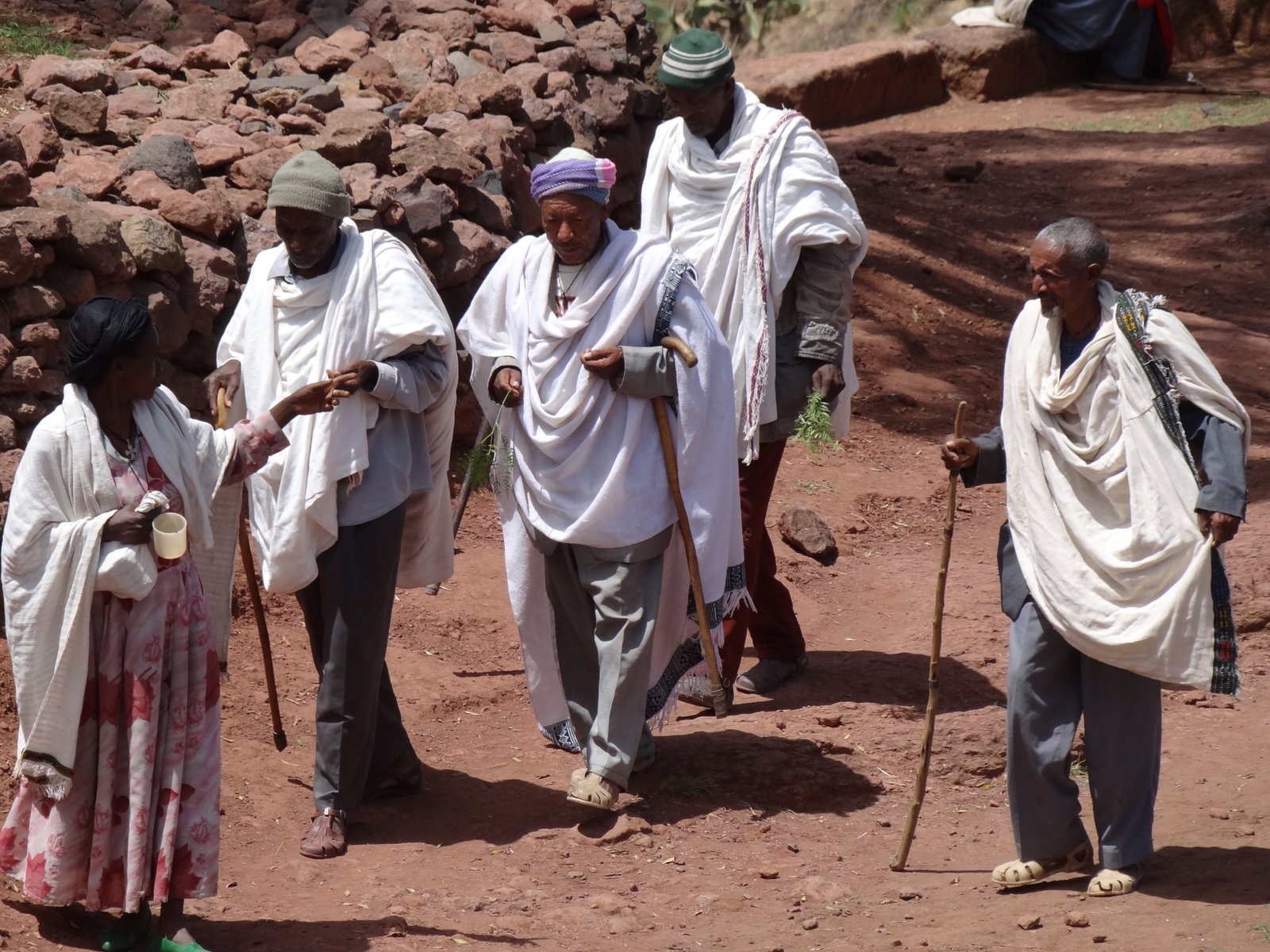
Lalibela is reached by a daily Ethiopian Airlines flight from Addis Ababa Bole International (approximately 1 hr 20 min). The eleven churches are grouped in two main clusters connected by a tunnel passage; most guides recommend starting with the northern group and finishing at Bet Giyorgis, the freestanding cruciform church in its own pit, which is best seen in afternoon light when the shadows deepen the carved crosses on its roof. Entry is managed by a single ticket covering all eleven churches. Dress modestly and remove shoes before entering; white robes worn by worshippers are not a costume for tourists.
Can you combine Tiya and the Awash Valley in one trip from Addis Ababa?
The two sites lie in opposite directions — Tiya south, the Awash Valley northeast — so combining them in a single day is not practical. A logical two-day itinerary: day one south to Tiya (half-day), continuing to Ziway lake for an overnight; day two east through Adama to Awash, returning to Addis Ababa in the evening. Both roads are paved. The best time for both sites is October to February, after the main rains, when daytime temperatures in the Awash Depression are more manageable.
What do the carvings on the Tiya stelae actually mean?
Scholars have not reached consensus. The recurring motifs — a weapon identified as a sword, stylised human figures, and abstract geometric symbols — appear across dozens of the 36 stones. Excavations beneath the stelae have revealed collective burial chambers, suggesting a funerary context, and the site has been linked to a culture active in the south-central Ethiopian valley between the 12th and 14th centuries CE. The identity of that culture and the precise meaning of the inscriptions remain open research questions. The site’s UNESCO inscription in 1980 noted specifically that the engravings are undeciphered.

.jpg)
_(29095993146).jpg)
.jpg)
