
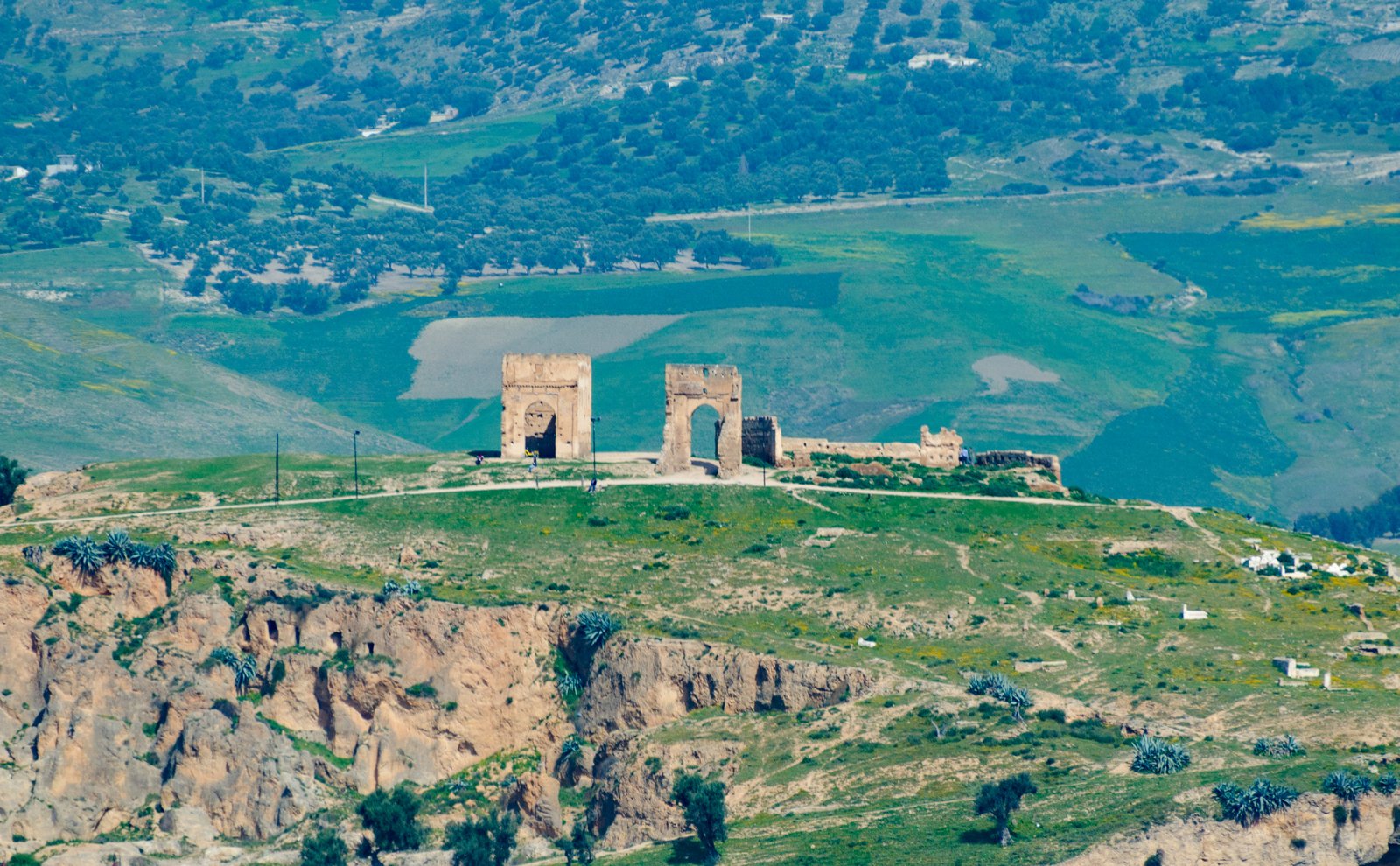
Four UNESCO World Heritage Sites lie within 200 kilometres of Fez — from the medieval medina underfoot to Roman mosaics at Volubilis, the imperial grandeur of Meknes, and the Andalusian lanes of Tetouan. Each rewards the detour with something the other cannot provide. From Cultural Heritage Online.
Medina of Fez within the city — no travel required
Fes el-Bali is one of the world’s largest car-free urban areas and almost certainly its best-preserved medieval city. UNESCO inscribed it in 1981, citing a continuous human settlement dating to the late 8th century and an urban fabric that has remained structurally intact through twelve centuries of occupation. The city grew rapidly after Idris II established it as his capital in 809 AD, and Andalusian and Tunisian refugees who arrived in the early 9th century imported crafts, musical traditions, and architectural conventions that took root permanently.
At the centre stands the University of al-Qarawiyyin, founded in 859 AD by Fatima al-Fihri and widely regarded as the oldest continuously operating university in the world. The building around it expanded over centuries — the current mosque complex, with its twelve ornate doorways, dates mainly to the Almoravid and Marinid periods. Nearby, the Bou Inania Madrasa (completed around 1357 under Sultan Abu Inan Faris) demonstrates the Marinid taste for stucco carving and geometric cedar woodwork at a scale that stops most visitors in their tracks: every square centimetre of the interior walls carries a different pattern.
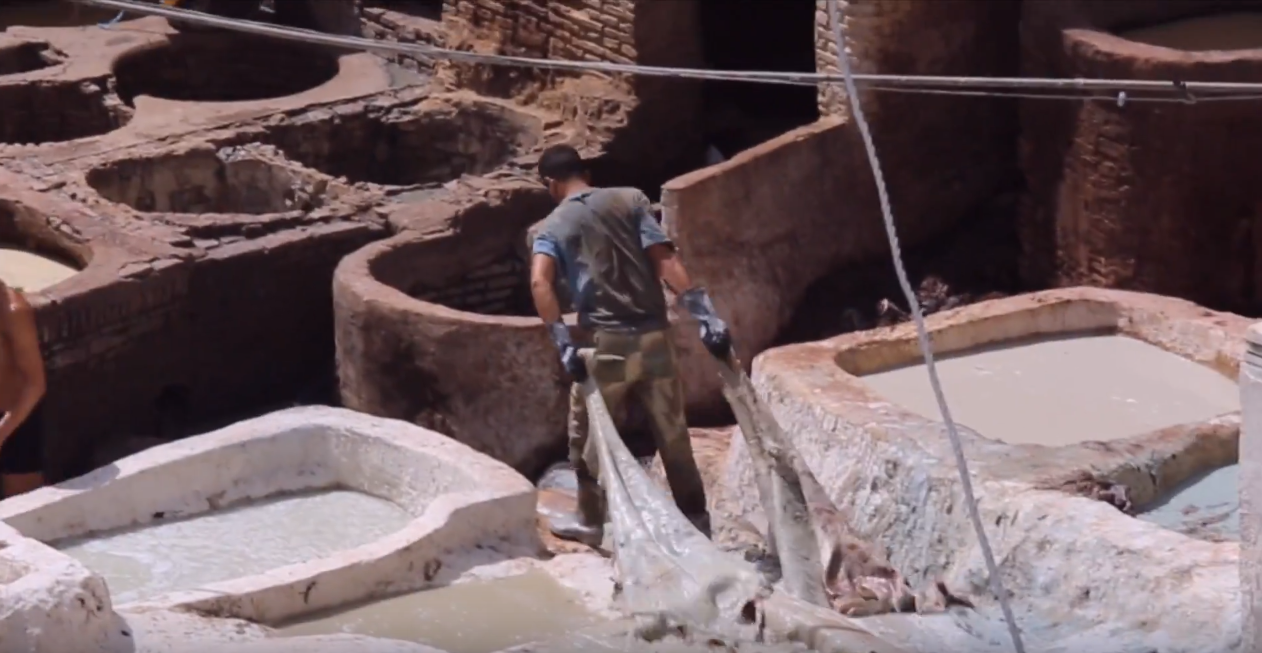
The Chouara tanneries, operating since the 11th century, remain the city’s most immediately striking sight. You look down from leather-goods shop balconies onto circular stone vats filled with natural dyes — saffron yellow, poppy red, indigo blue — while workers tread hides with bare feet exactly as their predecessors did a millennium ago. The ammonia from the pigeon dung used to soften the leather hits before you see anything. Fes el-Bali demands a full day; two is better if you want to move slowly through the souks of the Andalusian quarter and find the Nejjarine fountain and the restored fondouk behind it.
Getting there: The medina is the city — your riad is almost certainly inside it. Enter via Bab Bou Jeloud from the Ville Nouvelle side (petit taxi, 10–15 min). Allow: Full day minimum; two days to go beyond the tourist circuit. Best for: Anyone interested in Islamic architecture, urban history, or pre-industrial craft traditions.
Historic City of Meknes 60 km west — 45 min by train or bus
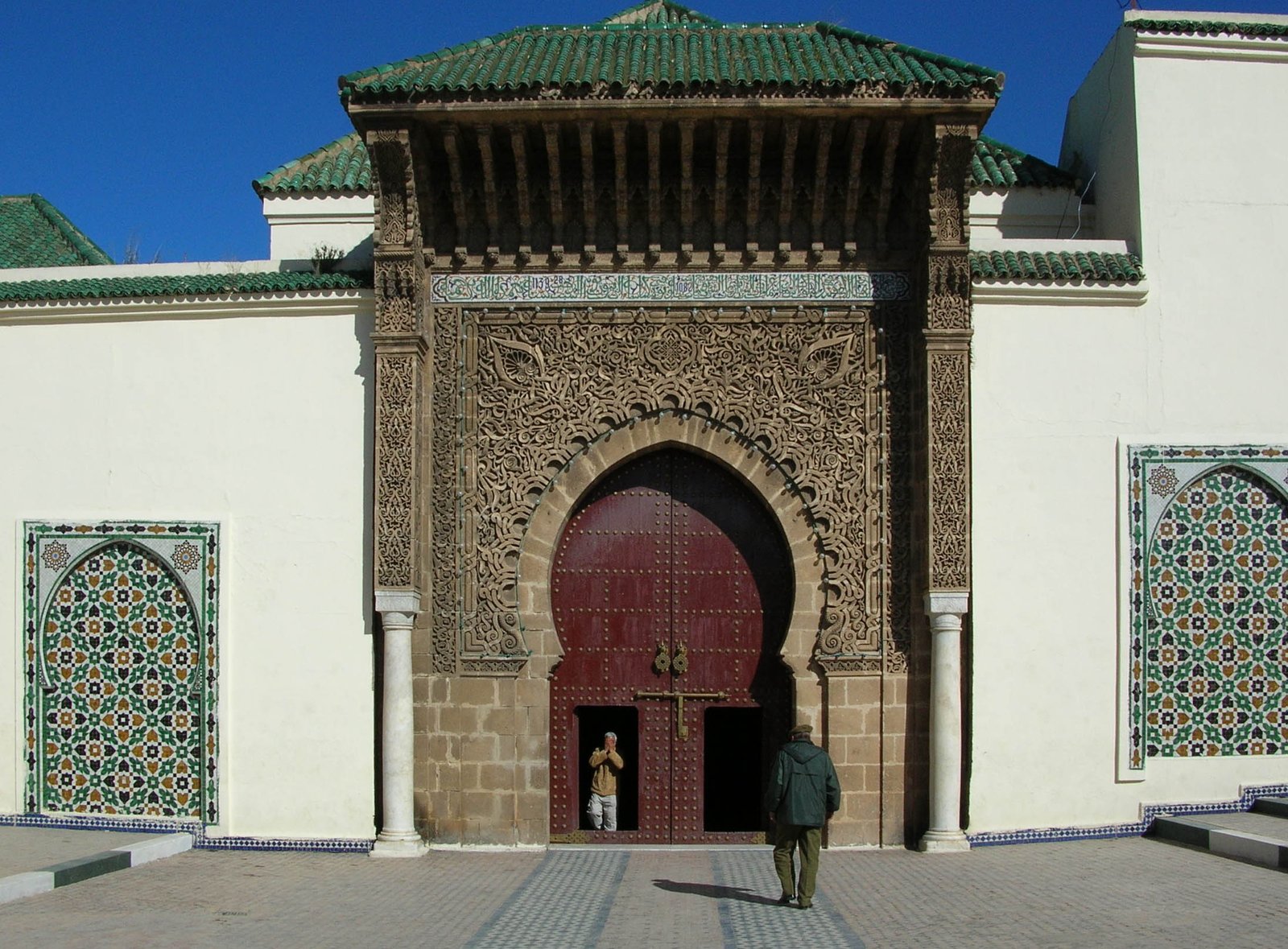
Sultan Moulay Ismail built Meknes as a rival to Versailles — literally. He was the contemporary of Louis XIV, and the ambition was declared rather than implied. During his reign (1672–1727) he transformed a modest Marinid town into an imperial capital ringed by 40 kilometres of walls, punctuated by enormous gates and storehouses whose sheer scale still communicates raw dynastic power. UNESCO inscribed the historic city in 1996.
Bab Mansour, completed in 1732 after Moulay Ismail’s death, is the largest and most ornate gate in Morocco. The arch spans over 12 metres; the façade is covered in Andalusian-style tile zellij and carved stucco in geometric compositions that read clearly from 50 metres away. Behind it, the royal complex unfolds into a series of stables, granaries, and gardens built to support an imperial household of thousands. The Heri es-Souani granaries — vaulted chambers built to store grain and feed 12,000 horses — extend for nearly a hectare underground. Walking through them, the temperature drops and the proportions feel more Roman than Moroccan.
The Mausoleum of Moulay Ismail is one of the few religious monuments in Morocco open to non-Muslims; its painted cedarwood ceilings and fountain-cooled antechambers offer a very different register from the monumental exterior. The medina souks adjacent to the imperial quarter are considerably less crowded than those of Fez and easier to navigate. Most visitors combine Meknes with Volubilis, 30 kilometres further northwest.
Getting there: Direct train from Fez (Gare de Fès) to Meknès; journey approximately 45 minutes, hourly departures. CTM buses also frequent. Allow: Half day for Meknes alone; full day if combining with Volubilis. Best for: Visitors interested in 17th-century Islamic imperial architecture and Moroccan history.
Archaeological Site of Volubilis 80 km west — 1 hr by car; no direct public bus
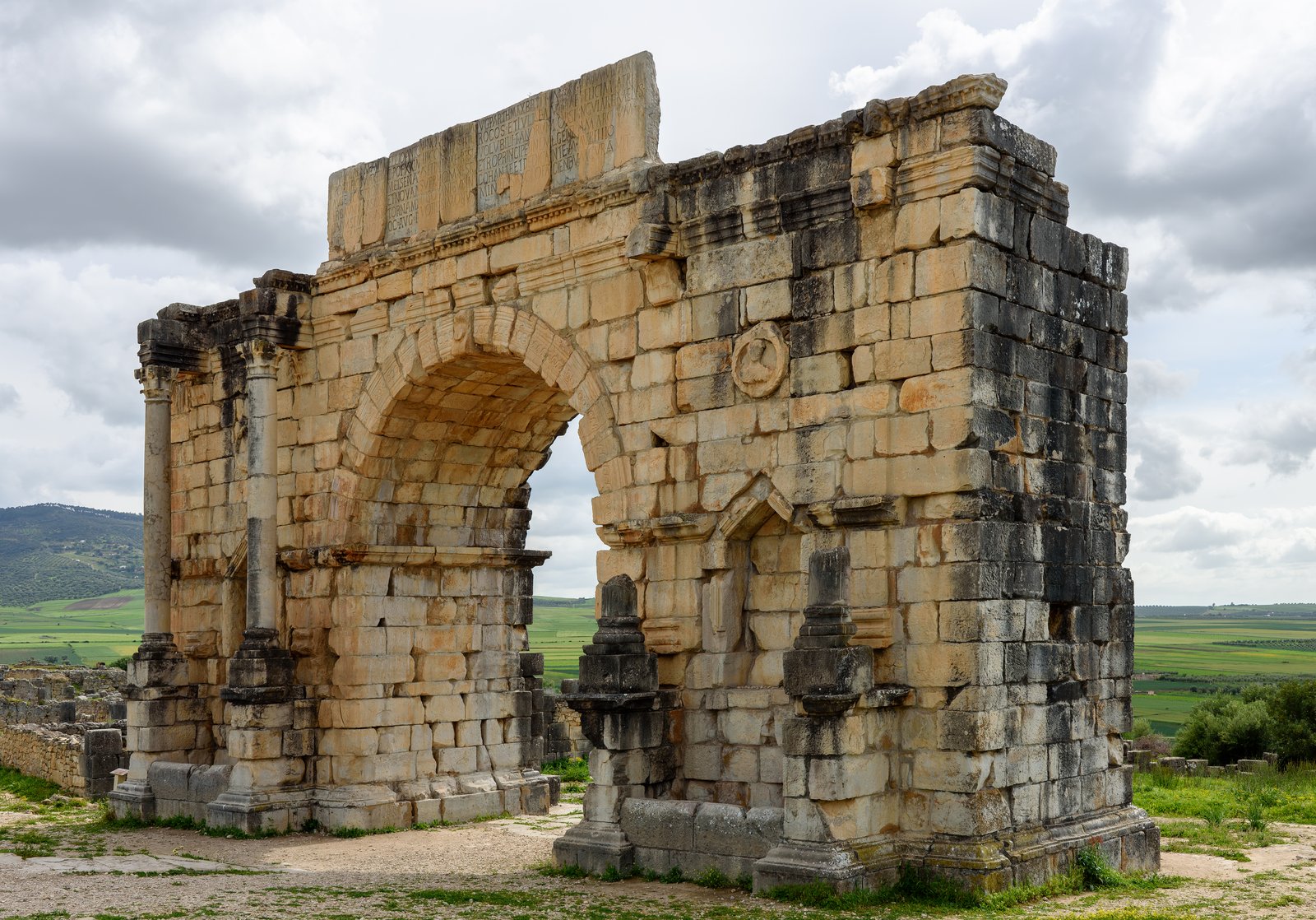
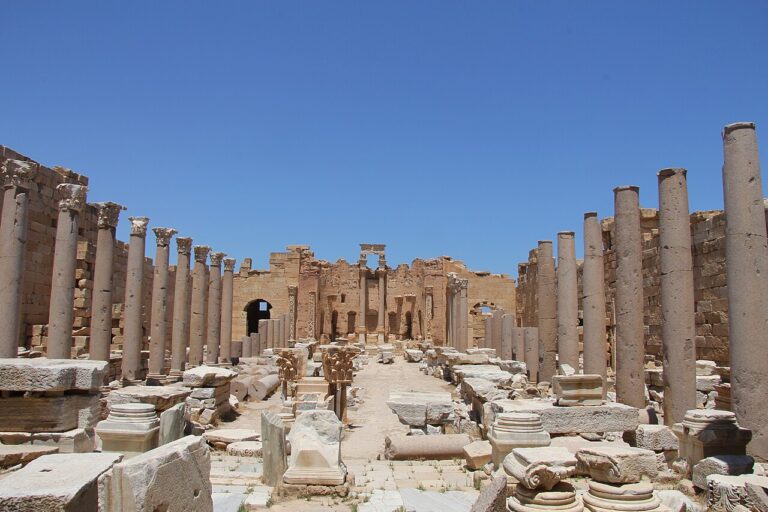
Volubilis is the best-preserved Roman city in Morocco and one of the most significant in the western Mediterranean. Founded as a Berber settlement, it became the capital of the client kingdom of Mauretania Tingitana under Roman patronage around 25 BC, and reached its peak population of roughly 20,000 during the 2nd and 3rd centuries AD. UNESCO inscribed it in 1997. Unlike many classical sites where you reconstruct what stood from faint foundations, Volubilis gives you actual rooms, columns still vertical, and mosaics still covering the floors where they were laid eighteen centuries ago.
The floor mosaics are the site’s most remarkable feature. Dozens survive in situ across the excavated houses of the Decumanus Maximus neighbourhood — scenes of Bacchus and Ariadne, of Orpheus charming animals, of Diana surprised at her bath — the tesserae uneven underfoot in a way that reminds you these were domestic floors, not museum pieces. The Triumphal Arch of Caracalla, erected in 217 AD to honour the emperor and his mother Julia Domna, rises at the city’s main crossroads. Its proportions are confidently Roman. The Capitol temple and three-aisled Basilica stand nearby; the Basilica’s apse is largely intact. Only a third of the site has been excavated. The rest lies under open fields, which gives the whole place an unusually quiet quality — grasshoppers, wind, and almost no sound of other tourists.
Getting there: No direct bus from Fez. Best reached by grand taxi or rental car from Meknes (30 km, 30 min) or from Fez (80 km, 1 hr). Organised day tours from Fez available through city riad guides. Allow: 2–3 hours on site. Best for: Travellers interested in Roman archaeology, classical history, or comparative Mediterranean heritage.
Medina of Tetouan 200 km north — 2.5 hr by CTM coach
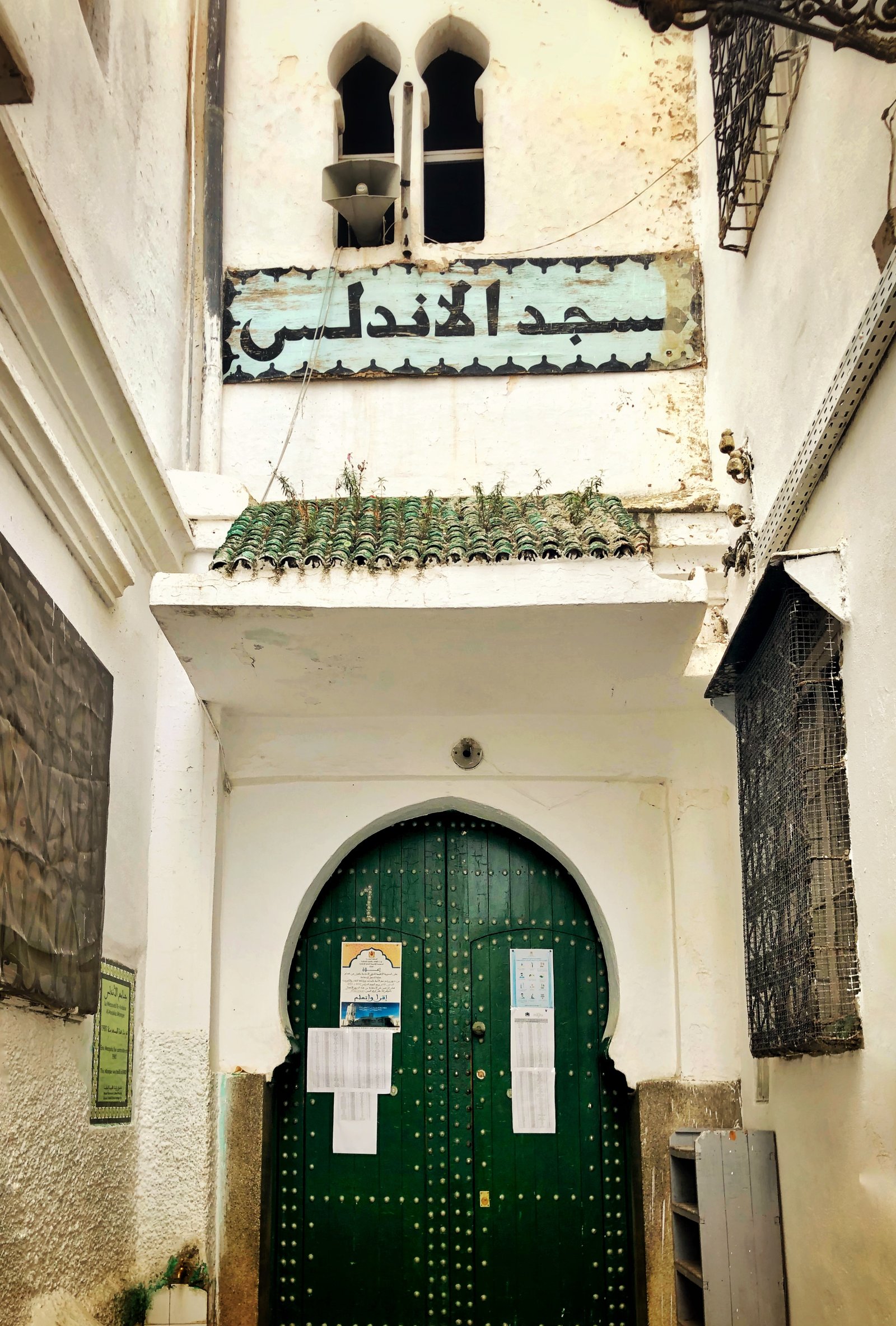
When Granada fell in 1492 and the Spanish crown expelled its Muslim and Jewish populations, thousands made their way across the strait to northern Morocco. Many settled in Tetouan — or rebuilt it, since the city had been largely abandoned. What emerged was a hybrid city: Moroccan in its street grid and souk structure, Andalusian in its house elevations, painted stucco, and ceramic tile traditions. UNESCO inscribed the medina in 1997 as an outstanding example of this Spanish-Moroccan synthesis.
The medina is compact and walkable. Its walls, rebuilt in the 16th century, enclose about 1.5 square kilometres of lanes that alternate between working-class neighbourhoods and stretches of extraordinary domestic architecture — carved wooden screens behind iron grilles, lime-washed façades in pale blue and white, zellige thresholds worn smooth. The Mellah, the former Jewish quarter, stands in the northwest corner of the medina; its streets are slightly wider than the surrounding Muslim neighbourhoods, and many of the doorframes carry the distinctive Hebrew inscriptions that identify where families once lived before emigration thinned the community through the 20th century. The ethnographic museum in the former palace of the Governor of Tetouan holds a focused collection of Hispano-Moresque ceramics, embroidery, and musical instruments that clarifies the cultural exchange behind what you see in the streets.
Tetouan receives far fewer visitors than Fez or Marrakech, which means the medina functions as a working city rather than a tourist environment. It requires more independent navigation but offers something correspondingly more direct. The route from Fez passes through the Rif mountains — the journey itself is scenic.
Getting there: CTM coach from Fez, approximately 2.5 hours, daily departures. Alternatively, train to Tangier then CTM to Tetouan. Allow: Half day in the medina; full day if including the Ethnographic Museum and the hillside quarter of Ain Tissimane. Best for: Travellers interested in Moorish-Andalusian heritage, intercultural history, and less-visited Moroccan cities.
Frequently Asked Questions
How many UNESCO World Heritage Sites are near Fez?
There are four UNESCO World Heritage Sites within reach of Fez. The Medina of Fez itself was inscribed in 1981. The Historic City of Meknes (60 km west) was inscribed in 1996, and the Archaeological Site of Volubilis (80 km west) joined the list in 1997. The Medina of Tetouan (200 km north) was also inscribed in 1997. All four can be visited on day trips or short overnight stays from Fez.
What should I see first in the Medina of Fez, and how long does it take?
Allow at least a full day. The Bou Inania Madrasa near Bab Bou Jeloud is a logical starting point — the carved stucco and cedar woodwork are exceptional and the site is well-signed. From there, navigate south through the medina toward al-Qarawiyyin mosque (exterior only for non-Muslims) and the adjacent Attarine Madrasa. The Chouara tanneries are in the eastern section of the medina; leather-goods shops along Rue Chouara Haddadin provide the standard elevated viewpoint. A knowledgeable local guide is genuinely useful here — the medina has over 9,000 lanes and no logical street grid.
Can Meknes and Volubilis be combined in a single day from Fez?
Yes, and this is the most common approach. Leave Fez by train early (first departure around 6:00 AM) and arrive in Meknes with time to visit Bab Mansour, the Heri es-Souani granaries, and the Mausoleum of Moulay Ismail before noon. A grand taxi from central Meknes to Volubilis takes about 30 minutes; most drivers will wait. Return to Fez by late afternoon train. The day is full but not rushed if you move at a reasonable pace and skip extended souk browsing in Meknes.
What makes Volubilis unusual compared to other Roman sites in the Mediterranean?
The floor mosaics at Volubilis are largely undisturbed in their original positions across dozens of excavated houses — they have not been removed to a museum. Walking through the residential quarter of the Decumanus Maximus, you cross directly over mythological scenes that Roman families walked across daily in the 2nd century AD. The site’s remote setting, combined with the fact that roughly two-thirds of the city remains unexcavated beneath open fields, gives it a quality of incompleteness that most heavily visited Roman sites have lost.
Sources
- S1 — Le Tourneau, Roger. Fès avant le protectorat: Étude économique e sociale d'une ville de l'Occident musulman. SMER, 1987. ISBN 978-2-87678-003-3.
- S2 — Rogerson, Barnaby. Marrakesh, Fez, Rabat. Cadogan Guides, 2000. ISBN 978-1-86011-973-6.
Spotted an error? Write to editorial@culturalheritageonline.com and we correct it the same day.
.jpg)


