No capital on the African continent puts five UNESCO World Heritage Sites within a two-hour radius the way Tunis does. Two inscribed properties are reachable by suburban train in under thirty minutes. A third — the medieval holy city of Kairouan — arrives by bus in under two hours. The fourth, a Roman amphitheatre that ranks among the largest ever built, sits at the end of a direct train line. The fifth, a Numidian and Roman town preserved on a hillside in the Tunisian interior, demands a private car but rewards the detour with one of the Mediterranean’s least-visited ancient landscapes. Together these five sites — inscribed between 1979 and 1997 — make Tunisia one of the most rewarding heritage destinations outside Europe. This guide covers all of them, with honest transport times and what to expect on arrival. From Cultural Heritage Online.
Medina of Tunis City centre
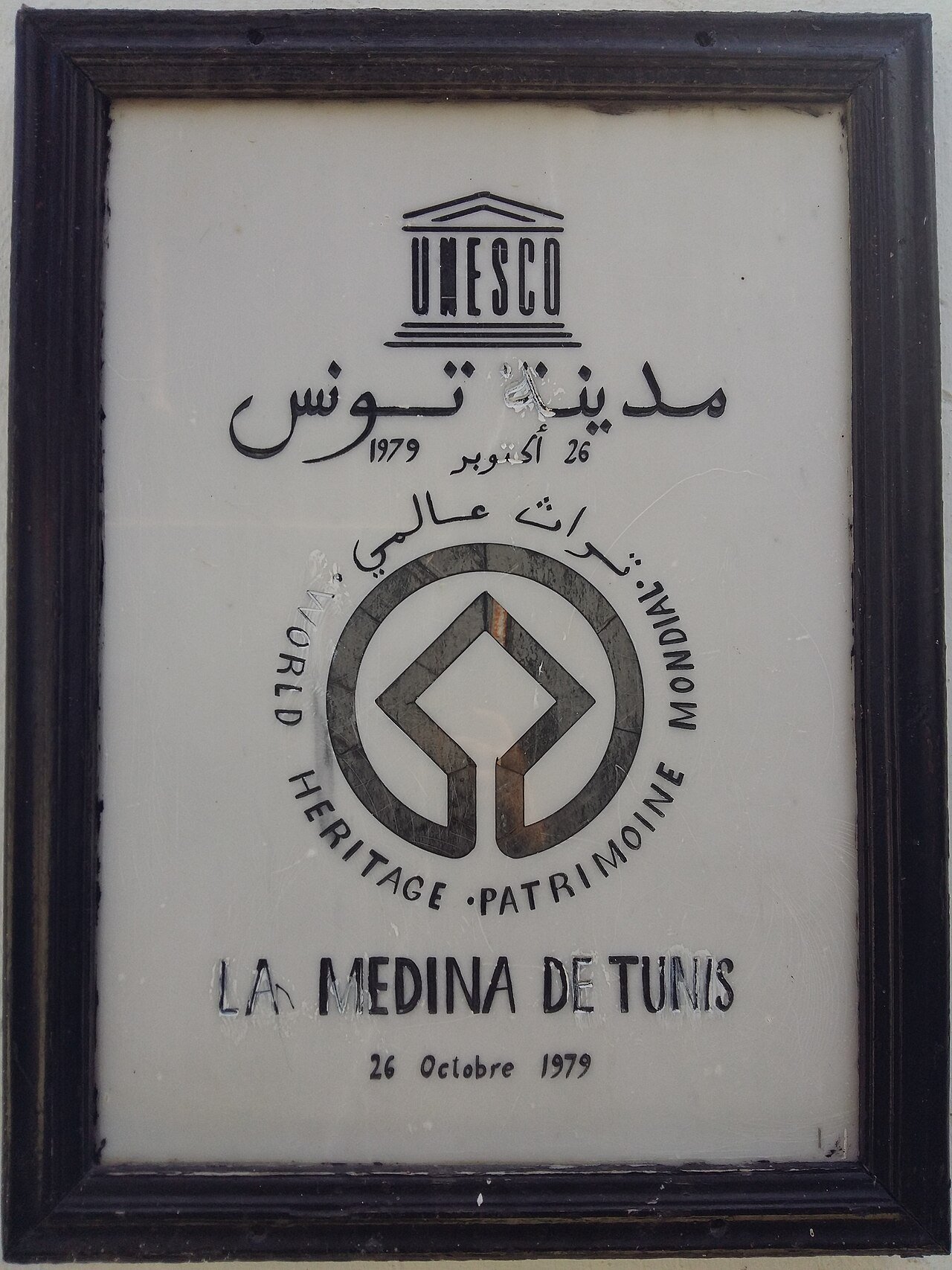
Inscribed in 1979, the Medina of Tunis developed from the seventh-century Arab city built around the Great Mosque of Zitouna — founded in 703 CE and still the spiritual and architectural centre of the district. At its medieval peak under the Hafsid dynasty (1229–1574), the medina held more than seven hundred mosques, palaces, madrasas, and fondouks within a walled area of roughly 270 hectares. That fabric, dense and remarkably intact, is what you navigate today: a grid of covered souks arranged by trade, each specialising in goods that have barely changed in centuries — perfume merchants near the Great Mosque, cloth sellers in the Souk el-Koumach, dyers and leather workers toward the outer walls. The smell of cedar dust from the woodworkers’ quarter drifts across intersections where the medieval street pattern has not shifted since the Hafsid era. More than one hundred thousand people still live inside the inscribed boundary, which makes this a working district rather than a preserved relic.
Getting there: The Medina is the historic core of central Tunis. From Tunis Marine (TGM coastal railway terminus) or Tunis Ville (main station), the main entrance at Bab Bhar (Port Gate) is a five-minute walk south along Avenue de France. Bus lines converge on the perimeter. Allow: 3–4 hours for the main souks and the Zitouna Mosque courtyard; a full day if you include the Bardo National Museum nearby. Best for: Urban architectural history, Islamic medieval heritage, active market culture.
Archaeological Site of Carthage 20 min by TGM train
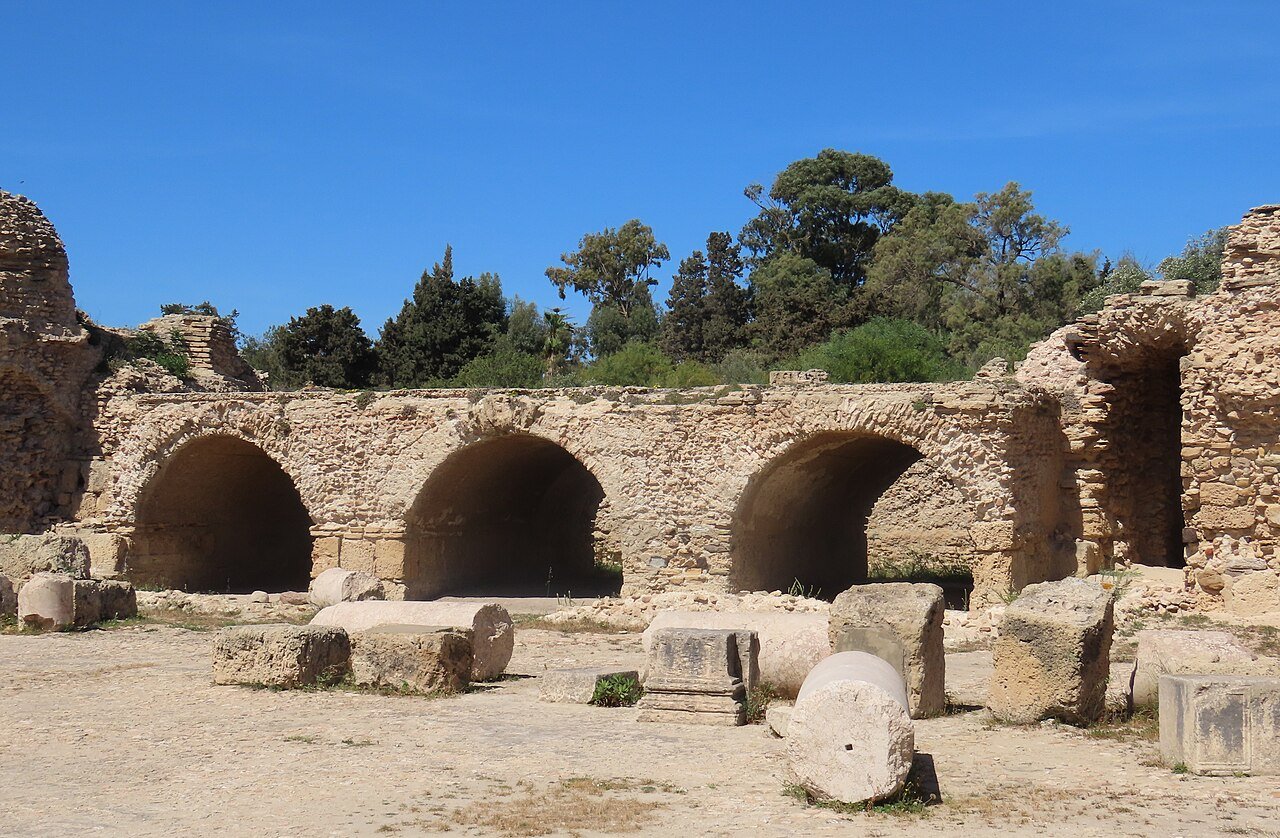
Founded by Phoenician settlers from Tyre around 814 BCE according to ancient sources — a date broadly consistent with archaeological evidence — Carthage grew into a maritime power that controlled trade across the western Mediterranean for five centuries. The Roman destruction of 146 BCE after the Third Punic War was thorough enough that the city was essentially levelled and salted, yet within a century Julius Caesar had ordered its refoundation as a Roman colony. The Roman city that rose from 44 BCE became the capital of the province of Africa Proconsularis and eventually one of the four largest cities of the empire, with an estimated population of 300,000 at its height. What remains today is spread across a hillside suburb of modern Tunis: the Antonine Baths (second century CE, among the largest thermal complexes in the ancient Roman world at roughly four hectares), the Tophet sanctuary, Punic ports, villas with mosaic floors, and the Carthage National Museum. No single monumental ruin dominates; the site requires patience and some orientation before it coalesces into a coherent picture of superimposed civilisations.
Getting there: TGM suburban railway from Tunis Marine or Tunis Ville to Carthage-Hannibal station — approximately 20 minutes, trains run every 30 minutes during daytime hours. The main archaeological zone is a short walk from the station. Allow: 2–3 hours for the principal zones; add 1 hour for the Carthage National Museum. Best for: Phoenician and Roman archaeology, mosaic collections, sea-view hillside setting.
Medina of Kairouan 1 hr 30 min by bus
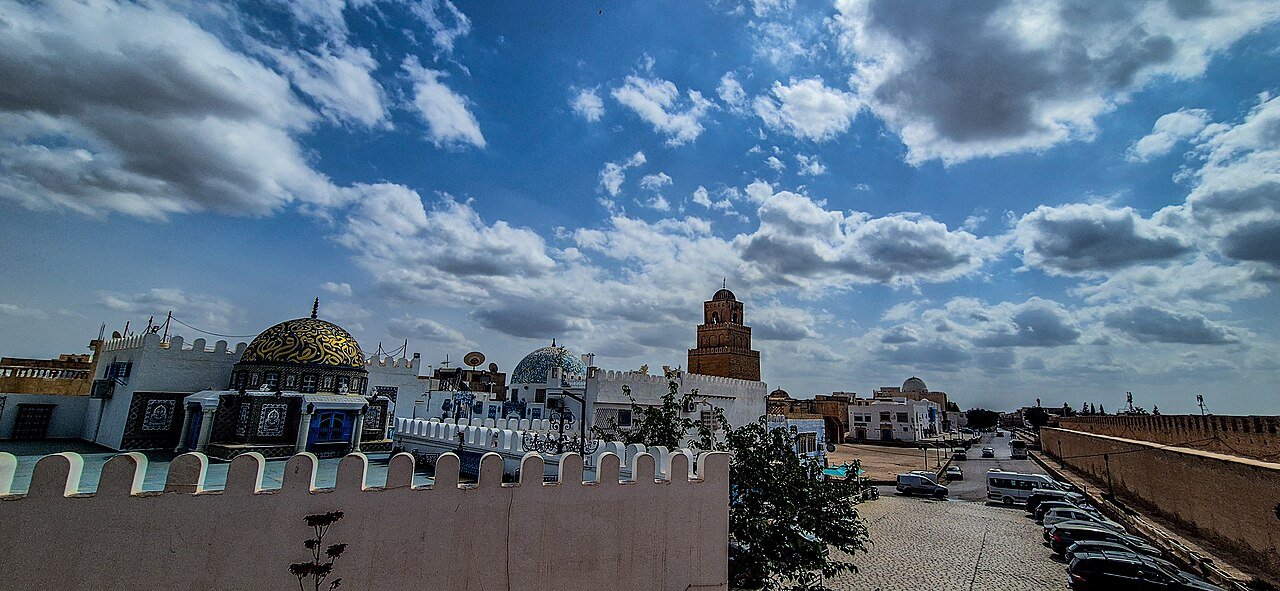
Kairouan was the first Arab city founded in North Africa, established in 670 CE by the general Uqba ibn Nafi on flat scrubland 160 kilometres south of Tunis. For two centuries it served as the capital from which Islamic rule expanded across the Maghreb and into the Iberian Peninsula, a status that gave the city an outsized religious significance it still carries. The Great Mosque of Kairouan, first built under Uqba in 670 and expanded to its current form under the Aghlabid emir Ziyadat Allah I between 836 and 863 CE, is considered the oldest and architecturally most influential mosque in the western Islamic world — its minaret, measuring 31.5 metres, set a proportional template replicated from Morocco to Andalusia. The inscribed medina (1988) extends well beyond the mosque to include the eighth-century Mosque of the Three Doors, Aghlabid water basins capable of holding 57,000 cubic metres of rainwater, and a dense residential and commercial urban fabric. Outside Mecca, Medina, and Jerusalem, Kairouan holds a devotional gravity rarely found in any Muslim city.
Getting there: SNTRI intercity buses depart from Tunis South Terminal (Gare Routière Sud, near Bab Alioua) several times daily — journey is approximately 1 hour 30 minutes to 2 hours depending on service. Shared taxis (louages) from Bab Alioua station are faster when full (around 1 hour 15 minutes) and depart when a car fills. No train connection exists. Allow: 3–4 hours for the Great Mosque, medina souks, and Aghlabid Basins. Best for: Islamic architecture, living medieval urban fabric, deeply meaningful pilgrimage destination.
Amphitheatre of El Jem 2 hrs by train
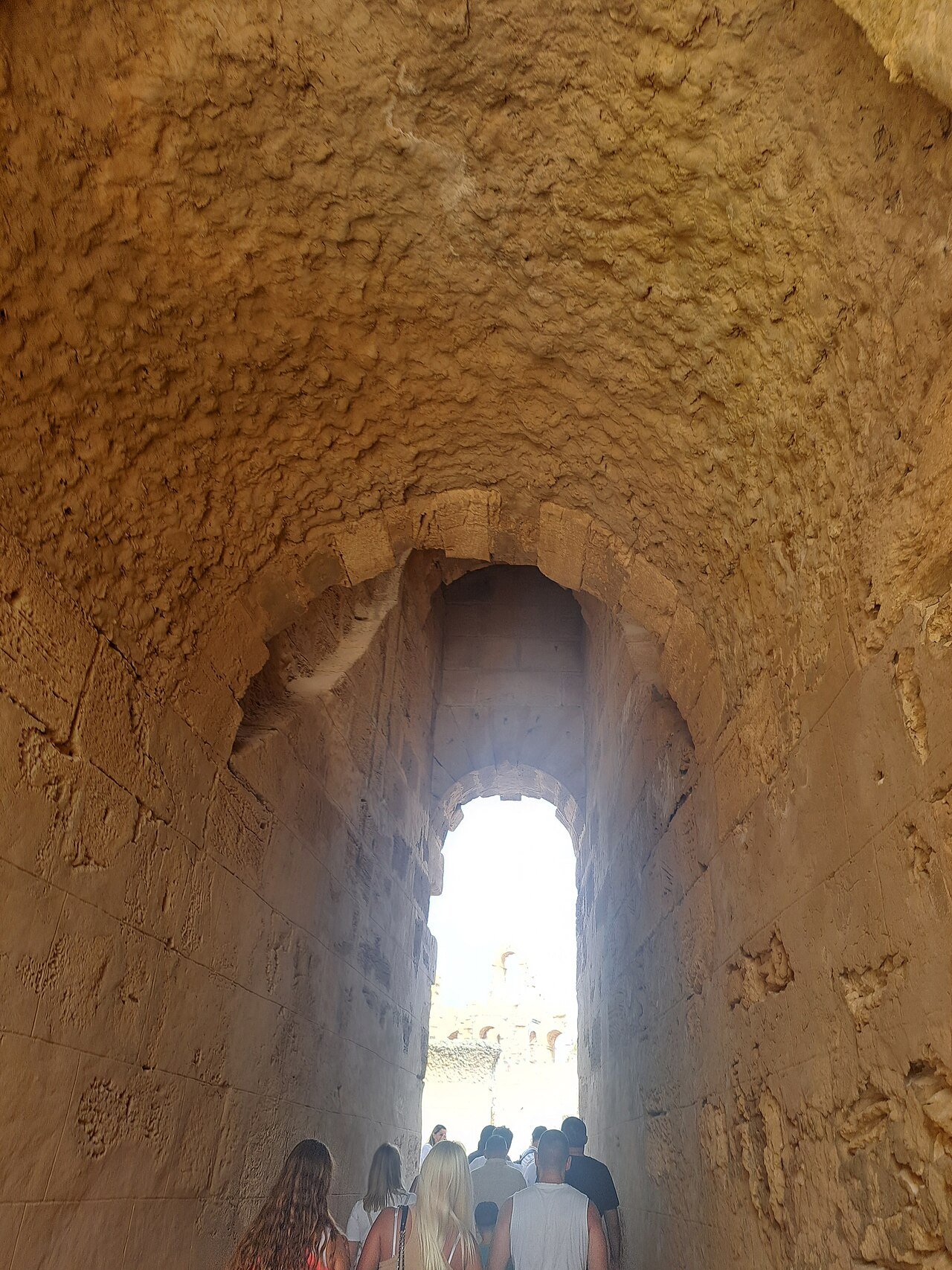
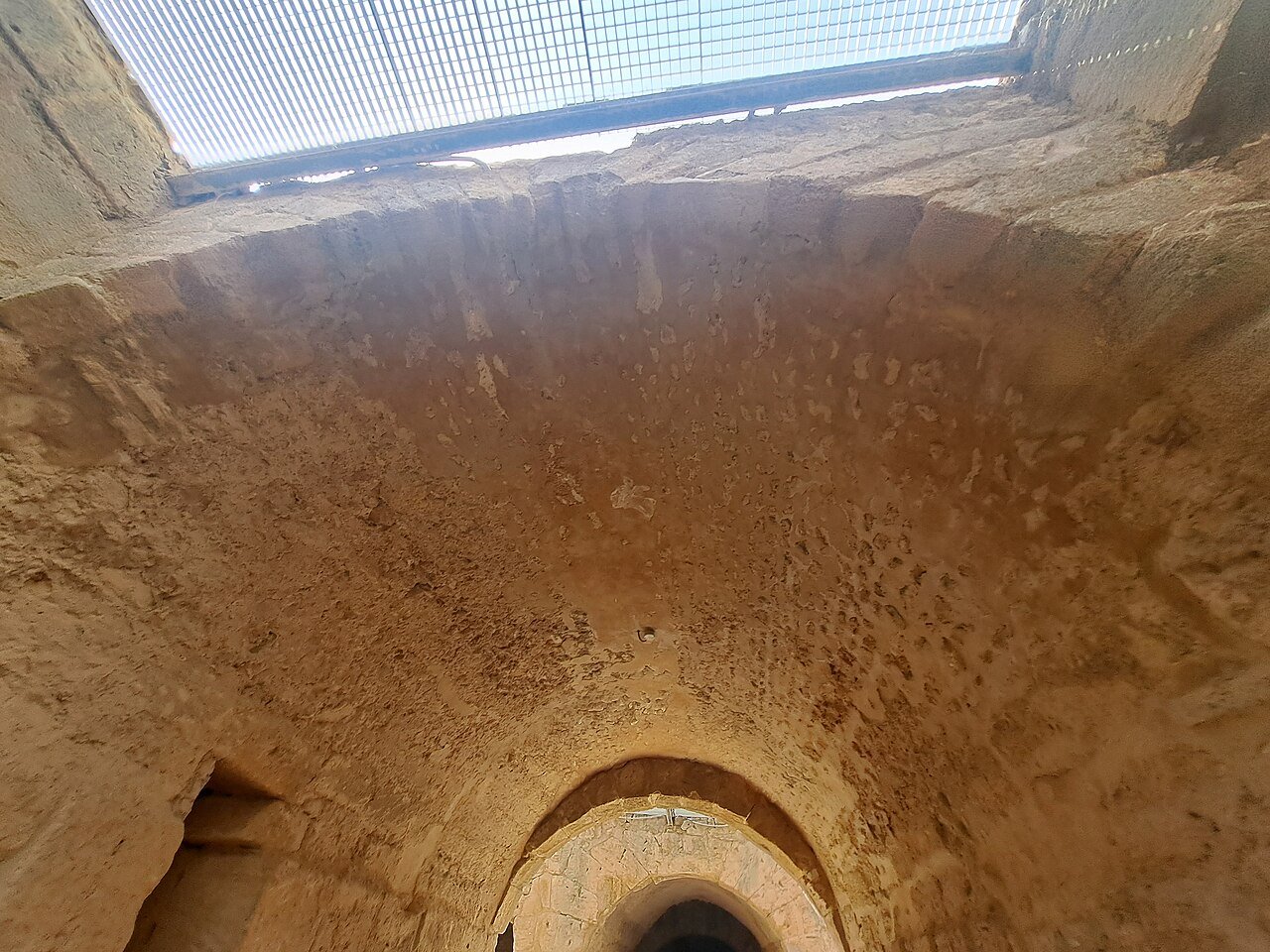
Inscribed in 1979, the Amphitheatre of El Jem is the largest Roman building in Africa and the third largest amphitheatre ever built, after the Colosseum in Rome and the amphitheatre at Capua. Construction began under the proconsul Gordian I around 230–238 CE, using local sandstone quarried nearby; the structure measures 148 by 122 metres at its outer walls and could seat an estimated 35,000 spectators. Unlike the Colosseum, El Jem was never completed — Gordian I declared himself emperor in 238 CE, triggering a civil war in which he died within months, and construction stopped. The shell that remained was used as a fortress by Berber resistance forces in the seventh century, part of its outer wall eventually demolished in 1695 to flush out rebels hiding inside. What stands today is among the best-preserved Roman amphitheatres in the world precisely because the town of El Jem grew up around rather than on top of it. The arena floor and most of the underground service tunnels — where animals and equipment were held before entering the arena — remain accessible to visitors, and the stone seating tiers convey the scale in a way photographs rarely capture.
Getting there: Direct train from Tunis Ville on the Sfax/Gabes line to El Jem station — approximately 2 hours. The amphitheatre is a 50-metre walk from the station exit: it is visible from the platform. Several trains daily; check SNCFT schedules in advance as afternoon services are limited. Allow: 1–2 hours, plus 30 minutes for the adjacent museum of mosaics. Best for: Roman imperial architecture, accessible underground galleries, one of Africa’s most dramatic ancient monuments.
Dougga / Thugga 1 hr 30 min by car
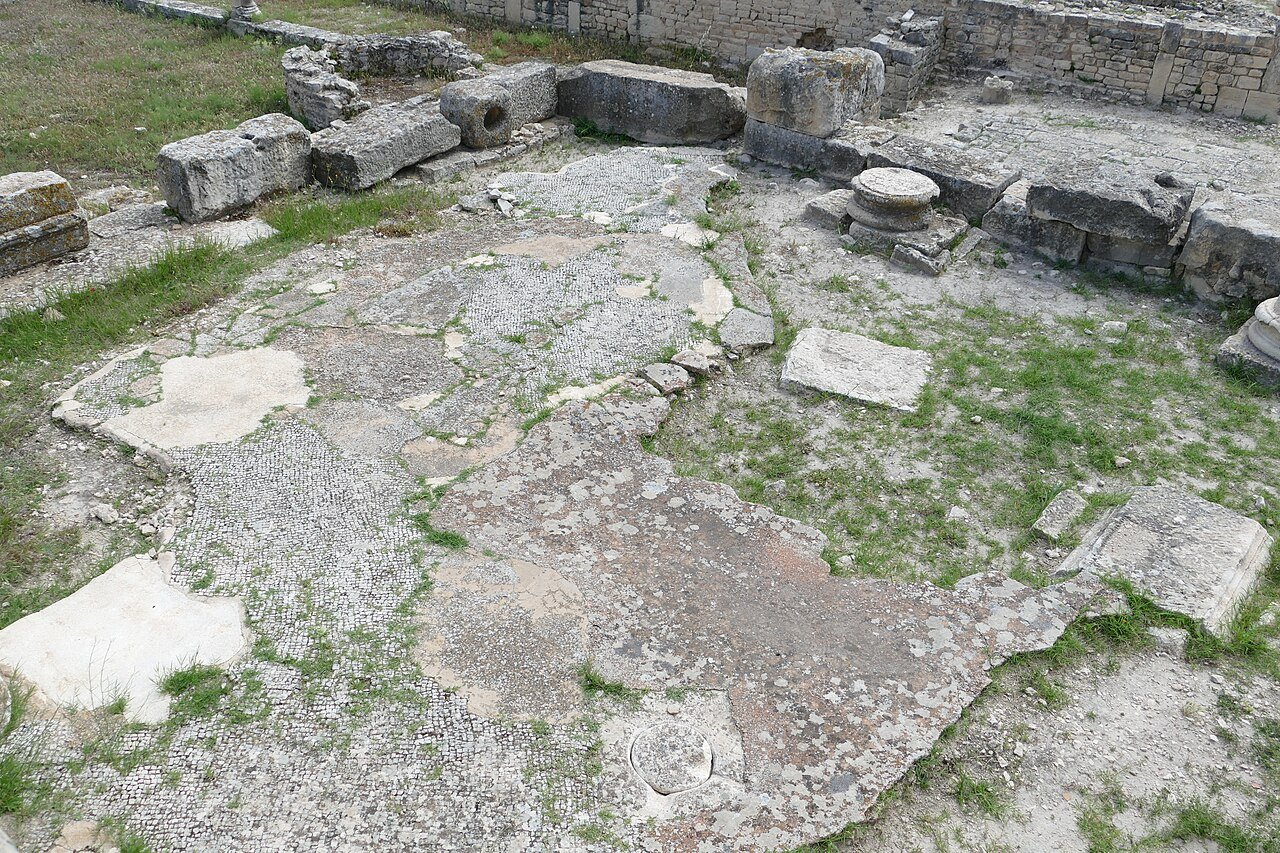
Dougga occupies a hillside in the Tunisian interior 110 kilometres south-west of Tunis, overlooking agricultural valleys that have been cultivated without interruption since antiquity. The site’s importance is that it preserves layers of Numidian, Punic, and Roman occupation across 65 hectares, largely without the modern urban overlay that has complicated interpretation elsewhere. The Numidian town — known as Thugga — existed before Roman annexation of North Africa; the Libyco-Punic mausoleum on the eastern edge of the site (dating to the second century BCE) is one of the best-preserved pre-Roman monuments in the country. Under Rome, Dougga became a municipium in 205 CE and a colonia in 261 CE, accumulating the public architecture visible today: a Capitoline temple dedicated to the Capitoline Triad in 166–167 CE with six Corinthian columns still standing to full height, a theatre cut into the hillside in 168–169 CE with a capacity of 3,500, a forum, thermal baths, and a triumphal arch. The site was inscribed in 1997 and sees a fraction of the visitors drawn to more accessible Tunisian monuments, which makes a visit here feel less curated than most comparable Roman sites in North Africa.
Getting there: No direct public transport exists. By car from Tunis, take the A3 motorway toward Le Kef and exit for Teboursouk (approximately 1 hour 30 minutes driving). A louage from Bab Saadoun terminal in Tunis toward Le Kef will stop at Teboursouk; from there a local taxi covers the remaining 12 kilometres to the site. Allow extra time for this connection. Allow: 2–3 hours on site. Best for: Roman and pre-Roman North Africa, uncrowded ancient landscape, one of the best-preserved Capitoline temples outside Italy.
Frequently Asked Questions
How many UNESCO World Heritage Sites are within two hours of Tunis?
Five inscribed properties lie within two hours of the Tunisian capital: the Medina of Tunis (city centre), the Archaeological Site of Carthage (20 minutes by suburban train), the Medina of Kairouan (roughly 1 hour 30 minutes by bus), the Amphitheatre of El Jem (2 hours by train), and Dougga / Thugga (1 hour 30 minutes by car). Tunisia holds a total of nine UNESCO World Heritage Sites; five of them cluster around Tunis in a way that makes the city the most heritage-dense starting point for cultural travel anywhere in Africa.
Which UNESCO site is closest to Tunis city centre?
The Medina of Tunis itself is the closest — it is the historic core of the city, accessible on foot from the main train stations. The Archaeological Site of Carthage is the next closest at around 20 minutes by TGM suburban railway from Tunis Marine. Both can be visited in the same day without difficulty.
What is the best season to visit UNESCO sites near Tunis?
Spring (March to May) and autumn (September to November) offer the most comfortable conditions — daytime temperatures between 18 and 26 degrees Celsius, lower visitor numbers than summer, and manageable heat at the outdoor sites of Carthage, El Jem, and Dougga. Summer (June to August) is viable but temperatures at El Jem and Dougga regularly exceed 38 degrees Celsius by midday; early morning visits are strongly recommended. The Medina of Tunis and Kairouan are covered environments where heat is less of a concern, though Kairouan in July and August can be very hot. December to February is generally mild in Tunis but wetter, and Dougga’s access road can be difficult after rain.
Do visitors need a visa to enter Tunisia, and what should they know about transport between sites?
Citizens of the European Union, United Kingdom, United States, Canada, and most other Western countries can enter Tunisia visa-free for stays of up to 90 days — confirm current rules with the Tunisian embassy or official government sources before travelling, as conditions can change. On transport: the TGM suburban railway (Tunis to Carthage) and the national rail network SNCFT (Tunis to El Jem) are both reliable and inexpensive. Long-distance buses operated by SNTRI connect Tunis to Kairouan. Dougga has no practical public transport link and requires hiring a car or negotiating a day-trip taxi from Tunis or Le Bardo. Shared taxis (louages) are the fastest and cheapest option for Kairouan but depart only when the vehicle is full.
Sources
- UNESCO World Heritage List — Tunisia: whc.unesco.org/en/statesparties/tn
- UNESCO inscription — Medina of Tunis (1979): whc.unesco.org/en/list/036
- UNESCO inscription — Archaeological Site of Carthage (1979): whc.unesco.org/en/list/037
- UNESCO inscription — Medina of Kairouan (1988): whc.unesco.org/en/list/499
- UNESCO inscription — Amphitheatre of El Jem (1979): whc.unesco.org/en/list/038
- UNESCO inscription — Dougga / Thugga (1997): whc.unesco.org/en/list/794