Chengdu puts three UNESCO World Heritage inscriptions within reach of a single base: a 2,300-year-old irrigation marvel 45 minutes away by high-speed rail, a Taoist mountain rising behind it, and a panda sanctuary two hours into the mountains. A fourth inscription — Jiuzhaigou’s kaleidoscopic alpine valleys — requires a five-hour bus ride or a short flight north, and rewards the effort with scenery that resists easy description. All four sites represent different facets of Sichuan’s layered heritage, from engineering genius and living religion to biodiversity conservation at continental scale. This guide covers every inscription, with transport details, visit durations, and practical logistics for independent travellers. Editorial from Cultural Heritage Online.
Mount Qingcheng and Dujiangyan Irrigation System 45 min by rail
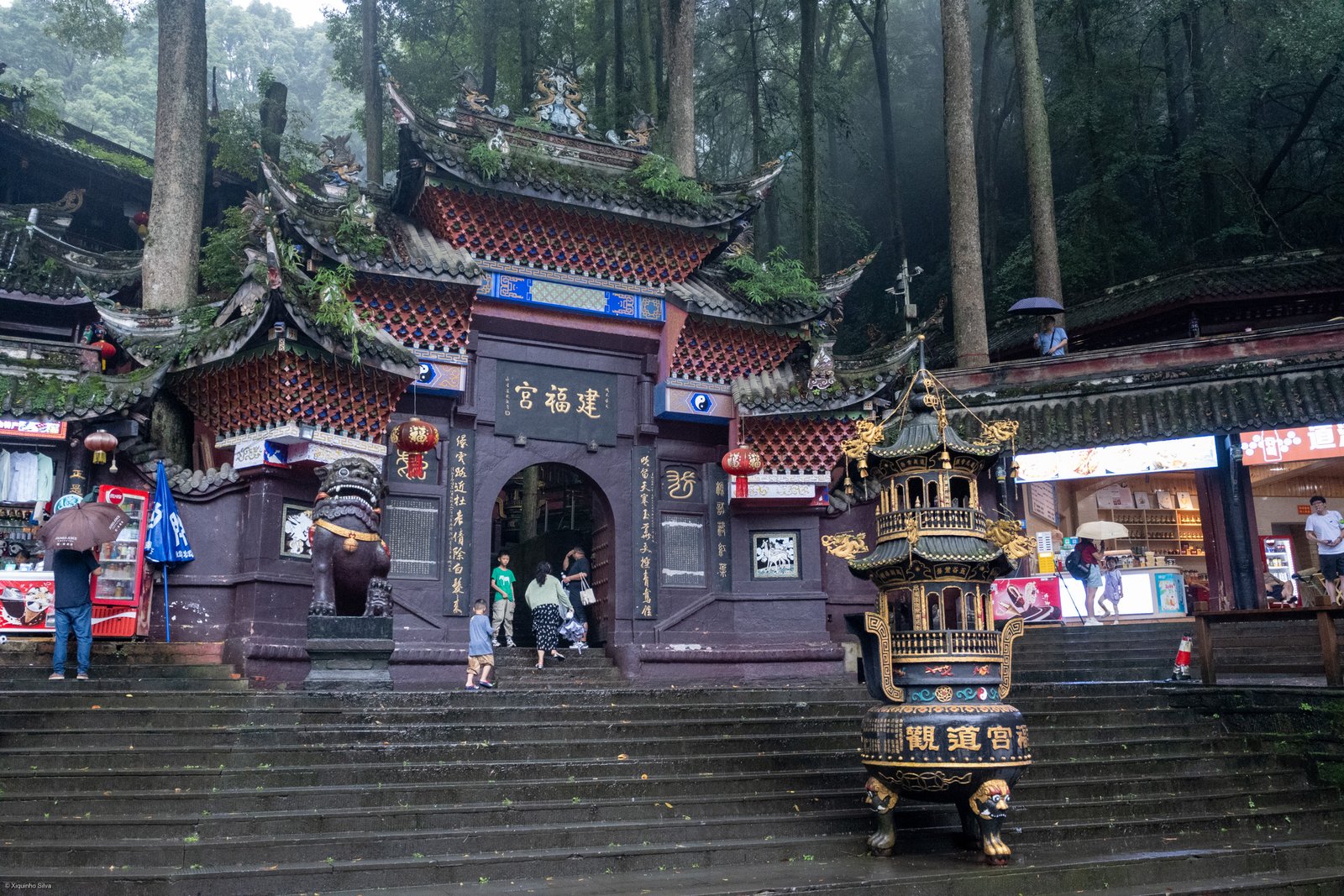
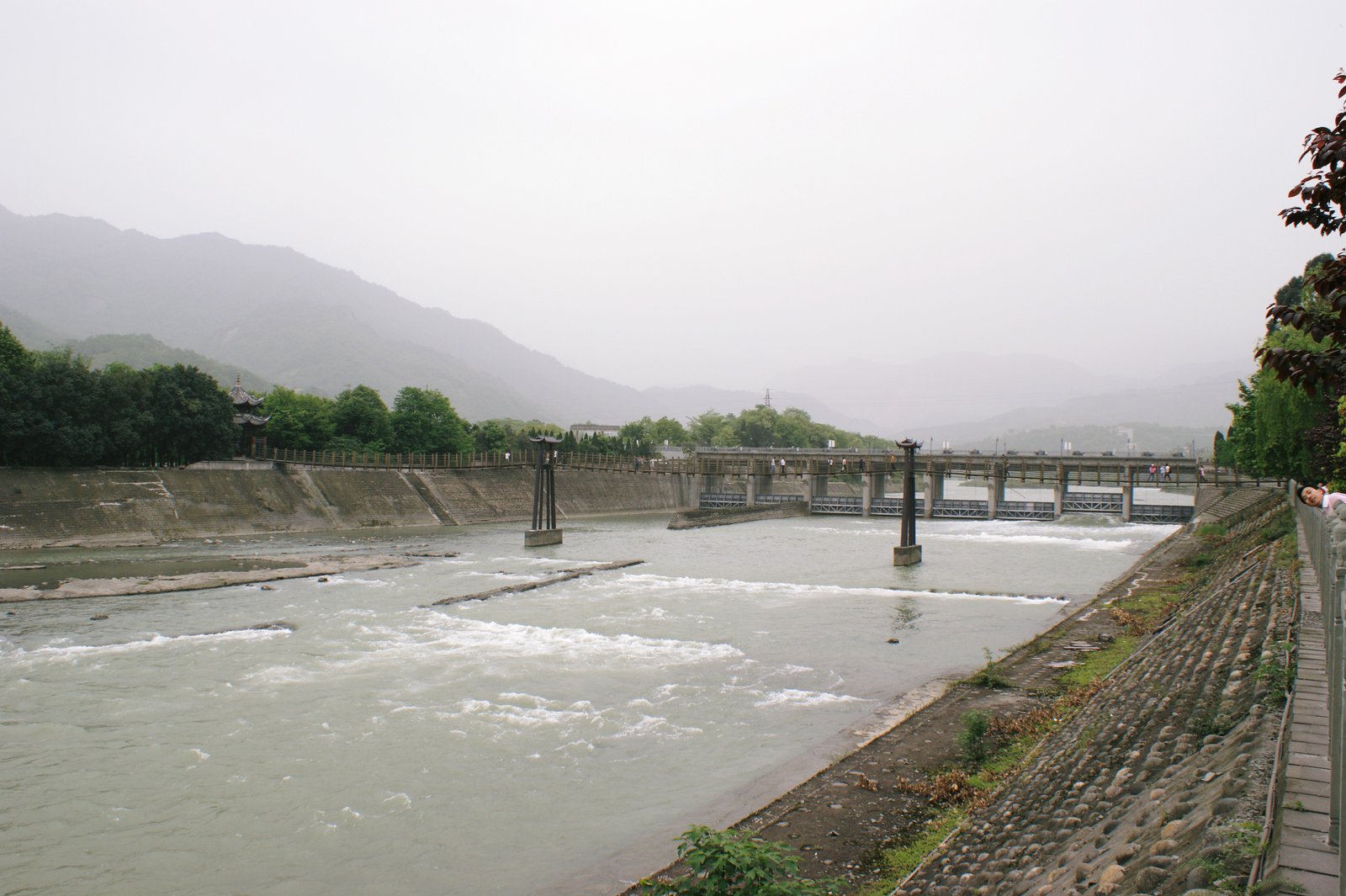
These two sites share a single UNESCO inscription, awarded in 2000, and they share a geography: Dujiangyan sits at the foot of the same mountain range that Mount Qingcheng crowns. Li Bing, governor of Shu for the State of Qin, designed the Dujiangyan system around 256 BC — an irrigation network that channelled the Min River across the Chengdu Plain without a dam, using three interlocking earthworks to divide, slow, and filter the flow. The Fish Mouth Levee, the Feisha Weir, and the Bottle-Neck Channel remain the system’s operating components today, still irrigating 668,700 hectares of farmland. Li Bing’s genius lay in reading the river rather than blocking it; the roar of the divided waters at the Fish Mouth carries across the suspension bridges that span the site. Mount Qingcheng, 15 kilometres south-west, belongs to a different register entirely. Zhang Daoling established the Way of the Five Pecks of Rice here in 142 AD, making Qingcheng one of Taoism’s founding sacred sites. Eleven temples ascend the forested slopes; the Tang-dynasty Jianfu Palace, rebuilt through the Qing period, anchors the lower mountain with its layered wooden eaves above deep-green moss. The upper peak reaches 1,600 metres and the air smells of wet stone and pine resin.
Getting there: CRH high-speed rail from Chengdu North station to Dujiangyan station, 45 minutes, trains every 30 minutes. Dujiangyan irrigation site is a 15-minute taxi from the station; Mount Qingcheng requires a further 15-minute drive or shuttle to the cable-car base. Allow: half a day for Dujiangyan alone; a full day to combine both sites. Best for: engineering history, Taoist religious culture, hiking (Qingcheng has marked trail circuits at front and rear mountain).
Sichuan Giant Panda Sanctuaries — Wolong 2 hrs by car
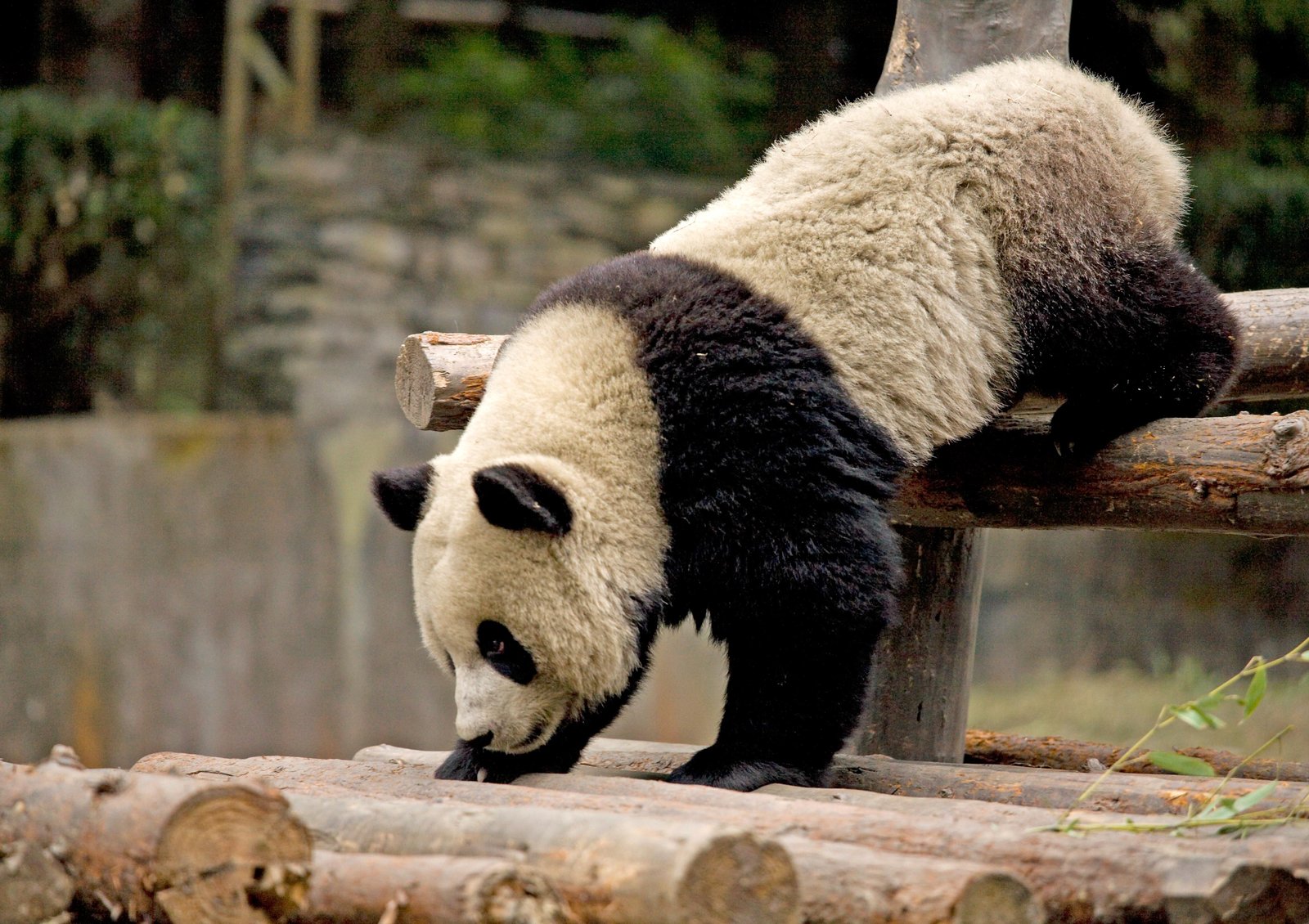
The Sichuan Giant Panda Sanctuaries received UNESCO inscription in 2006, recognised as the largest remaining contiguous habitat for the giant panda. The designation covers 924,500 hectares across eight nature reserves and nine scenic parks in the Qionglai and Jiajin mountains — an area larger than Cyprus. Wolong Nature Reserve, the most accessible component from Chengdu, is home to the China Giant Panda Protection and Research Centre, where semi-wild enclosures allow visitors to observe captive-born pandas at close range against a backdrop of bamboo forest and high-altitude meadow. The sanctuaries shelter more than 30 percent of the world’s wild giant panda population, alongside red pandas, snow leopards, and clouded leopards. Botanically, the site ranks among the richest outside tropical rainforests, with between 5,000 and 6,000 recorded flora species and ecosystems that resemble Paleogene paleo-tropical forests in structure. The 130-kilometre drive from Chengdu climbs steadily through river gorges; the elevation change from city to reserve is over 2,000 metres, and the temperature drops noticeably.
Getting there: 130 km north-west of Chengdu via Dujiangyan; approximately 2 hours by private car or hired minibus. No direct public bus serves Wolong — shared transport options involve a connection at Yingxiu. Allow: half a day minimum at the panda centre; a full day if combining with the reserve’s hiking trails. Best for: wildlife observation, conservation tourism, mountain scenery; note that altitude gain means warmer clothing is advisable even in summer.
Jiuzhaigou Valley Scenic and Historic Interest Area 5 hrs by bus or 1 hr by air
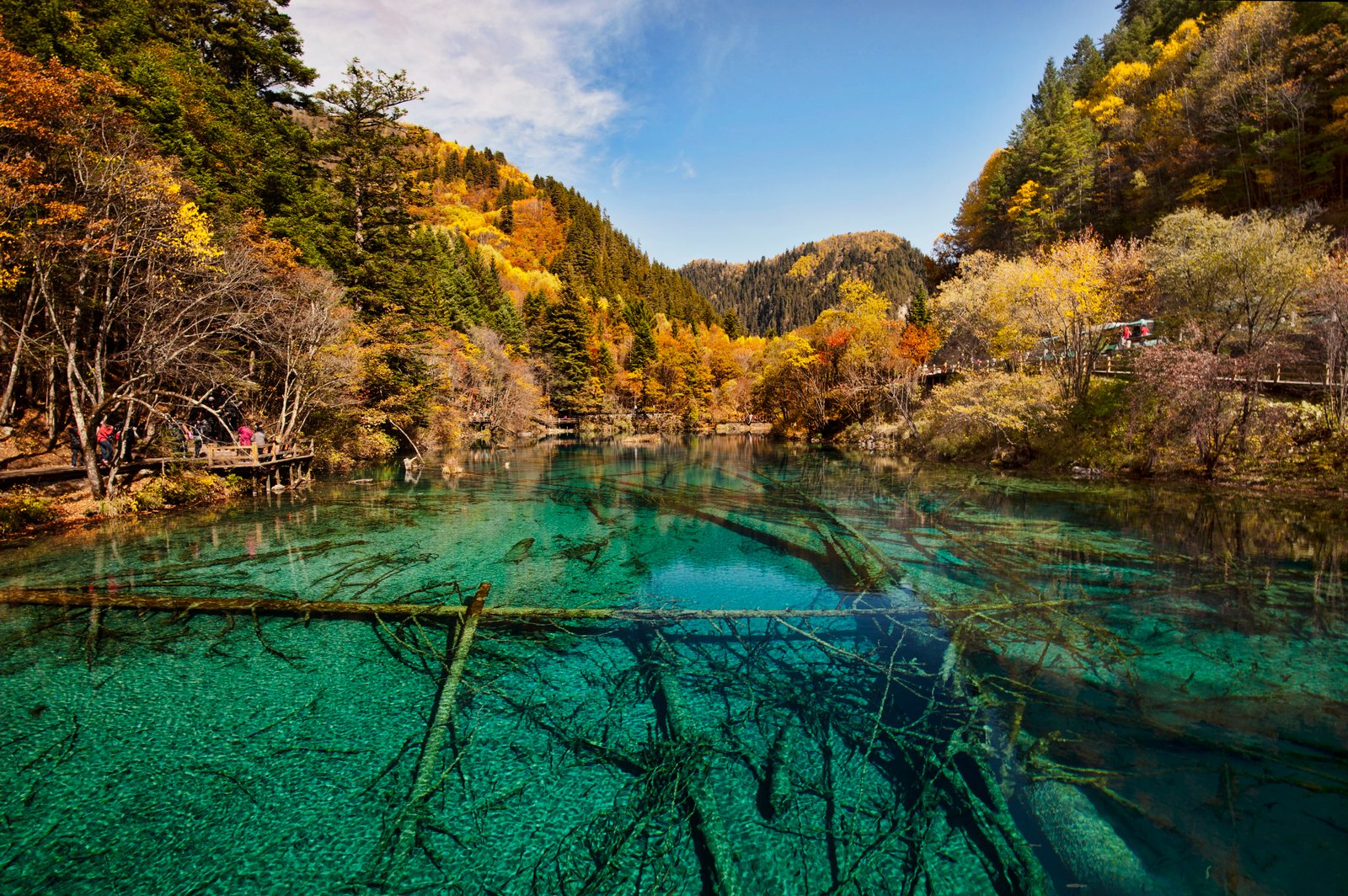
Jiuzhaigou was inscribed as a UNESCO World Heritage Site in 1992, and added to the UNESCO Man and Biosphere Reserve network in 1997. The valley covers 72,000 hectares at elevations between 2,000 and 4,500 metres in the Min Mountains, a geologically active zone where glacial, tectonic, and karst processes have shaped a landscape of exceptional visual intensity. The lakes — dozens of them, stacked along three tributary valleys — owe their improbable colouration to dissolved calcium carbonate precipitating as travertine; the mineral content and depth together produce blues, greens, and turquoises that shift with the angle of the sun and the season. Forestry scientist Wu Zhonglun surveyed the region in 1975 and documented its case for formal protection, leading to the establishment of Jiuzhaigou as a provincial nature reserve in 1980 and its opening to visitors in 1984. A magnitude 7.0 earthquake in August 2017 damaged parts of the valley floor, particularly Sparkling Lake; the site reopened in March 2018 on a controlled-capacity basis, with daily admissions now capped at 41,000 via timed tickets that must be booked in advance. An overnight stay in Songpan or at valley-edge hotels allows an early entry before crowds arrive.
Getting there: 350 km north of Chengdu. By bus: intercity services from Chadianzi Bus Station (Chengdu) to the valley entrance, approximately 5 hours. By air: flights from Chengdu Shuangliu International Airport to Jiuzhai Huanglong Airport, approximately 1 hour; note that the airport sits at 3,500 metres altitude — allow time to acclimatise before strenuous walking. Allow: a full day minimum; overnight recommended to use two timed entry windows. Best for: geological landscape, alpine lake photography, high-altitude hiking; book timed tickets via the official Jiuzhaigou ticketing platform well in advance during peak season (July–October).
Frequently Asked Questions
How many UNESCO World Heritage Sites are near Chengdu?
Three inscriptions fall within practical day-trip or overnight reach of Chengdu: Mount Qingcheng and the Dujiangyan Irrigation System (inscribed 2000), the Sichuan Giant Panda Sanctuaries (inscribed 2006), and Jiuzhaigou Valley (inscribed 1992). The first two share a single UNESCO designation. Jiuzhaigou requires either a five-hour bus journey or a one-hour flight from Chengdu and is best treated as an overnight excursion rather than a day trip.
Which UNESCO site is closest to Chengdu?
The Dujiangyan Irrigation System is the closest, approximately 60 kilometres north-west of central Chengdu. High-speed rail from Chengdu North station reaches Dujiangyan in around 45 minutes, with trains running every 30 minutes throughout the day. Mount Qingcheng, which shares the same inscription, is a short taxi or shuttle ride from the Dujiangyan rail station.
Do international visitors need a visa to enter China, and what is the best season for these sites?
Most foreign nationals require a Chinese visa in advance, though China has expanded visa-free agreements for short stays — check current bilateral arrangements for your passport before travelling. For the Chengdu UNESCO sites, September and October offer the best combination of clear skies and comfortable temperatures at altitude, particularly for Jiuzhaigou, where autumn foliage intensifies the lakeside colours. Spring (April–May) is also pleasant; summer sees peak crowds, and Jiuzhaigou’s timed ticket allocation sells out weeks ahead during July and August.
Is a transport card useful for getting around Chengdu and to the UNESCO sites?
A Tianfu Tong card (Chengdu’s reloadable transit card) covers metro and city bus fares within the urban area, but high-speed rail tickets to Dujiangyan must be purchased separately via the 12306 national rail app or at station ticket windows — passport registration is required. For Wolong and Jiuzhaigou, no single card covers intercity travel; bus tickets for Jiuzhaigou are sold at Chadianzi Bus Station, and transport to Wolong is most practically arranged through a local agency or private hire vehicle.
Sources
- UNESCO World Heritage Centre — Mount Qingcheng and the Dujiangyan Irrigation System (inscription 2000)
- UNESCO World Heritage Centre — Sichuan Giant Panda Sanctuaries (inscription 2006)
- UNESCO World Heritage Centre — Jiuzhaigou Valley Scenic and Historic Interest Area (inscription 1992)
- Wikipedia — Dujiangyan: historical construction dates, Li Bing, engineering specifications
- Wikipedia — Jiuzhaigou: area, elevation, visitor statistics, 2017 earthquake details