Sources
- S1 — Olsson, Christer. Volvo: Personvagnarna från 20-tal till 90-tal. Norden Media, 1996. ISBN 978-91-86442-17-0.
- S2 — Lindh, Björn-Eric. Volvo: The Cars from the Twenties to the Eighties. Motorbooks International, 1986. ISBN 978-0-87938-222-3.
On April 14, 1927, the very first production Volvo car—an open touring model designated ÖV 4 and nicknamed "Jakob"—rolled through the factory gates at Lundby on the island of Hisingen in Gothenburg. Founded by SKF sales manager Assar Gabrielsson and engineer Gustav Larson, Volvo was built on an uncompromising principle: that automobiles must be engineered first and foremost for human safety, endurance, and harsh Scandinavian road conditions.
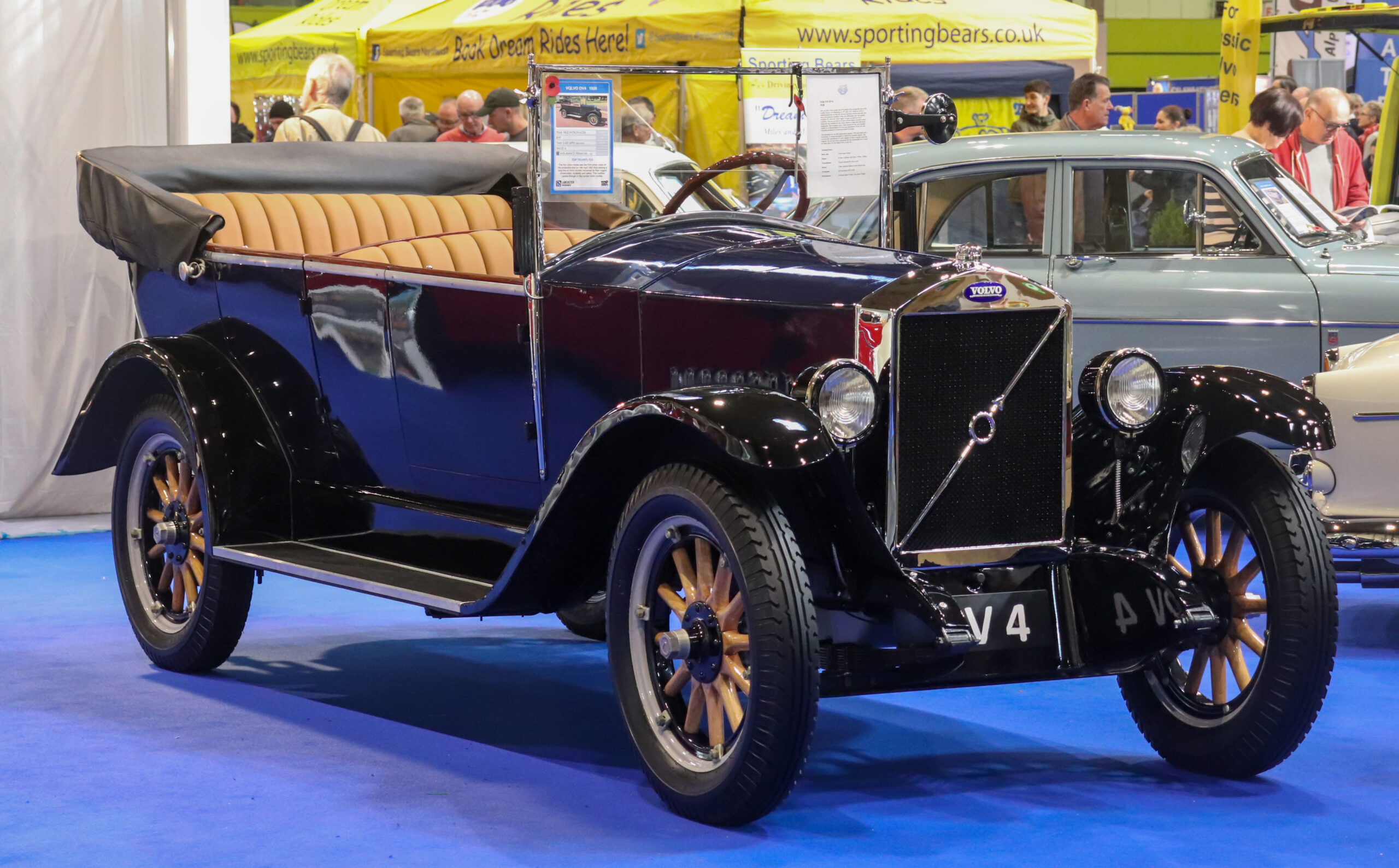
The SKF Heritage and the Lundby Assembly Line
In the mid-1920s, American and Continental automobiles imported into Sweden struggled with the country’s unpaved roads and sub-zero winter temperatures. Assar Gabrielsson (1891–1962), a sales executive at ball bearing manufacturer SKF, teamed up with mechanical engineer Gustav Larson (1887–1968) to build an automobile suited to Swedish conditions. According to company tradition, the founders first outlined their partnership over a crayfish dinner at Sturehof in Stockholm in 1924.
Backed by financing and facilities from SKF, they adopted the trademark *Volvo* ("I roll"), originally registered by SKF in May 1915 for a specialized line of ball bearings. The first production model, the ÖV 4 ("Öppen Vagn 4-cylindrig"), featured a frame of ash and beech sheathed in Swedish steel sheet metal and a 28-horsepower four-cylinder engine. Within a year, Volvo complemented passenger car output with heavy commercial trucks (Type 1), establishing a dual foundation in personal mobility and heavy transport.
The Safety Standard of the World: Nils Bohlin and Gothenburg
Volvo’s emphasis on protective engineering reached a turning point in 1959, when Volvo safety engineer Nils Bohlin invented the three-point lap-and-diagonal safety belt. In an extraordinary decision, Volvo released the patent as an open standard for all automobile manufacturers worldwide, saving an estimated one million lives over the following decades.
Today, Volvo’s industrial heritage in Gothenburg is showcased at the *World of Volvo* experience center, inaugurated in 2024 near Liseberg, and at its historic Lundby engineering campus. As the marque approaches its 1927–2027 centenary, the iron mark (*järnmärket*) remains an internationally recognized symbol of Scandinavian automotive design and safety innovation.
Automotive Salon: All-Steel Coachwork, Chassis Engineering, and Vehicle Safety
Original historical newsreel from the Istituto Luce Cinecittà Archive illustrating early all-steel safety bodywork, chassis engineering, and automotive exhibitions in the 1920s; this is period footage illustrating the era's automotive engineering and does not show Volvo. (Source: Historical Archive Istituto Luce Cinecittà / Period Newsreels)
Interactive 360° Heritage View: World of Volvo & Historic Lundby Industrial Campus
Historical Location: Lyckholms Torg 1, 412 63 Gothenburg, Sweden (Coordinates: 57.6892, 11.9967)