
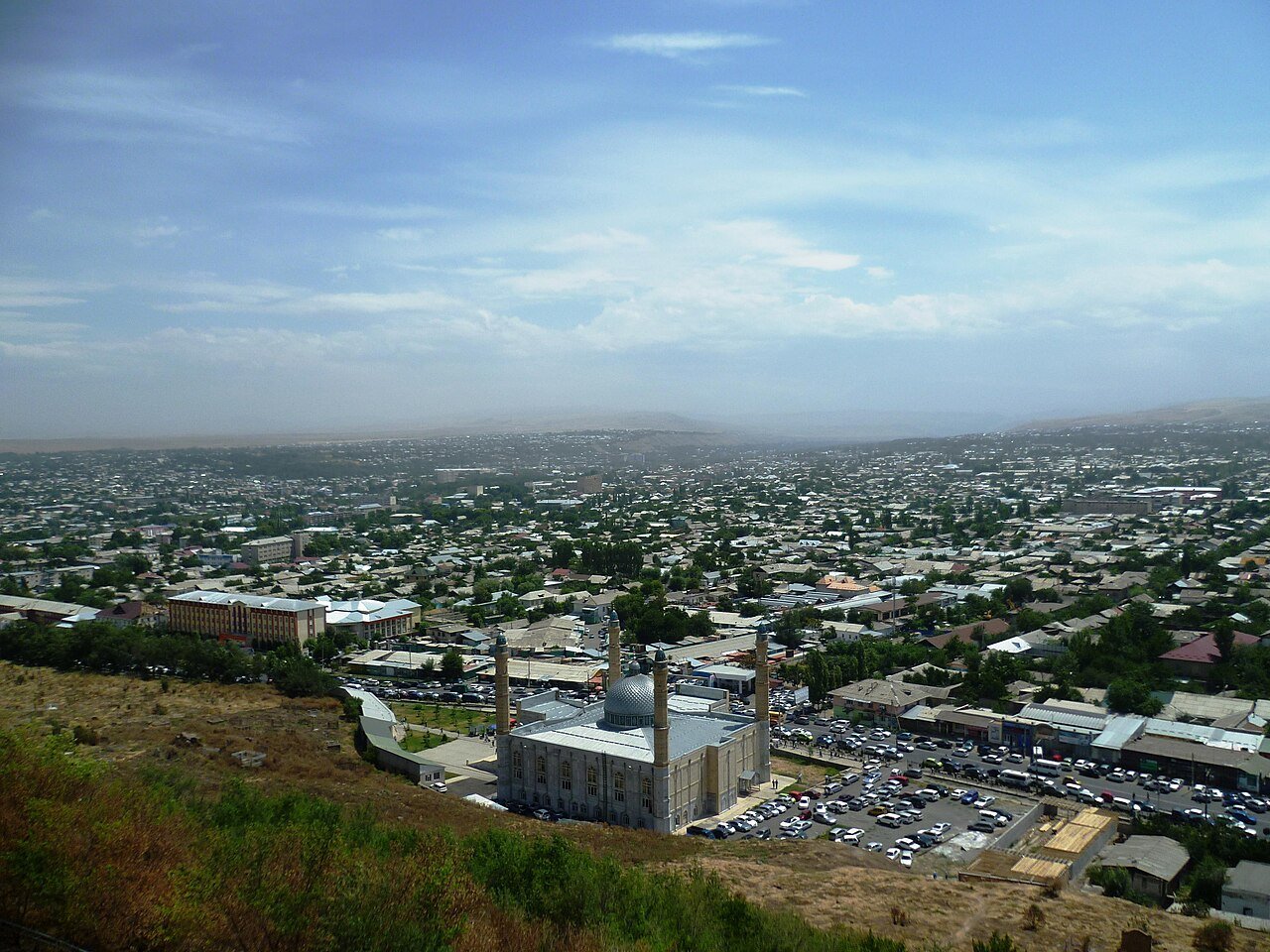
Kyrgyzstan holds three UNESCO World Heritage Sites, two of them reachable from Bishkek: the sacred mountain of Sulaiman-Too in Osh and the transboundary wilderness of the Western Tian-Shan. Together they span 3,000 years of continuous pilgrimage and one of the world’s most biodiverse mountain ranges. From Cultural Heritage Online.
Sulaiman-Too Sacred Mountain 300 km south — 5 hr by road or 1 hr by domestic flight
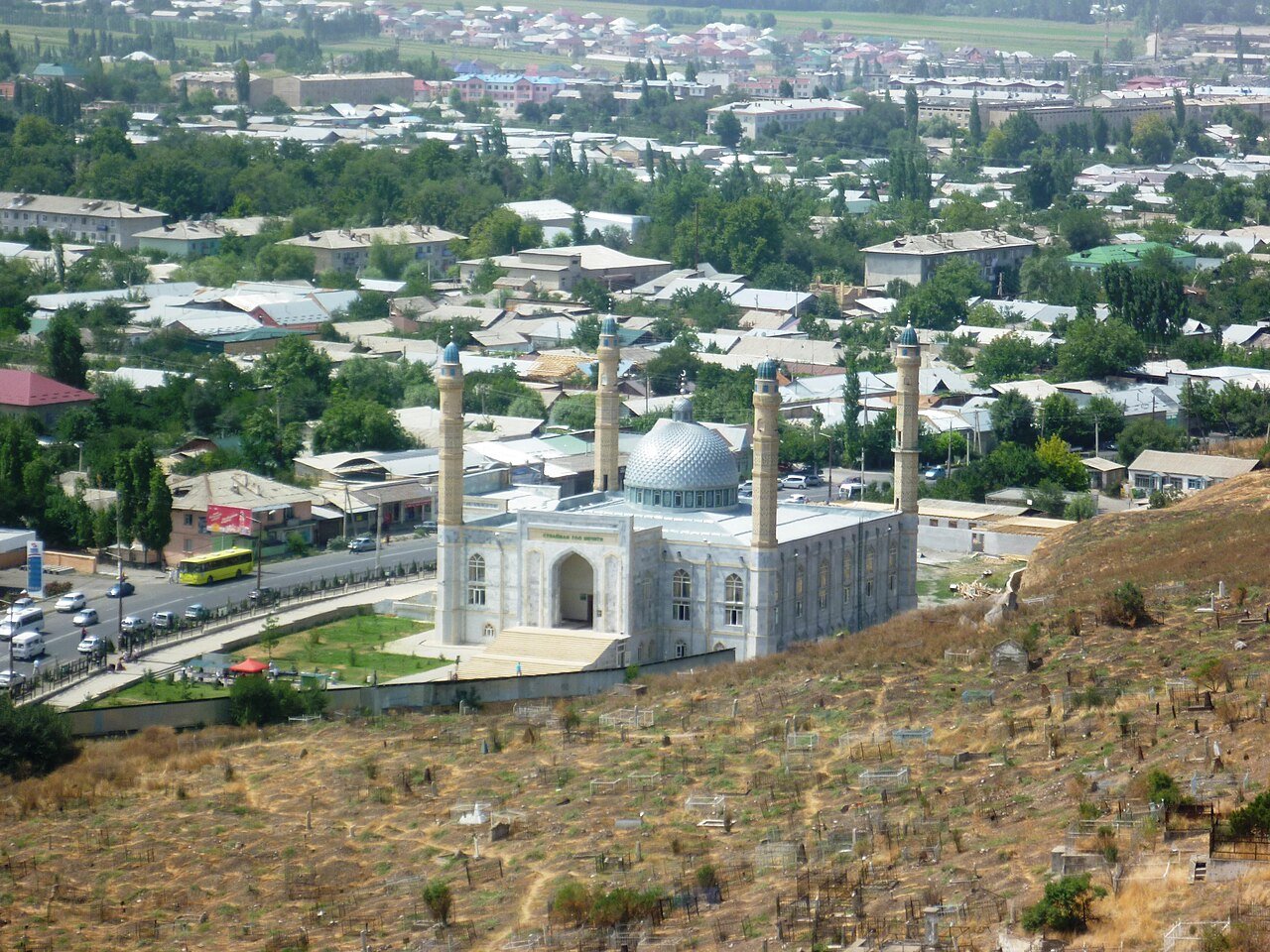
Sulaiman-Too rises from the middle of Osh — Kyrgyzstan’s second city — as five rocky peaks streaked with petroglyphs and cave paintings accumulated over three millennia. UNESCO inscribed the site in 2009, recognising it as one of the most sacred places in Central Asia: a mountain that people have climbed not to conquer but to ask for things, to leave something behind, to touch a stone worn smooth by countless hands before theirs.
The 16th-century Sulaiman Mosque, rebuilt on an older foundation, sits tucked against the rock face at the base of the main peak. Pilgrims still press their palms against a particular stone said to ease back pain; women seeking children make the circuit of a smaller shrine just above. The mountain is associated with the prophet Sulaiman — Solomon in the Abrahamic tradition — and the belief in its power is not historical but present tense. On any given morning, elderly women in headscarves and teenagers with smartphones climb the same rough stairway to the same hollowed-out caves.
The petroglyphs distributed across the slopes are easier to miss. Look for ibex, hunters with bows, and abstract spirals carved into the dark rock surface — layers of imagery that archaeologists date from the Bronze Age through the medieval period. The on-site museum, carved into the mountain itself, places the carvings in context and holds finds from excavations around the base.
Getting there: Domestic flights from Manas Airport (Bishkek) to Osh Airport take approximately 1 hour; marshrutka (shared minibus) from Bishkek to Osh takes 5–6 hours on the main road. From Osh city centre, the mountain is a 10-minute walk. Allow: 2–3 hours for the mountain and museum; a full day if exploring Osh Bazaar and the surrounding old city. Best for: Travellers interested in living religious traditions, Central Asian history, and archaeological sites.
Western Tian-Shan 150–300 km south of Bishkek — 3–5 hr by road
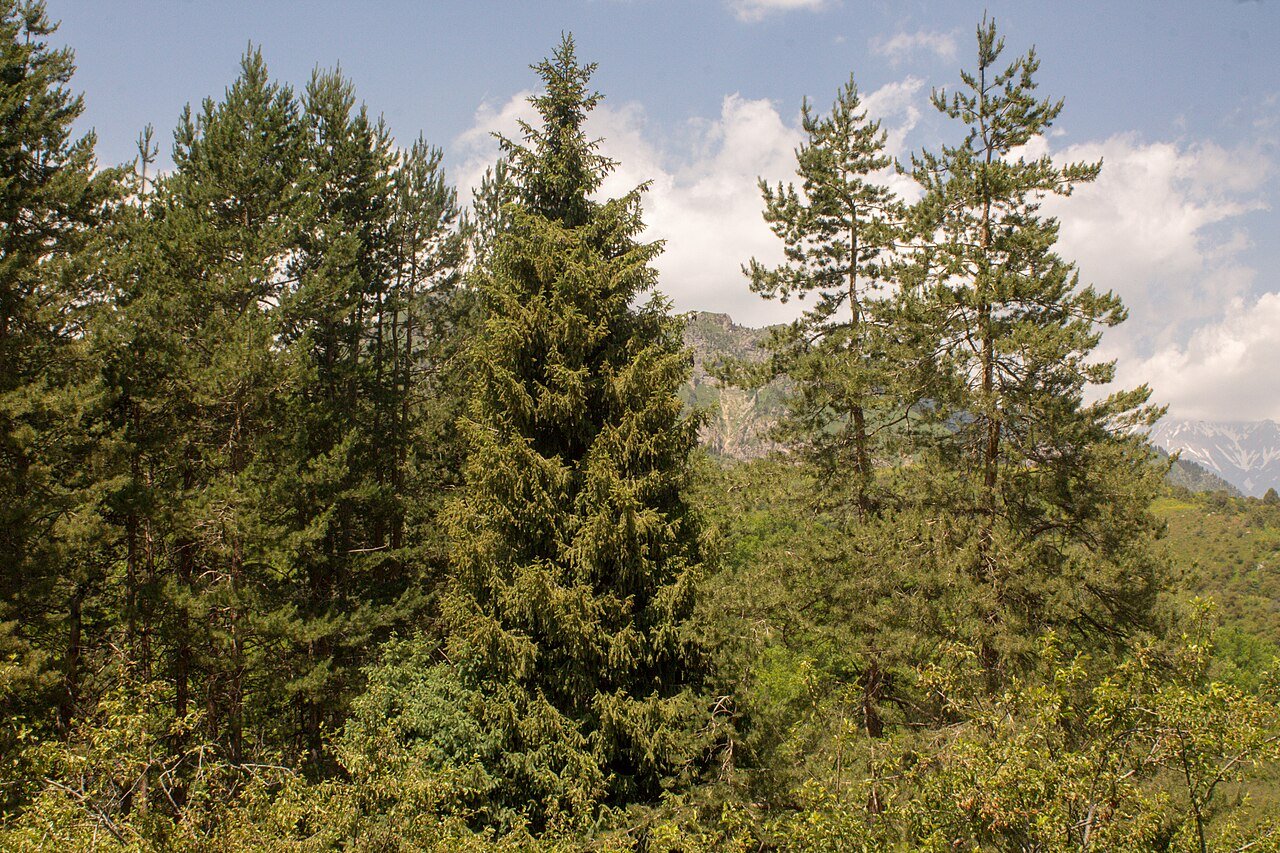
The Western Tian-Shan was inscribed in 2016 as a transboundary natural site shared between Kyrgyzstan, Kazakhstan, and Uzbekistan. The designation protects a chain of mountain ecosystems that scientists regard as a global biodiversity hotspot: the region is where Malus sieversii, the wild ancestor of the domestic apple, still grows in walnut-apple forests that look less like wilderness than like an orchard that forgot it was supposed to be managed. The Kyrgyz components — Besh-Aral State Reserve, Sary-Chelek Biosphere Reserve, and Padysha-Ata State Reserve — form an arc through the Jalal-Abad region, between 150 and 300 kilometres south of Bishkek.
Sary-Chelek is the most visited of the three protected areas. A glacial lake at 1,873 metres sits at the centre of the reserve, ringed by walnut and fruit forests that turn yellow-gold in autumn. Snow leopard, brown bear, and Marco Polo sheep move through the higher elevations; the lower forests shelter roe deer and over 160 recorded bird species. Road access from Bishkek passes through the Chychkan Gorge, which is itself a dramatic drive along a narrow canyon with the Chychkan River below.
Besh-Aral, the westernmost of the Kyrgyz components, receives fewer visitors and requires more planning. Its junipers — some several hundred years old — grow on slopes that were already old when the Silk Road caravans passed nearby. Padysha-Ata, the third area, centres on a gorge of the same name and is known for its walnut groves and small population of snow leopards. All three areas are accessible by 4WD on unpaved roads; guided access is strongly recommended for Besh-Aral and Padysha-Ata.
Getting there: Sary-Chelek is approximately 4–5 hours by road from Bishkek via Toktogul; the final section from Arkyt village requires a 4WD vehicle or local taxi. Besh-Aral and Padysha-Ata require additional travel south. Guided tours from Bishkek or Jalal-Abad city are available. Allow: Minimum 2 days for Sary-Chelek; 3–5 days to explore multiple reserves. Best for: Hikers, wildlife observers, and travellers with an interest in ecological heritage and rare flora.
Frequently Asked Questions
How many UNESCO World Heritage Sites are near Bishkek?
Kyrgyzstan has three UNESCO World Heritage Sites in total. Two are practically accessible from Bishkek: Sulaiman-Too Sacred Mountain (inscribed 2009), located in the city of Osh some 300 km to the south, and the Western Tian-Shan (inscribed 2016), a transboundary natural site whose Kyrgyz protected areas begin 150–300 km south of the capital. A third site, the Silk Roads: Zarafshan-Karakum Corridor (inscribed 2023), also has a Kyrgyz component along the northern Silk Road route through the Suusamyr Valley.
How do you get from Bishkek to Sulaiman-Too Sacred Mountain?
The fastest option is a domestic flight from Bishkek’s Manas Airport to Osh Airport, which takes approximately one hour; several airlines operate multiple daily departures. Alternatively, shared minibuses (marshrutka) run the 300 km route in around 5–6 hours. From Osh city centre, the mountain is a short walk. Entry to the mountain itself is free; the on-site museum charges a small admission fee.
What is the best time of year to visit the Western Tian-Shan reserves?
Late spring (May–June) and early autumn (September–October) offer the best conditions. In May and June the walnut-apple forests are in leaf and wildlife activity is high; in September the forests turn and the weather remains stable before the first snowfall closes higher roads. Sary-Chelek Lake is accessible from roughly May through October; Besh-Aral and Padysha-Ata can close to vehicles earlier in autumn. Summer (July–August) is warm but can be crowded at Sary-Chelek. Winter access to all three reserves is limited without specialist equipment.
Why is Sulaiman-Too considered one of the most sacred mountains in Central Asia?
The mountain has been a site of continuous veneration for at least 3,000 years, pre-dating Islam and absorbing successive religious traditions into a layered practice that persists today. It is associated with the prophet Sulaiman — Solomon — and local belief holds that praying at specific shrines and stones on the mountain can cure illness, aid fertility, and grant other requests. The petroglyphs and cave paintings distributed across its five peaks demonstrate the unbroken human presence here across millennia. Unlike many “sacred” sites that are primarily of historical interest, Sulaiman-Too remains actively used: pilgrims arrive daily, offerings are left at springs and stone shrines, and the site functions as a living place of worship rather than a monument to a past faith.
Sources
- S1 — Abazov, Rafis. Historical Dictionary of Kyrgyzstan. Scarecrow Press, 2004. ISBN 978-0-8108-4868-9.
- S2 — Dani, Ahmad Hasan, and V. M. Masson, eds. History of Civilizations of Central Asia. UNESCO Publishing, 1992. ISBN 978-92-3-102719-2.
Spotted an error? Write to editorial@culturalheritageonline.com and we correct it the same day.



.jpg)
.jpg)