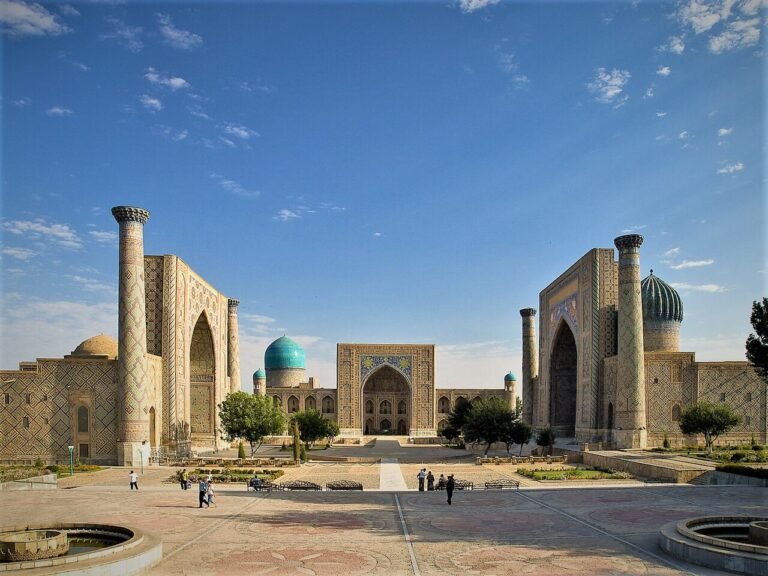
Iran holds fifteen UNESCO World Heritage Sites on the 2024 list, and Tehran gives travellers an unusually direct entry point into several of them. One stands in the city centre — a Qajar palace that defines the capital’s oldest quarter. The others lie at progressively greater distances along Iran’s interior plateau: a walled garden in Kashan two and a half hours south, a vast Safavid square in Isfahan requiring an overnight stay, and the Achaemenid ruins at Pasargadae best reached as part of a three-day journey into the south. This guide covers all four honestly, including what the journey involves and what each site actually offers when you arrive. From Cultural Heritage Online.
Golestan Palace City centre — 5 min walk from Imam Khomeini Metro
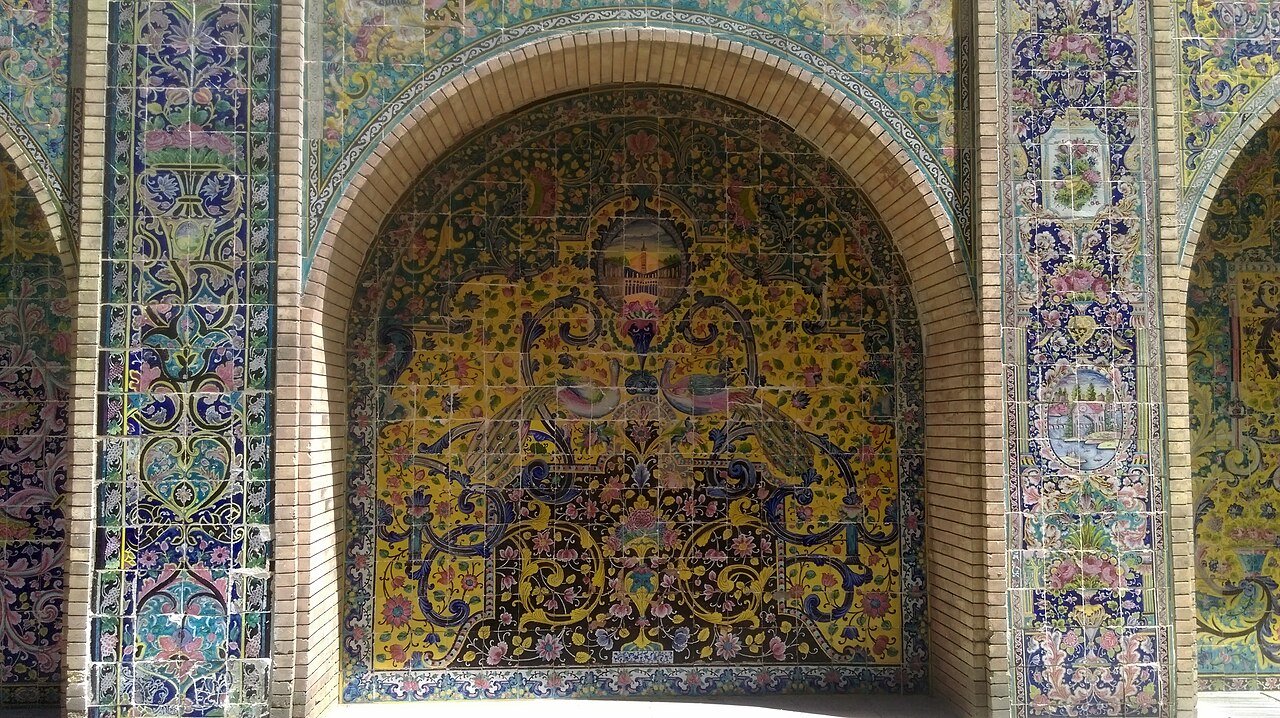
Golestan Palace was inscribed as a UNESCO World Heritage Site in 2013, recognised for its role as the seat of the Qajar dynasty and its synthesis of Persian and European decorative arts across the eighteenth to twentieth centuries. The complex occupies 5.3 hectares in central Tehran and comprises eight palatial structures enclosed by a single walled garden — once part of Tehran’s original citadel. Its current form largely reflects a reconstruction completed in 1865 under the direction of master builder Haji Ab ol Hasan Mimar Navai, working under Naser al-Din Shah, who also filled the interiors with gifts and acquisitions from European travels. The effect is layered and sometimes jarring: rooms lined with Belgian mirrors and French chandeliers open onto courtyards finished with vivid blue-and-gold Persian tile. Light from the central pool filters through stained glass and turns the reception halls gold in the late afternoon. Each of the eight buildings now functions as a separate museum, and a combined ticket provides access to all of them.
Getting there: Imam Khomeini Metro station (Line 1) places you five minutes on foot from the main entrance. Taxis and ride-share apps serve the same route. Allow: 2–3 hours to see the principal halls at a comfortable pace; budget an extra hour if visiting the Treasury. Best for: Visitors wanting a significant UNESCO site without leaving Tehran, particularly those interested in nineteenth-century court culture and decorative arts.
Persian Gardens — Fin Garden, Kashan 2 hrs 30 min by intercity bus from Tehran Southern Terminal
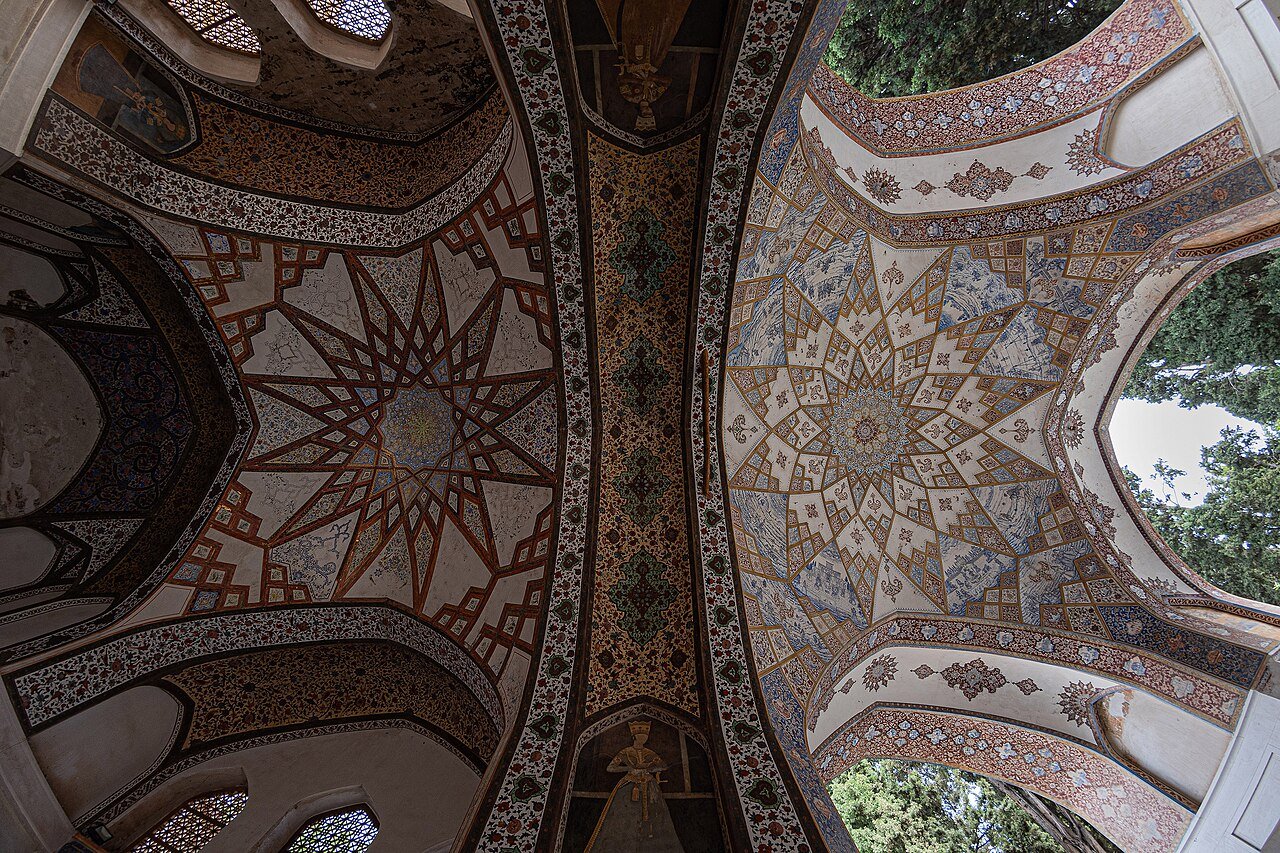
Fin Garden, part of the UNESCO-inscribed Persian Gardens group listed in 2011, is the oldest surviving garden in Iran. Its origins lie in the Safavid period: the garden reached its present-day layout under Shah Abbas I (r. 1587–1629), and the structures visible today blend Safavid and Qajar additions across its 2.3-hectare enclosure. What makes the design remarkable is its engineering: water from the Soleymanie qanat arrives at a head of natural pressure, feeding the pools, rills, and fountains at a sustained flow of approximately 350 litres per second — no pumps, no electricity, no intervention since the sixteenth century. Cypress and plane trees shade the central axis in deep columns of shadow, and the sound of water is constant from the moment you step inside the perimeter walls. Fin Garden carries a darker historical note. The bathhouse inside the complex is where Amir Kabir, the reformist Qajar chancellor, was assassinated by royal order in 1852. Both the garden and the bathhouse are open to visitors.
Getting there: Intercity buses depart frequently from Tehran’s Southern Terminal (Payan Terminal) to Kashan; journey time is approximately 2 hours 30 minutes. Fin Garden is reachable by taxi from Kashan bus station in under 15 minutes. Allow: 2–3 hours for the garden, bathhouse, and the adjacent National Museum of Kashan. Best for: Travellers interested in classical Persian garden design, hydraulic engineering, or Qajar-era history — and those combining the visit with Kashan’s historic houses.
Meidan Emam (Naqsh-e Jahan Square), Isfahan 4 hrs 30 min by train or 5 hrs by bus from Tehran — overnight stay recommended
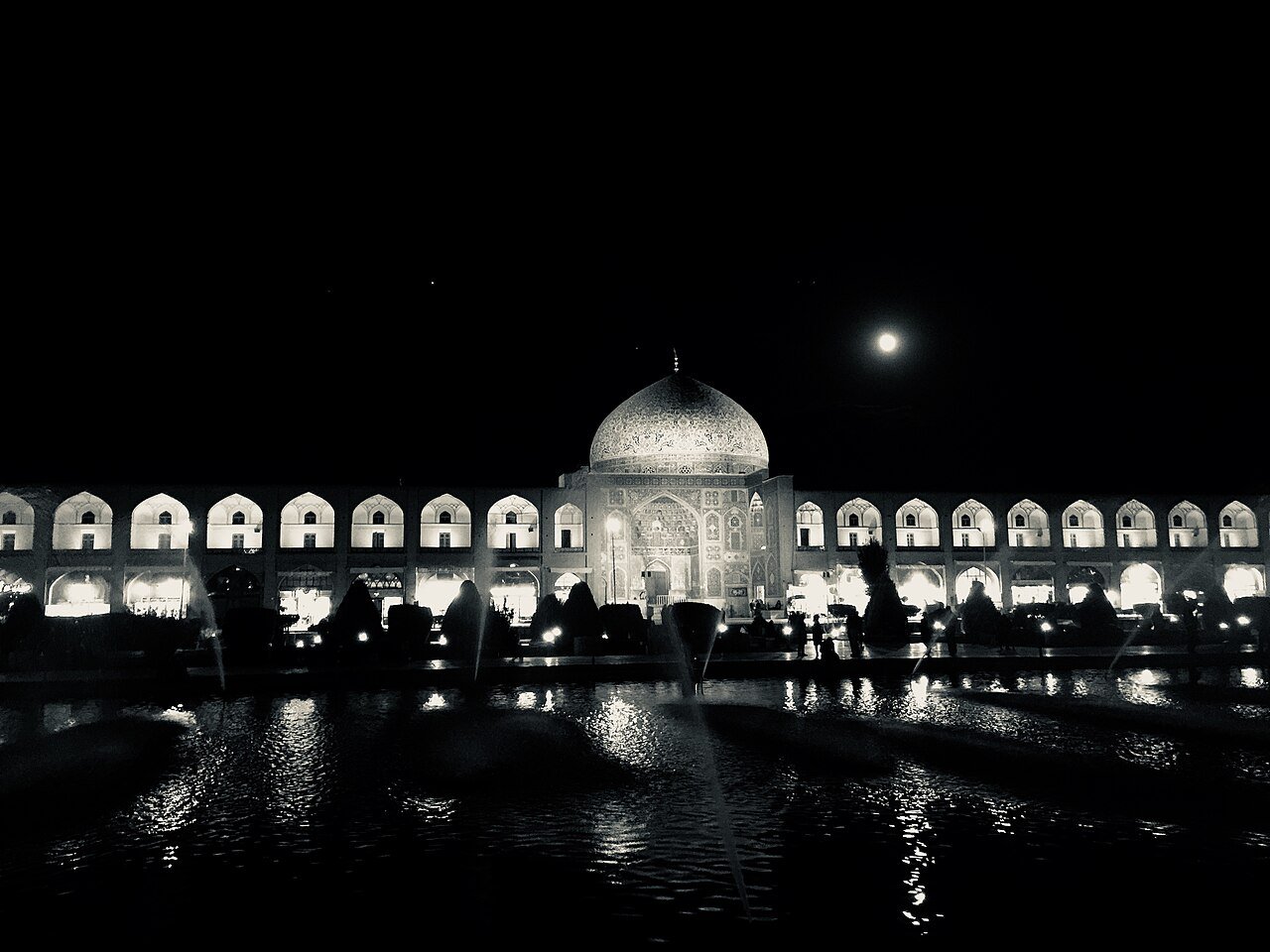
Naqsh-e Jahan Square — meaning “Image of the World” — was built between 1598 and 1629 under Shah Abbas I of the Safavid dynasty and inscribed as a UNESCO World Heritage Site in 1979, among the earliest sites in Iran to receive that designation. At 160 metres wide by 560 metres long, it covers roughly 89,600 square metres. Four monuments define its perimeter: the Shah Mosque (south), the Ali Qapu Palace (west), the Sheikh Lotfollah Mosque (east), and the Qeysarie Gate leading to the Isfahan Grand Bazaar (north). The Sheikh Lotfollah Mosque, completed in 1619, is generally considered the most refined of the four — its dome changes colour across the day from cream at noon to a deep amber late in the afternoon, a phenomenon caused by the precise application of faience tile across its exterior shell. The square’s scale only becomes clear on foot: the facades surrounding it form a continuous two-storey arcade nearly two kilometres in circumference, and polo was once played in the open centre.
Getting there: The Tehran–Isfahan train runs daily and takes approximately 4 hours 30 minutes; advance booking is advisable. Intercity buses take around 5 hours. The square is too far for a comfortable day trip — an overnight stay in Isfahan allows time to see all four monuments properly and visit the bazaar. Allow: A full day for the square and its four monuments, with additional time if visiting the Vank Cathedral or the Chehel Sotoun palace nearby. Best for: Anyone with a serious interest in Safavid architecture, Islamic art, or urban planning — Naqsh-e Jahan is among the most complete surviving examples of a premodern royal capital in the world.
Pasargadae — Tomb of Cyrus the Great 7 hrs by bus via Isfahan or Shiraz — best as part of a 3-day south Iran journey from Tehran
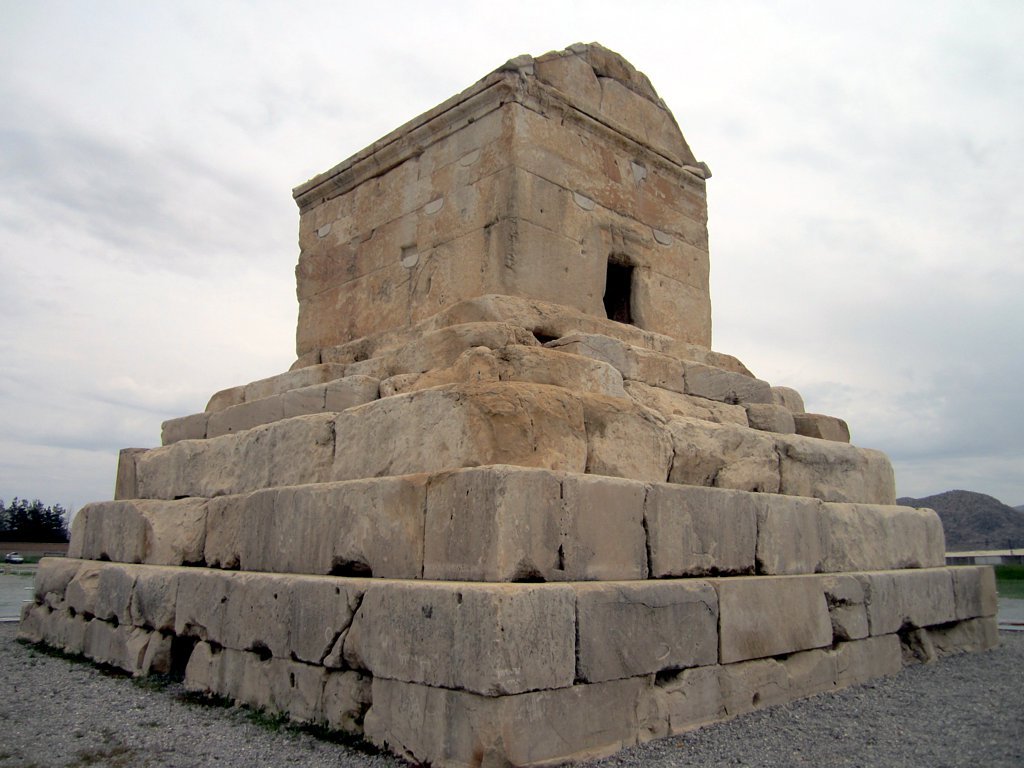
Pasargadae was the first capital of the Achaemenid Empire under Cyrus the Great, who reigned from 559 to 530 BC. The site was inscribed as a UNESCO World Heritage Site in 2004 and covers 160 hectares on the Fars Province plateau, approximately 90 kilometres northeast of Shiraz. The structures date to the sixth century BC and were built using dressed stone and clay — construction methods derived from older Iranian, Mesopotamian, and Anatolian traditions simultaneously. At the site’s northern edge stands the tomb of Cyrus himself: a stepped limestone plinth of six receding stages, topped by a simple gabled chamber. It stands approximately 11 metres high and has remained identifiable since antiquity. The plateau around it reads as open steppe in most seasons, with the Zagros mountains visible at distance, and the emptiness is integral to the experience — this is not a site that makes concessions to visitor comfort, and the distance from Tehran reflects the remoteness that made it a defensible capital in the first place.
Getting there: Pasargadae is not easily reached as a standalone day trip from Tehran. The practical approach is a minimum three-day itinerary: Tehran to Isfahan (overnight), Isfahan to Shiraz (overnight), then a day excursion to Pasargadae by taxi or organised tour from Shiraz. Buses and shared taxis from Shiraz reach the site in about 1 hour 30 minutes. Allow: 2–3 hours at the site itself; the monumental remains are spread across the plateau and require walking between them. Best for: Travellers with a dedicated interest in ancient history, Achaemenid civilisation, or the archaeology of early imperial capitals — and those already planning a visit to Persepolis, which lies 43 kilometres to the southeast.
Frequently Asked Questions
How many UNESCO World Heritage Sites are near Tehran?
Iran has fifteen UNESCO World Heritage Sites in total. Four are practical to visit on a trip based in Tehran: Golestan Palace in the city centre, Fin Garden in Kashan (2.5 hours south), Naqsh-e Jahan Square in Isfahan (4–5 hours), and Pasargadae in Fars Province (7+ hours, best as part of a multi-day journey). The site that requires no travel at all is Golestan Palace, inscribed in 2013 and located five minutes on foot from a central metro station.
What is the closest UNESCO World Heritage Site to Tehran?
Golestan Palace is the only UNESCO World Heritage Site within Tehran itself. It sits in the city’s historic core, a five-minute walk from Imam Khomeini Metro station on Line 1. The complex houses eight separate museums within a single walled garden and is one of the most visited cultural sites in the country. No other UNESCO-inscribed site in Iran is as immediately accessible from the capital.
Do foreign visitors need a visa to visit Iran, and are there any travel considerations?
Most foreign nationals require a visa to enter Iran; many nationalities can obtain a visa on arrival at Tehran’s Imam Khomeini International Airport, though this varies by passport and is subject to change. Travellers are advised to check current entry requirements with their country’s foreign ministry before booking. Credit and debit cards issued outside Iran are not accepted anywhere in the country due to international sanctions, so cash in euros or US dollars is essential and should be exchanged at authorised exchange offices on arrival.
What is the best season to visit these UNESCO sites in Iran?
Spring (March to May) and autumn (September to November) offer the most comfortable conditions across all four sites. Summer temperatures on the Fars Province plateau where Pasargadae stands regularly exceed 40°C, which makes the site physically demanding mid-year. Isfahan and Kashan are similarly hot in July and August. Tehran is milder than the interior in summer but still warm. The Nowruz national holiday in late March draws large crowds to all major heritage sites; booking accommodation well in advance is advisable during that period.
Sources
- UNESCO World Heritage List — Iran State Party entries, whc.unesco.org
- Wikipedia — Golestan Palace
- Wikipedia — Fin Garden
- Wikipedia — Naqsh-e Jahan Square
- Wikipedia — Pasargadae