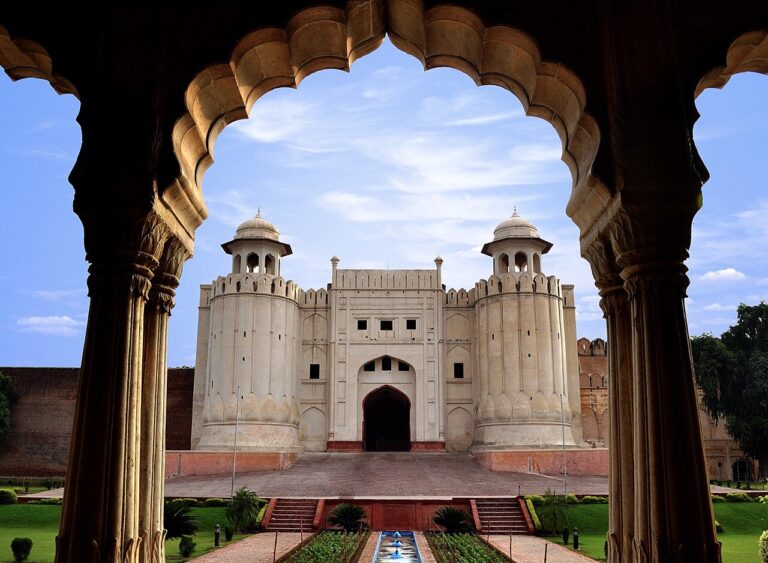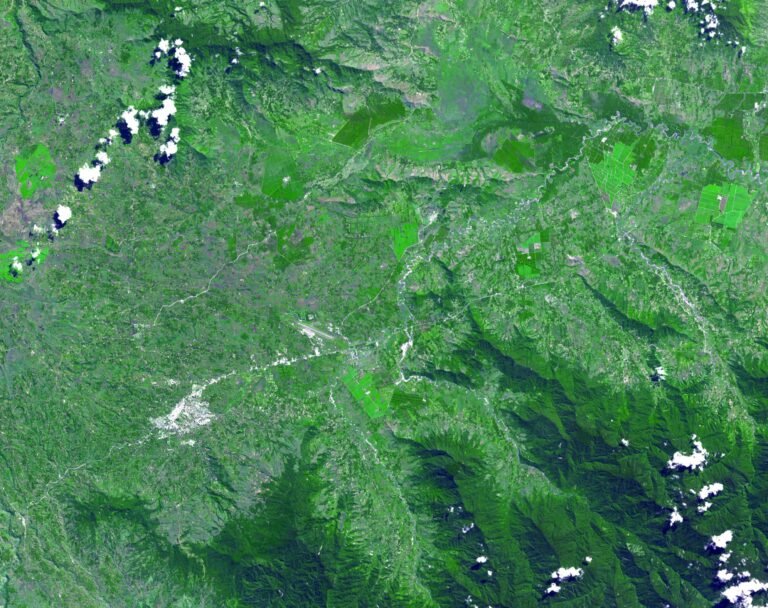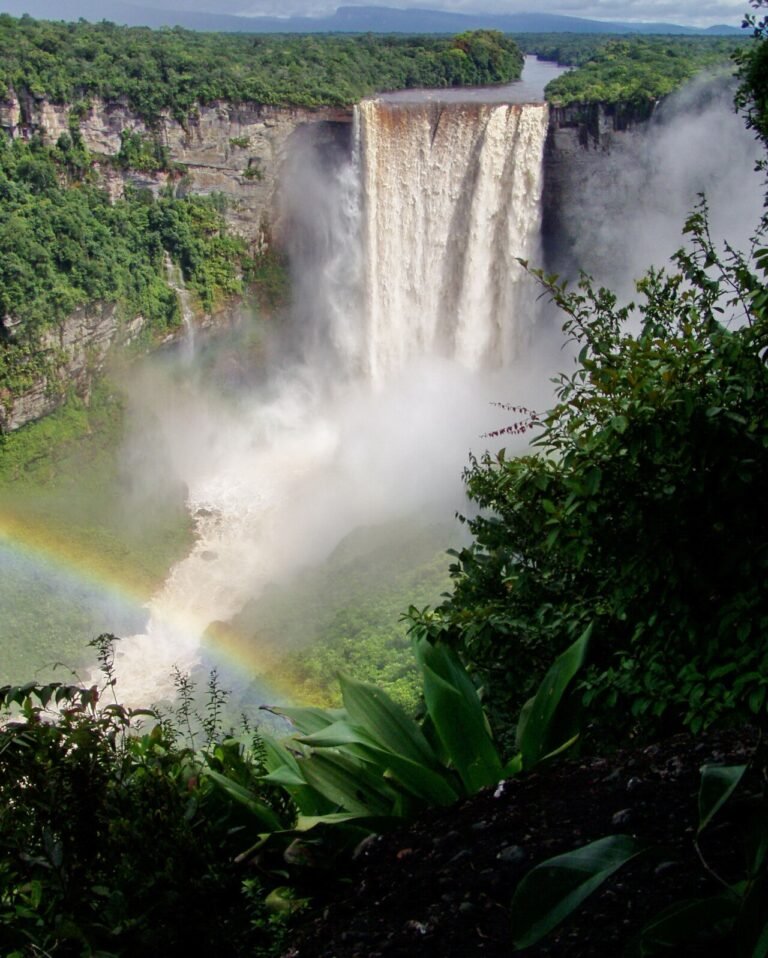
Saudi Arabia holds six UNESCO World Heritage Sites. Four of them are reachable from Riyadh — the closest in under half an hour, the farthest after a domestic flight and a drive through southwestern desert. The range is striking: mud-brick palace ruins from the first Saudi state, a living agricultural landscape fed by artesian springs, Nabataean rock tombs carved two millennia ago into rose-coloured sandstone, and a plateau dense with prehistoric petroglyphs. Each rewards a different kind of attention. From Cultural Heritage Online.
At-Turaif District, Ad-Diriyah 30 min from central Riyadh
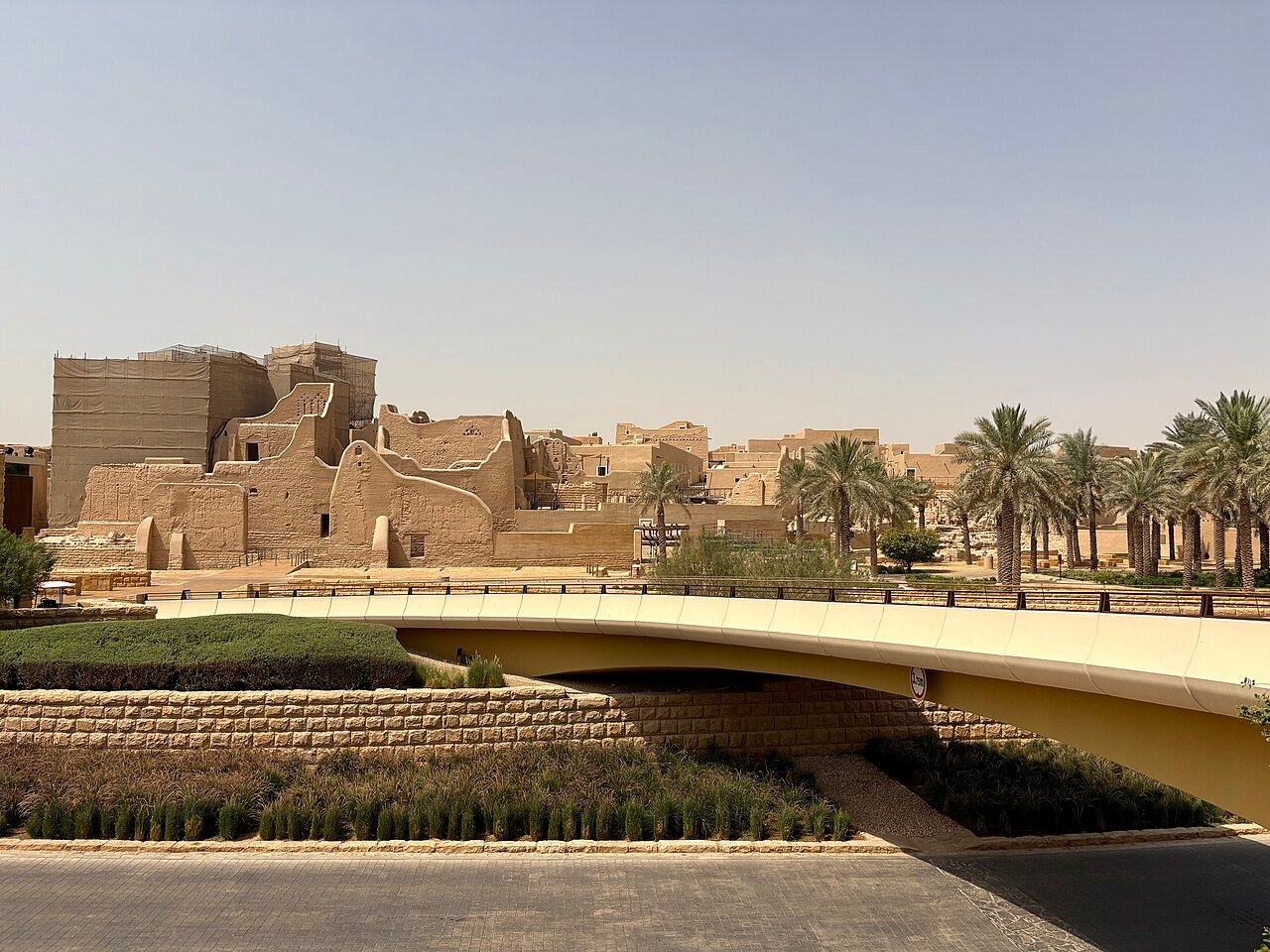
Inscribed in 2010, At-Turaif is the original seat of Saudi political power — and the most accessible UNESCO site in the country. The district was founded in the 15th century and reached its apex as the capital of the first Saudi state between 1727 and 1818, when it served as the administrative centre for the Al-Saud dynasty. Ottoman forces razed it in 1818 following the Siege of Diriyah, and the site remained deserted for nearly two centuries. The architecture is Najdi: massive tapering mud-brick walls, palm-wood ceiling beams, geometric relief patterns pressed into the exteriors. The surviving structures include Salwa Palace, the Imam Mohammad bin Saud Mosque, and Saad bin Saud Palace. Inside the partially restored compound, the scale surprises — these are not modest ruins but the foundations of a capital city, with tower walls still rising several storeys above the wadi floor. A Vision 2030 restoration initiative, launched in December 2018, has transformed the site into an open museum with interpreted walkways and lighting.
Getting there: 25 km northwest of central Riyadh; 30 minutes by car or taxi; alternatively take the Riyadh Metro Blue Line to Al-Shohada station, then a taxi. Allow: 2–3 hours. Best for: Anyone wanting to understand the origins of the modern Saudi state within a single afternoon from the capital.
Al-Ahsa Oasis Agricultural and Archaeological Landscape 3 hrs by car from Riyadh
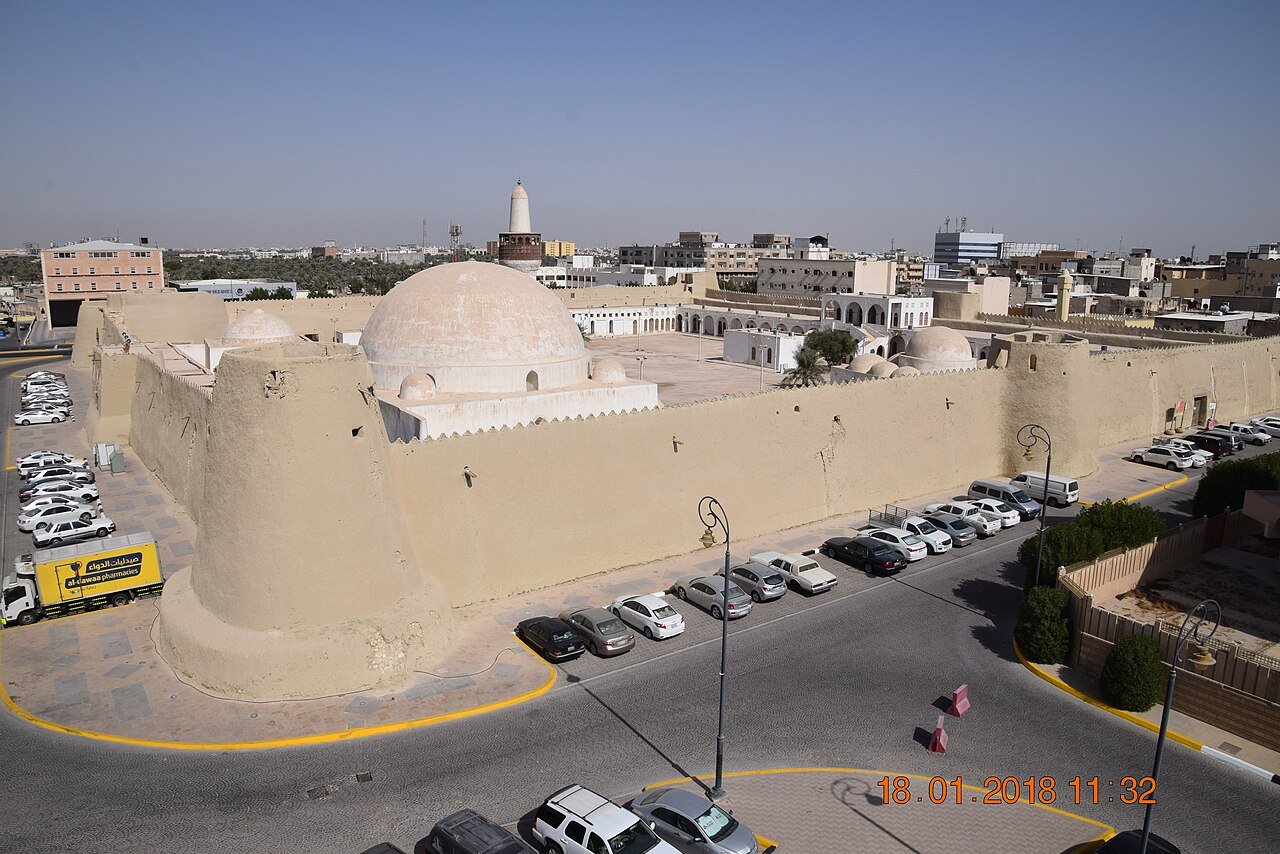
Inscribed in 2018, Al-Ahsa Oasis is the largest oasis in the world — 85.4 square kilometres of continuous date-palm cultivation sustained by more than 280 artesian springs. The landscape sits in eastern Saudi Arabia near the city of Al-Hofuf and has supported settled life for millennia: by around 1000 CE it ranked among the tenth largest cities on earth with an estimated 100,000 inhabitants. The Qarmatians controlled it from 899 CE; Ottoman rule arrived in 1550; Qasr Ibrahim, the Ottoman fortress visible in photographs of the site, was built during that period and still stands in Hofuf. More than 2.5 million date palms shade the ground, and the air carries the particular coolness of irrigated farmland in full desert — a thermal contrast that makes walking the pathways between the palm groves immediately distinctive. Beyond the palms, the UNESCO designation covers canals, springs, gardens, archaeological sites, and historic urban fabric. Half a day is the minimum. A full day allows the gardens, the old market of Al-Qaisariyah, and Qasr Ibrahim.
Getting there: 3 hours by car from Riyadh via Highway 40 east toward Al-Hofuf; no direct rail service currently available. Allow: Half day minimum; full day recommended. Best for: Travellers interested in living cultural landscapes where agriculture, history, and urban heritage overlap.
Hegra Archaeological Site (Al-Hijr) 90-min flight + transfer
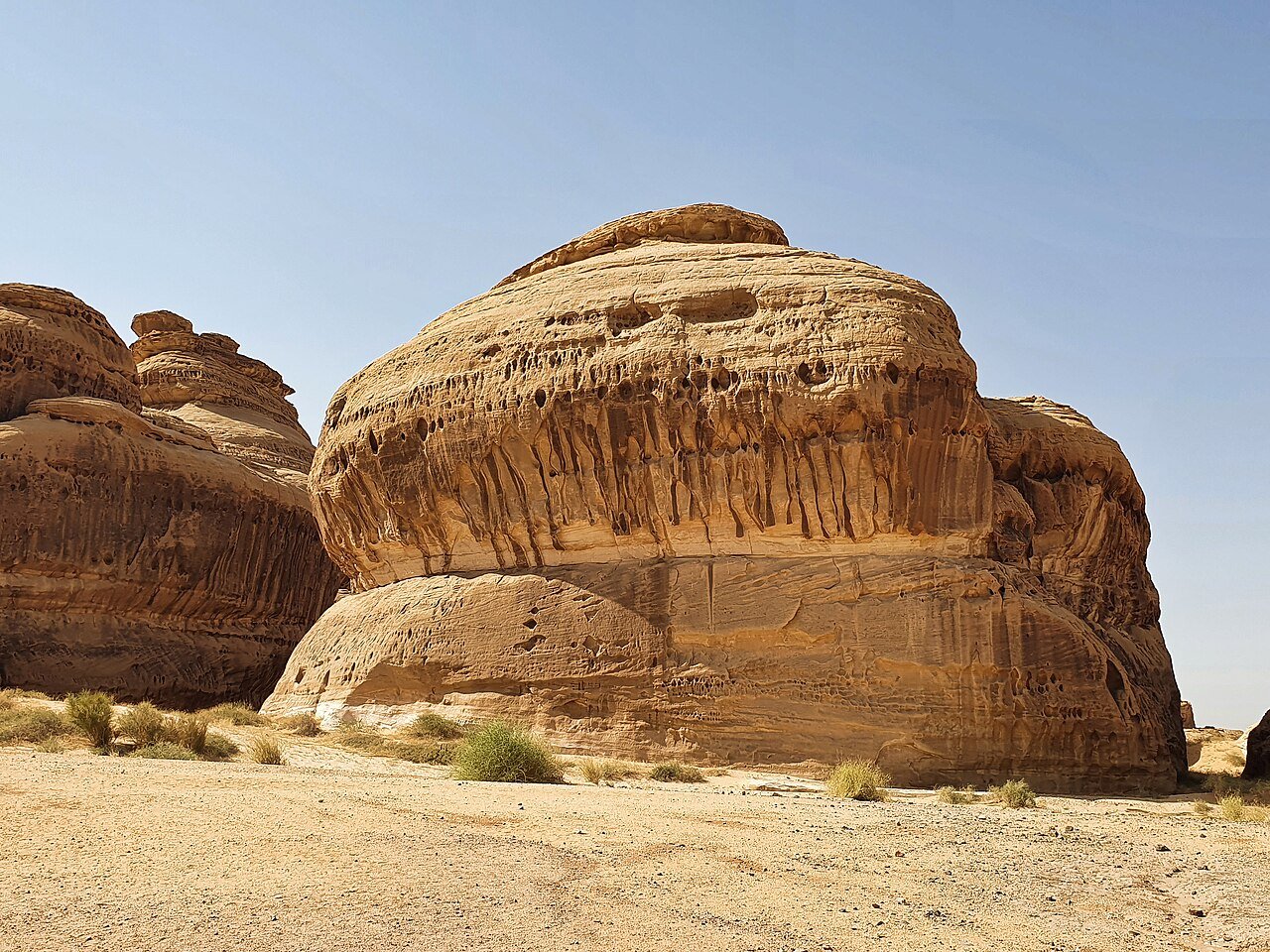
Saudi Arabia’s first UNESCO World Heritage Site, inscribed in 2008, Hegra preserves more than 110 rock-cut Nabataean tombs in an extraordinary state of preservation. The site lies 20 kilometres north of Al-Ula in Medina Province, and during the 1st century BC it served as the second city of the Nabataean kingdom after Petra, reaching its height under King Aretas IV (9 BC–40 AD). Roman annexation in 106 AD under Emperor Trajan ended the Nabataean state; Hegra’s tombs, sealed into the sandstone cliffs, survived the centuries largely intact. The largest, Qasr al-Farid, stands 16 metres high — a single unfinished façade rising from a free-standing boulder, its columns and pediment cut from the rock but never fully completed, which makes the construction process legible in a way few ancient monuments allow. The inscriptions covering many tomb facades are legal documents, recording ownership and prohibiting misuse, rendered in Nabataean script. A full day is the realistic minimum; some visitors extend to two with accommodation at AlUla.
Getting there: Fly Saudia or Flynas from King Khalid International Airport, Riyadh, to Prince Abdul Mohsin bin Abdulaziz Airport, AlUla (approximately 90 minutes); then roughly 45 minutes by car to the archaeological site. Plan for an overnight stay if visiting from Riyadh. Allow: Full day on site. Best for: Those seeking pre-Islamic archaeology comparable in ambition to Petra, without Petra’s visitor numbers.
Hima Cultural Area 1-hr flight to Najran + 1-hr drive
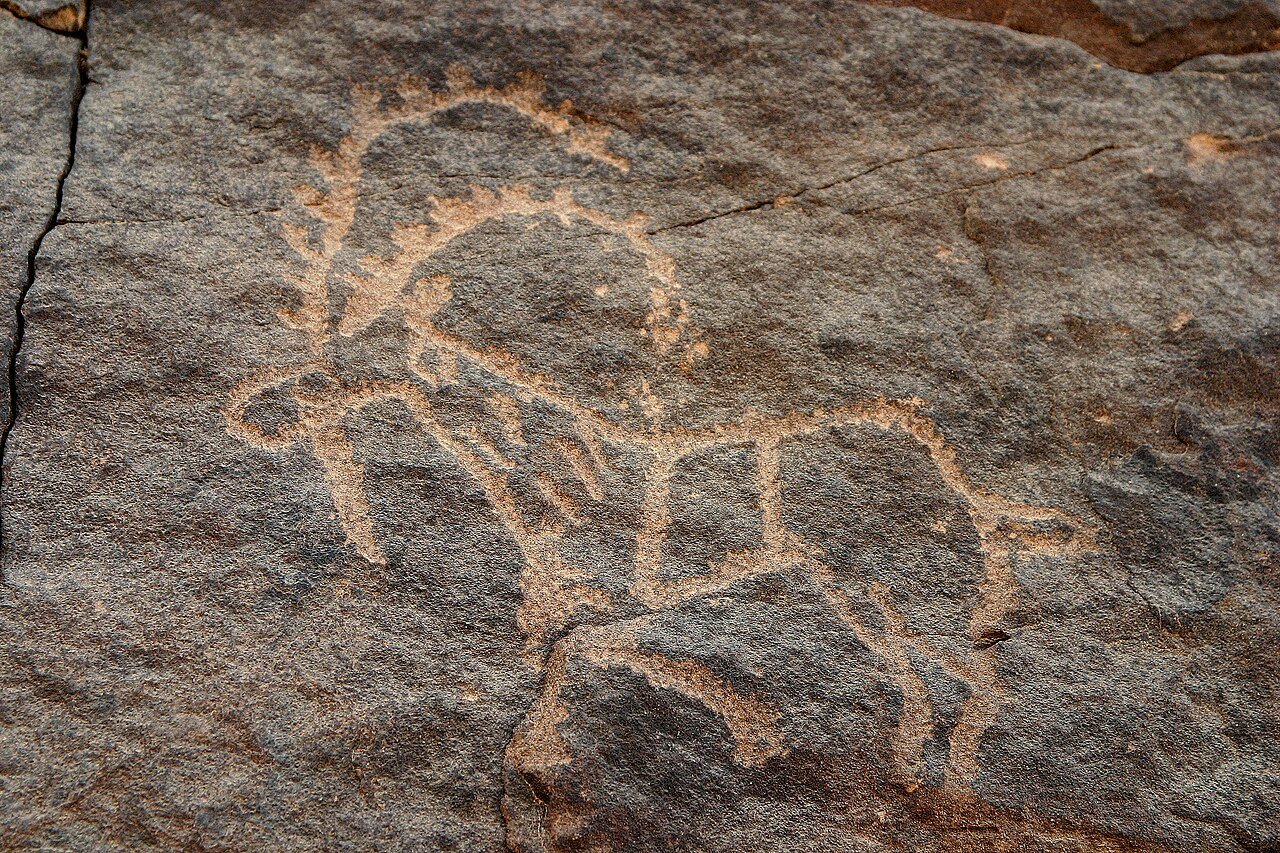
Inscribed in 2021 at the 44th session of the World Heritage Committee (reference 1619), the Hima Cultural Area lies approximately 120 kilometres north of Najran city in southwestern Saudi Arabia. The Bir Hima complex contains one of the largest and most diverse concentrations of rock art in the world: the Najran area alone holds up to 6,400 human and animal illustrations, including more than 1,800 depictions of camels and 1,300 human figures carved and incised into the rock surfaces between roughly 7000 and 1000 BC. The inscriptions span scripts from al-musnad and Thamudic to Aramaic-Nabataean, Greek, and Islamic — a record of successive languages laid directly onto the same plateau surfaces over millennia. Sixth-century inscriptions attributed to Dhu Nuwas, a Himyarite king, are among the historically significant texts. The Philby-Ryckmans-Lippens expedition first documented the site in 1951. This is a remote destination: the drive from Najran takes around an hour on desert roads. Plan an overnight in Najran, and note that the southwest of Saudi Arabia is mountainous and cooler than the Riyadh region.
Getting there: Fly approximately 1 hour from Riyadh to Najran Airport, then 1 hour by car north toward the Bir Hima site; 4WD recommended for the final approach. Overnight in Najran is advisable. Allow: Half day on site; full day with travel from Najran. Best for: Visitors with an interest in prehistoric rock art and ancient Semitic epigraphy who are comfortable with remote travel.
Frequently Asked Questions
How many UNESCO World Heritage Sites are near Riyadh?
Saudi Arabia has six UNESCO World Heritage Sites in total. Four are reachable from Riyadh using the capital as a base: At-Turaif District in Ad-Diriyah (30 minutes by car), Al-Ahsa Oasis (3 hours by car), Hegra (90-minute flight to AlUla), and the Hima Cultural Area (1-hour flight to Najran plus a 1-hour drive). The remaining two Saudi sites — the rock art of Jubbah and Shuwaymis, and Al-Faw Archaeological Area — require separate planning from other regional airports.
What is the closest UNESCO World Heritage Site to Riyadh?
At-Turaif District in Ad-Diriyah is the closest, at 25 kilometres northwest of central Riyadh. The drive takes around 30 minutes, and the Riyadh Metro Blue Line reaches Al-Shohada station, from which taxis serve the site. At-Turaif was inscribed in 2010 and represents the 15th-century founding capital of the first Saudi state, built in the Najdi mud-brick architectural tradition.
What is the best season to visit Saudi Arabia’s UNESCO heritage sites?
October through March offers the most comfortable conditions across all four sites. Summer temperatures in Riyadh and Al-Ahsa exceed 45°C, making outdoor archaeological exploration difficult. The AlUla and Hegra area sees milder desert conditions but remains very hot from June through August. The Najran region, where Hima is located, sits at higher elevation and is cooler than the Gulf coast, but the optimal window for that site is also autumn to spring.
Do international visitors need a visa to enter Saudi Arabia for heritage tourism?
Saudi Arabia issues tourist e-visas to nationals of more than 60 countries, including most European, North American, and several Asian nations; the application is processed online before travel. Visitors should note that modest dress is expected at heritage sites and in public areas generally. Alcohol is not available in the country. Entry requirements can change; travellers should verify current regulations through the official Saudi Arabia Tourism website or their national embassy before booking.
Sources
- S1 — Al-Rasheed, Madawi. A History of Saudi Arabia. Cambridge University Press, 2010. ISBN 978-0-521-74754-7.
- S2 — Vassiliev, Alexei. The History of Saudi Arabia. Saqi Books, 2000. ISBN 978-0-86356-193-1.
Spotted an error? Write to editorial@culturalheritageonline.com and we correct it the same day.