Within a day’s journey south of Chennai lie three UNESCO World Heritage Sites that span six centuries of South Indian stone-craft — from the Pallava rock-cut rathas of the 7th century to the soaring Chola vimanas of the 11th. All three repay the travel. From Cultural Heritage Online.
Group of Monuments at Mahabalipuram 60 km · 1.5 hrs
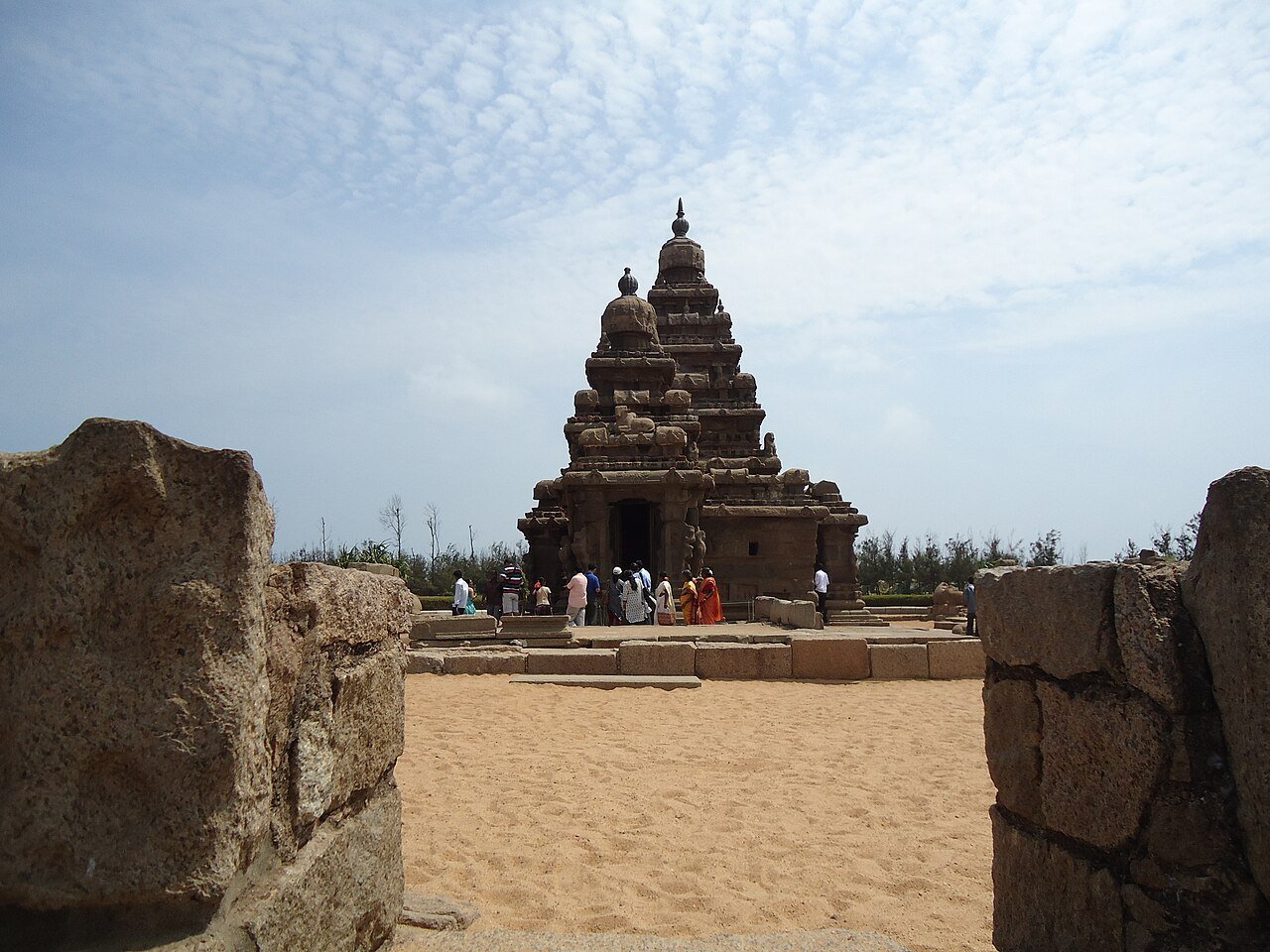
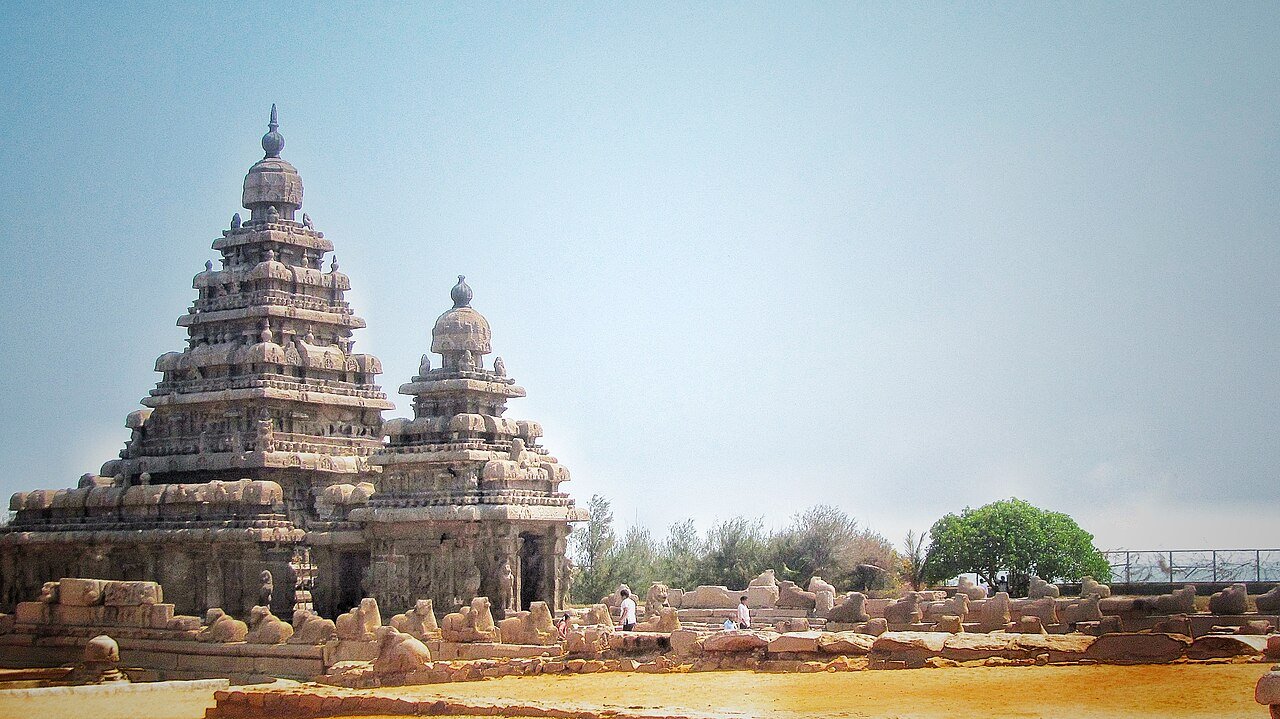
Inscribed by UNESCO in 1984 under criteria (i), (ii), (iii) and (vi), the Group of Monuments at Mahabalipuram comprises 40 ancient structures spread across a granite headland on the Coromandel Coast. The site records, in stone, the full arc of early Dravidian invention: cave mandapas and monolithic rathas carved from living rock by Narasimha Varman I (ruled 630–668 CE), followed by the structural Shore Temple completed under Rajasimha (ruled 690–728 CE). The five Pancha Rathas — each fashioned from a single granite boulder — demonstrate how Pallava masons worked without mortar or joinery, shaping the stone downward from the summit as a sculptor removes clay. The Descent of the Ganges panel, one of the largest open-air rock reliefs in the world at roughly 27 metres wide and 9 metres tall, shows gods, humans, elephants and serpents all converging on a natural fissure that served as the river itself. At dawn the shore breeze carries sea salt across the compound and the dark granite of the Shore Temple takes a grey-blue cast before the sun clears the Bay of Bengal.
Getting there: TNSTC buses depart Koyambedu terminal regularly for Mahabalipuram (approx. 1 hr 30 min); alternatively take the MRTS to Velachery and connect by bus. Day tours depart Chennai hotels daily. Allow: 3–4 hours for the full site. Best for: Anyone wanting a tangible lesson in how rock-cut architecture evolved into free-standing stone construction over a single century.
Great Living Chola Temples — Brihadeeswarar, Thanjavur 350 km · 5 hrs by train
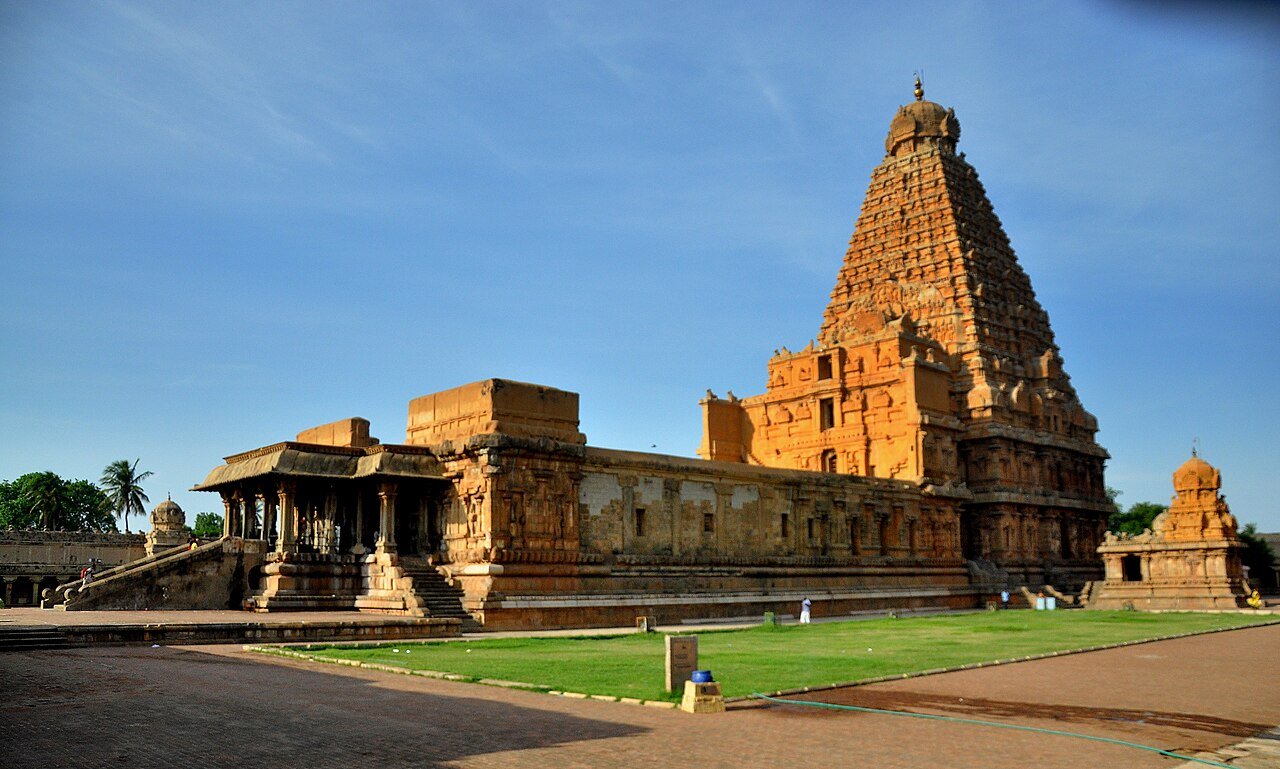
Commissioned by Rajaraja I and completed in 1010 CE, the Brihadeeswarar Temple at Thanjavur remains the anchor of the Great Living Chola Temples UNESCO designation, inscribed in 1987. The vimana rises 63.4 metres across 16 tapering storeys — a height that was unmatched by any other temple in the subcontinent at the time of its construction. The 25-tonne granite capstone at the summit was raised without the benefit of conventional scaffolding, almost certainly via a kilometres-long earthen ramp. Inside, 64 inscriptions left by Rajaraja I himself document the temple’s endowments with the precision of a court ledger: so many villages assigned, so many weight-units of gold, so many devadasi attendants. The upper corridor carries carvings of 81 dance positions drawn from the Natya Shastra. Standing in the courtyard on a clear afternoon, the shadow of the vimana stretches across the entire 240-metre enclosure and the stone gives off a warmth stored since morning. An overnight stay in Thanjavur is strongly recommended; the 350-kilometre journey from Chennai takes roughly five hours on the Cholan Express from Egmore station.
Getting there: Cholan Express from Chennai Egmore to Thanjavur Junction — approximately 5 hours; overnight stay in Thanjavur recommended to allow morning and late-afternoon visits. Allow: 3–4 hours at the main temple complex. Best for: Travellers with a serious interest in medieval South Indian architecture, bronze sculpture, and the scale of Chola statecraft.
Great Living Chola Temples — Gangaikondacholapuram 280 km · 4 hrs + 1 hr bus
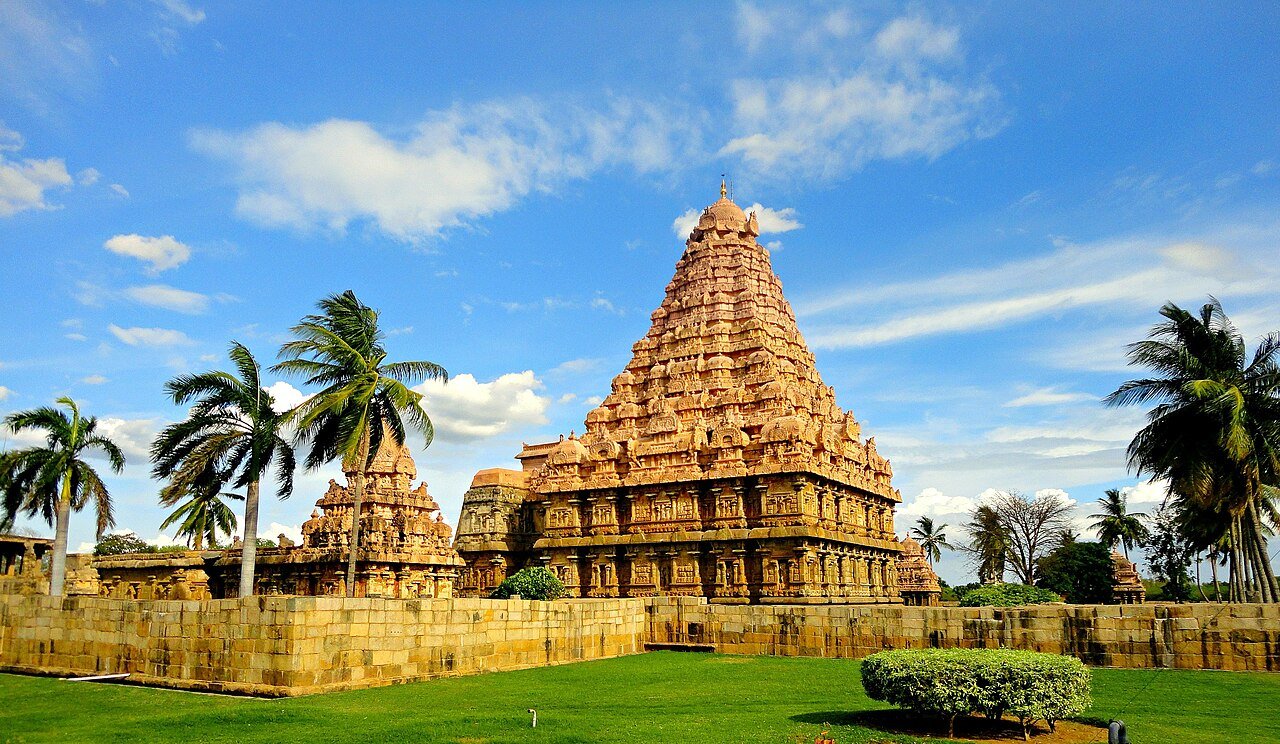
Twenty-five years after his father Rajaraja I built the Thanjavur temple, Rajendra I completed a second Brihadeeswarar at his new capital, Gangaikondacholapuram, in 1035 CE. The name translates as “the city of the Chola who conquered the Ganges” — Rajendra had led his armies to the Gangetic plain and brought back water from the sacred river to fill a vast ceremonial tank beside the temple. Scholars consistently rate the sculptural programme here above that of Thanjavur: the basement reliefs and niche figures exhibit a softness and movement that the earlier monument’s stonework does not attempt. The temple’s profile is also subtly different — the vimana curves inward with a slight convexity, giving it an organic quality compared to the more vertical silhouette at Thanjavur. The complex is far less visited than its sibling, and on most mornings the only sounds in the courtyard are birds and the distant movement of a village a few hundred metres away. Gangaikondacholapuram pairs naturally with Thanjavur on a two-day south India circuit: train from Chennai to Kumbakonam (roughly four hours), then one hour by bus to the temple, before continuing to Thanjavur.
Getting there: Train from Chennai to Kumbakonam (approximately 4 hours), then 1-hour bus to Gangaikondacholapuram; best combined with Thanjavur in a 2-day itinerary. Allow: 2 hours. Best for: Architecture enthusiasts who want to compare two masterworks of Chola temple-building side by side, away from large crowds.
Frequently Asked Questions
How many UNESCO World Heritage Sites are near Chennai?
There are two UNESCO World Heritage inscriptions accessible from Chennai: the Group of Monuments at Mahabalipuram (1984), located 60 kilometres south, and the Great Living Chola Temples (1987), which covers the Brihadeeswarar Temple at Thanjavur and the temple at Gangaikondacholapuram — making three individual sites in total across the two designations.
What is the closest UNESCO World Heritage Site to Chennai?
The Group of Monuments at Mahabalipuram is the closest, at roughly 60 kilometres south of central Chennai. Regular TNSTC buses from Koyambedu terminal and organised day tours make it feasible as a half-day excursion. The Chola Temples at Thanjavur and Gangaikondacholapuram require an overnight trip.
What is the best season to visit these UNESCO sites near Chennai?
October to February offers the most comfortable temperatures for outdoor exploration — daytime highs hover between 25 and 30 degrees Celsius, and the northeast monsoon has typically cleared by late November. Visiting Mahabalipuram at dawn avoids both heat and the peak of day-tour groups. Thanjavur and Gangaikondacholapuram are less crowded throughout the year and can be visited comfortably into March.
Do visitors need to pay entry fees, and what is the dress code at these temples?
The Archaeological Survey of India charges a nominal entry fee at Mahabalipuram (higher rate for foreign nationals; Indian nationals pay a lower rate). The Brihadeeswarar Temple at Thanjavur and the temple at Gangaikondacholapuram are active religious sites: modest dress covering shoulders and knees is expected, and footwear must be removed before entering the inner sanctum. ASI-managed outer compounds are generally open from sunrise to dusk.
Sources
- UNESCO World Heritage Centre, Group of Monuments at Mahabalipuram (List no. 249, inscribed 1984).
- UNESCO World Heritage Centre, Great Living Chola Temples (List no. 250, inscribed 1987, extended 2004).
- Wikipedia, Group of Monuments at Mahabalipuram.
- Wikipedia, Brihadeeswarar Temple, Thanjavur.
- Wikipedia, Gangaikonda Cholapuram.