Jaipur sits at the centre of one of the most concentrated clusters of UNESCO World Heritage designations in South Asia — four inscriptions within a 130-kilometre radius, ranging from a royal observatory in the heart of the Pink City to a Solanki stepwell carved seven stories into the Gujarat plain. From Cultural Heritage Online.
Jantar Mantar, Jaipur 10 min walk from Hawa Mahal
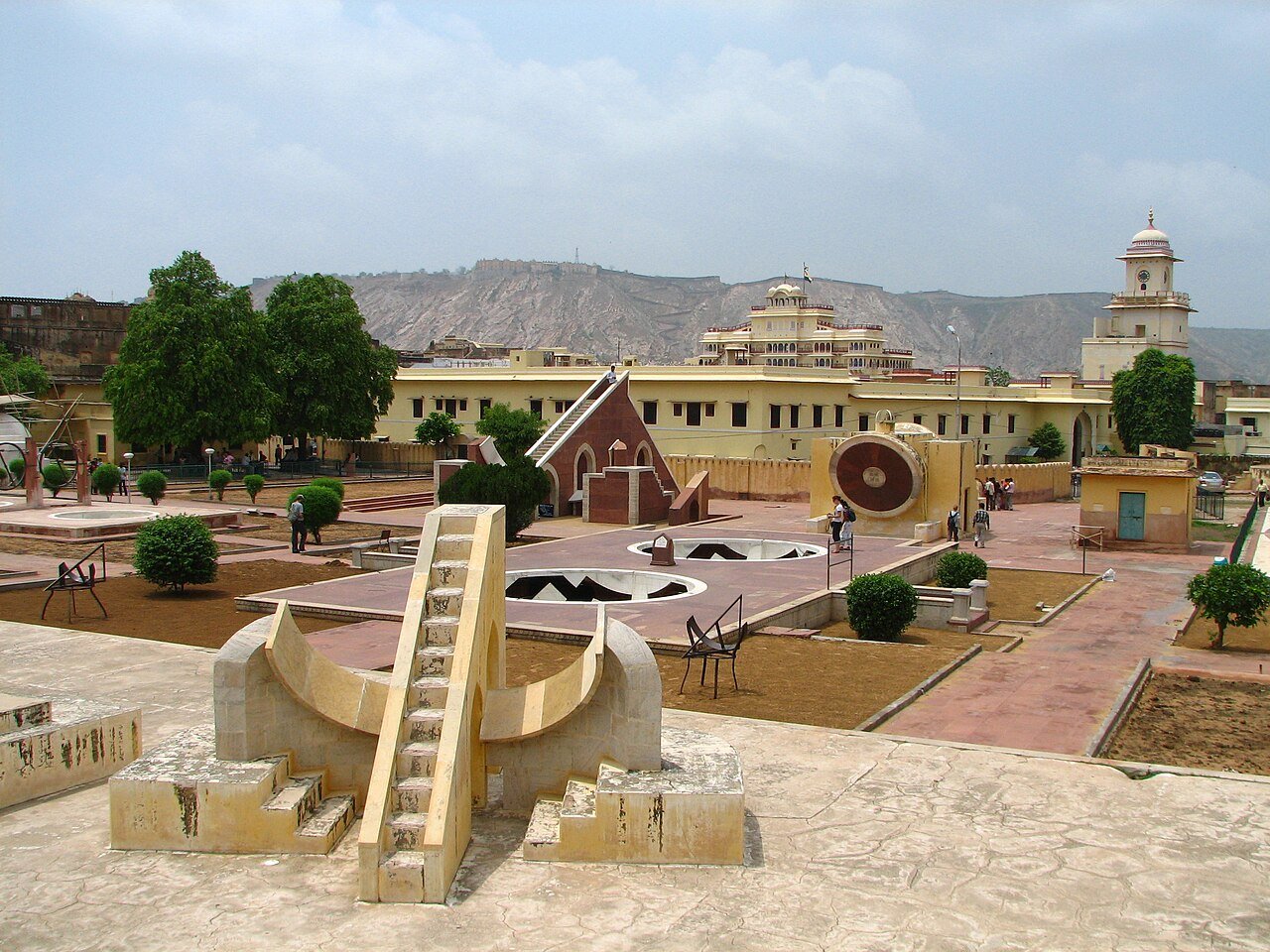
Completed in 1734 under Sawai Jai Singh II (1686–1743), the Rajput king who founded Jaipur, the Jantar Mantar is a collection of 19 astronomical instruments built from local stone, marble and brick. UNESCO inscribed the site in 2010, recognising it as “an expression of the astronomical skills and cosmological concepts of the court of a Mughal-era prince.” The centrepiece is the Vrihat Samrat Yantra — the world’s largest stone sundial, standing 27 metres high with its gnomon angled at exactly 27 degrees, the latitude of Jaipur. Its shadow moves at roughly one millimetre per second, a pace the naked eye can detect if you stand close enough and wait. On a clear morning the instruments cast long geometric shadows across the paving stones, turning the enclosed garden into a working diagram of the solar system. The scale is disorienting: what looks from a distance like abstract sculpture reveals itself, instrument by instrument, as a precision tool accurate to within two seconds of time.
Getting there: Located inside the Old City, a 10-minute walk from Hawa Mahal; auto-rickshaws from anywhere in Jaipur reach the gate. Allow: 1–2 hours. Best for: Anyone with an interest in pre-telescopic astronomy or Mughal-era science, and for the sheer architectural strangeness of the instruments at dawn.
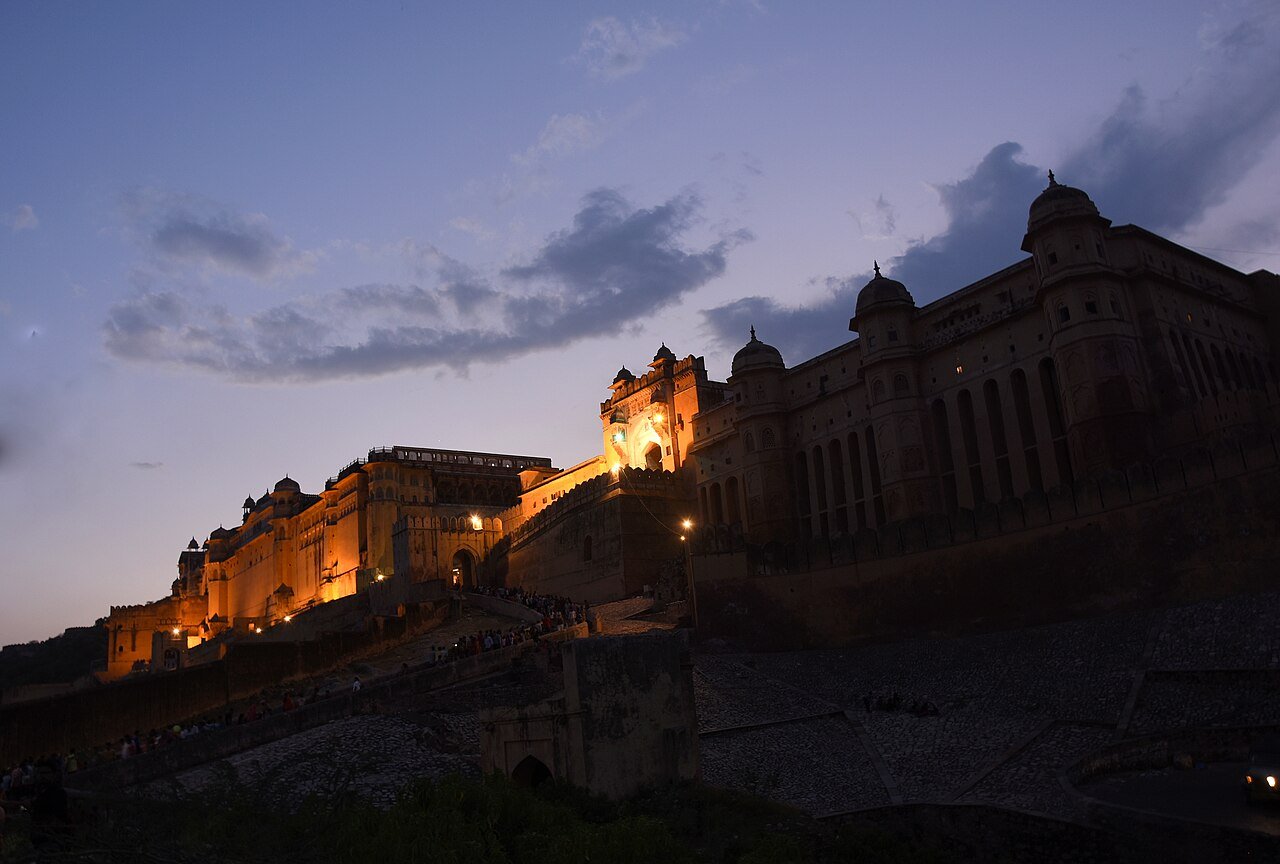
Amber Fort — Hill Forts of Rajasthan 30 min from Jaipur city centre
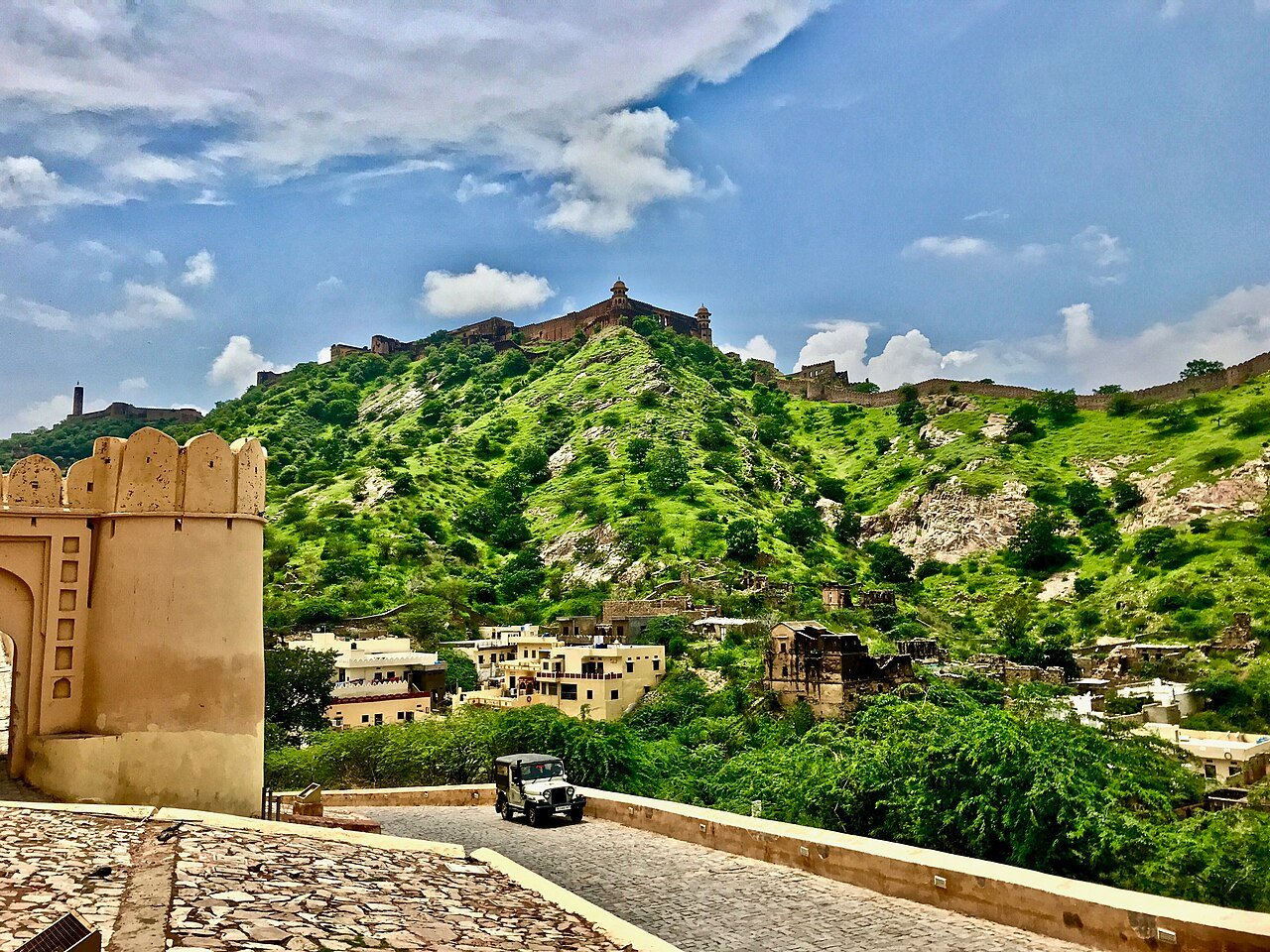
Eleven kilometres north of Jaipur, Amber Fort rises from a ridge overlooking Maota Lake with a composure that suggests the landscape was arranged around it rather than the other way around. Raja Man Singh I began construction in 1592 — completing the core within a decade — and successive Kachhwaha rulers expanded the complex over the next 150 years. UNESCO inscribed Amber as one of six Hill Forts of Rajasthan in 2013, the collective inscription recognising a chain of fortifications that shaped the political history of northwestern India. The architectural language is confidently hybrid: Rajput in its massing and plan, Mughal in the marble inlay and latticed screens. The Sheesh Mahal — the Hall of Mirrors — is the element that draws most visitors, and it earns the attention: convex mirror fragments set into plaster ceilings catch a single candle flame and multiply it into what early descriptions called a sky full of stars. The Ganesh Pol gateway above the second courtyard layers frescoes, pietra dura panels and jali screens into a surface that rewards close inspection for far longer than most visitors allow.
Getting there: 11 km north of Jaipur city centre; local bus from Sindhi Camp bus stand (30 minutes), or shared jeep from the base of the hill. Allow: 2–3 hours. Best for: The full sweep of Rajput-Mughal palatial architecture and the Sheesh Mahal interior — arrive before 9 a.m. to beat the crowds.
Keoladeo National Park, Bharatpur 1 hr from Jaipur
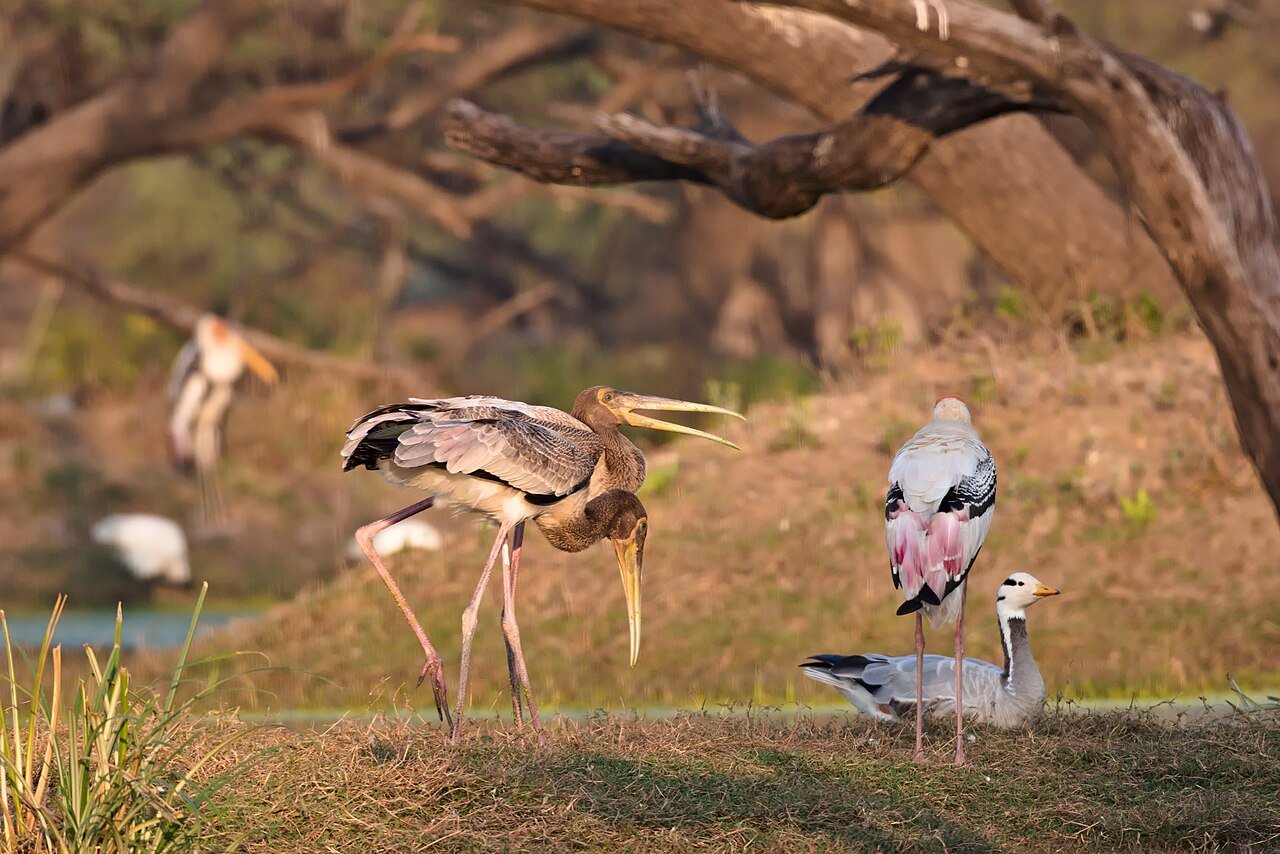
Fifty-five kilometres east of Jaipur, Keoladeo National Park covers 2,873 hectares of wetland, grassland and woodland on the edge of Bharatpur. UNESCO inscribed it in 1985 — four years after its Ramsar designation — recognising the park as a critical wintering ground for migratory waterfowl from Central Asia and Siberia. More than 370 bird species have been recorded here; during December and January the population swells dramatically as bar-headed geese, shovelers, pintails and, in some years, Siberian cranes arrive from the north. The park originated as a private duck-shooting preserve of the Maharaja of Bharatpur from the 1850s. Today it is protected and navigated on foot, by cycle-rickshaw or bicycle along flat paths through the marsh — the sound landscape in winter is dense: the clacking of painted storks nesting in the trees, the bursts of kingfisher calls across the channels, and the constant low conversation of thousands of coots on open water. The ornithologist Salim Ali lobbied for its formal protection, and his influence on its eventual designation as a national park in 1982 is well documented.
Getting there: 55 km east of Jaipur — approximately 1 hour by car; trains run from Jaipur Junction to Bharatpur (around 1 hour 30 minutes), then a short auto-rickshaw or cycle-rickshaw ride to the park gate. Allow: 3–4 hours minimum; a full day for serious birdwatchers. Best for: Winter birding (November–February) — the park is open year-round but the migratory spectacle peaks in December and January.
Rani ki Vav, Patan 2 hr 30 min from Jaipur
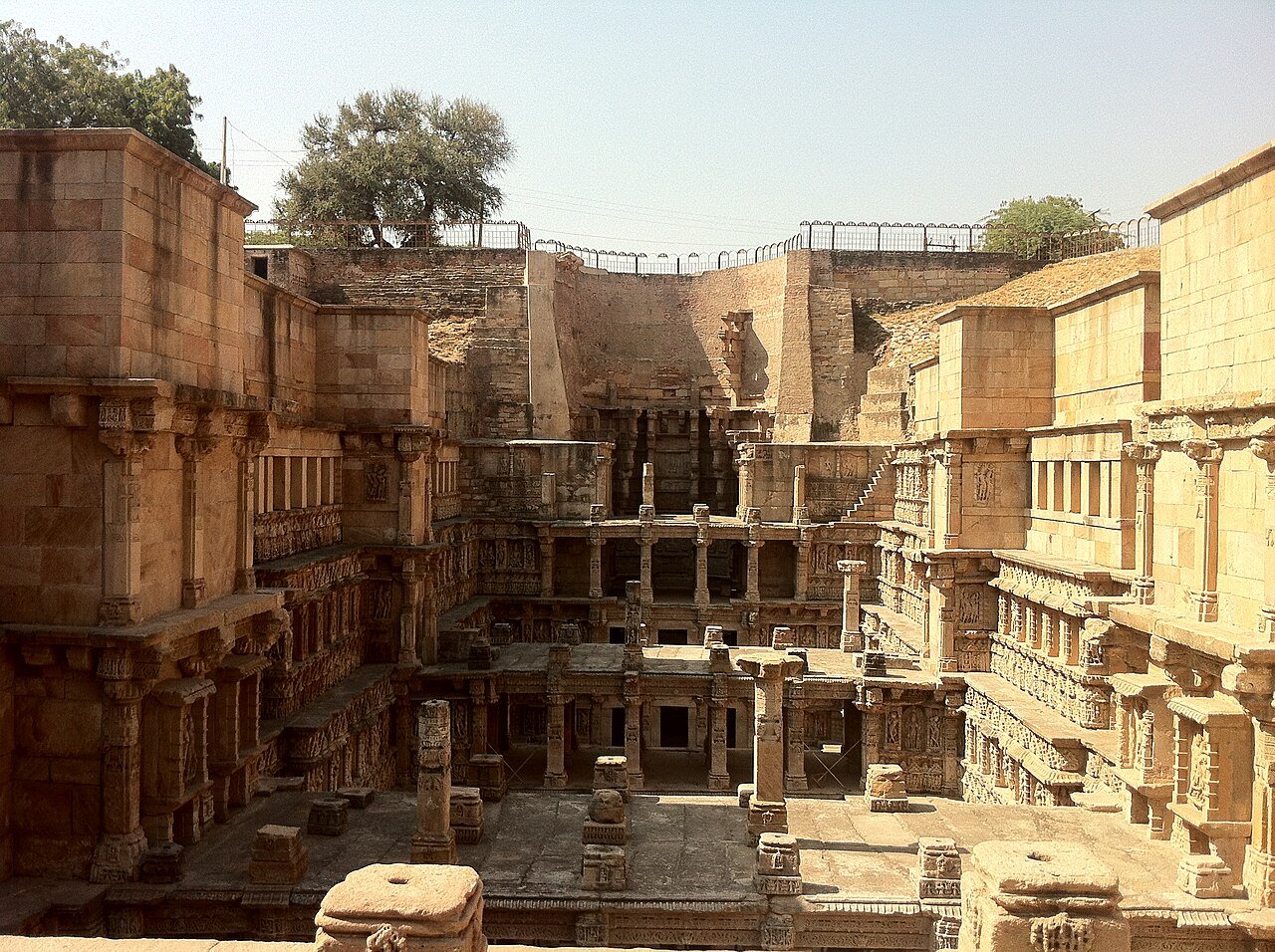
Rani ki Vav (“the Queen’s Stepwell”) stands in Patan, Gujarat, 130 kilometres south of Jaipur — a 2-hour-30-minute drive via NH48. UNESCO inscribed it in 2014, describing it as “one of the finest examples of a stepwell in the subcontinent” and recognising the stepwell as a distinct form of subterranean water architecture. Its construction is attributed to Udayamati, queen of the 11th-century Chaulukya king Bhima I, built as a memorial after his death. The structure descends seven storeys below the Gujarat plain; its staircase walls carry more than 500 principal sculptures and over 1,000 minor carvings depicting Vishnu, apsaras and a full hierarchy of Hindu imagery. The well silted over entirely and lay buried until rediscovery in the 1940s; the Archaeological Survey of India restored it through the 1980s. Walking down the stepped corridor, the air cools noticeably with each level and the carving grows denser — figures that at the surface appear as decorative frames reveal themselves, at the lowest galleries, as full-sized relief panels cut with a precision that the century of burial left almost intact. This is a half-day excursion from Jaipur requiring a car; it pairs naturally with the Patan textile tradition and the ruined Solanki capital at Anhilwara nearby.
Getting there: 130 km south of Jaipur via NH48 — 2 hours 30 minutes by car; no direct rail connection to Patan from Jaipur. Plan for a day trip or an overnight stay in Patan or Ahmedabad (80 km further). Allow: 1–2 hours at the stepwell itself. Best for: Medieval Indian sculpture and the rare experience of a below-ground heritage site that functions as both architecture and gallery.
Frequently Asked Questions
How many UNESCO World Heritage Sites are near Jaipur?
Four UNESCO World Heritage Sites lie within 130 kilometres of Jaipur: Jantar Mantar in the city centre (inscribed 2010), Amber Fort 11 km north as part of the Hill Forts of Rajasthan (inscribed 2013), Keoladeo National Park in Bharatpur 55 km east (inscribed 1985), and Rani ki Vav in Patan 130 km south (inscribed 2014). Jaipur’s Old City itself — the walled Pink City — was inscribed as a UNESCO World Heritage Site in 2019.
What is the closest UNESCO World Heritage Site to Jaipur?
Jantar Mantar is within the city itself, a 10-minute walk from Hawa Mahal in the Old City. Amber Fort, part of the Hill Forts of Rajasthan inscription, is 11 kilometres north of the city centre and reachable in around 30 minutes by local bus or jeep. Both can be visited in a single day.
What is the best season to visit these UNESCO sites near Jaipur?
October through March is the most comfortable period across all four sites. Keoladeo National Park is at its best in December and January when migratory birds — painted storks, bar-headed geese, and in exceptional years Siberian cranes — reach peak numbers. Amber Fort and Jantar Mantar are open year-round, but summer temperatures in Rajasthan regularly exceed 42°C and make outdoor exploration demanding before 8 a.m. and after 5 p.m.
Do these sites require advance tickets, and is there a dress code?
All four sites are managed by the Archaeological Survey of India (Jantar Mantar, Amber Fort, Rani ki Vav) or the Forest Department (Keoladeo) and charge separate entry fees; foreign nationals pay higher rates than Indian nationals at ASI sites. Tickets can be purchased at the gate; Amber Fort also offers online booking. There is no formal dress code, but modest clothing — shoulders and knees covered — is respectful at all sites, and Keoladeo’s paths require sturdy footwear. Visa requirements for India depend on your nationality; most visitors use the e-Visa facility available via the Indian government’s official portal before travel.
Sources
- UNESCO World Heritage Centre — Jantar Mantar, Jaipur (2010)
- UNESCO World Heritage Centre — Keoladeo National Park (1985)
- UNESCO World Heritage Centre — Hill Forts of Rajasthan (2013)
- UNESCO World Heritage Centre — Rani-ki-Vav (the Queen’s Stepwell) at Patan, Gujarat (2014)
- Archaeological Survey of India — asi.nic.in (ticketing and site management information)