Norway is a large country, and its UNESCO World Heritage Sites are spread accordingly — from the industrial valleys of Telemark, two and a half hours from Oslo by bus, to rock carvings etched into Arctic stone accessible only by plane. This guide covers all five of Norway’s inscribed sites, with honest travel times, overnight recommendations, and the context needed to decide which journeys are worth making. From Cultural Heritage Online.
Rjukan-Notodden Industrial Heritage Site 2 hrs 30 min by bus
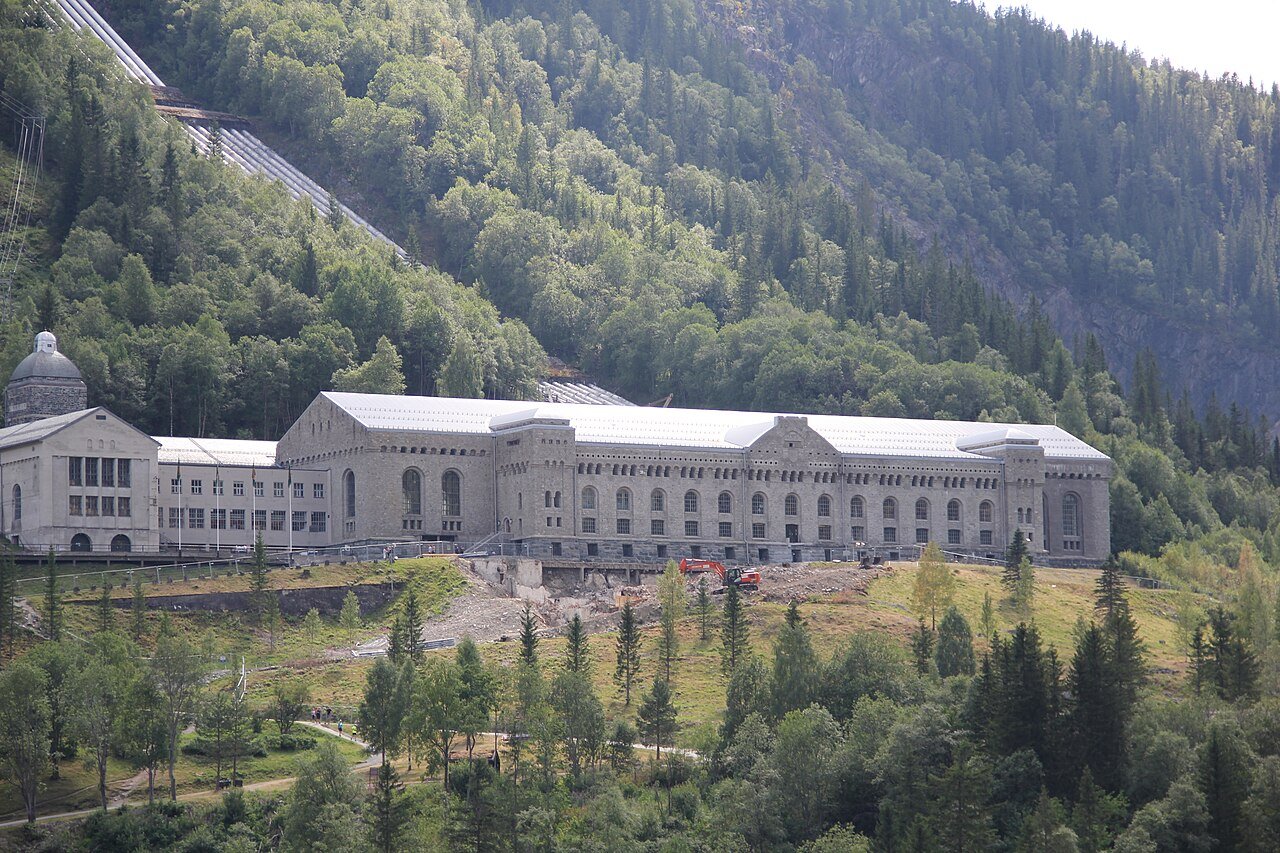
Inscribed in 2015, the Rjukan-Notodden Industrial Heritage Site in Telemark county preserves the landscape that fuelled a revolution in global agriculture. In the early twentieth century, Norwegian engineers Sam Eyde and Kristian Birkeland developed a process for fixing atmospheric nitrogen into synthetic fertiliser, and the infrastructure built around it — hydroelectric power stations, transmission lines, railways, and two planned company towns — survives across 4,959 hectares. Vemork power station, built by Norsk Hydro and opened in 1911, was then the largest hydroelectric plant in the world. During the Second World War, the same facility produced the heavy water that Allied saboteurs famously destroyed in 1943. Walking the valley today, the scale of the industrial ambition presses in from every side: the gorge is steep, the turbine halls vast, and the mountains that supplied the water still loom overhead. The Norwegian Industrial Workers Museum at Vemork tells both the production and the resistance story with clarity.
Getting there: NOR-WAY Bussekspress bus from Oslo Bus Terminal to Rjukan, approximately 2 hrs 30 min; or by car via E134, around 2 hours. Day trip from Oslo is comfortable. Allow: 3–4 hours. Best for: Visitors drawn to early twentieth-century industrial history and Second World War narratives.
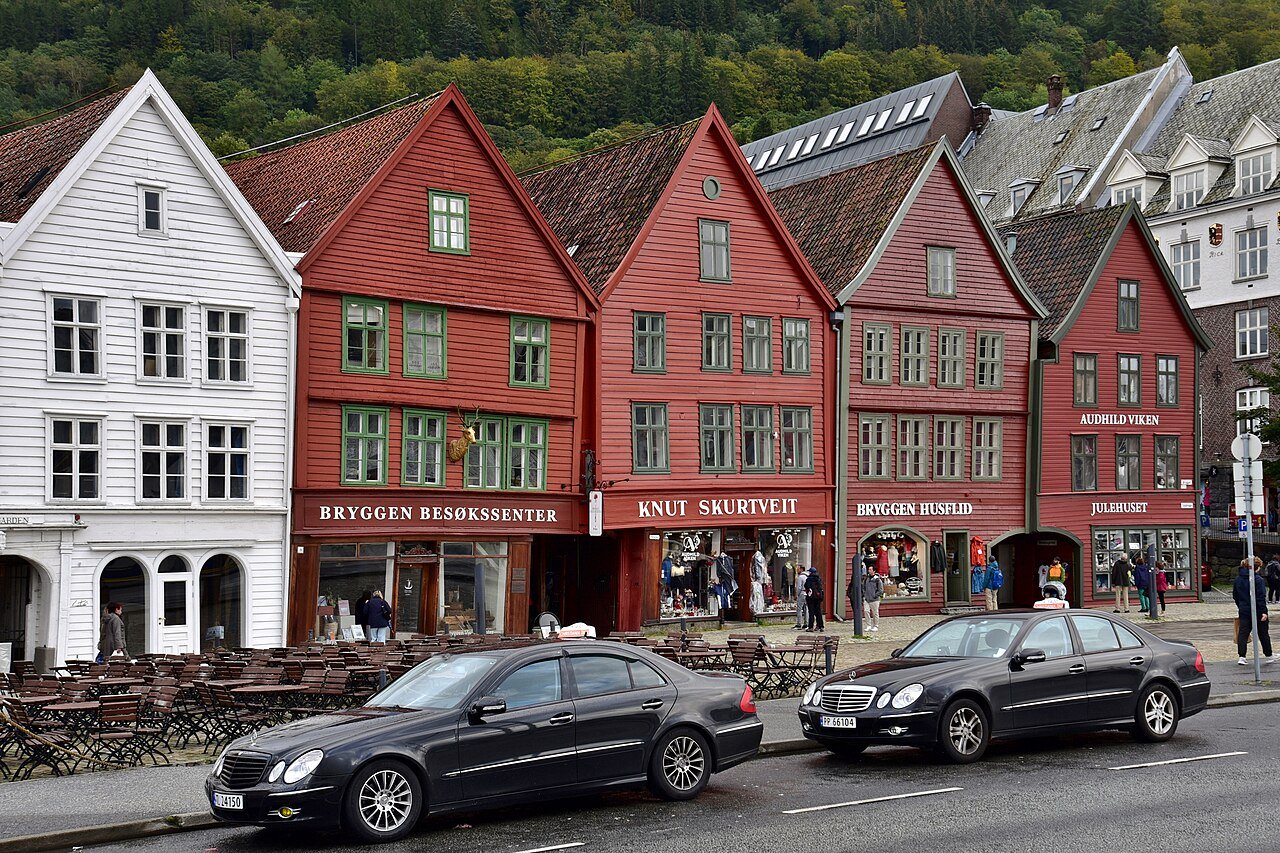
Bryggen Wharf in Bergen 6 hrs 30 min by train — overnight recommended
The row of timber warehouses along Bergen’s Vågen harbour has been a commercial address without interruption since the fourteenth century. Around 1350, the Hanseatic League established its Norwegian trading post here, and Bryggen — then known as Tyskebryggen, the German Wharf — became the nerve centre of northern trade in dried cod, grain, and cloth. Fire destroyed the district repeatedly; the current buildings date largely from after the great fire of 1702, reconstructed in the same style and on the same medieval plot boundaries. Bryggen was inscribed as a UNESCO World Heritage Site in 1979. The narrow alleys between the warehouse wings are dim and slightly damp, the timber boards weathered to deep ochre and grey — a texture that no photograph quite captures. The Bryggens Museum, partly built over excavations from a twelfth-century settlement, sits at the northern end and provides archaeological depth. Bergen itself merits at least a full day beyond the wharf.
Getting there: NSB Bergensbanen train from Oslo Central Station to Bergen, approximately 6 hrs 30 min — an overnight stay in Bergen is strongly recommended. Alternatively, Wideroe or SAS flights from Oslo Gardermoen reach Bergen Airport in around 55 minutes. Allow: 3–4 hours for Bryggen; plan a full day in Bergen. Best for: Hanseatic and medieval maritime history; combining with the Fjords itinerary below makes the journey most efficient.
Nærøy and Geiranger Fjords Multi-day trip — combine with Bergen
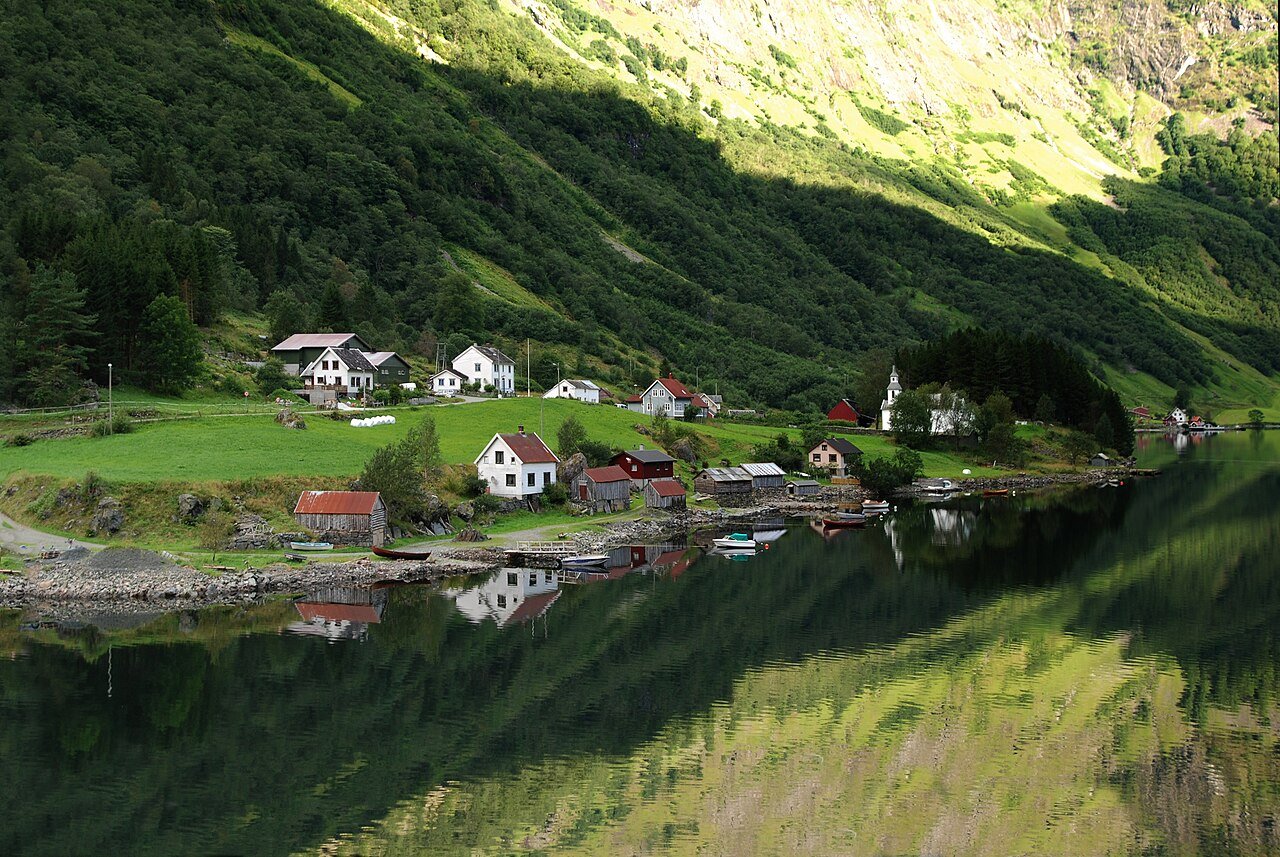
The West Norwegian Fjords — inscribed in 2005 under UNESCO criteria for outstanding natural beauty and geological significance — encompass two separate fjord systems roughly 120 kilometres apart: the Nærøyfjord in the north, the innermost arm of the Sognefjord, and the Geirangerfjord in the south, a 15-kilometre branch of Storfjorden in Møre og Romsdal. Both reach depths that swallow mountain faces wholesale. The Nærøyfjord narrows to 250 metres at its tightest passage, flanked by walls that rise 1,400 metres. The Geirangerfjord is known for the Seven Sisters waterfall, whose seven ribbons of white water drop freely into the fjord. These are not convenient day trips from Oslo. The standard approach pairs the Bergensbanen train with the Flåm Railway descent to Flåm, then a ferry through the Nærøyfjord — a sequence that takes the best part of two days and fits naturally into the Bergen overnight described above.
Getting there: Train to Myrdal via Bergen, then the Flåm Railway to Flåm (1 hr), then ferry through Nærøyfjord to Gudvangen (2 hrs) — approximately 7–8 hours from Oslo total, excluding overnight stops. Plan at minimum 2 full days; 3 is better if also visiting Geirangerfjord. Combine with Bergen stay. Allow: Multi-day. Best for: Dramatic fjord landscapes; the trip functions as a scenic loop rather than a single destination.
Urnes Stave Church 7 hrs by train and ferry — combine with Nærøyfjord
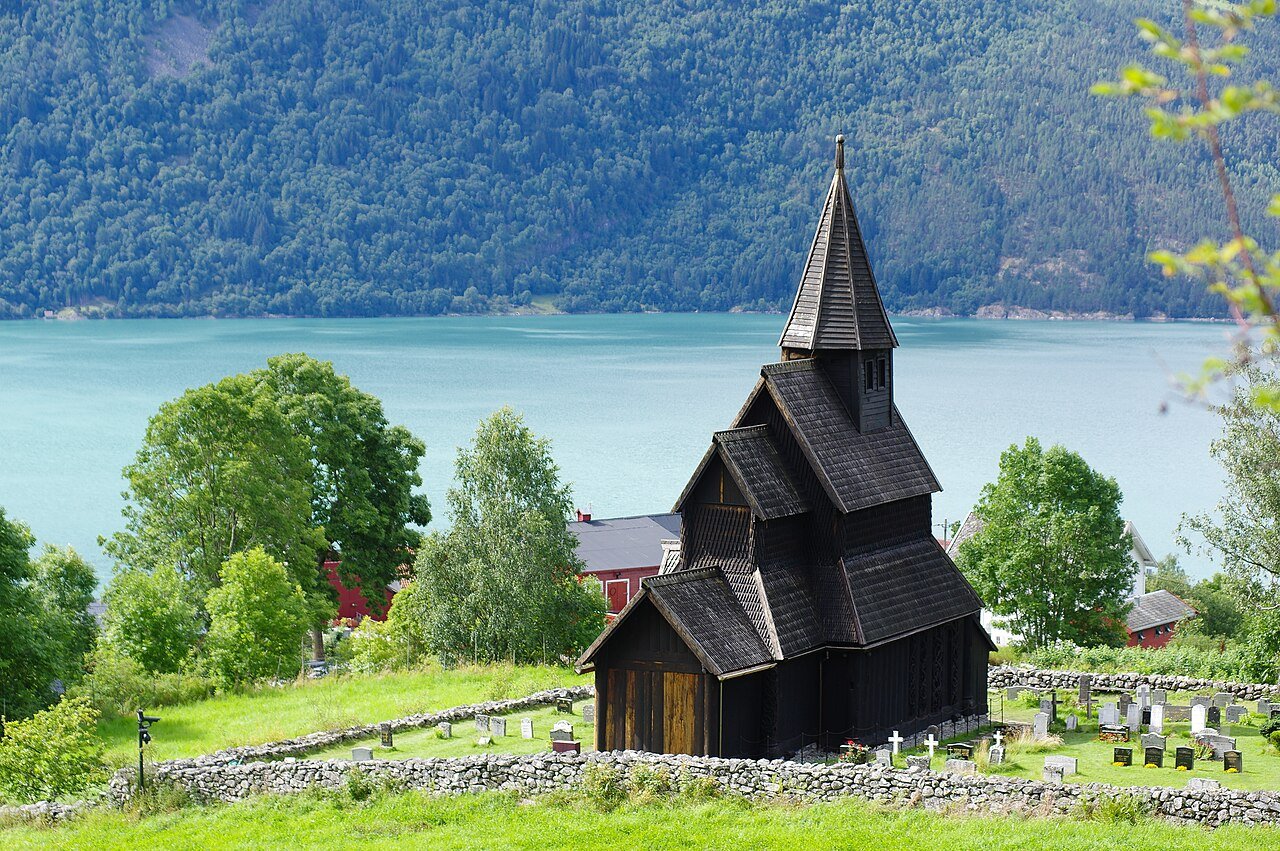
Urnes Stave Church, built around 1132 on a ridge above the Lustrafjorden in Luster Municipality, is the oldest surviving stave church in Norway and one of the oldest wooden buildings in Europe. UNESCO inscribed it in 1979 — in the same year as Bryggen — citing its fusion of Viking Age animal-interlace ornament with early Christian iconography, a combination visible most clearly in the north portal’s carved serpents and ribbon beasts. Dendrochronological dating confirms the main structure to c. 1132, though some timber elements trace back to the second half of the eleventh century. The Society for the Preservation of Ancient Norwegian Monuments (Fortidsminneforeningen) has owned and maintained the church since 1881. Inside, the space is small and dark, the air carrying the particular stillness of wood that has absorbed centuries of use. The church stands on a slope above a tiny ferry landing, reachable only by boat across the Lustrafjorden from Solvorn — a logistical detail that keeps visitor numbers modest.
Getting there: Train to Sogndal via Bergen and bus, then ferry from Solvorn to Ornes — approximately 7 hours from Oslo. Best combined with a multi-day Sognefjord itinerary that includes the Nærøyfjord ferry. This is not a day trip; plan at least one overnight near Flåm or Sogndal. Allow: 1–2 hours at the church. Best for: Medieval timber architecture and Viking-era decorative art; visitors already travelling the Sognefjord circuit.
Rock Art of Alta 2 hrs by plane from Oslo Gardermoen
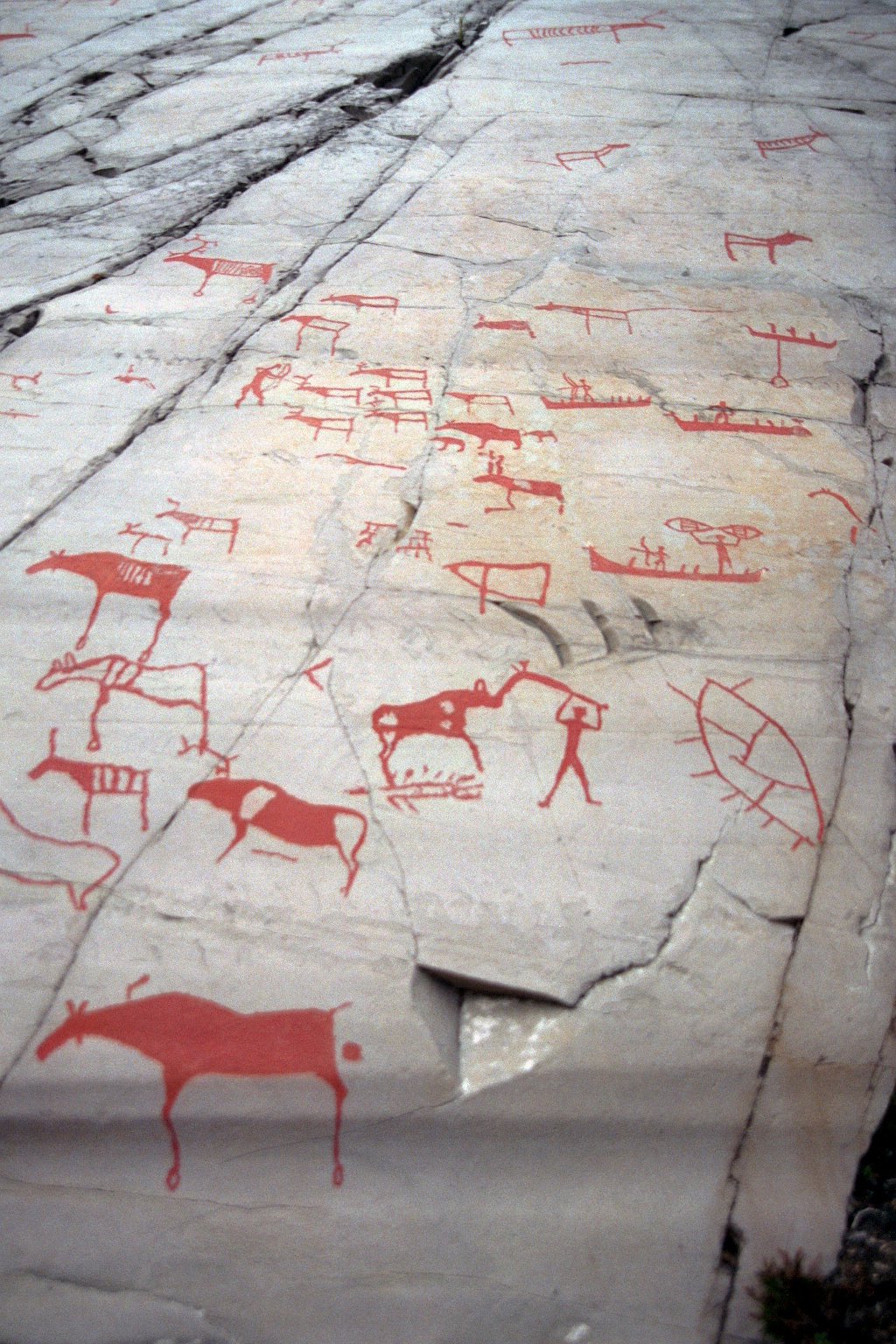
Alta, 70 degrees north in Finnmark county, is a two-hour flight from Oslo — the farthest of Norway’s World Heritage Sites and the only one requiring air travel. The carvings, inscribed in 1985 as Norway’s sole prehistoric World Heritage Site, number more than 6,000 individual images spread across multiple open-air panels between approximately 4200 BC and 500 BC. They were first documented by researchers in 1973. The petroglyphs at Jiepmaluokta, about five kilometres from the town centre, form the largest concentration and have been developed into a walk-through open-air museum with boardwalks that keep visitors above the polished stone. The images depict reindeer hunts, boats, human figures, and shamanistic motifs — a sustained record of Arctic hunter-gatherer culture carved into reddish-brown slate at the edge of the Alta River. The World Heritage Rock Art Centre – Alta Museum, which sits adjacent to the Jiepmaluokta site, provides interpretive context and houses research collections.
Getting there: SAS or Norwegian direct flights from Oslo Gardermoen to Alta Airport, approximately 2 hours. The site is a genuine destination trip — at minimum one overnight in Alta is recommended to allow a relaxed visit. Summer is best: the midnight sun illuminates the carvings from an angle that deepens the contrast. Allow: 3–4 hours. Best for: Prehistoric art, Arctic landscape, and the cultural history of northern Norway’s first inhabitants.
Frequently Asked Questions
How many UNESCO World Heritage Sites are near Oslo?
Norway has five UNESCO World Heritage Sites, and all of them are reachable from Oslo — though distances vary considerably. The closest, Rjukan-Notodden, is 2 hours 30 minutes by bus. The farthest, the Rock Art of Alta, requires a 2-hour flight north to the Arctic.
What is the closest UNESCO World Heritage Site to Oslo?
The Rjukan-Notodden Industrial Heritage Site in Telemark is the nearest, reachable by NOR-WAY Bussekspress bus from Oslo Bus Terminal in approximately 2 hours 30 minutes, or by car in around 2 hours. It makes a comfortable day trip without an overnight stay.
Can I visit Bryggen and the fjords on the same trip from Oslo?
Yes, and it is the logical way to structure a multi-day itinerary. The Bergen overnight gives access to Bryggen Wharf, and the classic Fjord route — Bergen to Myrdal by train, down the Flåm Railway, then ferry through the Nærøyfjord — extends naturally from the same base. Allow at least three full days for the combined trip.
When is the best time to visit the Alta rock carvings?
June to August offers the most practical visit, when the midnight sun keeps the site accessible around the clock and the open-air boardwalk at Jiepmaluokta is fully operational. The low-angle light of the Arctic summer also improves contrast on the carved panels, making the individual figures easier to read.
Sources used in this article
- UNESCO World Heritage Centre — World Heritage List.
- Wikipedia — Rjukan–Notodden Industrial Heritage Site.
- Wikipedia — Bryggen.
- Wikipedia — Rock carvings at Alta.
- Wikipedia — Urnes Stave Church.
- CHO — Interactive heritage map.