Finland concentrates an unusual density of UNESCO World Heritage Sites within a single country, and five of them sit within striking distance of Helsinki — reachable by public ferry, intercity train, or car, on journeys ranging from twenty minutes across the harbour to a full day’s travel deep into the Finnish interior. Each site represents a distinct chapter in the country’s history: a Swedish sea fortress, an industrial mill village frozen in 1964, a network of 19th-century geodetic survey points, a medieval wooden town still lived in today, and a Lutheran log church standing in a birch forest since 1765. From Cultural Heritage Online.
Suomenlinna Sea Fortress 20 min by HSL ferry
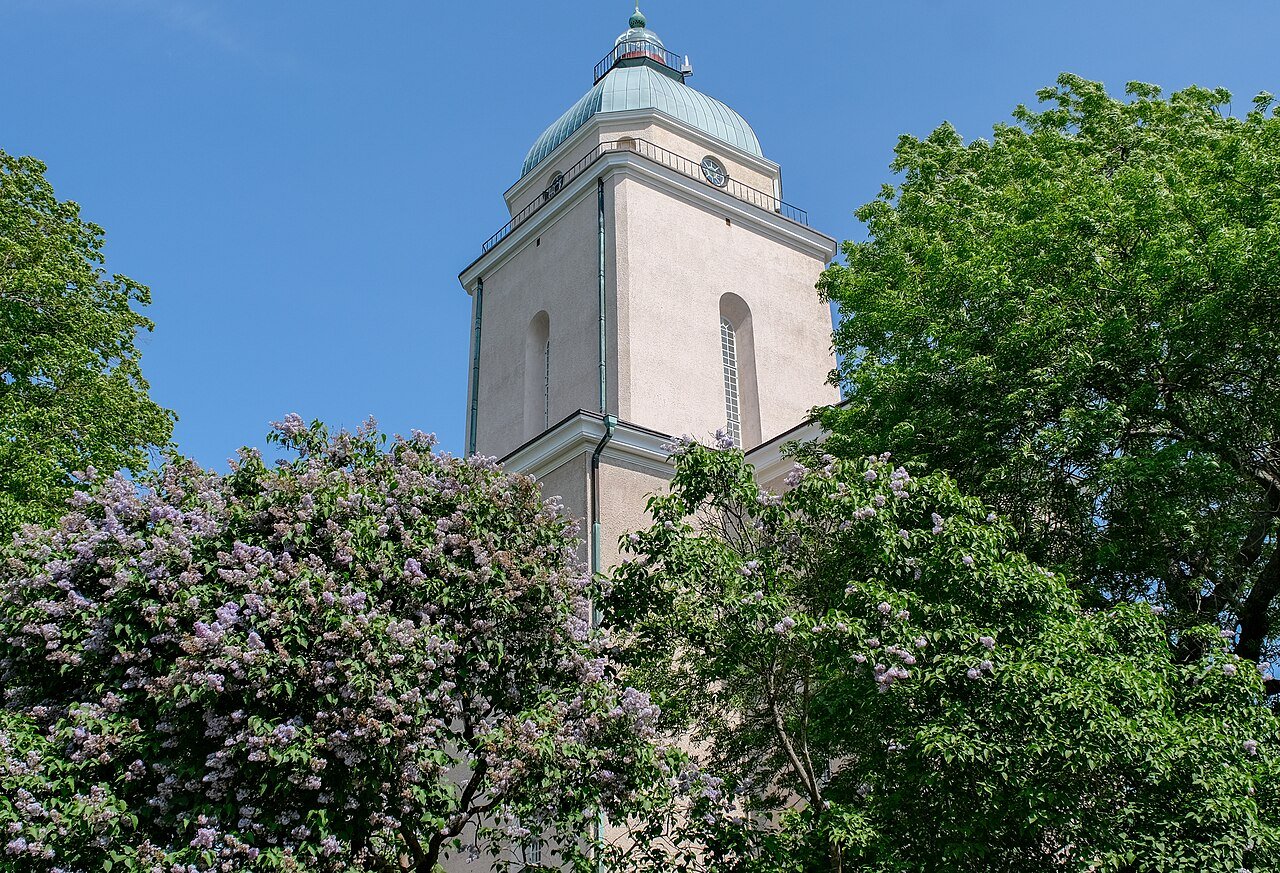
Construction of Suomenlinna — known as Sveaborg under Swedish rule — began in 1748 on the orders of the Swedish Crown and under the general direction of Admiral Augustin Ehrensvärd. The fortress spreads across eight islands, six of them fortified, roughly four kilometres southeast of Helsinki’s city centre. Inscribed on the UNESCO World Heritage List in 1991, the site represents one of the largest surviving sea fortresses in the world and one of the finest examples of 18th-century European military architecture. Its design drew on the principles of French engineer Sébastien Le Prestre de Vauban, adapted to the archipelago’s fractured granite topography. In May 1808, the fortress surrendered to a Russian siege after two months of resistance. Russia held it until Finnish independence in 1917, when the garrison withdrew and the site was renamed. Civilian administration took over in 1973. Today the islands carry the particular atmosphere of a living heritage site: thick stone walls opening onto meadows, a working dry dock dating from the 18th century, and the constant sound of Baltic water.
Getting there: Take the HSL public ferry from Market Square (Kauppatori) in central Helsinki — the crossing takes approximately 20 minutes and operates year-round. The ferry accepts the standard Helsinki transit ticket. Allow: 2–3 hours minimum; a full half-day to explore all six islands. Best for: History travellers who want a UNESCO site accessible on a city transit ticket without leaving Helsinki’s transport network.
Verla Groundwood and Board Mill 1 hr 45 min by car
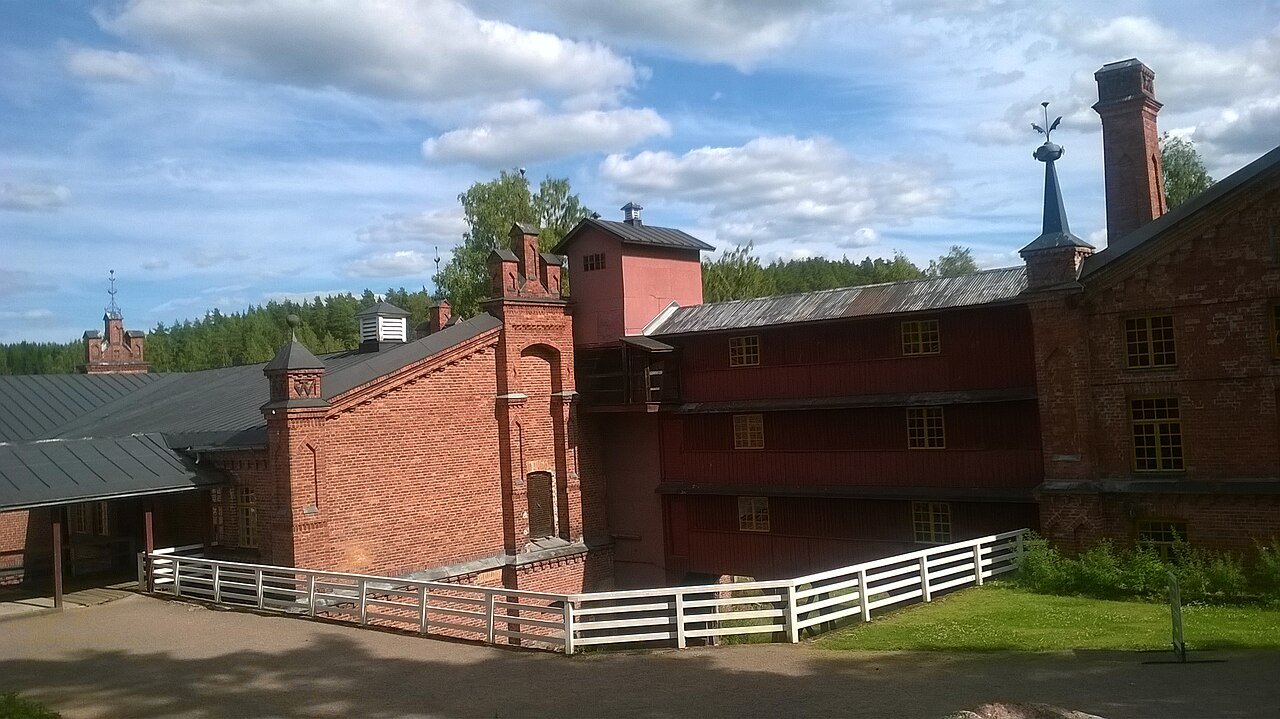
The Verla mill village stands beside a rapids on the Verlankoski River, a remarkably complete example of a 19th-century industrial community in which the factory, workers’ housing, and owner’s residence survive intact. Hugo Neuman founded the first groundwood mill on the site in 1872; it burned in 1876. A larger facility followed in 1882, built by Gottlieb Kreidl and Louis Haenel, its main buildings in red brick with Neo-Gothic detailing that sits incongruously against the surrounding birch forest. The Kymmene Corporation acquired the operation in 1908. Machinery halted permanently on 18 July 1964, and the entire production sequence — from log debarking through grinding, drying, and packing of board — remained untouched, making the site a uniquely legible record of late-19th-century industrial process. UNESCO inscribed Verla in 1996 under criterion (iv). The site covers 22.78 hectares. A guided museum visit walks visitors through machinery that has not moved in six decades, the smell of old timber and grease still faint in the air.
Getting there: Verla lies roughly 1 hour 45 minutes by car from Helsinki via Kouvola. Public transport is limited: reach Kouvola by VR train (1 hr 10 min), then arrange a taxi or rental car for the remaining 35 km. Allow: 2 hours on site. Best for: Industrial heritage and those travelling by car who can combine it with the Kouvola region.
Struve Geodetic Arc (Finnish Points) 30 min by car to Espoo
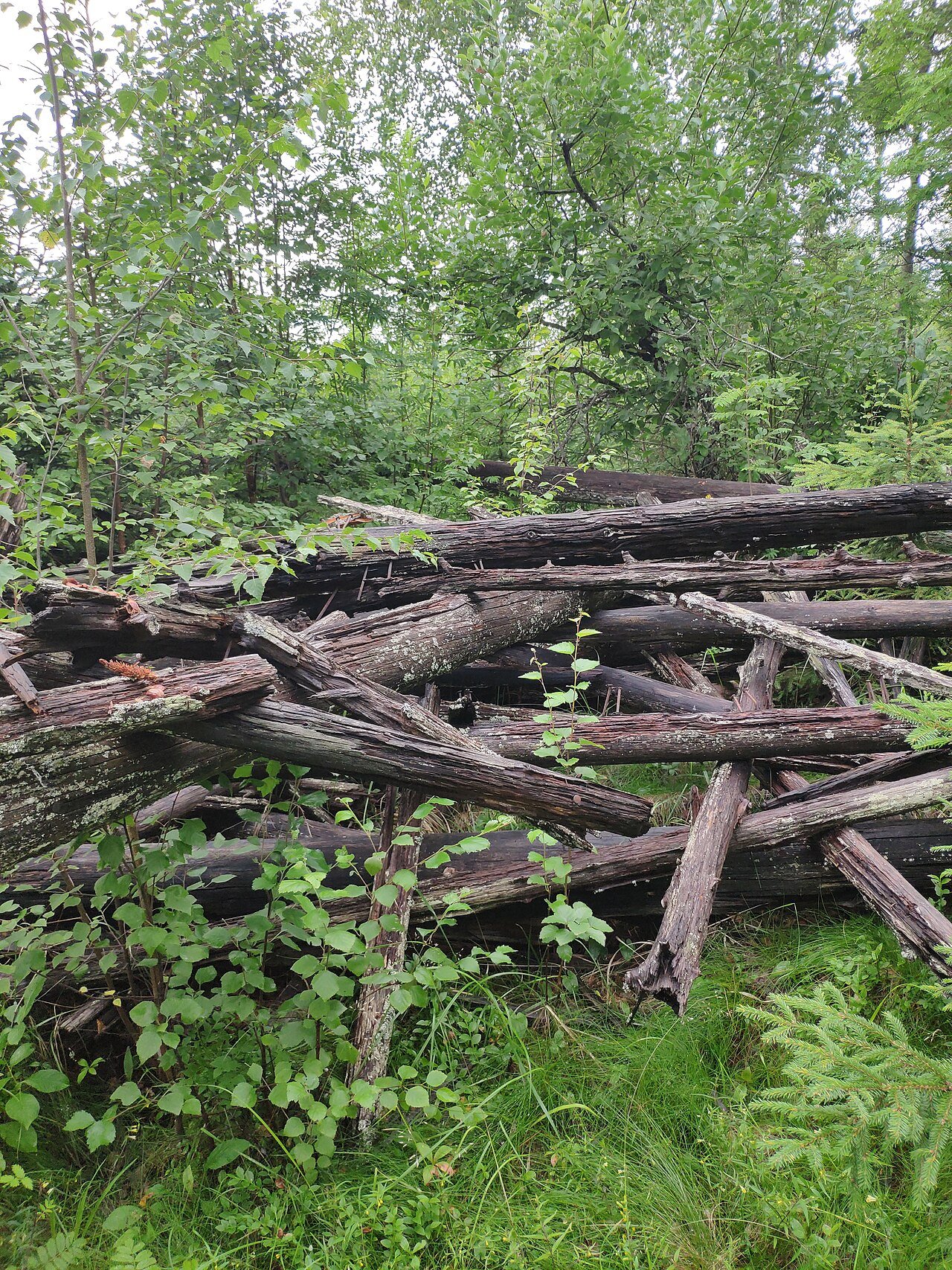
The Struve Geodetic Arc is one of the most unusual entries on the UNESCO World Heritage List: not a single monument but a chain of 265 triangulation stations stretching 2,820 kilometres from Hammerfest in northern Norway to the Black Sea coast, passing through ten countries. The survey was conducted between 1816 and 1855 under the direction of Friedrich Georg Wilhelm von Struve, a German-born Russian scientist, and produced the first accurate measurement of a long arc of a meridian — a foundational achievement in geodesy and cartography. UNESCO inscribed the arc in 2005, designating 34 surviving station points, of which Finland holds several. The closest to Helsinki is the Mustaviita point in Espoo, about 30 minutes by car. Other Finnish stations — Kulvenmäki, Perheniemi, Soitinkallio, Virmala, and Korsmalm among them — are marked by stone obelisks or inscribed rock surfaces set quietly in forests and fields. Each marker is a physical record of 19th-century scientific ambition: the effort to measure the Earth with chains, angles, and patience.
Getting there: The Mustaviita point in Espoo is approximately 30 minutes by car from central Helsinki. Other Finnish points require longer drives across southern and central Finland. Allow: 1–2 hours per station visit; plan as a driving route if visiting multiple points. Best for: Travellers with an interest in the history of science, geodesy, or unusual heritage typologies.
Old Rauma 2 hrs 30 min by VR Intercity train
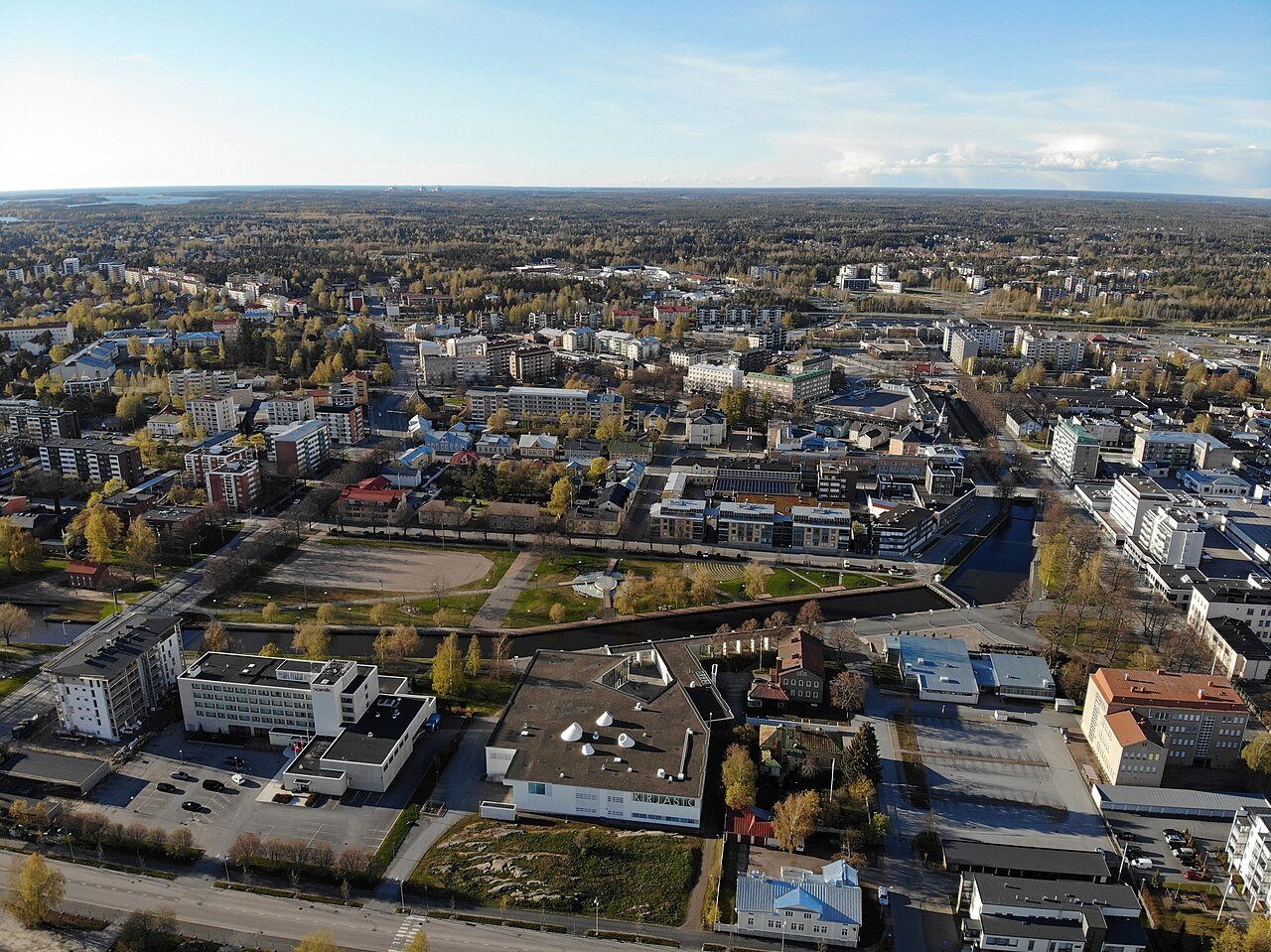
Old Rauma is the largest surviving medieval wooden town centre in Scandinavia, covering 0.3 square kilometres and containing approximately 600 buildings, most of them still in residential and commercial use. The street pattern retains its medieval layout, though the town suffered major fires in 1640 and 1682; the oldest standing buildings date from the 18th century. The Church of the Holy Cross, inaugurated in 1512 as a Franciscan monastery church, anchors the southern edge of the old town. The Old Town Hall dates from 1776. UNESCO inscribed Old Rauma in 1991, recognising the exceptional preservation of its wooden urban fabric and the continuity of its civic life. Around 800 people live within the heritage boundary today. Walking the narrow streets in warm weather, painted timber facades close overhead and the smell of old pine rises from sun-warmed planks. Rauma’s distinctive dialect, Rauman murre, has been spoken in these streets for centuries and remains recognisable today.
Getting there: VR Intercity trains run from Helsinki to Rauma with a change at Tampere or Turku; total journey approximately 2 hours 30 minutes. Direct bus services also operate from Helsinki. Allow: 2–3 hours to walk the old town; an overnight stay is recommended to visit outlying sites at leisure. Best for: Urban heritage and Scandinavian wooden architecture; an excellent standalone destination for a weekend trip from Helsinki.
Petäjävesi Old Church 3 hrs by train, then 45 min by car
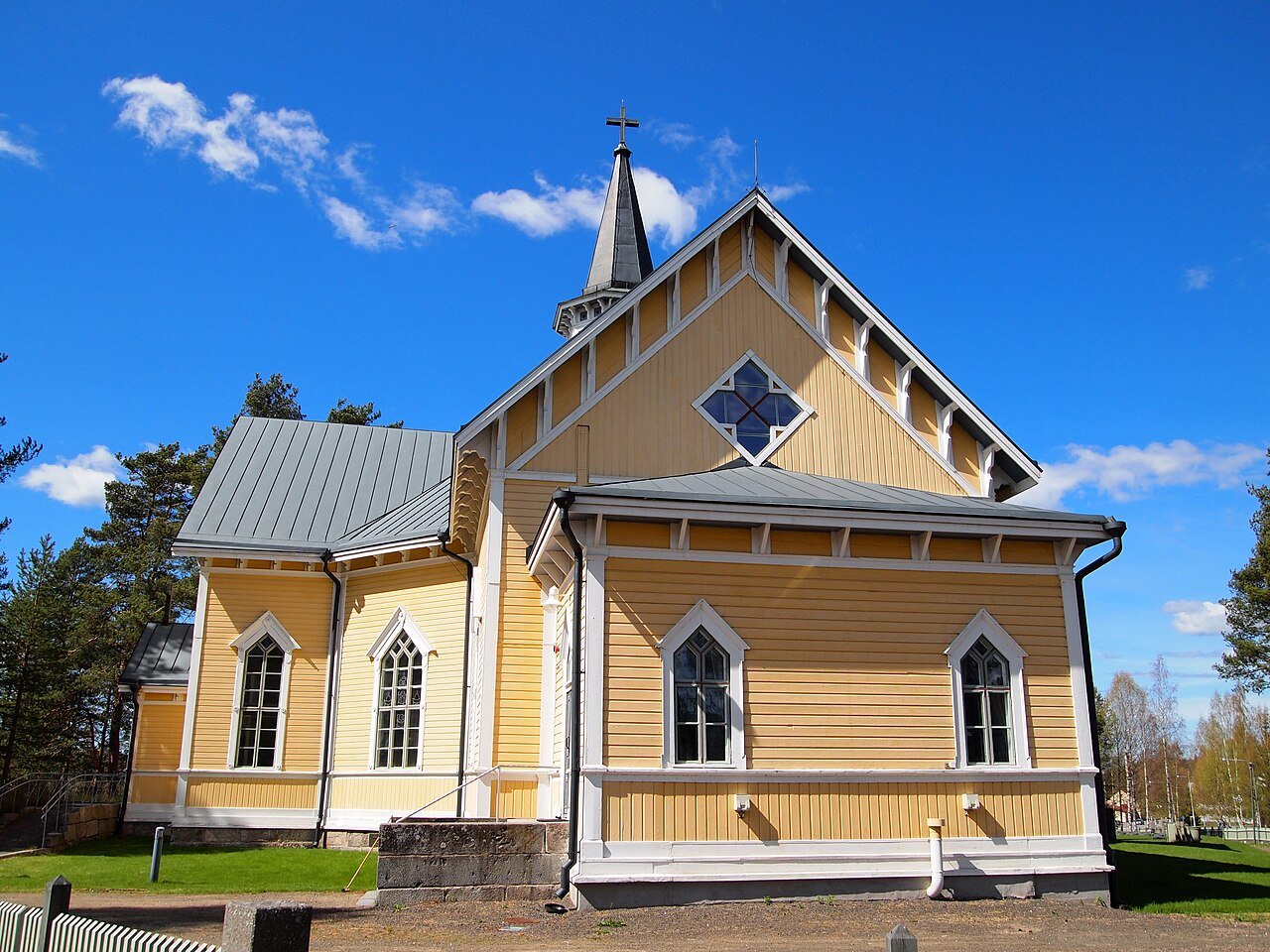
Petäjävesi Old Church was built between 1763 and 1765 in the Tavastia region, then under Swedish rule, and represents one of the most eloquent surviving examples of Nordic log church construction. The bell tower was added in 1821. UNESCO inscribed the church in 1994, citing it as testimony to a distinct tradition of wooden religious architecture that flourished in the Nordic countries from the 17th to the 19th centuries. The building sits roughly one kilometre west of the Petäjävesi village centre, on a low rise above a birch and pine forest. Its log walls have weathered to a deep grey-brown, giving the exterior a gravity that contrasts with the light interior. The church still holds weddings and regular Sunday services, making it a living place of worship. Reaching it from Helsinki requires a VR train to Jyväskylä — approximately three hours — followed by a 45-minute drive. This makes Petäjävesi most practical as an overnight trip, with Jyväskylä as a comfortable base.
Getting there: VR train from Helsinki to Jyväskylä (approx. 3 hours), then approximately 45 minutes by car or taxi to Petäjävesi. No direct public transport from Jyväskylä to the church. Allow: 1 hour at the church itself; plan an overnight stay in Jyväskylä. Best for: Travellers with a dedicated interest in vernacular wooden architecture or Nordic ecclesiastical heritage; not a practical day trip from Helsinki.
Frequently Asked Questions
How many UNESCO World Heritage Sites are near Helsinki?
Finland has five UNESCO World Heritage Sites that are reachable from Helsinki: Suomenlinna Sea Fortress, the Verla Groundwood and Board Mill, the Finnish stations of the Struve Geodetic Arc, Old Rauma, and Petäjävesi Old Church. Travel times range from 20 minutes by public ferry to a full day’s journey by train and car.
What is the closest UNESCO World Heritage Site to Helsinki?
Suomenlinna Sea Fortress is by far the closest — it is accessible on the standard Helsinki public transit network via a 20-minute HSL ferry from Market Square (Kauppatori). No additional transport or vehicle is needed. The nearest point of the Struve Geodetic Arc, at Mustaviita in Espoo, is about 30 minutes by car.
Can I visit Old Rauma as a day trip from Helsinki?
Old Rauma is feasible as a long day trip by train, with a travel time of approximately 2 hours 30 minutes each way. An overnight stay in Rauma is more comfortable and allows time to explore the old town thoroughly, including its museums and outlying areas, without rushing to catch a return train.
Is Petäjävesi Old Church open to visitors?
Yes, Petäjävesi Old Church is open to visitors during the summer season and remains an active Lutheran parish church hosting weddings and regular Sunday services. Because the site is approximately 3 hours from Helsinki by train plus a 45-minute onward car journey, it is best planned as an overnight trip with a base in Jyväskylä.
Sources used in this article
- UNESCO World Heritage Centre — World Heritage List.
- Wikipedia — Suomenlinna.
- Wikipedia — Verla.
- Wikipedia — Old Rauma.
- Wikipedia — Petäjävesi Old Church.
- Wikipedia — Struve Geodetic Arc.
- CHO — Interactive heritage map.