On December 6, 1928, by Royal Decree Law No. 2744, the Italian State established the Istituto Poligrafico dello Stato in Rome. Headquartered in the monumental rationalist palace of Piazza Verdi, the institute unified sovereign currency coinage, official gazettes, legal stamps, and security engraving, transforming State printing into a permanent temple of graphic excellence and numismatic artistry.
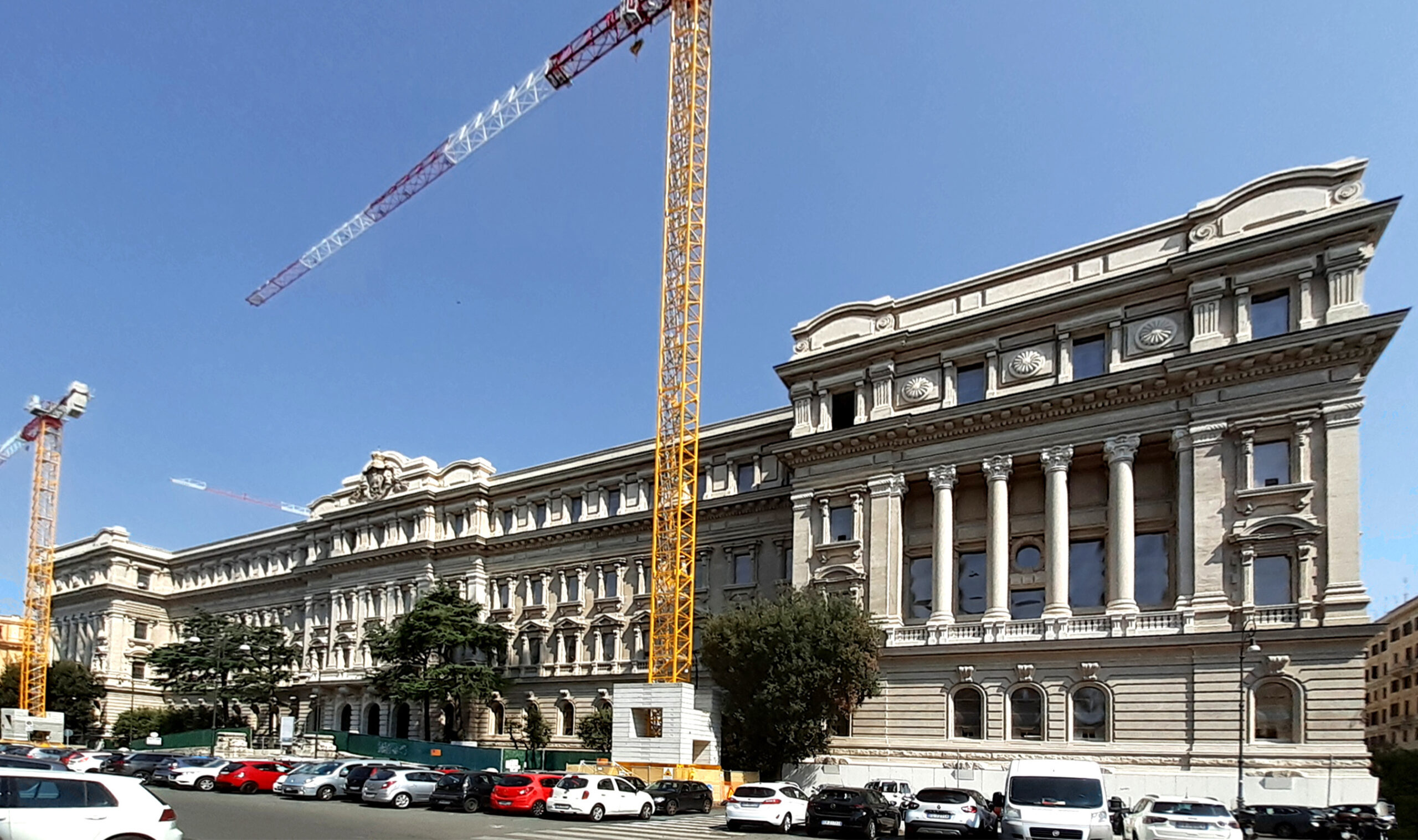
The Sovereign Forge in Piazza Verdi
In late 1928, the Italian government recognized the imperative to concentrate state paper printing, security watermark milling, and official legal publications into a single, technologically unassailable entity. The Istituto Poligrafico dello Stato was formally established, absorbing the historic Officina Governativa delle Carte Valori of Turin and establishing its monumental home in Piazza Verdi in Rome’s Pinciano-Parioli district, designed with imposing neo-renaissance and rationalist facades by architect Garibaldi Burba.
Equipped with state-of-the-art intaglio presses, copper electrotyping baths, and security paper vaults, the Piazza Verdi complex became an architectural city within a city. Master engravers and medalists sculpted dies for the Royal Mint (*Regia Zecca*), producing celebrated silver coins, commemorative medallions, and intricate philatelic issues that embodied the pinnacle of early 20th-century sovereign graphic art.
From Historical Engraving to High-Security Digital Identity
In 1978, the official merger with the State Mint codified the institution as the *Istituto Poligrafico e Zecca dello Stato* (IPZS). Beyond safeguarding legal gazettes and numismatic art, the institute evolved into a global leader in high-security biometric passports, electronic identity cards, and anti-counterfeiting tracking technology.
Today, while manufacturing operations have transitioned to cutting-edge secure facilities, the colossal Piazza Verdi palace stands as a monumental landmark of industrial archaeology. Its numismatic museum, archival prints, and restored monumental halls celebrate nearly a century of sovereign craft and technological safeguarding.
La calcografia, la monetazione e la stampa dei valori di Stato a Roma
Cinegiornale storico dell'Istituto Luce che documenta i torchi di stampa, la fusione delle monete e le lavorazioni di sicurezza presso il Poligrafico di Stato. (Fonte: Archivio Storico Istituto Luce Cinecittà)
Interactive 360° Heritage View: Palazzo del Poligrafico dello Stato — Historic Piazza Verdi Complex
Historical Location: Piazza Giuseppe Verdi 10, 00198 Roma RM, Italy (Coordinates: 41.9189, 12.4939)
Historical Archive Gallery
Sources
- S1 — Poligrafico e Zecca dello Stato. Cento anni di moneta e stampa di Stato. IPZS, 2011. ISBN 978-88-240-2720-5.
- S2 — De Felice, Renzo. Mussolini il fascista: L'organizzazione dello Stato totalitario. Einaudi, 1995. ISBN 978-88-06-13987-2.
Spotted an error? Write to editorial@culturalheritageonline.com and we correct it the same day.