Within two and a half hours of Copenhagen, five UNESCO World Heritage Sites span a thousand years of Scandinavian history — from Viking burial mounds and medieval royal tombs to Renaissance sea fortresses, chalk sea cliffs, and an intact eighteenth-century Moravian town. From Cultural Heritage Online.
Kronborg Castle 45 min by train
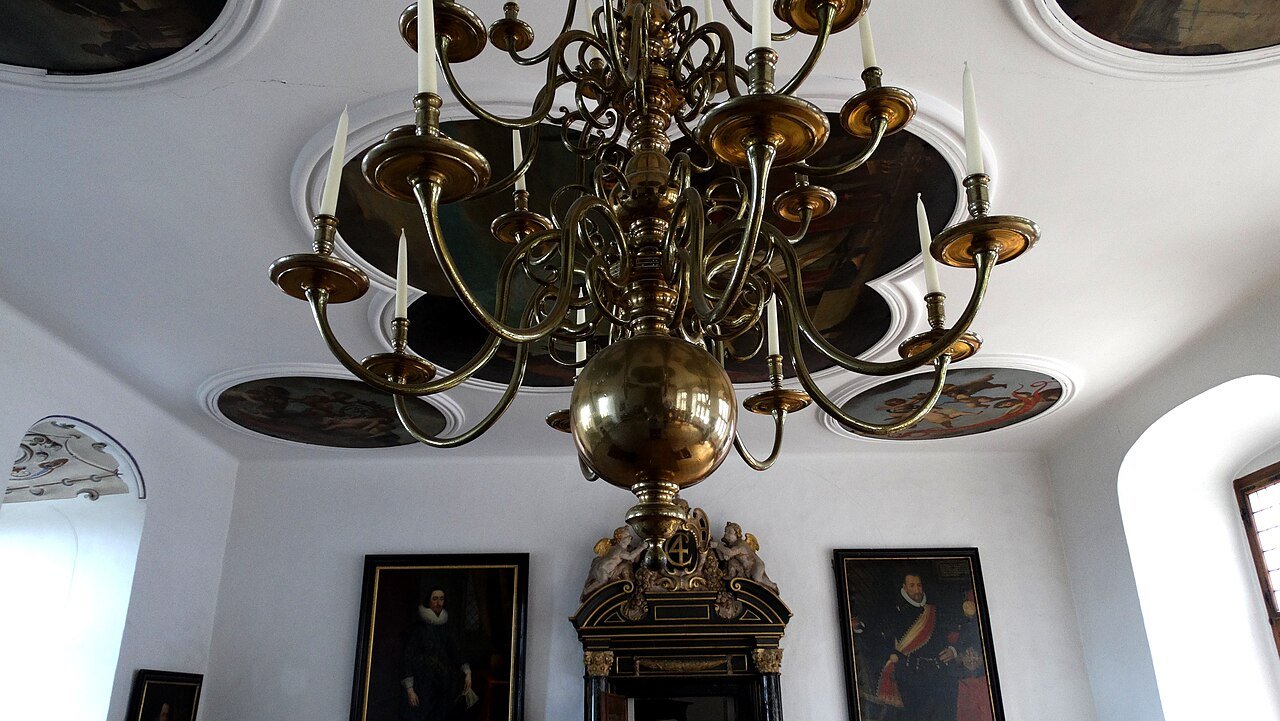
Guarding the narrowest point of the Øresund strait — barely four kilometres of grey-green water separating Denmark from Sweden — Kronborg has controlled Baltic trade and military passage since the 1420s, when King Eric VII built the original fortress he called Krogen. The Renaissance transformation between 1574 and 1585, commissioned by King Frederick II and executed by Flemish architects Hans Hendrik van Paesschen and Anthonis van Obbergen, produced the copper-roofed, sandstone-trimmed landmark that stands today. A fire in 1629 destroyed much of the interior; Christian IV rebuilt it within a decade, leaving the massive cannon-filled casemates beneath the courtyard largely intact. That subterranean labyrinth — vaulted brick, echoing, perpetually cold — still carries the weight of three centuries of gunpowder and garrison life. Inscribed on the UNESCO World Heritage List in 2000, the castle is celebrated both as an exemplar of Renaissance military architecture in Northern Europe and as the inspiration for Elsinore in Shakespeare’s Hamlet, a connection that has shaped its international reputation far beyond its strategic history.
Getting there: DSB train from Copenhagen H to Helsingør, approximately 45 minutes; the castle is a 15-minute walk from the station. Allow: 2–3 hours. Best for: A short, self-contained day trip combining the castle with Helsingør’s compact old town and the Øresund waterfront.
Roskilde Cathedral 25 min by S-train
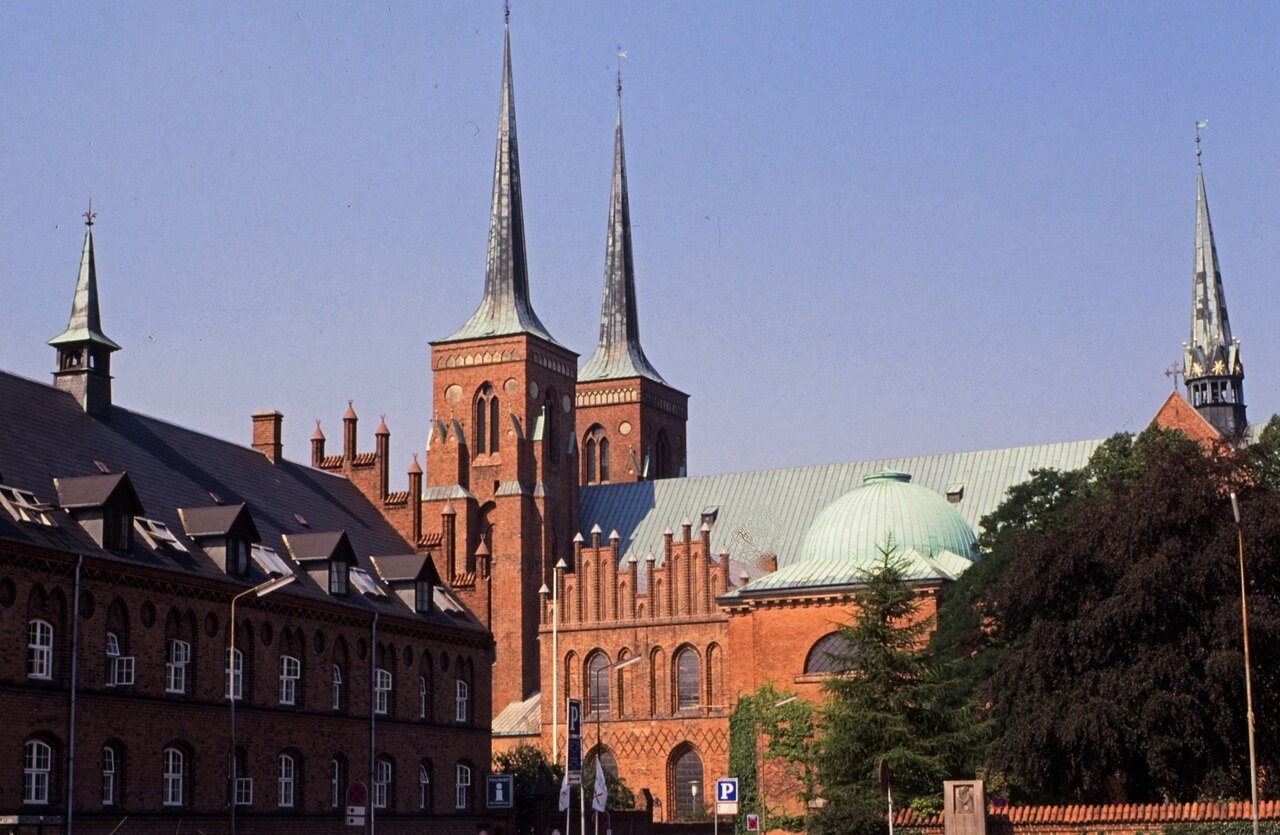
Roskilde Cathedral is the closest UNESCO World Heritage Site to central Copenhagen — twenty-five minutes on the S-train, then a short walk uphill through a market town that was Denmark’s capital before Copenhagen. Bishop Absalon began construction around 1170 on foundations of an earlier church; the building continued through the twelfth and thirteenth centuries and was substantially complete by 1280, making it one of the earliest Gothic brick structures in Scandinavia. Its twin towers rise 75.7 metres above the town and are visible across the flat farmland of western Zealand for miles. The interior is 86 metres long. Chapels were added for more than five centuries, giving the nave an almost biographical quality: each alcove holds a different monarch’s tomb, from Margaret I in the fifteenth century to Fredrik IX in 1985. Inscribed on the UNESCO World Heritage List in 1995, the cathedral is recognised for demonstrating eight hundred years of European architectural evolution within a single building and for its decisive role in spreading Brick Gothic construction across Northern Europe.
Getting there: S-train line A from Copenhagen H to Roskilde, approximately 25 minutes. Allow: 2–3 hours, including the Viking Ship Museum nearby. Best for: A half-day combination of royal history and the adjacent fjord, easily paired with the world-class Viking Ship Museum a ten-minute walk from the cathedral.
Stevns Klint 1 hr 30 min by train and bus
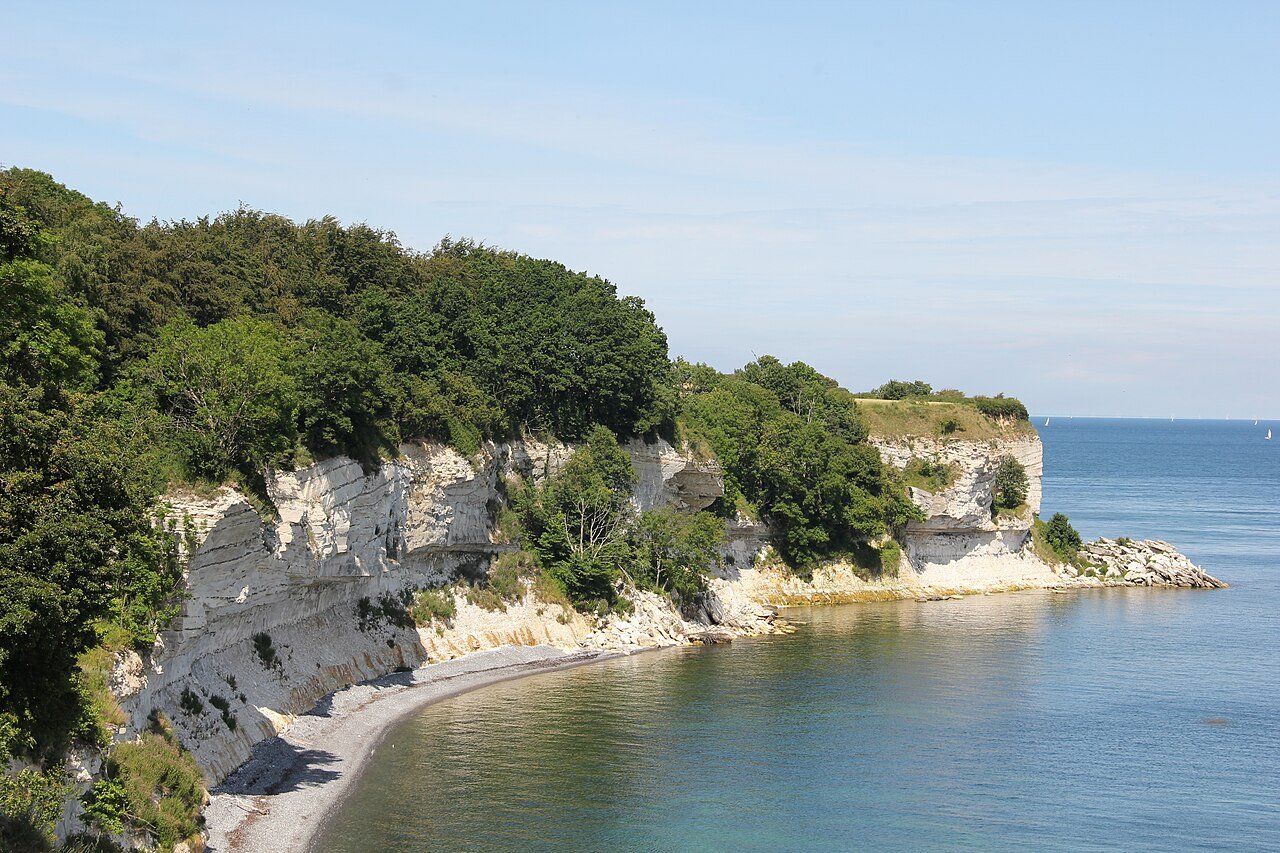
Stevns Klint is not a building. It is seventeen kilometres of white chalk cliff on the eastern coast of Zealand, rising up to forty metres above the Baltic — and it holds evidence of one of the most consequential geological events in Earth’s history. Within a thin dark band of clay visible in the cliff face runs the Cretaceous-Tertiary (K/T) boundary, the geological record of the mass extinction that ended the age of the dinosaurs approximately sixty-six million years ago. Stevns Klint exposes this boundary more clearly and accessibly than almost anywhere else on the planet, which is why it was inscribed on the UNESCO World Heritage List in 2014 under criteria viii for outstanding geological significance. The cliff is actively eroding — sections calve into the sea each winter — which both threatens long-term preservation and perpetually refreshes the fossil record for researchers. Paths along the cliff top offer views of the chalk face meeting the flat, gun-metal water below, while Højerup Old Church, partially collapsed over the cliff edge, marks the human scale of geological time.
Getting there: Train from Copenhagen H to Store Heddinge, then local bus to the cliff car park, approximately 1 hour 30 minutes total. Allow: 2–3 hours. Best for: Visitors with an interest in geology or natural landscapes who want something unlike any other UNESCO site in the region.
Jelling Mounds, Runic Stones and Church 2 hrs 30 min by IC train and bus
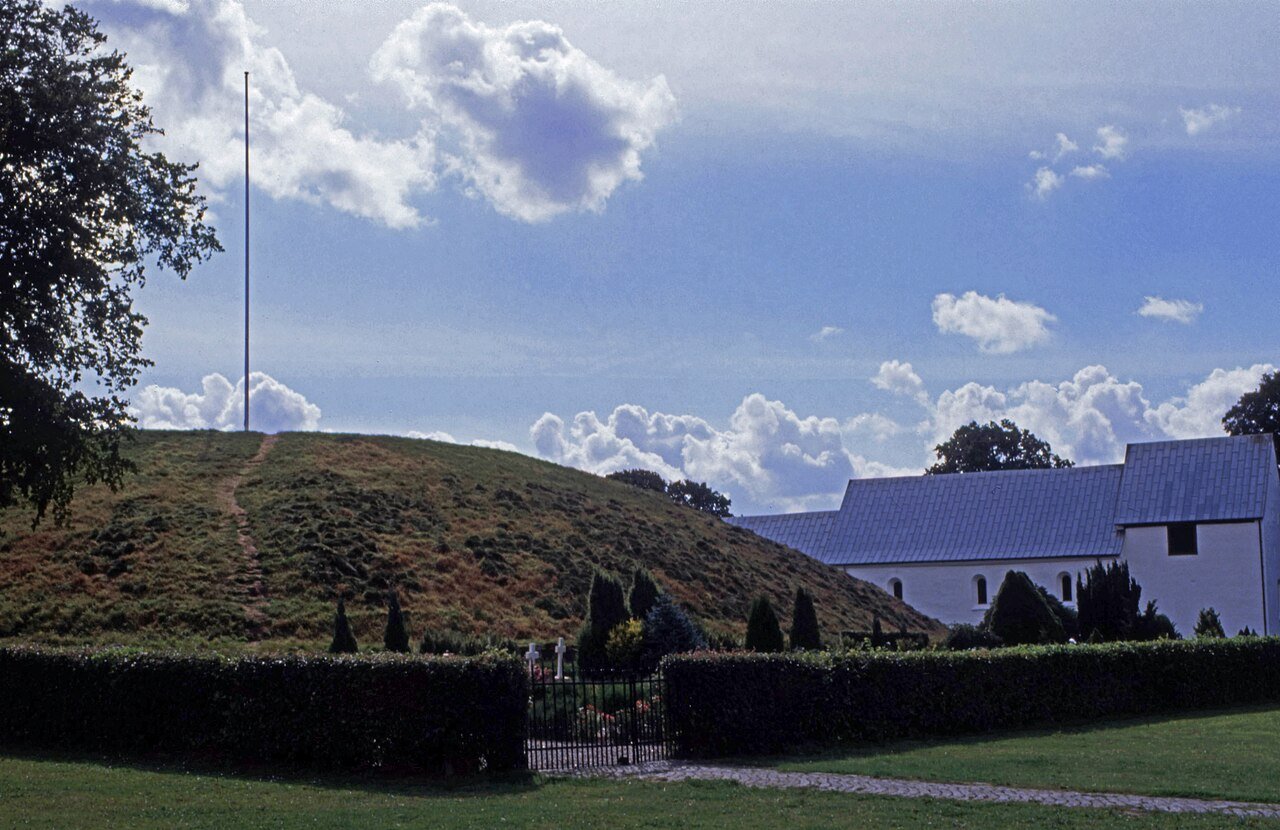
Jelling is where Denmark began. Two massive grass-covered burial mounds flank a small white church in the Jutland countryside, and between them stand two runestones that document, in carved runic script, the conversion of the Danish people to Christianity and the unification of a kingdom. The older stone was raised in the early tenth century by King Gorm the Old in memory of his wife Thyra. The larger stone — often called “Denmark’s birth certificate” — was erected by Gorm’s son, Harald Bluetooth, who declared himself king of all Denmark and Norway and credited himself with making the Danes Christian. That inscription, carved in the 960s, is the earliest written record of the name “Denmark.” The church built between the mounds dates from the eleventh century. Together, this compact ensemble of pagan burial architecture and early Christian monument was inscribed on the UNESCO World Heritage List in 1994 as an unparalleled record of the transition from Norse paganism to Christianity in Northern Europe.
Getting there: IC train from Copenhagen H to Vejle, then local bus to Jelling, approximately 2 hours 30 minutes total; plan for a full day. Allow: 1–2 hours at the site. Best for: Those interested in Viking Age history and the political origins of Scandinavia, combined with the excellent Jelling Museum adjacent to the site.
Christiansfeld, a Moravian Church Settlement 2 hrs 30 min by IC train and bus
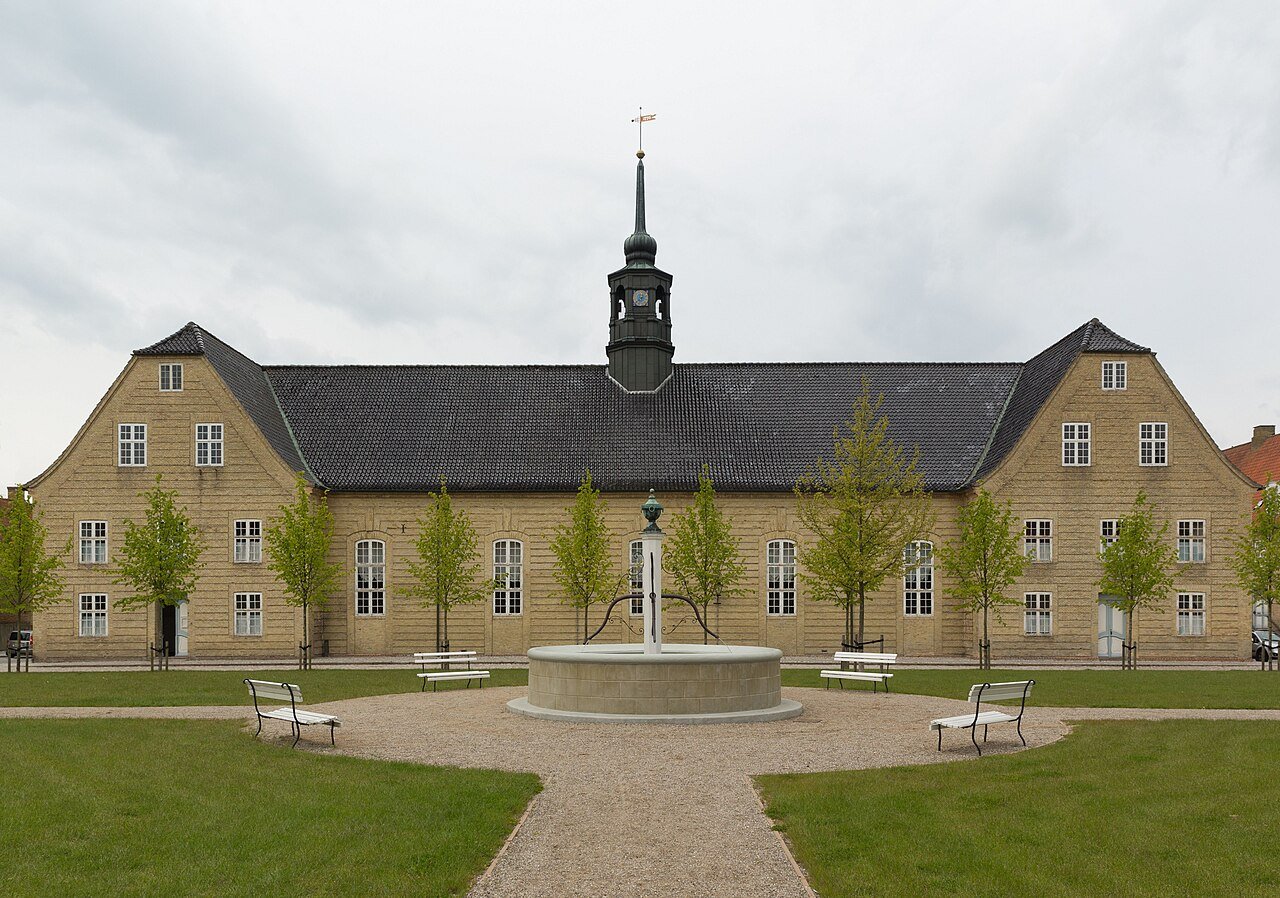
Christiansfeld was founded in 1773 by the Moravian Brethren — a Protestant movement with roots in Bohemia — and named after the Danish king Christian VII, who granted them land in Southern Jutland. The town was conceived from the outset as an expression of Moravian theology: egalitarian, plain, communal. Streets are laid out in a strict grid; the buildings along them are yellow brick, nearly identical in height and proportion, their facades stripped of ornament that might suggest hierarchy or individual pride. The Brethren Church, built in 1777, anchors the plan. Behind it lies the God’s Acre cemetery — Gudsageren — where flat, uniform headstones lie level with the grass, a deliberate statement that all are equal in death. No Moravian settlement anywhere in the world has preserved this completeness of plan and fabric. Inscribed on the UNESCO World Heritage List in 2015, Christiansfeld is recognised as the best-preserved example of Moravian urban planning and architecture. The town’s famous honey cakes, produced here since the eighteenth century, remain in production today.
Getting there: IC train from Copenhagen H to Kolding, then local bus to Christiansfeld, approximately 2 hours 30 minutes total; plan for a full day. Allow: 2 hours. Best for: Visitors drawn to religious heritage, urban history, or the quiet architecture of social idealism — one of Scandinavia’s most coherent and least-visited UNESCO sites.
Frequently Asked Questions
How many UNESCO World Heritage Sites are near Copenhagen?
Five UNESCO World Heritage Sites are reachable within approximately two and a half hours of Copenhagen by public transport or car: Kronborg Castle, Roskilde Cathedral, Stevns Klint, Jelling Mounds and Runic Stones, and Christiansfeld. The two closest — Kronborg and Roskilde Cathedral — are practical half-day trips, while Jelling and Christiansfeld in Jutland require a full day.
What is the closest UNESCO World Heritage Site to Copenhagen?
Roskilde Cathedral is the closest, just 25 minutes from Copenhagen H on the S-train. Kronborg Castle in Helsingør is a close second at 45 minutes by DSB train. Both can be combined into a single day if departing early.
Can you visit Kronborg Castle and Roskilde Cathedral on the same day?
Yes, though it requires an early start. Take the S-train to Roskilde in the morning, spend two hours at the cathedral and Viking Ship Museum, then take a regional train north via Copenhagen to Helsingør for the afternoon. Allow three hours at Kronborg and aim to be back in Copenhagen by early evening.
Is Stevns Klint worth the journey from Copenhagen?
For visitors interested in natural heritage or geology, yes. The chalk cliffs are visually striking and geologically unique — this is one of the world’s most accessible exposures of the Cretaceous-Tertiary boundary. The journey of roughly ninety minutes each way by train and bus is straightforward, and the cliff path takes two to three hours to walk at a comfortable pace.
Sources used in this article
- UNESCO World Heritage Centre — World Heritage List.
- Wikipedia — Kronborg.
- Wikipedia — Roskilde Cathedral.
- Wikipedia — Jelling stones.
- Wikipedia — Stevns Klint.
- CHO — Interactive heritage map.