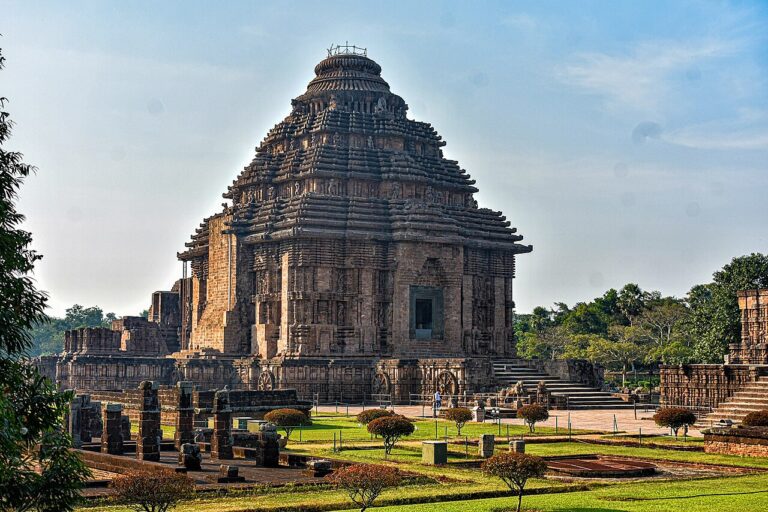
Ancient Thebes with its Necropolis — the site of modern Luxor — was inscribed in 1979 as the funerary and religious capital of the New Kingdom of Egypt (1550–1069 BCE). Karnak’s hyperstyle hall, the Valley of the Kings, and Deir el-Bahari’s cliff temples represent the most concentrated accumulation of ancient Egyptian monumental architecture in the world.
Ancient Thebes: Karnak and Luxor Temples City centre and east bank
Ancient Thebes with its Necropolis, inscribed in 1979 under criteria (i), (iii), and (vi), was the capital of Egypt during the New Kingdom — the period of maximum imperial expansion under pharaohs including Thutmose III, Hatshepsut, Akhenaten, Ramesses II, and Ramesses III. On the east bank of the Nile (the side of the living), two temple complexes served the state cult of Amun: the Temple of Karnak (begun c. 2055 BCE, continuously expanded for 1,300 years) and the Temple of Luxor (begun c. 1390 BCE by Amenhotep III). The Hypostyle Hall of Karnak — a forest of 134 sandstone columns rising to 23 metres, covering 5,000 square metres — is the largest columnar hall ever built; its walls carry painted relief carvings of royal ritual that took three successive reigns (Sety I, Ramesses II, Ramesses III) to complete. The processional avenue of sphinxes, 3 kilometres long, connected Karnak to Luxor, and has been extensively re-excavated and restored since 2021.
Valley of the Kings and the Theban Necropolis 🚌 30 mins west bank ferry + taxi
The Valley of the Kings — a remote limestone ravine in the Theban hills west of the Nile — served as the royal burial ground for sixty-three pharaohs of the 18th, 19th, and 20th dynasties (1550–1069 BCE). The New Kingdom pharaohs carved deep hypogea (underground tomb complexes) into the valley’s bedrock, decorated with religious texts and astronomical charts intended to guide the deceased king’s passage through the underworld. The tomb of Tutankhamun (KV62, discovered intact by Howard Carter in 1922) is the most visited; the tomb of Sety I (KV17) contains the most extensive painted decoration in the Valley. The Valley of the Queens, 2 kilometres south, holds the tomb of Nefertari (QV66) — Ramesses II’s great royal wife, decorated with the finest painting in any Egyptian tomb and requiring timed advance booking. The Mortuary Temple of Hatshepsut at Deir el-Bahari, with its three colonnaded terraces rising against the Theban cliff face, is the most architecturally ambitious building on the west bank.
Dendera and Abydos: Ptolemaic and Old Kingdom Egypt 🚗 ~1 hr north to Dendera; ~3 hrs north to Abydos
The Temple of Hathor at Dendera, 60 kilometres north of Luxor (not separately inscribed but within the Ancient Thebes buffer zone’s cultural landscape), is one of the best-preserved Egyptian temples — built by the Ptolemaic dynasty and completed under Roman emperors between 54 BCE and 20 CE. Its ceiling carries an astronomical programme — the Dendera Zodiac, now housed in the Louvre — and its crypts below the main sanctuary still carry colour. The Temple of Sety I at Abydos, 160 kilometres north, contains the famous king list of Sety I (an inscription of 76 royal cartouches documenting pharaonic succession from Menes to Sety himself), and the L-shaped floor plan unique in New Kingdom temple architecture. Abydos was considered the burial place of Osiris and was Egypt’s premier pilgrimage destination for two thousand years.
Nubian Monuments: Abu Simbel and the Relocated Temples ✈ ~45 mins south to Abu Simbel
The Nubian Monuments from Abu Simbel to Philae, inscribed in 1979 under criteria (i) and (iii), preserve the temples rescued from the rising waters of Lake Nasser after the construction of the Aswan High Dam (1964–1968) — the most ambitious heritage rescue operation in history, which UNESCO coordinated and which became the founding justification for the World Heritage Convention itself. Abu Simbel’s Great Temple, carved from the living rock under Ramesses II (c. 1264 BCE), was cut into 2,000 blocks, moved 210 metres inland and 65 metres upward, and reassembled with its interior alignment preserved so that twice a year sunlight still illuminates the four statues in the sanctuary’s innermost chamber. The Temple of Philae, similarly relocated to the island of Agilkia, is the last Egyptian temple built in the pharaonic style and the last to be active — its cult of Isis survived into the sixth century CE.
Practical information
Luxor has its own international airport (LXR) with connections to Cairo, Hurghada, and charter flights from Europe. The east bank temple complexes (Karnak, Luxor Temple) are walkable or a short taxi/calèche ride. The west bank sites require a ferry (5 minutes) from the east bank corniche and then minibus or hired taxi; a full west bank day covers the Valley of the Kings, Hatshepsut’s temple, and the Valley of the Queens. Book the tomb of Nefertari (QV66) online well in advance — access is strictly limited. The best visiting season is October to March; summer temperatures regularly exceed 40°C. The Luxor Museum on the corniche provides essential context for understanding the temple relief programmes.
Frequently Asked Questions
Is Luxor a UNESCO World Heritage Site?
Yes. Ancient Thebes with its Necropolis was inscribed in 1979 under criteria (i), (iii), and (vi). The inscription covers both the east bank temples (Karnak, Luxor) and the west bank necropolis (Valley of the Kings, Valley of the Queens, Deir el-Bahari).
How many pharaohs are buried in the Valley of the Kings?
The Valley of the Kings contains 63 numbered tombs (KV1–KV63) belonging to pharaohs and nobles of the 18th, 19th, and 20th Dynasties (New Kingdom, c. 1550–1069 BCE). Not all 63 tombs belonged to pharaohs; some were for princes, nobles, and wives. The valley was in use for approximately 500 years.
What is the best day trip from Luxor for ancient Egyptian heritage?
The west bank in a single day: depart by 6 a.m. (to beat midday heat), Valley of the Kings (allow 2 hours), Temple of Hatshepsut (1 hour), Valley of the Queens (1 hour, or Nefertari’s tomb if pre-booked). Afternoon: Karnak Temple on the east bank (2 hours). Return to hotel by 4 p.m.
Sources
- S1 — Wilkinson, Richard H. The Complete Temples of Ancient Egypt. Thames & Hudson, 2000. ISBN 978-0-500-05100-9.
- S2 — Reeves, Nicholas, and Richard H. Wilkinson. The Complete Valley of the Kings. Thames & Hudson, 1996. ISBN 978-0-500-05080-4.
Spotted an error? Write to editorial@culturalheritageonline.com and we correct it the same day.