
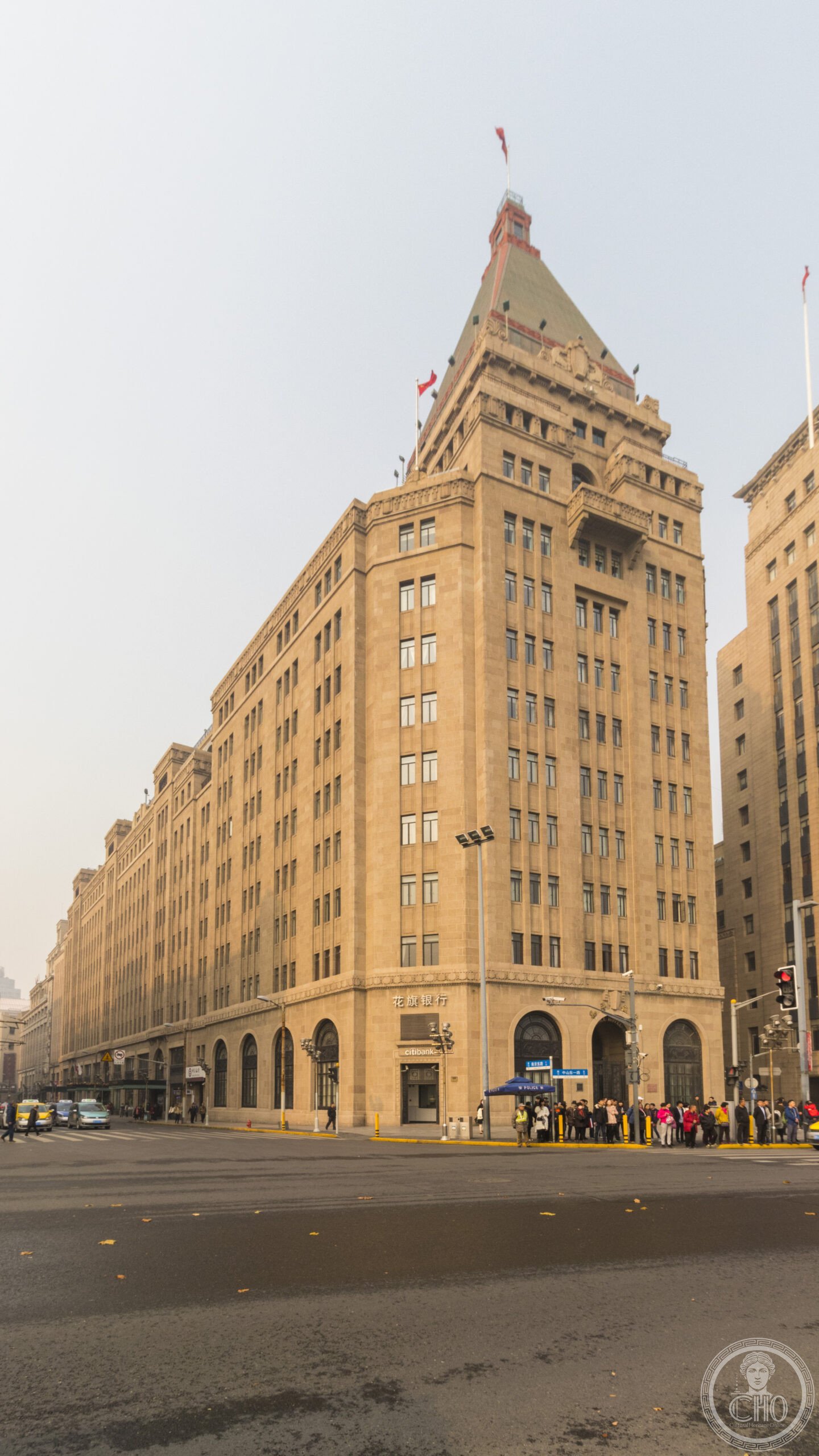
Rising above the Bund with its unmistakable green pyramidal copper roof, the Fairmont Peace Hotel opened in 1929 as the Cathay Hotel and is the defining monument of Art Deco Shanghai. Conceived by the Sephardic Jewish property magnate Sir Victor Sassoon and designed by the prestigious firm Palmer and Turner, the building set a benchmark for luxury in Asia that no rival could match for decades. Its stepped silhouette, ornate bronze entrance, and nine elaborately themed suites embodied the cosmopolitan ambitions of 1930s Shanghai, a city then dubbed the Paris of the East. Malraux, Chaplin, Coward, and Shaw signed the guestbook; the Jazz Bar pulsed every night until the Japanese occupation silenced it in 1941. After a meticulous four-year restoration completed in 2010, the Fairmont group reopened the hotel to its original splendour, preserving the storied Jazz Bar, the soaring atrium, and the mosaic floors that once welcomed the world.
At a glance
- Type
- Luxury hotel
- Period
- 1926-1929
- Style
- Art Deco / Shanghai Deco
- Location
- 20 Nanjing Road East, The Bund, Shanghai, China
- Coordinates
- 31.2415 N, 121.4887 E
- Architect(s)
- Palmer & Turner
Overview
The Fairmont Peace Hotel stands at number 20 Nanjing Road East, at the northern end of the Bund, where the street meets the Huangpu River. Originally called Sassoon House and housing the Cathay Hotel on its upper floors, it was the most prestigious address in Asia when it opened. The copper-clad pyramid atop the tower, now verdigris green, became the instant symbol of Shanghai luxury. The building rises nine storeys over a four-storey podium and integrates retail, office, and hotel functions in a single composition, as was common in the great commercial towers of the era.
History
Victor Sassoon, heir to the Baghdad-born Sassoon trading dynasty, acquired land along the Bund in the early 1920s and commissioned Palmer and Turner to design his flagship building. Construction ran from 1926 to 1929. The Cathay Hotel, occupying floors five through nine, opened to instant acclaim, charging the highest room rates in Asia. The Jazz Bar became a social epicentre for Shanghai expatriate society throughout the 1930s. Japanese forces occupied the building in 1941 and used it as military quarters. After 1949 the People Republic renamed it the Peace Hotel and operated it as a state guesthouse. The Fairmont group took over management in 2007 and oversaw a complete restoration, reopening in 2010.
Architecture & Design
Palmer and Turner delivered a masterwork of transitional Art Deco, blending the verticality of American skyscraper design with British colonial detailing and Shanghai Deco ornament. The facade of pale granite is articulated by vertical piers that draw the eye upward to the distinctive octagonal green copper pyramid, a deliberate landmark visible from across the Huangpu. Inside, the nine themed suites, including Indian, Chinese, English, French, American, German, Italian, Japanese, and Spanish rooms, feature hand-crafted period furniture and original tilework. The entrance hall retains its bronze revolving doors, marble floors, and coffered ceiling, all restored to their 1929 appearance.
Cultural significance
The Peace Hotel is the most recognisable emblem of Shanghai Jazz Age ambitions. In the 1930s the Bund was called the Wall Street of Asia and the Cathay Hotel was its social heart, hosting everyone from Charlie Chaplin and Noel Coward to Andre Malraux and George Bernard Shaw. The hotel encapsulates the brief, brilliant cosmopolitan moment when Shanghai was one of the world truly international cities, and its restoration has made it a pilgrimage site for lovers of Art Deco heritage and modern Shanghai history alike.
Visiting today
The hotel operates as a full-service luxury property under the Fairmont brand. Non-guests can visit the Jazz Bar in the evenings, where a veteran band plays nightly from 19:00. The Cathay Room restaurant, the Dragon Phoenix Chinese restaurant, and the restored Palm Court are open for meals and afternoon tea. The heritage themed suites can be booked directly through the Fairmont website. A small display in the lobby recounts the hotel history with period photographs.
Getting there
The hotel is located at 20 Nanjing Road East on the Bund. The nearest Metro stations are East Nanjing Road on Lines 2 and 10, a five-minute walk west along Nanjing Road. Taxis and ride-hailing services drop off directly in front on Zhongshan East 1st Road. From Pudong International Airport, take Metro Line 2 to East Nanjing Road, approximately 50 minutes.
Sources & resources
Find it on the map
See this place and what’s around it →Record researched and written by Luigi De Marchi for Cultural Heritage Online, 2026.
📷 Become a Cultural Heritage Online photographer
Share your photos of places: they stay published under your name as the author. The more they're seen, the more you get noticed — and soon a contest will reward the most appreciated photos.
Log in or sign up free to add a photoIs this page about you?
This page is read by travellers and heritage enthusiasts who find it on Google. Tell us how you are connected to this place and we will take it from there.