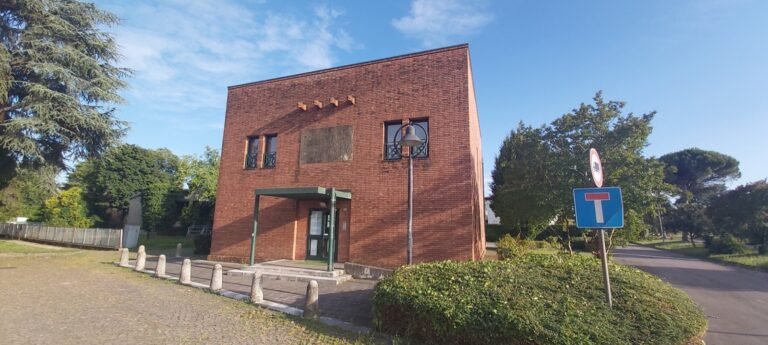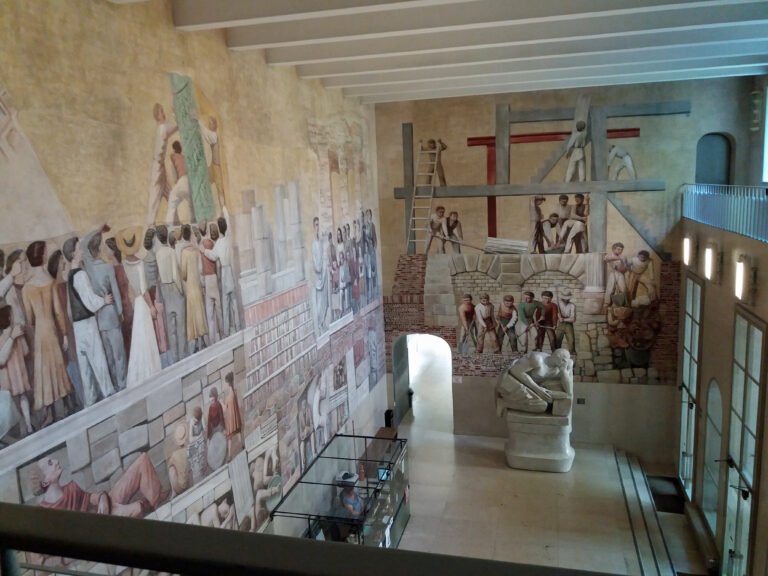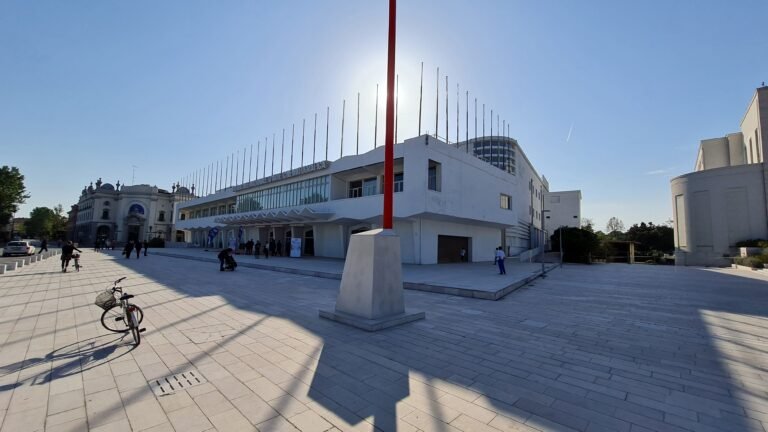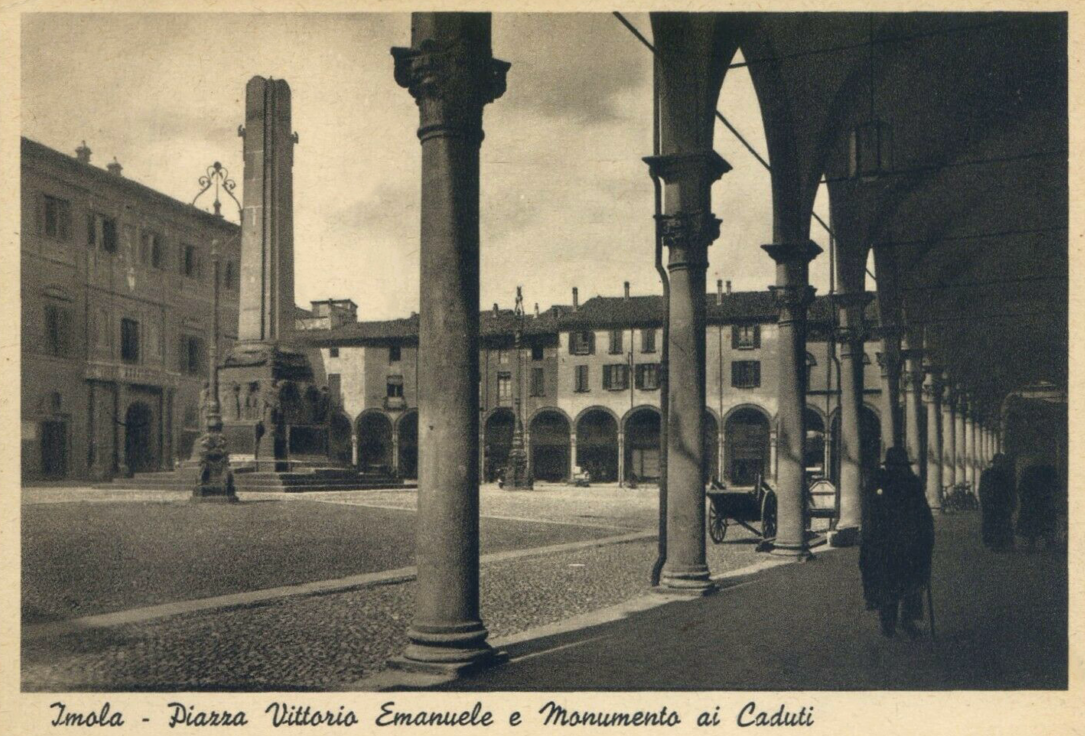
The Monumento ai Caduti in Imola, Bologna, was designed by architect Giovanni Battista Milani and executed by sculptor Angelo Zanelli in 1928. The monument commemorates those who fell in war and represents the commemoration practices of Fascist-era Italy.
Giovanni Battista Milani (1876–1940) was a prominent Italian architect and engineer who trained under Guglielmo Calderini and became professor of technical architecture at the Royal School of Engineering in Rome in 1905. He co-founded the School of Architecture in 1920 with Gustavo Giovannoni. Milani’s career encompassed institutional and residential commissions across Italy, from church extensions in Rome to regional banking headquarters and public facilities.
About Giovanni Battista Milani
Milani’s practice spanned both Rome and regional Italian cities. His documented works include San Lorenzo da Brindisi church (1910), residential complexes on Viale Mazzini (1911), the expansion of the School of Engineering (1916–1920), the Banca Popolare Cosentina headquarters in Cosenza (1926), and a psychiatric hospital in Rieti (1930). The Imola war memorial reflects the commemorative architectural programme of the 1920s.
Details
- Designer: Giovanni Battista Milani, architect
- Sculptor: Angelo Zanelli
- Year completed: 1928
- Location: Imola, Bologna, Emilia Romagna
- Type: War memorial
Frequently asked questions
Who designed the monument?
Architect Giovanni Battista Milani designed the memorial, with sculptural work executed by Angelo Zanelli.
When was it built?
The Monumento ai Caduti was completed in 1928.
Where is it located?
The monument stands in Imola, in the province of Bologna, Emilia Romagna.
Sources
- S1 — Panzetta, Alfonso. Dizionario degli scultori italiani dell'Ottocento e del primo Novecento. Umberto Allemandi, 2003. ISBN 978-88-422-1158-7.
- S2 — Ciucci, Giorgio. Gli architetti e il fascismo: architettura e città 1922-1944. Einaudi, 2002. ISBN 978-88-06-16310-5.
Spotted an error? Write to editorial@culturalheritageonline.com and we correct it the same day.