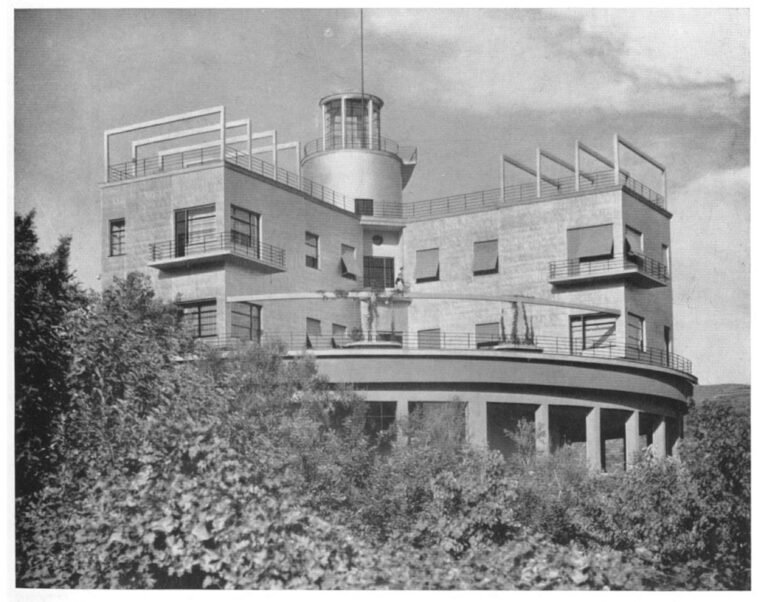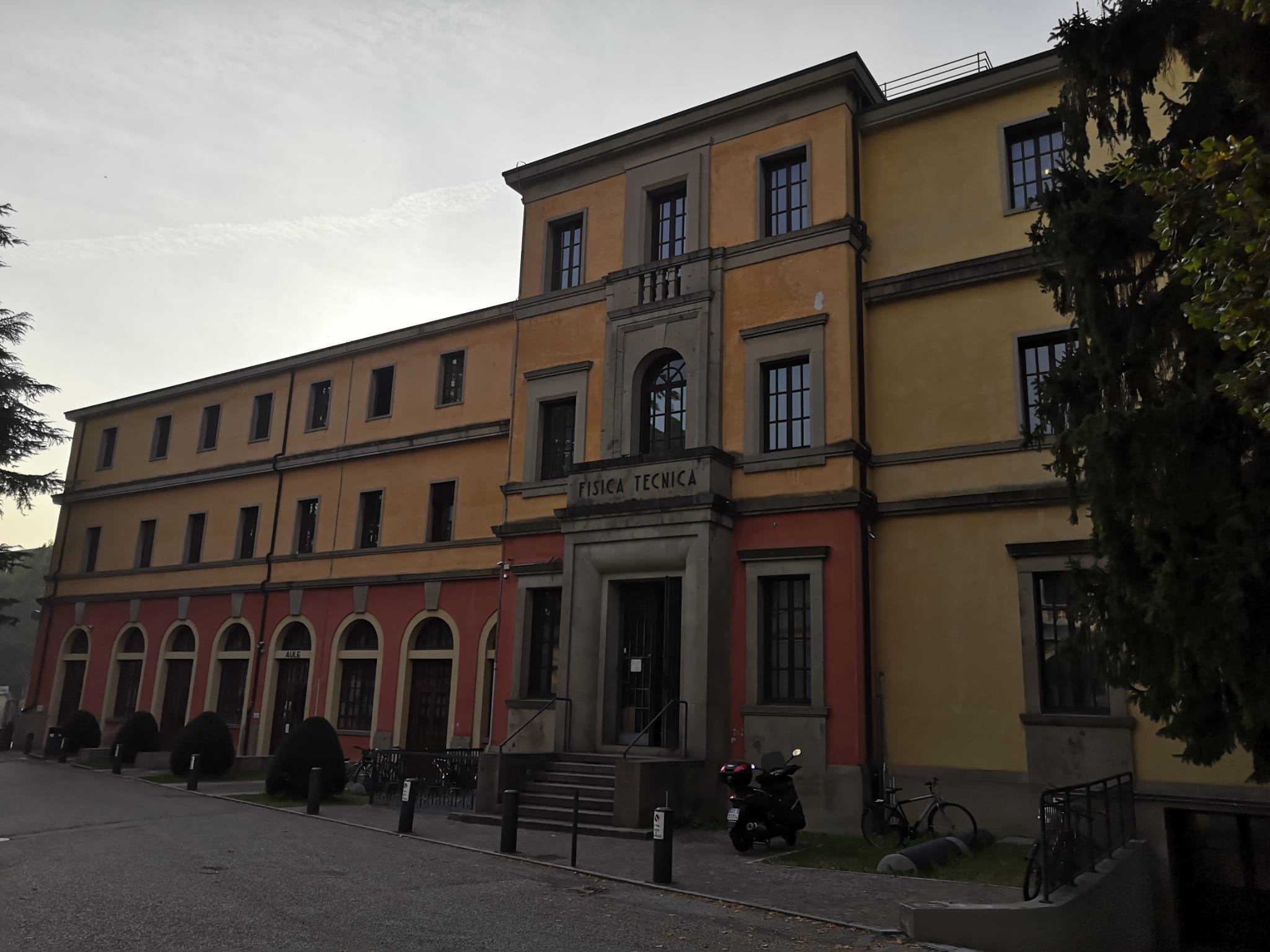
The Fisica Tecnica building was constructed in 1936 for the Physics and Engineering faculty of the University of Padua in Padua, Italy.
The University of Padua, founded in 1222, ranks among the world’s oldest universities. It originated from a migration of students from Bologna who initially settled in Vicenza before establishing themselves in Padua. The university’s identity combines two medieval traditions: the faculty of medicine, symbolised by Christ the Redeemer, and the faculty of law, represented by Saint Catherine of Alexandria. This duality reflects the institution’s foundational character as a place where knowledge in both healing and jurisprudence developed.
The Fisica Tecnica building dates from the interwar period of Italian architectural development, when institutional commissions often adopted Rationalist principles in their design approach. The structure served the university’s scientific and technical programmes during a significant moment in Italian higher education.
Details
- Built: 1936
- Location: Padua, Veneto, Italy
- Function: Physics and Engineering faculty
- Institution: University of Padua (founded 1222)
Frequently asked questions
When was the University of Padua founded?
The University of Padua was founded in 1222, making it one of the world’s oldest universities.
What faculties did the medieval university comprise?
The medieval University of Padua was organised around two main faculties: medicine, whose patron was Christ the Redeemer, and law, whose patron was Saint Catherine of Alexandria.
Is the University of Padua still active?
Yes, the University of Padua remains a major Italian state university and ranked first in Italy’s 2024 Censis rankings for state universities with over 40,000 students.