
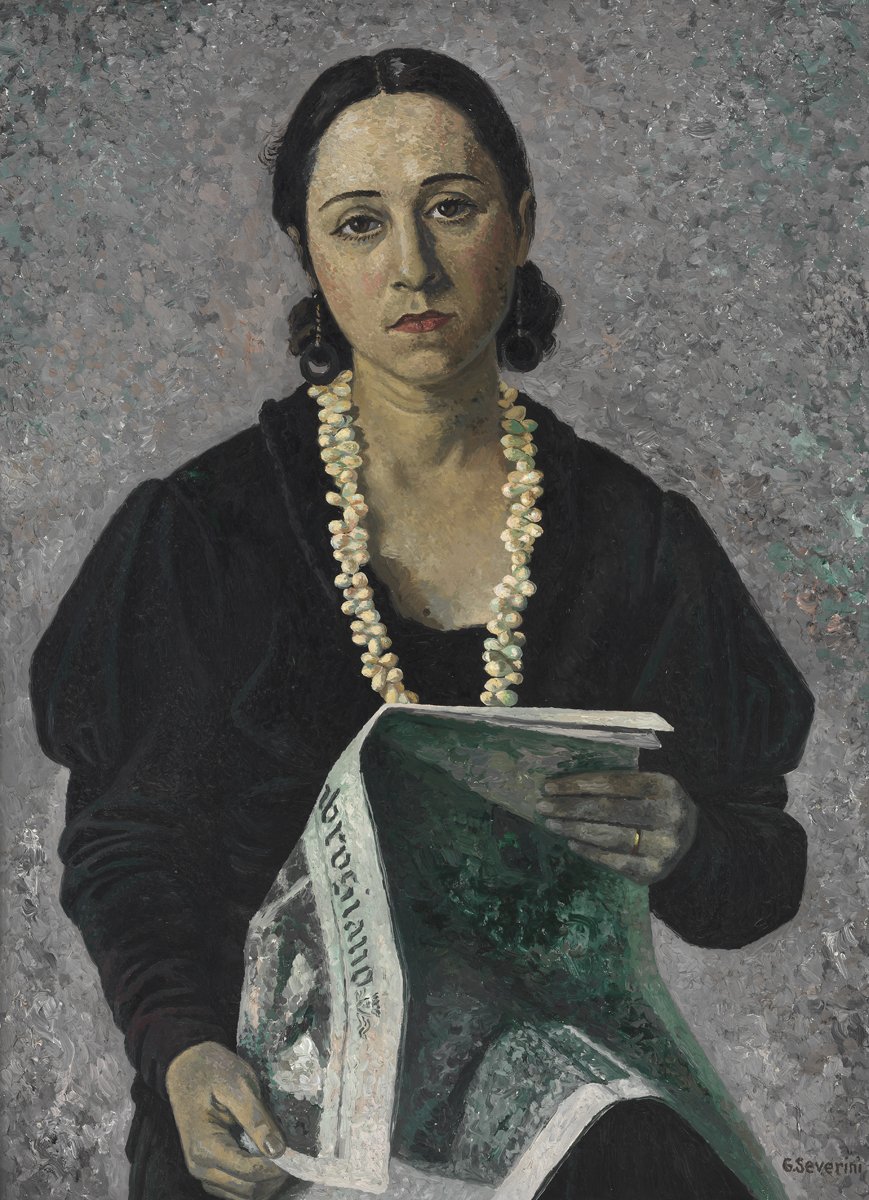
Gino Severini painted this portrait of Signora Severini in 1934. The work exemplifies the artist’s engagement with neo-classical principles during the interwar period, a significant shift from his earlier Futurist practice.
Severini was an Italian painter and a leading member of the Futurist movement who spent much of his career between Paris and Rome. During the decades following the First World War, he became associated with the broader European “return to order,” a movement toward classical restraint and figuration. This portrait belongs to that phase of his artistic development, when he had turned from the dynamic fragmentation of Futurism toward more structured representational modes.
About Gino Severini
Severini’s career spanned multiple decades and media. Beyond painting, he worked in mosaic and fresco, and his work was exhibited at major institutions including the Rome Quadrennial, where he received recognition from significant art prizes.
Details
- Artist: Gino Severini
- Year: 1934
- Subject: Portrait of Signora Severini
- Movement: Neo-classicism, post-Futurist “return to order”
On video
Frequently asked questions
Who was Gino Severini?
Severini was an Italian painter and a leading member of the Futurist movement. He divided his time between Paris and Rome throughout much of his life and later became associated with neo-classicism and the “return to order” movement after the First World War.
What artistic movements did Severini work in?
Severini began as a Futurist but later shifted toward neo-classicism and the “return to order” in the interwar period. He worked across painting, mosaic, and fresco throughout his career.
Where was this portrait exhibited?
The sources do not specify where this particular portrait was exhibited or is currently located.
Sources
- S1 — Pontiggia, Elena. Il Novecento Italiano. Abscondita, 2003. ISBN 978-88-8416-048-5.
- S2 — De Fusco, Renato. Storia del design. Laterza, 2002. ISBN 978-88-420-6623-1.
Spotted an error? Write to editorial@culturalheritageonline.com and we correct it the same day.


