
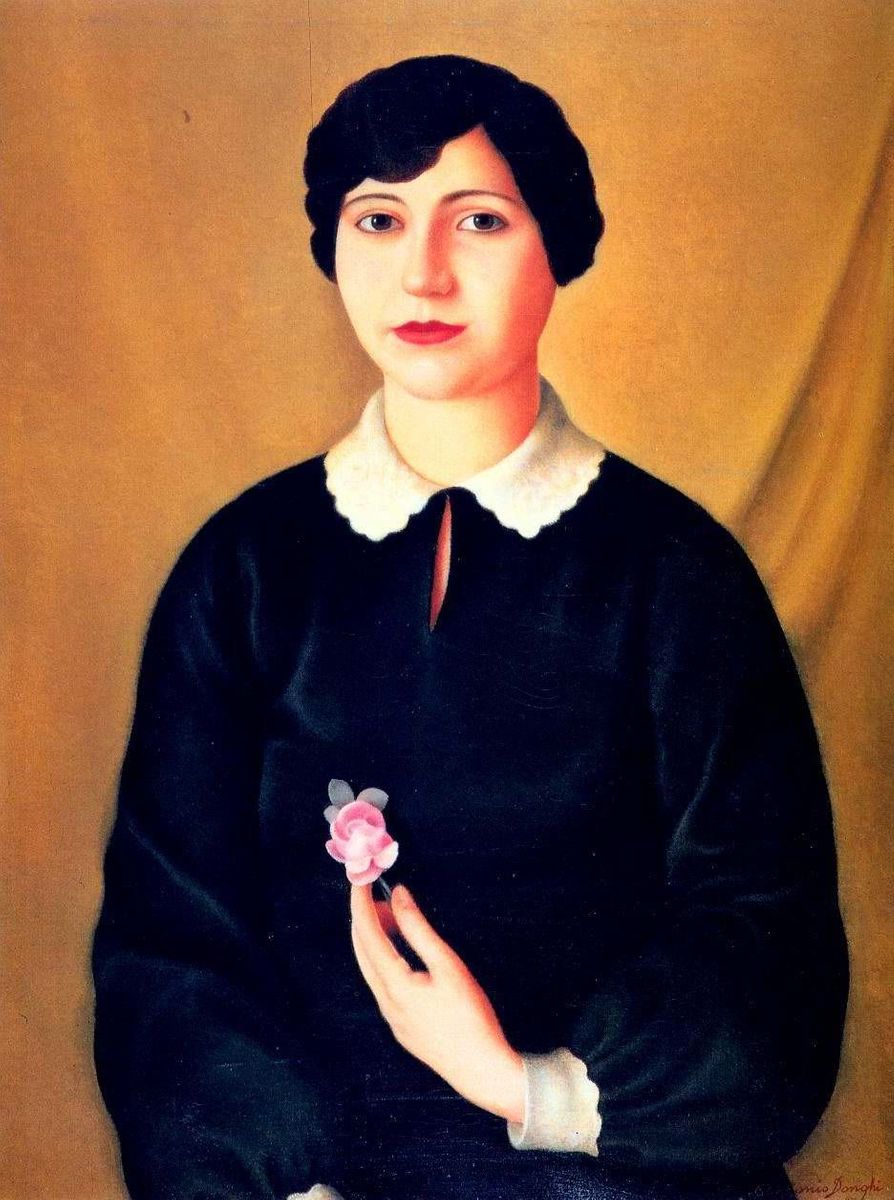
La signorina is a painting by Antonio Donghi, created in 1927. The work exemplifies the neoclassical aesthetic that established Donghi as a leading figure in Italian art during the 1920s.
Donghi’s approach is defined by strong composition, spatial clarity, and a refined technical mastery. His figures possess a distinctive gravity and archaic stiffness that evokes the work of Renaissance master Piero della Francesca, while his treatment of contemporary subject matter carries subtle humor reminiscent of Henri Rousseau and Georges Seurat. In 1925, critic Franz Roh identified Donghi among Italy’s major artists working in the magic realism tendency, a recognition of his place within the broader cultural movements of the period. That same year, Donghi won First Prize in an International Exhibit at the Carnegie Institute in Pittsburgh, affirming both his popular and critical success.
About Antonio Donghi
Born in Rome in 1897, Donghi studied at the Instituto di Belle Arti from 1908 to 1916 and later pursued further training in Florence and Venice following his military service in World War I. He became known for paintings of popular life, landscapes, and still lifes, favoring compositions of disarming simplicity and symmetry.
Details
- Artist: Antonio Donghi
- Year: 1927
- Movement: Neoclassicism, magic realism
- Subject matter: Popular life
On video
Frequently asked questions
Who was Antonio Donghi?
Antonio Donghi (1897–1963) was an Italian painter of popular life, landscapes, and still lifes. Born in Rome, he became one of Italy’s leading figures in the neoclassical movement of the 1920s, recognized for his refined technique and populist subject matter.
What movement did this work belong to?
La signorina was created during Donghi’s prominence in the neoclassical movement and the magic realism tendency of the 1920s, when he achieved both popular and critical success.
What recognition did Donghi receive in 1927?
In 1927, Donghi won First Prize in an International Exhibit at the Carnegie Institute in Pittsburgh, affirming his standing among Europe’s leading artists of the period.
Sources
- S1 — Pontiggia, Elena. Il Novecento Italiano. Abscondita, 2003. ISBN 978-88-8416-048-5.
- S2 — Ciucci, Giorgio. Gli architetti e il fascismo: architettura e città 1922-1944. Einaudi, 2002. ISBN 978-88-06-16310-5.
Spotted an error? Write to editorial@culturalheritageonline.com and we correct it the same day.


