


The finest coral stone building on earth – carved from living reef boulders, joined without mortar, and lined with 17th-century lacquerwork and Quranic calligraphy.
At a glance
- Type
- Mosque
- Period
- 1658
- Style
- Maldivian coral stone architecture
- Location
- Male, Maldives
- Coordinates
- 4.1776, 73.5126
- Patron
- Sultan Ibrahim Iskandar I
Overview
The Hukuru Miskiy of Male, built in 1658, is the masterpiece of the coral stone mosque tradition unique to the Maldives: walls of porite coral blocks cut from the reef while soft, dressed to razor precision, and fitted without mortar, carved inside and out with interlace and Quranic script. UNESCO holds the coral stone mosques of the Maldives on its World Heritage tentative list as an architecture found nowhere else.
History
The mosque replaced the island’s first Friday mosque from 1153, the year the Maldives converted to Islam. Sultan Ibrahim Iskandar I commissioned the present building at the kingdom’s zenith; its munnaru minaret of 1675, a white cylinder banded like a lighthouse, called the capital to prayer for three centuries. The surrounding cemetery holds carved coral tombstones of sultans and heroes, domed mausolea among them.
Architecture and Design
The prayer hall interior is roofed in Malabar teak and ironwood, lacquered in red, black, and gold by Maldivian craftsmen, with panels recording the conversion of 1153. Coral walls bear some of the finest stone carving in the Indian Ocean world – rosettes, foliage, and a famous frieze of interlocking medallions. The building rests on a plinth oriented to an older, pre-Islamic alignment, evidence of the temple that preceded it.
Cultural significance
Hukuru Miskiy is the national monument of the Maldives and the supreme document of a civilization that built in living reef. Its preservation – against climate, salt, and the rising sea that threatens the archipelago itself – is a touchstone of Maldivian identity beyond the resort image.
Visiting today
Non-Muslim visitors may enter outside prayer times with permission from the Islamic Ministry, usually arranged through guides; modest dress required. The Medhu Ziyaaraiy shrine and the Mulee-aage palace stand across the street.
Getting there
The mosque is in the center of Male, ten minutes on foot from the airport ferry jetty; Male itself is a short speedboat hop from Velana International Airport.
Sources and resources
Frequently Asked Questions
What is the mosque made of?
Its walls are porite coral blocks cut from the reef while soft and fitted without mortar. The blocks are dressed to precision and carved inside and out with interlace and Quranic script. The prayer hall interior is roofed in Malabar teak and ironwood.
Can non-Muslims visit the mosque?
Yes, outside prayer times and with permission from the Islamic Ministry, usually arranged through guides. Modest dress is required. The Medhu Ziyaaraiy shrine and the Mulee-aage palace stand across the street.
How do I get to the mosque from the airport?
The mosque is in the center of Male, ten minutes on foot from the airport ferry jetty. Male is a short speedboat hop from Velana International Airport.
What can I see inside the prayer hall?
The interior is roofed in Malabar teak and ironwood, lacquered in red, black, and gold by Maldivian craftsmen. Its panels record the conversion of 1153. The coral walls bear stone carving including rosettes, foliage, and a frieze of interlocking medallions.
Find it on the map
See this place and what’s around it →
Record researched and written by Luigi De Marchi for Cultural Heritage Online, 2026.
At auction this weekArt Deco glass, lighting and furniture are sold at auction every weekPieces from the 1920s and 1930s are open for bidding today on Catawiki, where an expert checks each lot before it goes live.See what is open on Catawiki →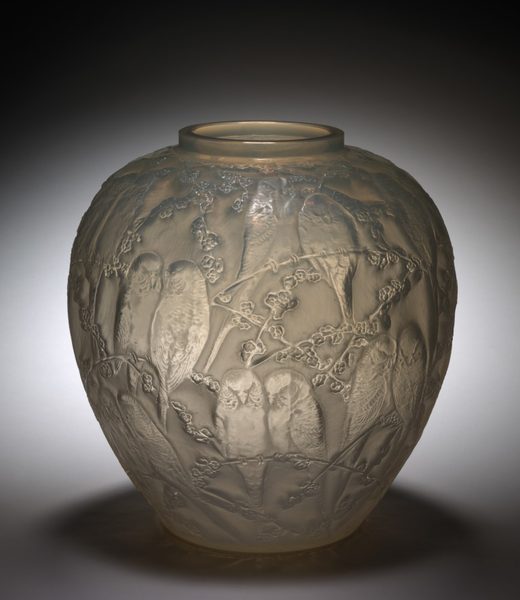
Advertisement. Pictured, from the Cleveland Museum of Art (CC0) and not for sale: three pieces of Lalique glass, 1920 to 1931. How we handle this
📷 Become a Cultural Heritage Online photographer
Share your photos of places: they stay published under your name as the author. The more they're seen, the more you get noticed — and soon a contest will reward the most appreciated photos.
Log in or sign up free to add a photoIs this page about you?
This page is read by travellers and heritage enthusiasts who find it on Google. Tell us how you are connected to this place and we will take it from there.
This entry stays online and free either way — and a free account lets you add to it yourself.