

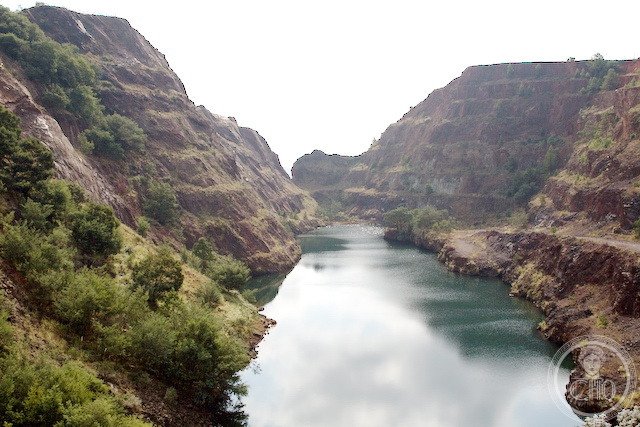
The oldest mine on earth – 43,000 years of ochre digging at the Lion Cavern, where humanity first went underground for beauty.
At a glance
- Type
- Ancient ochre and iron mine
- Period
- c. 41,000 BC onward
- Style
- Prehistoric mining site
- Location
- Ngwenya mountain, Eswatini
- Coordinates
- -26.2000, 31.0333
- Excavators
- Dated by radiocarbon in the 1960s Swaziland archaeological surveys
Overview
On Ngwenya – the Crocodile mountain – the Lion Cavern’s red galleries mark the oldest known mining operation in the world: radiocarbon dates around 41,000-43,000 years ago show Middle Stone Age people quarrying specularite and red ochre here for body paint and ritual – humanity’s first underground industry, pursued for symbol rather than survival.
History
Ochre from Ngwenya travelled trade routes across southern Africa millennia before agriculture; Bantu-speaking smelters later worked the mountain’s iron from about 400 AD. The modern open-cast iron mine of 1964-1977 – independent Swaziland’s first big export earner, with ore railed to Maputo for Japan – bit a vast amphitheatre beside the ancient workings, closing when prices fell. The ensemble sits on UNESCO’s tentative list as a complete arc of mining from ochre to globalization.
Architecture and Design
The Lion Cavern’s low adits preserve grooved hammerstones’ work; viewpoints ring the modern pit’s banded red-and-blue walls. The site museum keys the sequence; haematite still stains visitors’ fingers as it did the first miners’ palms.
Cultural significance
Ngwenya redefines mining as old as art – pigment’s pursuit at humanity’s symbolic dawn – and gives Eswatini a world-first claim beyond its kingship pageantry. Malolotja reserve’s trails fold the site into highland wilderness.
Visiting today
Entry through Malolotja Nature Reserve with a guide to Lion Cavern; the glass-blowing village at Ngwenya gate recycles to art. Mbabane lies thirty minutes east.
Getting there
The Ngwenya/Oshoek border road from Mbabane passes the reserve gate; self-drive or tours from the capital.
Sources and resources
Find it on the map
See this place and what’s around it →Record researched and written by Luigi De Marchi for Cultural Heritage Online, 2026.
📷 Become a Cultural Heritage Online photographer
Share your photos of places: they stay published under your name as the author. The more they're seen, the more you get noticed — and soon a contest will reward the most appreciated photos.
Log in or sign up free to add a photoIs this page about you?
This page is read by travellers and heritage enthusiasts who find it on Google. Tell us how you are connected to this place and we will take it from there.