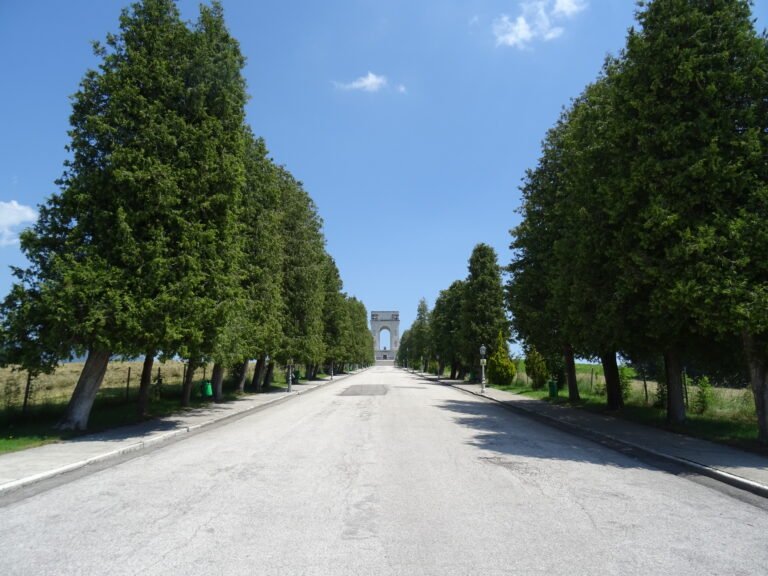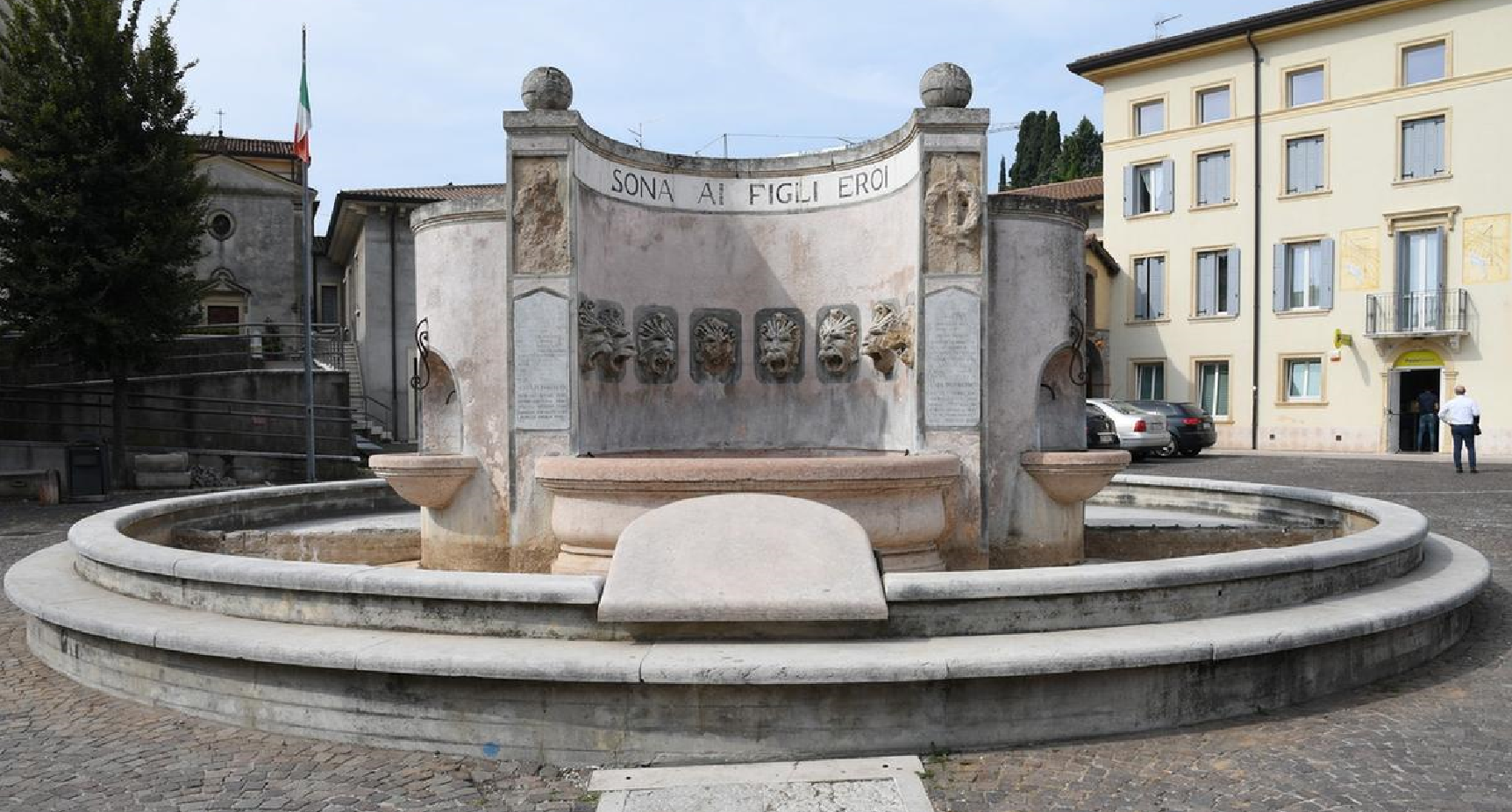
The Monumento ai Caduti in Sona, Verona, was designed by architect Francesco Banterle and completed in 1927. The monument stands as a memorial to fallen soldiers and reflects the architectural idiom of interwar Italy.
Banterle’s design emerges from a period when the architect was synthesizing modernist language with elements of local classicist tradition—an approach characteristic of his work throughout the 1920s and 1930s. The monument represents one of several commissions Banterle received during these decades from civic and ecclesiastical institutions across the Veneto region.
About Francesco Banterle
Francesco Banterle (1886–1972) was an Italian architect trained at the Regio Istituto Superiore di Belle Arti in Bologna, graduating in 1916. From the 1920s onwards, he became a preferred professional among the Veronese clergy and bourgeoisie, designing numerous villas and residential buildings across Verona’s expanding urban districts. Beyond new construction, Banterle also undertook significant restoration work on historic buildings in the city centre.
Details
- Designer: Francesco Banterle
- Year completed: 1927
- Location: Sona, Verona, Veneto
- Type: War memorial
- Architectural period: Italian Rationalism and Novecento
Frequently asked questions
Who was Francesco Banterle?
Francesco Banterle (1886–1972) was an Italian architect trained in Bologna who became a prominent figure in Verona from the 1920s onwards, designing residences, public buildings, and restoration projects while combining modernist and classicist elements.
When was the Monumento ai Caduti completed?
The monument was completed in 1927 in Sona, a town in the province of Verona.
What architectural style does the monument represent?
The work reflects Banterle’s approach of the mid-1920s, which synthesized modernist language with traditional local classicist vocabulary characteristic of Italian interwar architecture.
Sources
- S1 — Panzetta, Alfonso. Nuovo dizionario degli scultori italiani dell'Ottocento e del primo Novecento. AdArte, 2003. ISBN 978-88-422-1158-7.
- S2 — Pontiggia, Elena. Il Novecento Italiano. Abscondita, 2003. ISBN 978-88-8416-048-5.
Spotted an error? Write to editorial@culturalheritageonline.com and we correct it the same day.