
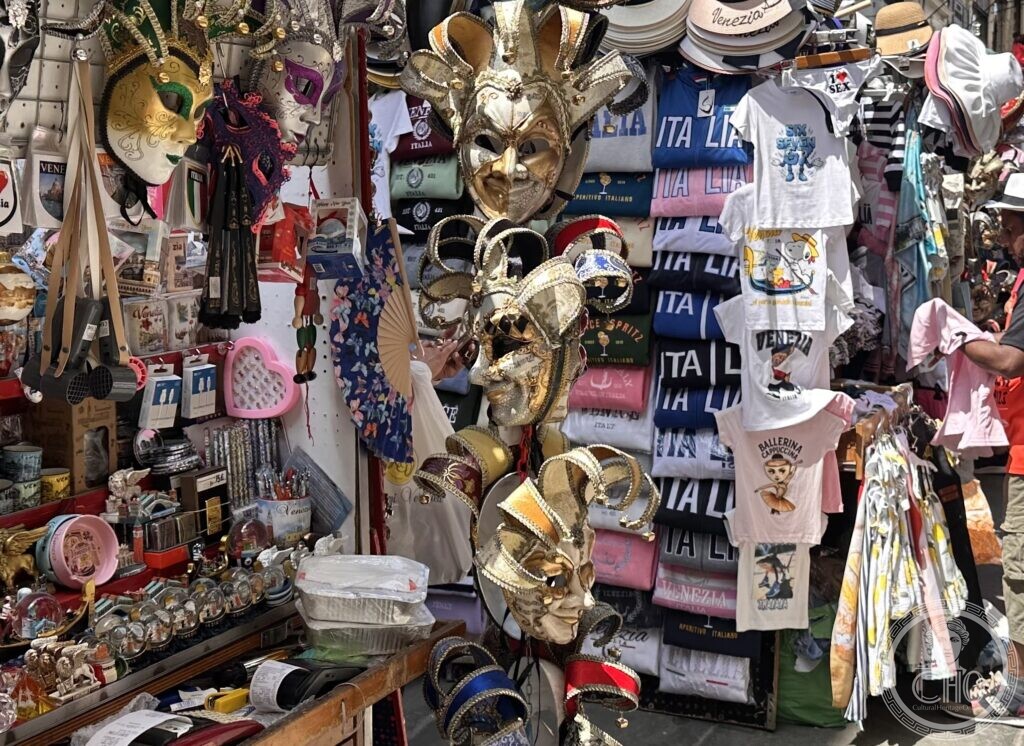
Cross the Rialto bridge and you pass between rows of the same objects: fridge magnets, carnival masks, glass trinkets, sunglasses. Most visitors assume the city allows it. The city forbade it in 2003, and the stalls are still there — because the ban was written for shops that open, and these had already opened.
In short. Venice has forbidden the opening of souvenir shops at Rialto since 5 June 2003, under city council resolution no. 73. The ban lists seventeen categories of goods and includes authentic Venetian glass, lace and embroidery. It applies only to new openings and transfers, is not retroactive, and therefore left every existing stall in place. A further regulation, approved on 9 April 2025, tightened the rules for new businesses and now requires glassware to document its production chain.
What exactly did Venice ban at Rialto, and when?
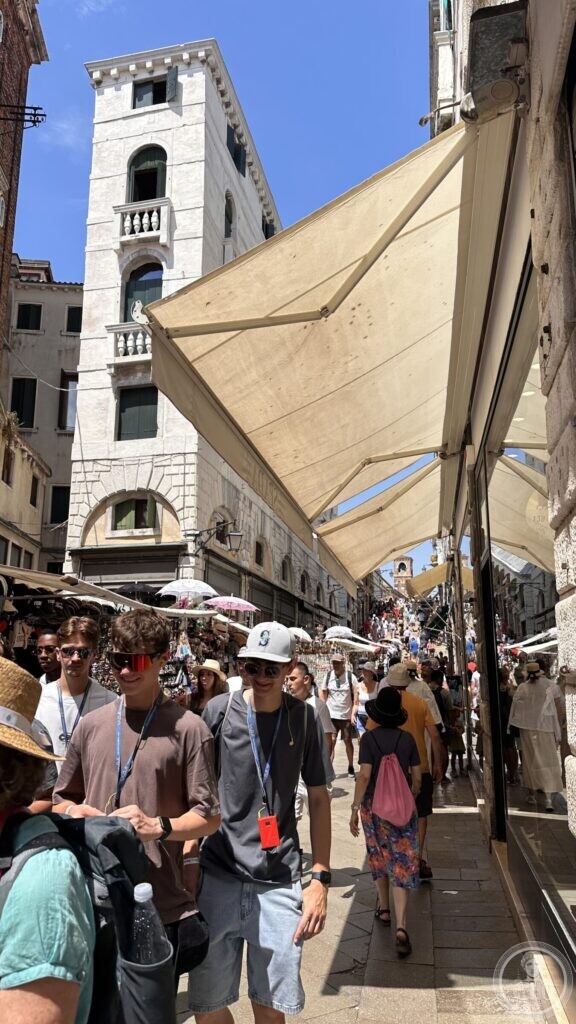
Resolution no. 73 of the Venice city council, dated 5 June 2003, names five parts of the city — Rialto and San Polo, Rio Terà San Leonardo, via Garibaldi, Campo Santa Margherita — and states that in those areas “new openings and transfers” of businesses selling seventeen listed categories of goods are not permitted.
The list is worth reading in full, because it contains a surprise: costume jewellery and trinkets; souvenirs; Venetian specialities; keepsakes of Venice; products of Venetian craftsmanship — glass, lace, embroidery; local craft articles; artistic reproductions and objects; gift items; ethnic objects; guides, maps and illustrated material about Venice; postcards; carnival articles and costumes; masks; clothing accessories and knitwear; sunglasses sold apart from proper opticians; photographic material sold on its own; sportswear sold as a souvenir; and pizza by the slice.
Glass, lace and embroidery are on that list — the real thing, not the imitation. The council of 2003 was not defending craftsmanship against cheap imports. It was trying to stop a monoculture: five addresses in the city where every shopfront had begun to sell the same category of object, whatever its quality. The ban treats authentic Murano glass and a plastic gondola as the same problem, because at that density they had become the same problem.
And the stalls remain because the rule governs new openings and transfers. It is not retroactive. Twenty-three years on, that single clause explains most of what a visitor sees from the bridge: the trade at Rialto is not an abuse of the rules. It is what the rules froze in place.
The city has kept legislating since. A council resolution of 2019, extended in 2022, gave separate rules to the shops facing the bridge and the surrounding Realtina area — Ponte degli Oresi, Sotoportego dei Oresi, Sotoportego Rialto, Campo San Giacomo di Rialto, Naranzaria and Erbaria. That protection ran from 3 May 2022 to 3 May 2025. On 9 April 2025, three weeks before it lapsed, the city government approved the regulation Venetians call the delibera antipaccottiglia, the junk-goods resolution: glassware sold in the regulated area must now document its production chain and display the Murano artistic glass mark, a commission examines each application to open, and a business can be closed immediately if the declaration it filed proves false. A further resolution of 8 May 2025 extended the approach to the whole sestiere of San Marco and the high-footfall streets.
There is also a door. A city government resolution of 2018 allows exemptions from the 2003 ban for businesses presenting “projects aimed at the requalification of the protected areas”. How many exemptions have been granted, to whom, and for what projects, is not published anywhere we could find.
What does “intangible cultural heritage” actually mean?
The word is used loosely, so it is worth going back to the text. The UNESCO Convention of 2003 defines intangible cultural heritage as the practices, representations, expressions, knowledge and skills that a community recognises as its own — heritage “transmitted from generation to generation”, constantly recreated by communities in response to their environment, and giving them “a sense of identity and continuity”. Among the five domains it lists is traditional craftsmanship.
Read that definition once more and a consequence falls out of it. If this kind of heritage exists only in being handed on, then removing the generation that should receive it does not weaken it. It ends it. That is not a rhetorical flourish; it is what the definition says, and the definition has been signed by most of the world.
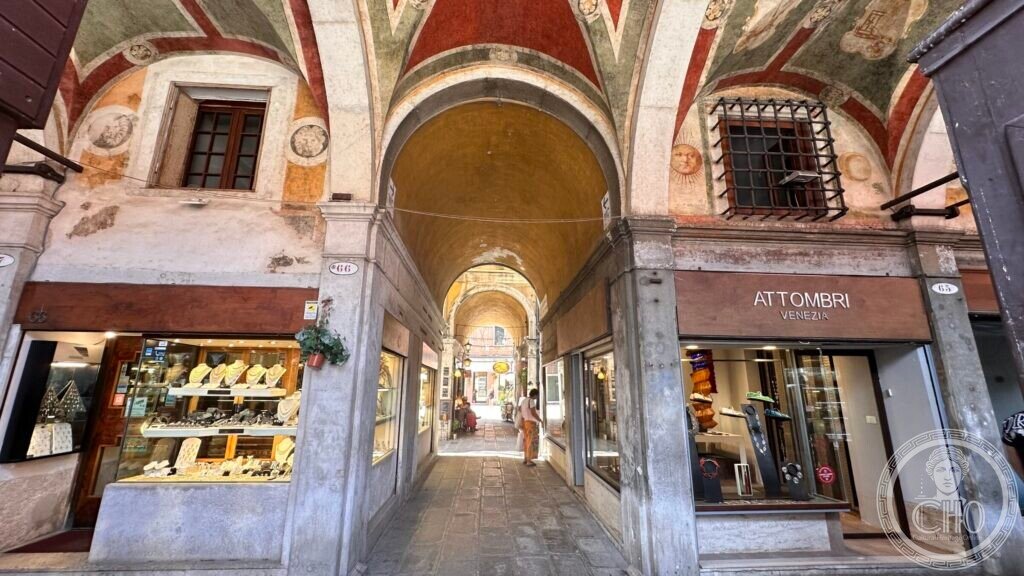
A few metres from the stalls, the Sotoportego dei Oresi shows what the handing on used to look like in practice. Every craftsman whose shop faced the passage undertook to have the vault frescoed in front of his own door: prestige for the shop, maintenance for a public building, at no cost to the city. Those vaults still carry part of their painting, and they are among the last external frescoes visible anywhere in Venice.
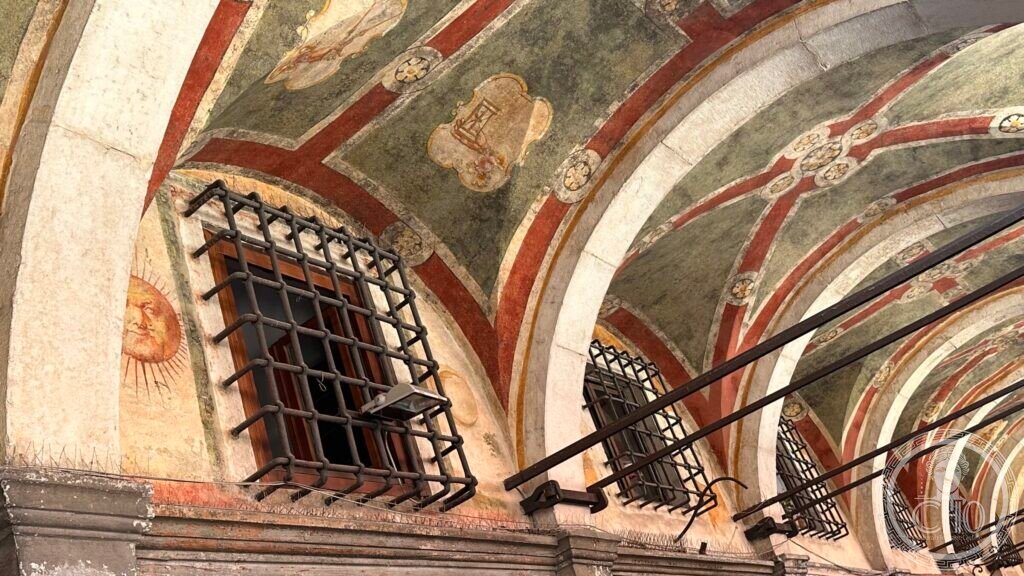
The goldsmiths who paid for it divided their trade between the two Rughe of Rialto: rings and small objects in one, large pieces in the other. Their speciality was filigree — opus veneciarum — and the pieces known as manini, worked in a mesh of very fine gold. The passage is still lined with jewellers. The knowledge that produced the vaults above them is not.
Who is behind the stall? A testimony from Nigeria
The person behind the stall is the part of this that no municipal resolution describes. Our publisher spent twenty-five years working in Africa, and four of them living in Nigeria. What follows is his account, published as testimony and set apart from the documentary record, in line with our editorial guidelines.
Testimony
Arch. Luigi De Marchi, publisher and founder of Cultural Heritage Online. He worked in Africa from 1995 to 2020 and lived in Nigeria from 2016 to 2020. He now works in Asia.
What I saw. I spent twenty-five years working in Africa — Morocco, Libya, Algeria, Tunisia, Kenya — and the last four of them living in Nigeria. Our association, ABCO, has run a project called Culturland since 2003, beginning with expeditions to Kenya: we built computer rooms, we brought supplies, and we worked alongside Sister Nadia Monetti, whose orphanage at Malindi had grown into a school. The project was set up against child illiteracy and for the value of local traditions.
In Nigeria I watched how the boys were taken. Men would arrive in a village in good cars and good clothes, saying they were scouting for European football clubs. They would have the boys play against each other and pick the healthiest and the strongest. Then vans, and the road to Europe. Once across the border the documents were taken away, and from that point the boy belonged to whoever held them. They did the same with the women: a family that has been promised a better life gives a daughter in marriage without much argument.
In March 2017 I raised this with Adebayo Osinowo — then a member of the Lagos State House of Assembly for Kosofe, later senator for Lagos East from 2019 until his death in June 2020. What I understood from him was that the state had had to put a dedicated force against those gangs, which were emptying the villages of their young and leaving the old and the children behind.
I should say plainly how much weight that recollection can carry. We spoke partly in Italian, which was not his language, and I may have taken a tense or a turn of phrase for something it was not. I did not press him: I was in Lagos on other business, and it was a conversation, not an interview. He cannot be asked again — he died on 15 June 2020. What I am sure of is the substance, and it is the part that matters: he treated the thing as known, and as something the state was already fighting.
At the other end of the journey, the work pays between two and four euros an hour.
What I came to think. Twenty-five years also taught me something no report measures. Around every tourist resort a second economy grows, and it is made of coins handed to children. One euro given to a boy on a beach can be a third of what his father earns in a day breaking his back in a field or on a building site. So the boy earns more than the man who has to feed the family, and the order inside that family turns over. Children are taken out of school and sent back to the beach, dressed badly on purpose, because badly dressed they earn more.
What is handed down in those years is not a craft or a language or a rite. It is the idea that what the visitors have is what a life should look like — and that it is somewhere else. That is where the leaving begins. And what leaves with them does not come back: it was never written down anywhere. It only lived in being passed on.
Editor’s note. Adebayo Sikiru Osinowo (1955–2020) sat in the Lagos State House of Assembly for the Kosofe constituency across four terms before being elected senator for Lagos East in 2019. He chaired the Senate Committee on Industry and died on 15 June 2020, at 64. His colleagues in the Lagos assembly recorded a tribute to him four days later, reported by TVC News Nigeria on 19 June 2020. The record also settles the point our contributor leaves open. Nigeria does have such a body, and it is older than the conversation: the National Agency for the Prohibition of Trafficking in Persons (NAPTIP) was established on 14 July 2003 under the Trafficking in Persons (Prohibition) Enforcement and Administration Act. The agency describes itself as “the Federal Government of Nigeria’s response to addressing the scourge of trafficking in persons”; it may investigate, “arrest, detain and prosecute offenders”, and enter premises to search. It operates nine zonal commands, one of them in Lagos.
The recruitment method described above is documented independently. The International Organization for Migration has reported since 2007 on the trafficking of young African footballers to Europe: unlicensed intermediaries posing as scouts, parents persuaded to pay, and players exploited or abandoned on arrival. In the cases it recorded, 34 Ivorian adolescents were held in southern Mali after their parents had been defrauded, and the association Culture Foot Solidaire had been in direct contact with 800 young Africans abandoned in France. The European Parliament took up the question in 2019 under the heading “People trafficking in football”.
What is actually being lost, and on which side of the counter
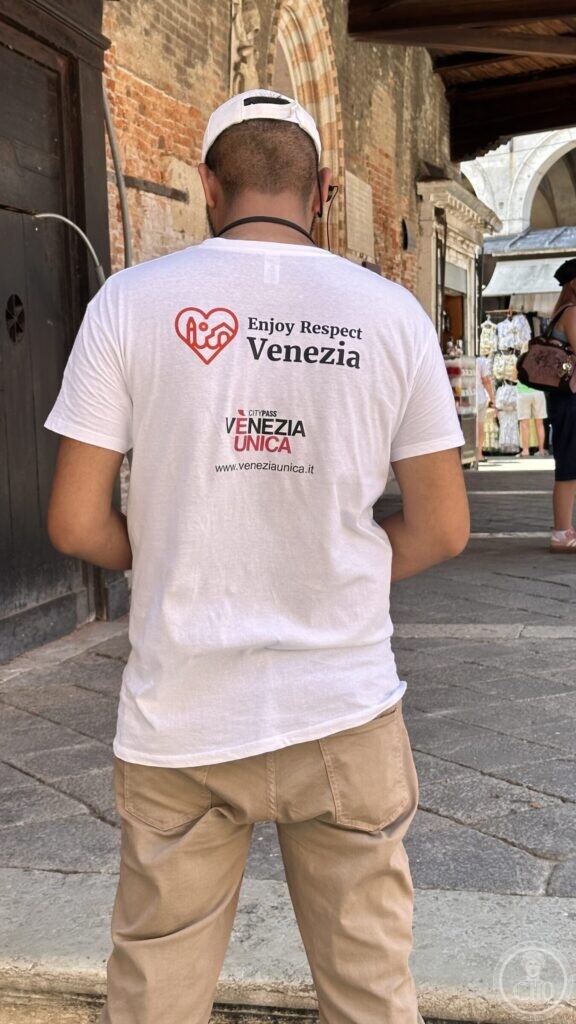
It is tempting to read this as two separate stories that happen to meet at a till. It is one story told twice.
On the Venetian side, a craft tradition thinned out until the city had to prohibit the sale of its own glass and lace to stop the thinning. A place does not reach that point because of a shop: it reaches it when the people who would have learned the trade did something else, and the chain of transmission broke. The resolution of 2003 is the record of a city noticing the break twenty years late.
On the other side, a boy leaves a village where somebody — his father, a craftsman, an elder — would have taught him something. That something is not taught to anyone else. The UNESCO Convention says intangible heritage passes from generation to generation; it does not say it can be archived and resumed. A missing link is not a pause. It is the end of that particular line.
And between the two, on the counter, an object that belongs to neither tradition, manufactured far from both, sold in the place where one of them was invented.
Thirty metres away: a clinic inside the oldest church in Venice
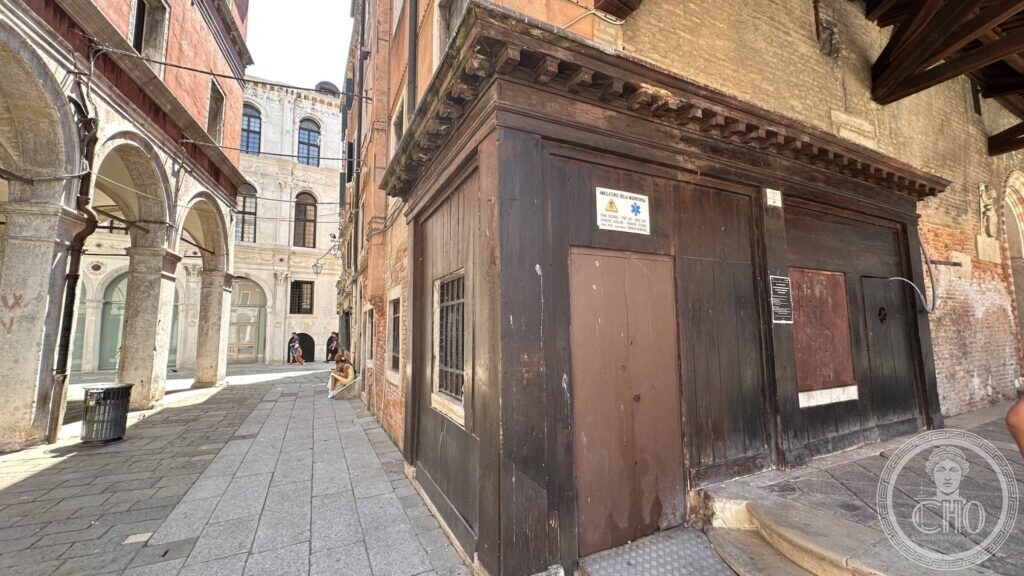
There is a footnote to all this, and it stands about thirty metres from the stalls. The church of San Giacomo di Rialto — San Giacometto, by tradition the oldest in the city — has been in the care of the Arciconfraternita di San Cristoforo e della Misericordia since 4 May 1932. In 2000 the confraternity obtained the ground-floor rooms beside it, until then the station of the municipal police of the wholesale fruit and vegetable market. Since 5 June 2001 those rooms have held, in the confraternity’s own words, a clinic and reception centre for the destitute, people with no fixed address, and foreigners without papers.
The sign above the door of the timber structure offers first aid in five languages. The oldest church in Venice, at the centre of the most crowded market in the city, spends its ground floor on the people the market does not see.
Sources
- S1 — Settis, Salvatore. Se Venezia muore. Einaudi, 2014. ISBN 978-88-06-21820-1.
- S2 — Davis, Robert C., and Garry R. Marvin. Venice, the Tourist Maze: A Cultural Critique of the World's Most Touristed City. University of California Press, 2004. ISBN 978-0-520-24120-6.
Photographs by Luigi De Marchi. Editorial text © Cultural Heritage Online, 2026.
Spotted an error? Write to editorial@culturalheritageonline.com and we correct it the same day.