Mongolia holds four UNESCO World Heritage Sites, and two of the most historically significant are reachable from Ulaanbaatar overland: the Orkhon Valley Cultural Landscape to the southwest and the sacred mountain of Burkhan Khaldun to the northeast. Together they span two millennia of steppe empire history — and almost every hour of the drive is worth it. From Cultural Heritage Online.
Orkhon Valley Cultural Landscape 370 km southwest — 6–7 hr by road
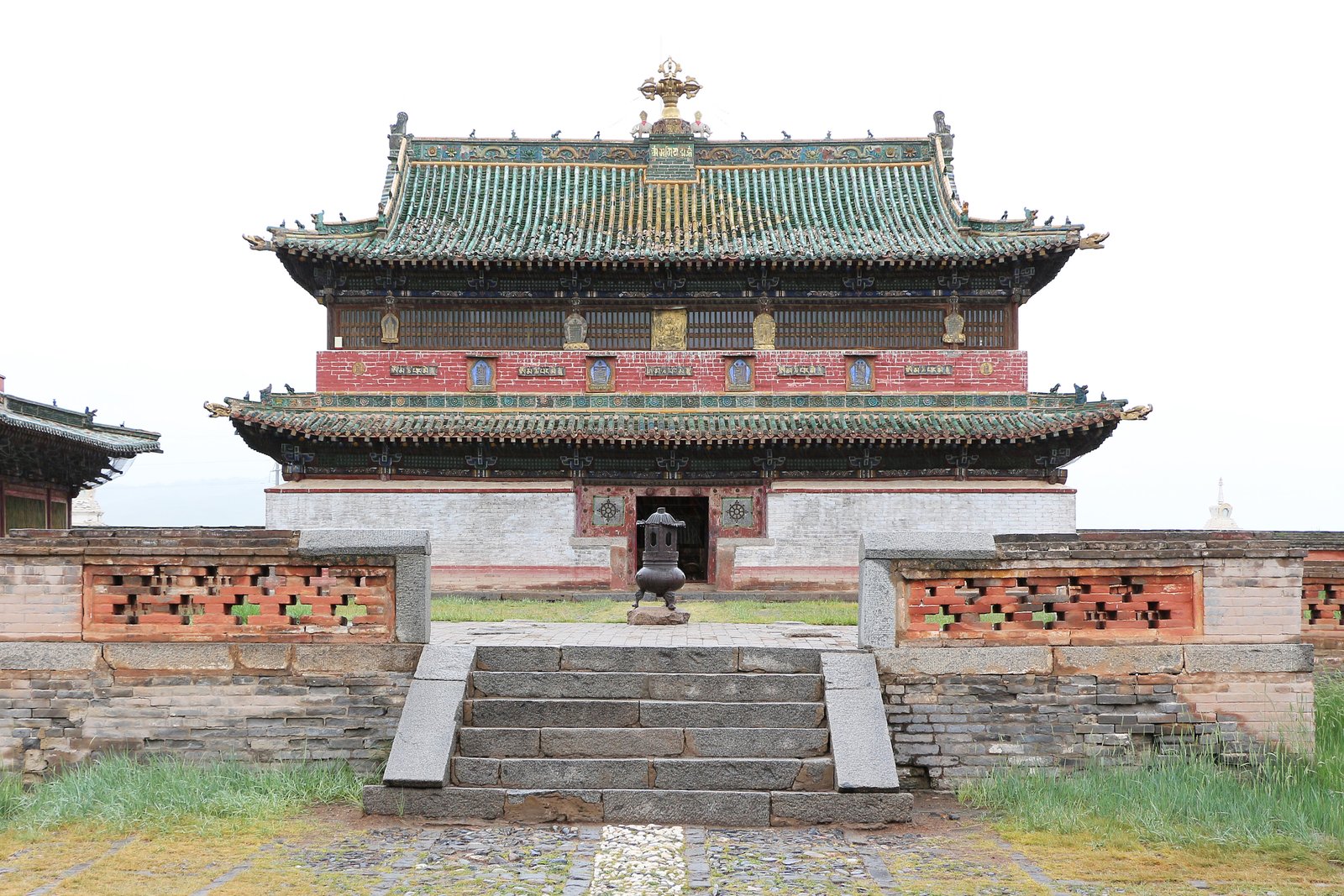
The Orkhon Valley Cultural Landscape was inscribed in 2004 across 121,967 hectares of river valley, steppe and ancient ruins in central Mongolia. The site encodes roughly 2,000 years of nomadic empire: the Xiongnu confederacy built earthen structures here in the second century BCE, Turkic khanates raised stone memorial figures (balbal) in the seventh and eighth centuries CE, and Uyghur rulers established their capital Khar Balgas along the river before Genghis Khan chose this same valley for his own imperial capital. Karakorum, founded in 1220, served as the administrative nerve centre of the largest contiguous land empire ever assembled. Marco Polo described it; ambassadors from Korea, Persia and Hungary passed through its gates.
What strikes visitors today is the vertical compression of time into a nearly flat landscape. Stand at the edge of the Erdene Zuu Monastery walls — 108 white stupas spaced at regular intervals, built in 1586 from salvaged stone taken from Karakorum’s ruins — and the steppe stretches away in every direction without a building in sight. The light here in late afternoon turns the grass silver before it goes gold. Inside the monastery’s three surviving temple halls, gold-leaf Buddhas and silk thangkas fill the dim interiors with colour that takes a moment for the eyes to adjust to. The Gol Zuu Temple holds a particularly fine assembly of eighteenth-century Buddhist sculpture; the smell of juniper incense mixes with cold stone in a way that stays with you.
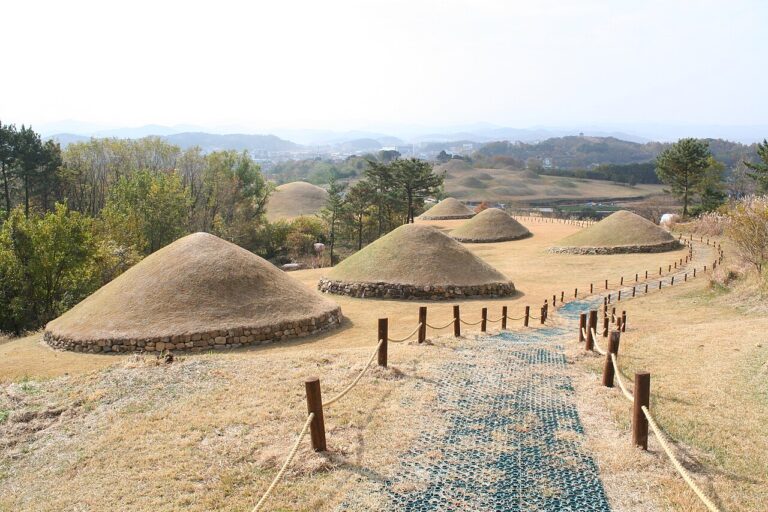
Outside the monastery walls, the terrain around ancient Karakorum still yields carved stone turtles (the bases of inscribed stelae) and low earthworks where the palace precinct once stood. Archaeological excavations led by German and Mongolian teams since the 1990s continue to recover floor tiles, coins and Chinese ceramics. Bronze Age burial mounds dot the higher ground, each surrounded by radiating stone lines — a burial tradition that predates the Mongol empire by more than a millennium.
Getting there: Charter a 4WD vehicle from Ulaanbaatar; the route follows paved road to Kharkhorin town, then a short track to the monastery. Public minibuses run to Kharkhorin from Ulaanbaatar’s Dragon Bus Terminal (roughly 8 hr). Allow: A minimum of two days to do the site justice; three days if you include the Orkhon waterfall gorge. Best for: Travellers interested in nomadic empires, Buddhist art and Central Asian archaeology.
Great Burkhan Khaldun Mountain and its Sacred Landscape 230 km northeast — 4–5 hr by road
Inscribed in 2015, Burkhan Khaldun rises from the Khentii mountain range northeast of Ulaanbaatar as one of the most sacred peaks in Mongolia. Its significance predates Genghis Khan: the mountain appears in the Secret History of the Mongols as a place of refuge and reverence. Temüjin — the future Genghis Khan — was reportedly born near these slopes around 1162, and medieval sources record that he came here to pray before his campaigns and designated the area around the peak as perpetually protected ground. The exact location of his burial remains unknown by deliberate choice: the site was concealed after his death in 1227, and the surrounding landscape was placed under a prohibition on disturbance that has been maintained, in different forms, ever since.
The peak stands at 2,362 metres. The approach on foot through sub-alpine forest — larch and birch giving way to open ridges — takes three to four hours from the base. Prayer flags in blue, white and yellow mark the summits and ridge lines; ovoo (stone cairn shrines) appear at each high point, draped in silk scarves left by pilgrims. The forest is genuinely quiet: no machinery, no crowds. On clear days the panorama extends over folded ridges all the way to the Mongolian-Russian border zone. The site buffers into a protected area where no mining, logging or permanent settlement is permitted, which makes the silence structural rather than accidental.
Access requires registration with local authorities in Khentii Province and, for foreign visitors, coordination with a licensed Mongolian guide. The sacred status of the mountain means certain ridge sections are restricted to ritual purposes; the rules are enforced and should be respected.
Getting there: Drive northeast from Ulaanbaatar on the road toward Öndörkhaan; the mountain lies within the Khentii Strictly Protected Area near Dadal sum. A 4WD is essential beyond the paved section. Allow: Two full days minimum — one for travel and base camp, one for the ascent. Best for: Hikers, historians of the Mongol empire, and travellers drawn to pilgrimage landscapes.
Frequently Asked Questions
How many UNESCO World Heritage Sites are near Ulaanbaatar?
Mongolia has four UNESCO World Heritage Sites in total. Two are reachable overland from Ulaanbaatar: the Orkhon Valley Cultural Landscape (inscribed 2004), about 370 km southwest, and the Great Burkhan Khaldun Mountain and its Surrounding Sacred Landscape (inscribed 2015), about 230 km northeast. The other two — the Uvs Nuur Basin (2003) and the Petroglyphic Complexes of the Mongolian Altai (2011) — are in far western Mongolia, over 1,600 km away, and require a domestic flight.
What is there to see at Erdene Zuu Monastery and how should I plan a visit?
Erdene Zuu, founded in 1586, is the oldest surviving Buddhist monastery in Mongolia and the main cultural anchor of the Orkhon Valley site. Three temple halls still stand inside the perimeter wall of 108 white stupas. The Gol Zuu and Zuu temples hold significant collections of gilded Buddhist sculpture and painted thangkas; a small museum on site displays archaeological finds from Karakorum. Plan at least half a day for the monastery and ruins combined. Most visitors based at a ger camp in Kharkhorin add the Orkhon waterfall (about 25 km south) the following morning.
Can you combine the Orkhon Valley and Burkhan Khaldun in one trip from Ulaanbaatar?
Not efficiently. The two sites are in opposite directions from the capital — Orkhon Valley to the southwest, Burkhan Khaldun to the northeast — with no direct road between them. Combining both in a single loop would add roughly 600 km of off-road driving. Most travellers treat them as separate multi-day excursions. If time allows only one, Orkhon Valley has more visible monuments and more accommodation options near the site.
Why is the burial place of Genghis Khan kept secret, and does that affect access to Burkhan Khaldun?
According to the Secret History of the Mongols and later sources, Genghis Khan instructed that his burial be concealed to prevent desecration — a common precaution among steppe rulers of the period. The location has never been conclusively identified, and Mongolian law prohibits archaeological excavation in the Burkhan Khaldun protected area. Access to the mountain itself is permitted for pilgrims and registered visitors, but certain summit and ridge areas carry ritual restrictions. Foreign visitors must enter with a licensed guide; the mountain’s protected status is actively enforced by park rangers.
Sources
- S1 — Weatherford, Jack. Genghis Khan and the Making of the Modern World. Crown, 2004. ISBN 978-0-609-61062-6.
- S2 — Bawden, C. R. The Modern History of Mongolia. RoutledgeCurzon, 1989. ISBN 978-0-7103-0326-4.
Spotted an error? Write to editorial@culturalheritageonline.com and we correct it the same day.