
Java holds three UNESCO World Heritage Sites within reach of Jakarta: the colossal Buddhist monument at Borobudur, the soaring Hindu towers of Prambanan, and the fossil beds of Sangiran where Homo erectus was first identified. A single overnight trip from the capital connects all three. From Cultural Heritage Online.
Borobudur Temple Compounds 550 km east of Jakarta — 1 hr 10 min flight to Yogyakarta + 1.5 hr drive
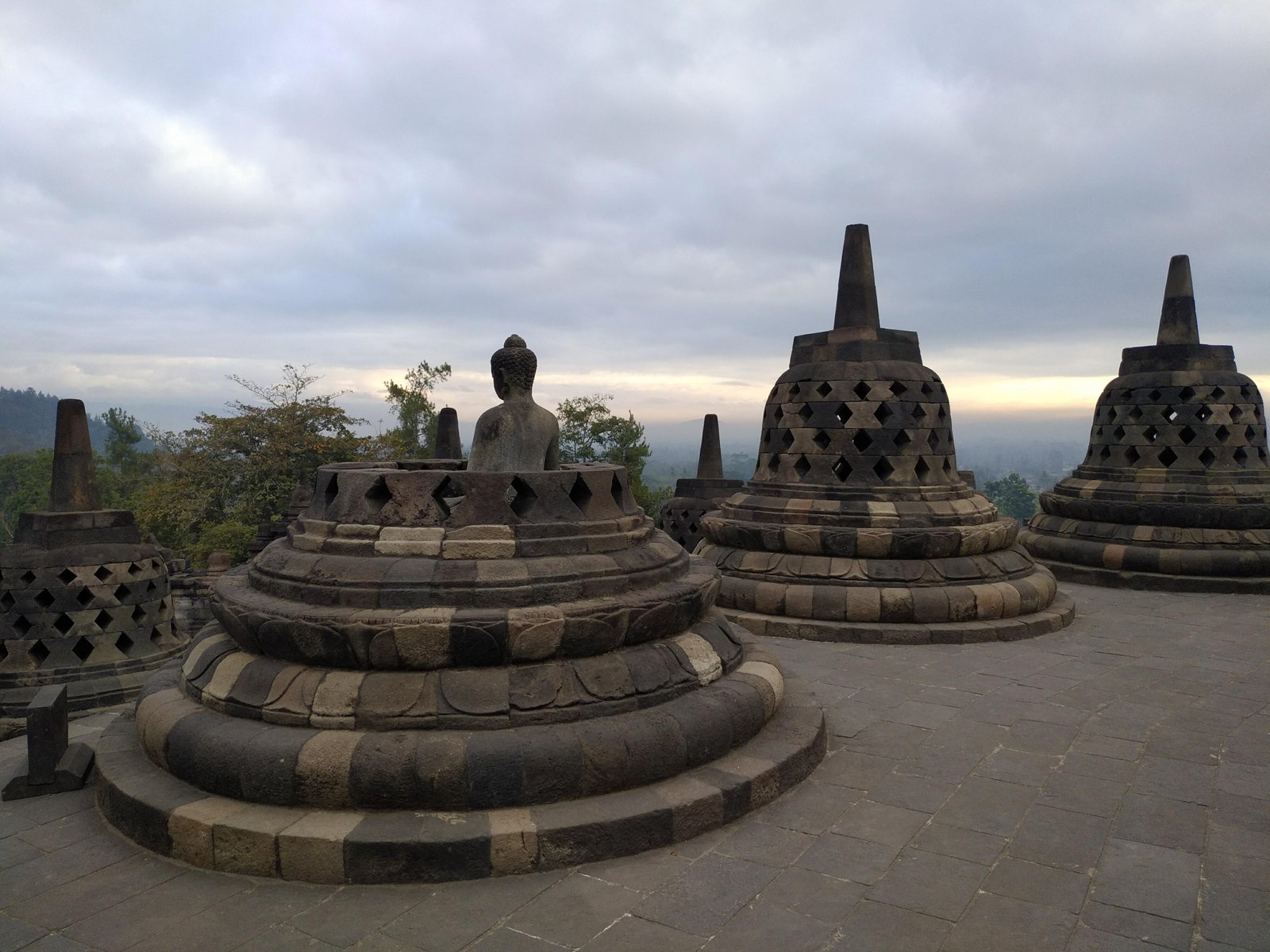
Borobudur is the largest Buddhist monument on earth. Nine stacked terraces rise from the Kedu Plain in Central Java, each representing a stage in the Buddhist cosmological journey from the world of desire to the realm of formlessness. The three circular upper terraces carry 72 latticed stupas, each enclosing a seated stone Buddha. Stand among them at sunrise and the entire volcanic landscape — Merapi to the east, Merbabu to the north — appears in silhouette below you, the air still cool and carrying the faint scent of incense from offerings left in the early hours.
The Sailendra dynasty built the monument during the 8th and 9th centuries, though no written record survives explaining its precise purpose. It was abandoned as Java’s population shifted and fell under layers of volcanic ash and jungle growth for centuries. In 1814, Thomas Stamford Raffles, then Lieutenant-Governor of Java under British administration, was informed of a buried monument by local officials and commissioned the first systematic excavation. A major international restoration project between 1973 and 1984, led by UNESCO and the Indonesian government, stabilised the structure and cleaned the 2,672 bas-relief panels that encircle each terrace — the longest continuous narrative in stone anywhere in the world, depicting Jataka tales and scenes from daily life in medieval Java.
UNESCO inscribed Borobudur in 1991 alongside Prambanan, recognising both as outstanding examples of human creative genius. The site opens before dawn for ticketed sunrise access. Arrive early: the upper terraces fill quickly after 7 a.m., and the quality of light through the stupa lattices lasts only a short window.
Getting there: Fly Jakarta (CGK) to Yogyakarta (JOG), roughly 1 hour 10 minutes; then car or taxi 1.5 hours northwest to Magelang. By train, Argo Lawu or Argo Wilis from Gambir Station to Yogyakarta takes around 8 hours overnight. Allow: Half a day minimum; full day recommended with museum. Best for: Architecture, Buddhist history, photography at sunrise.
Prambanan Temple Compounds 640 km east of Jakarta — 1 hr 10 min flight to Yogyakarta + 30 min drive
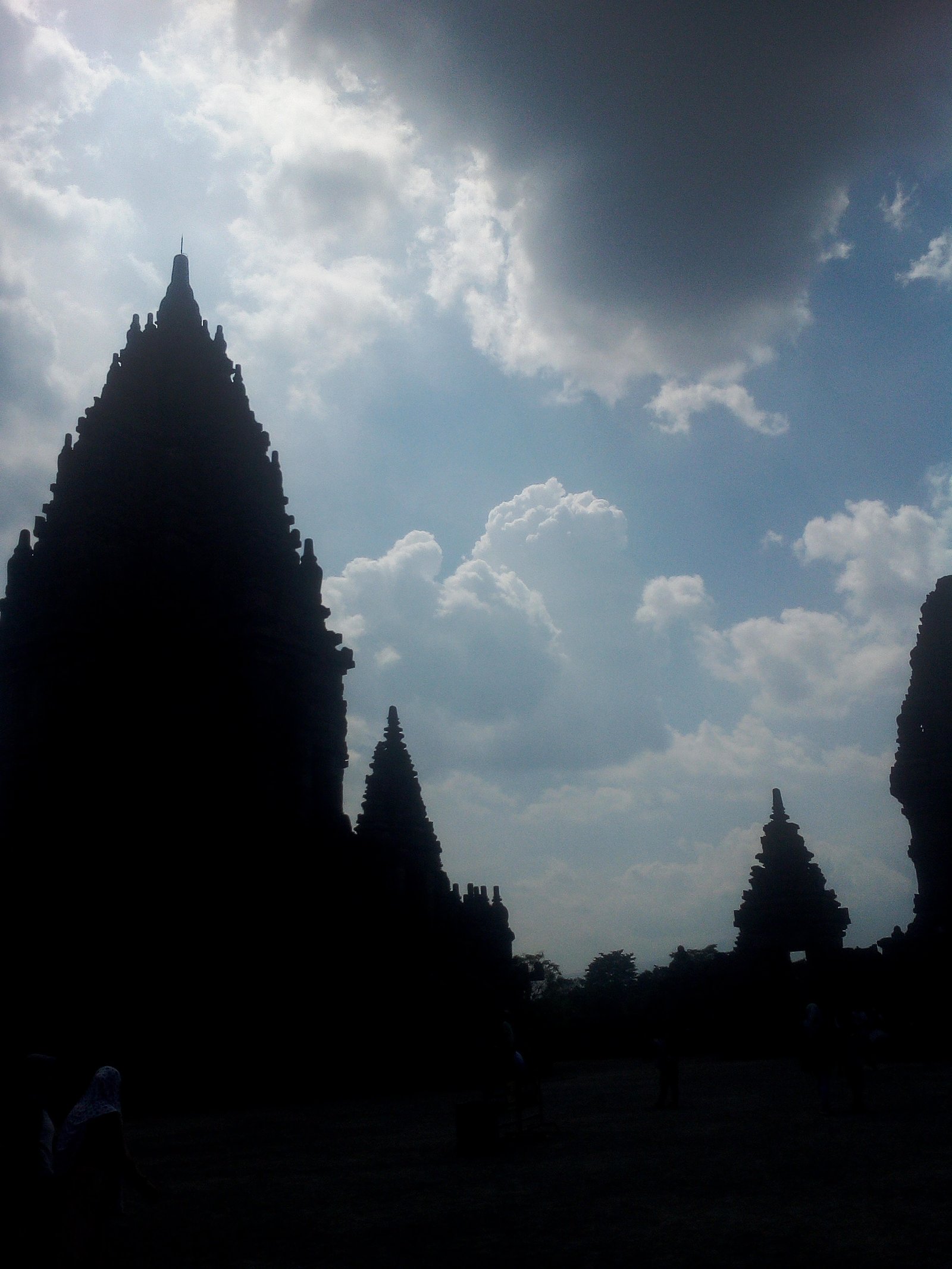
Prambanan is Indonesia’s largest Hindu temple complex, built in the 9th century by the Sanjaya dynasty — possibly as a direct response to the Buddhist grandeur of Borobudur rising thirty kilometres to the west. The central Shiva temple stands 47 metres high, its exterior surfaces dense with carved kala faces, celestial musicians, and narrative panels illustrating the Ramayana epic. The stone has darkened with age, and the carved figures emerge from the surface with a relief so deep that individual facial expressions are still legible. Adjacent temples are dedicated to Vishnu and Brahma, flanked by smaller shrine towers that once held statues now lost.
The Ramayana bas-reliefs that wrap the inner gallery of the main compound are among the finest examples of narrative stone carving in Southeast Asia. They move counter-clockwise through the epic — Rama’s exile, Sita’s abduction by Ravana, Hanuman’s leap to Lanka, the final battle — in a style that blends Indian iconographic tradition with distinctly Javanese aesthetic sensibility. On certain evenings between May and October, the Ramayana Ballet performance is staged in the open-air theatre with the floodlit temples as backdrop; the stone towers turn amber against the night sky.
A 7.9-magnitude earthquake in 2006 brought down many of the smaller compound shrines; restoration is ongoing, and some areas remain under conservation scaffolding. The main triad is fully accessible. Prambanan sits 18 kilometres northeast of central Yogyakarta and is routinely combined with Borobudur on a single day itinerary.
Getting there: From Yogyakarta, 30 minutes by car or taxi; also reachable by TransJogja bus. Combined day trips from Yogyakarta covering both Borobudur and Prambanan are widely available. Allow: 2–3 hours on site. Best for: Hindu iconography, Ramayana history, evening performance visits.
Sangiran Early Man Site 650 km east of Jakarta — 1 hr 10 min flight to Yogyakarta + 2 hr drive via Solo
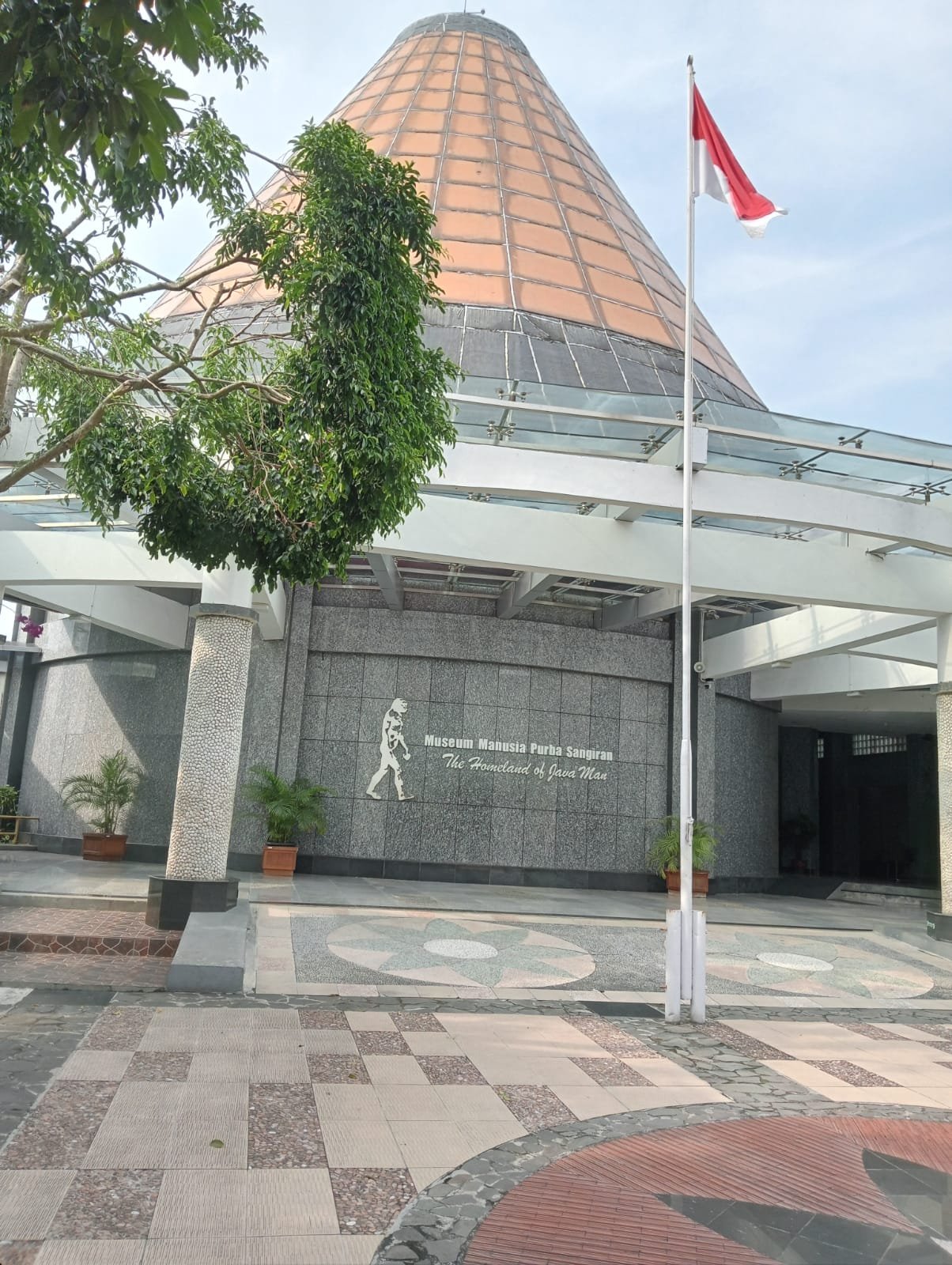
The Sangiran dome, a geological formation 15 kilometres north of Solo (Surakarta), is one of the most significant paleoanthropological sites ever found. Between 1936 and 1941, German-Dutch geologist Gustav Heinrich Ralph von Koenigswald excavated a series of fossilised skulls and skeletal fragments from the eroded volcanic sediment here. They belonged to Homo erectus — popularly called Java Man — and date to between 1.5 million and 150,000 years ago. More than 50 fossil sites are distributed across the 56 square kilometre protected area. The site accounts for roughly 65 percent of all known Homo erectus fossils worldwide.
UNESCO inscribed Sangiran in 1996 for its exceptional contribution to understanding human evolution in Asia. The landscape is raw and unglamorous — eroded clay gullies in shades of ochre and grey — but it communicates geological time in a way that temples cannot. Walking the exposed sediment layers is an encounter with deep time. The four-cluster museum (Krikilan, Ngebung, Bukuran, Dayu) holds casts and original fossils, faunal remains of extinct elephant and rhinoceros species, and geological cross-sections showing the stratigraphy of the dome. The Krikilan cluster is the main visitor hub.
Sangiran is quieter than Borobudur or Prambanan and attracts a narrower audience — researchers, educators, travellers with a specific interest in human prehistory. That relative quiet makes it easier to spend time with the exhibits and to walk the landscape without crowds. The site can be combined with a morning at Prambanan for a single long day from Yogyakarta.
Getting there: From Yogyakarta, approximately 2 hours by car via Solo (Surakarta); from Solo city centre, roughly 30 minutes. Alternatively, combine with Prambanan on a single day itinerary leaving Yogyakarta early. Allow: 2–3 hours for museum and outdoor fossil sites. Best for: Human evolution, paleoanthropology, geological heritage.
Frequently Asked Questions
How many UNESCO World Heritage Sites are near Jakarta?
Three UNESCO World Heritage Sites on the island of Java are reachable from Jakarta: Borobudur Temple Compounds (inscribed 1991), Prambanan Temple Compounds (inscribed 1991), and the Sangiran Early Man Site (inscribed 1996). All three are accessible from Yogyakarta, roughly 550–650 kilometres east of the capital.
How do you visit Borobudur from Jakarta, and what should you see there?
The most practical route is a flight from Jakarta’s Soekarno-Hatta airport to Yogyakarta (about 1 hour 10 minutes), followed by a 1.5-hour drive to Magelang. Borobudur opens before dawn for sunrise visits; book the early-access ticket in advance during peak season. Once on site, the upper circular terraces with their 72 stupas are the structural highlight, but the bas-relief galleries on the lower terraces — 2,672 carved panels depicting Buddhist teaching stories and Javanese daily life — reward slow examination. Allow at least half a day.
Can you combine Borobudur, Prambanan and Sangiran in one trip?
Yes, and most visitors do. A two-day itinerary from Yogyakarta covers all three comfortably: Borobudur on day one (pre-dawn to midday), Prambanan on day two morning, then Sangiran via Solo in the afternoon before returning to Yogyakarta or continuing to Solo for the night. A single full day is tight but possible if you skip the optional museums. Yogyakarta is the logical base, with frequent flights from Jakarta and good ground transport to all three sites.
Why is Sangiran considered one of the most important prehistoric sites in the world?
Sangiran holds the largest known concentration of Homo erectus fossils on earth — approximately 65 percent of the world total. The site’s exposed geological dome, formed by volcanic and sedimentary uplift, has yielded over 100 individual hominin specimens since systematic excavation began in the 1930s. The stratigraphy spans nearly two million years, making it one of the few places where the full timeline of early human habitation in Asia can be read directly from the landscape.
Sources
- S1 — Soekmono, R. Chandi Borobudur: A Monument of Mankind. The UNESCO Press, 1976. ISBN 978-92-3-101342-3.
- S2 — Jordaan, Roy E., ed. In Praise of Prambanan: Dutch Essays on the Loro Jonggrang Temple Complex. KITLV Press, 1996. ISBN 978-90-6718-105-1.
Spotted an error? Write to editorial@culturalheritageonline.com and we correct it the same day.

_(51113054890).jpg)

