Tokyo holds no UNESCO World Heritage inscription of its own, yet two of Japan’s most celebrated sites sit within two hours of the city by train or bus: the baroque shrine complex of Nikkō and the sacred volcano that has shaped Japanese art and spirituality for more than a millennium. Both reward a day away from the capital. From Cultural Heritage Online.
Shrines and Temples of Nikkō 2 hrs from Tokyo
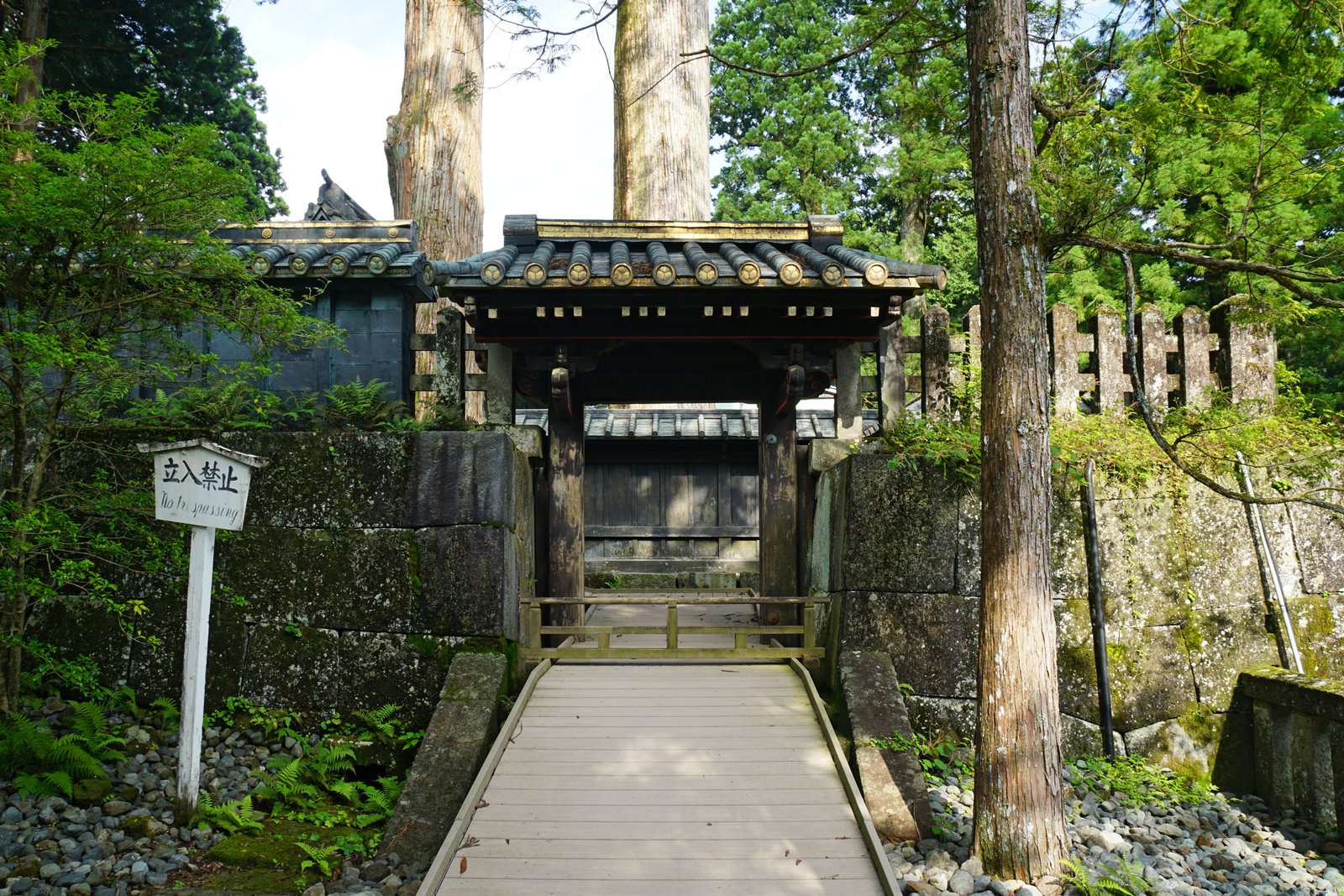
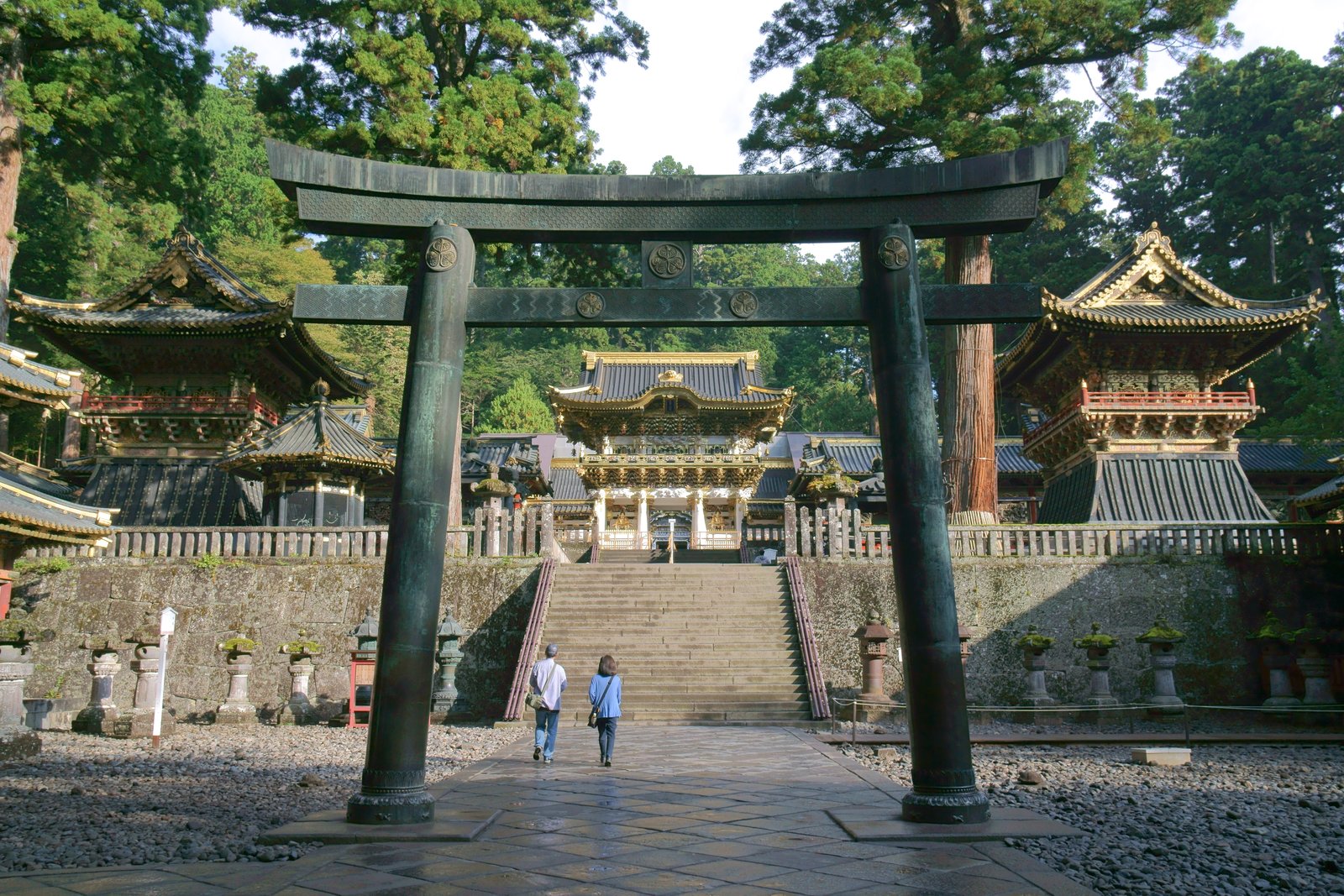
Inscribed in 1999, the Shrines and Temples of Nikkō gather 103 buildings across three main ensembles — Tōshōgū, Rinnō-ji Temple and Futarasan Shrine — on forested mountain slopes north of the Kantō plain. Nine of those structures carry National Treasure status; 94 are designated Important Cultural Properties. The dominant presence is Tōshōgū, completed in 1636 to enshrine Tokugawa Ieyasu (1543–1616), the warlord who unified Japan and founded the Edo shogunate. His grandson Tokugawa Iemitsu ordered the adjacent Taiyū-in Mausoleum finished by 1653. Standing before the Yōmeimon gate, its 508 carved panels dense with dragons, peonies and mythical beasts painted in lacquer and gold leaf, the sheer accumulation of ornament reads less like architecture than a three-dimensional manuscript. A cedar forest planted during the same early-Edo construction campaign wraps the complex in perpetual shadow, amplifying the quiet between the carvings.
Getting there: Tobu Nikko Limited Express from Asakusa Station, Tokyo (approximately 2 hours, departures roughly every hour); or Shinkansen to Utsunomiya then JR Nikkō Line (total approximately 1 hour 50 minutes). Allow: 4–5 hours on site. Best for: Architectural detail, Japanese religious history, autumn foliage (late October–early November).
Fujisan, Sacred Place and Source of Artistic Inspiration 2 hrs from Tokyo
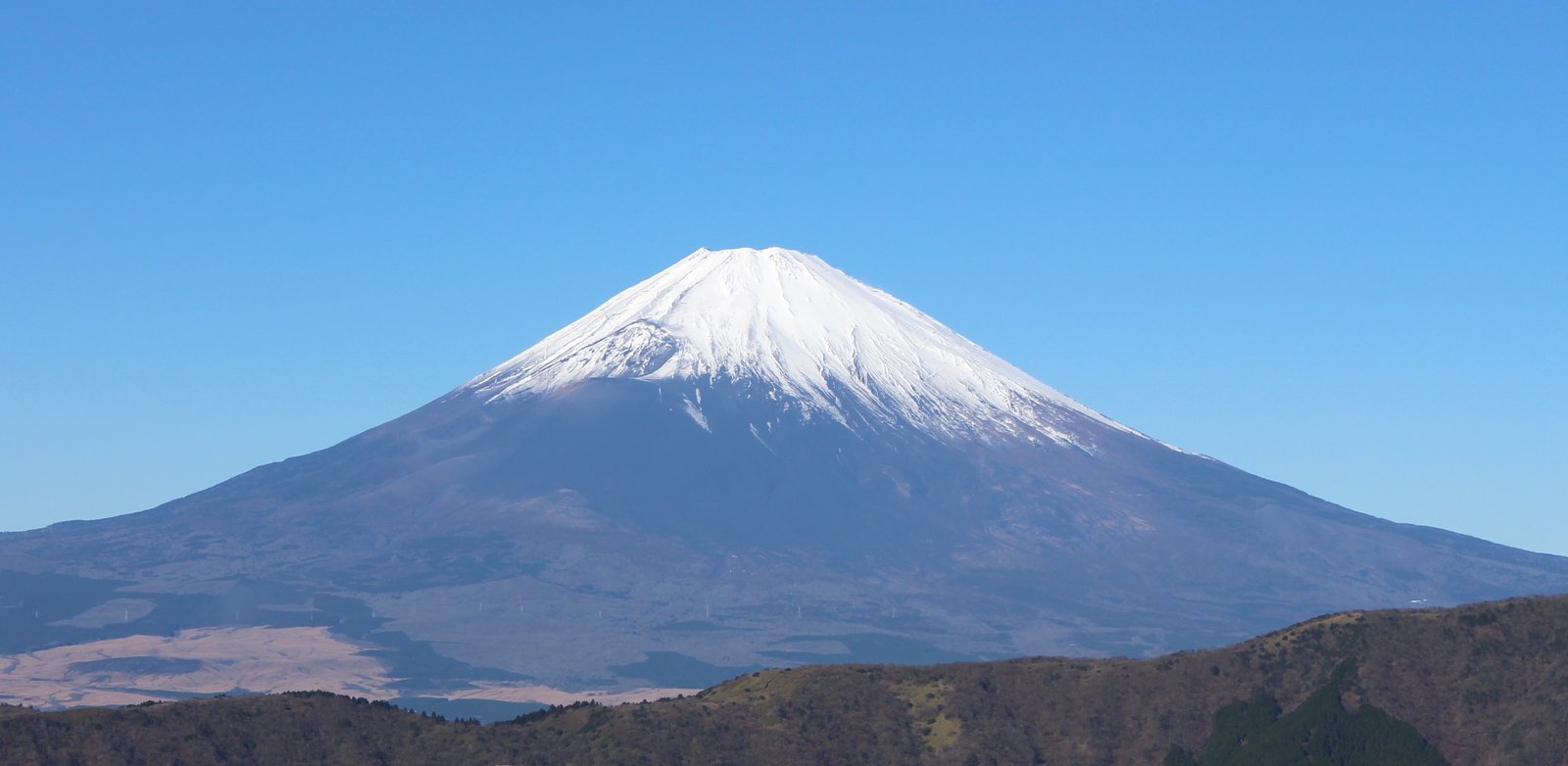
UNESCO inscribed Fujisan as a Cultural Site in 2013, recognising a mountain that has shaped Japanese aesthetics and religious practice across more than a thousand years. At 3,776.24 metres, it is Japan’s highest peak and an active stratovolcano whose near-perfect symmetrical cone carries snow for roughly five months a year. The first recorded ascent dates to 663 CE, attributed to the ascetic En no Ozunu. By the Edo period, a popular religious movement known as Fuji-kō organised mass pilgrimages to the summit as an act of spiritual renewal, drawing tens of thousands of climbers each season. Katsushika Hokusai distilled that devotion into print with his Thirty-six Views of Mount Fuji, produced across the 1830s — a series that fixed the mountain’s silhouette in the visual imagination of the modern world. On clear winter mornings the summit is visible from central Tokyo, some 100 kilometres to the east, as a white triangle above the city’s low horizon.
Getting there: Fujisan express bus (Keio Highway Bus) from Shinjuku Expressway Bus Terminal to Fuji 5th Station, approximately 2 hours. Summit-climb buses operate seasonally, typically July–August; Fuji 5th Station is accessible year-round by bus for crater-rim views. Allow: Half day to full day (add 6–8 hours for a summit climb during the official climbing season). Best for: Landscape photography, pilgrimage history, artistic heritage; combine with Fuji Five Lakes for lakeside views.
Frequently Asked Questions
How many UNESCO World Heritage Sites are within reach of Tokyo?
Two major sites are accessible within roughly two hours of central Tokyo: the Shrines and Temples of Nikkō (inscribed 1999) to the north in Tochigi Prefecture, and Fujisan, Sacred Place and Source of Artistic Inspiration (inscribed 2013) to the southwest in Shizuoka and Yamanashi prefectures. Tokyo itself does not hold a UNESCO inscription.
Which UNESCO site is closest to Tokyo?
Nikkō is generally more straightforward to reach by rail — the Tobu Nikkō Limited Express runs direct from Asakusa in central Tokyo in approximately two hours, with regular departures throughout the day. Mount Fuji’s Fuji 5th Station also takes around two hours by highway bus from Shinjuku, though services are more seasonal for the summit-approach route.
Do I need a visa to visit Japan, and which transport card works best for day trips?
Citizens of many countries, including the United States, EU member states, the United Kingdom and Australia, can enter Japan visa-free for stays of up to 90 days, though requirements vary by nationality and should be confirmed before travel. For the Nikkō day trip, an IC card (Suica or Pasmo) covers Tokyo metro journeys to Asakusa, but the Tobu Nikkō line requires a separate ticket or the Tobu Tourist Pass, which includes unlimited travel on Tobu lines and local buses around Nikkō. IC cards are not valid on Keio Highway buses to Fuji 5th Station, where cash or a pre-purchased bus ticket is needed.
What is the best season to visit both sites?
Autumn (mid-October to mid-November) is widely considered the finest time for Nikkō, when the cedar-framed shrine complex sits beneath maple and lacquer-tree canopy turning deep red and orange. For Mount Fuji, the official climbing season runs from early July to early September; the mountain’s classic snow-capped silhouette is most visible from a distance in winter and early spring, when low humidity gives the clearest views from Tokyo or the Fuji Five Lakes area.
Sources
- S1 — Coaldrake, William H. Architecture and Authority in Japan. Routledge, 1996. ISBN 978-0-415-10601-6.
- S2 — Earhart, H. Byron. Mount Fuji: Icon of Japan. University of South Carolina Press, 2011. ISBN 978-1-57003-976-8.
Spotted an error? Write to editorial@culturalheritageonline.com and we correct it the same day.