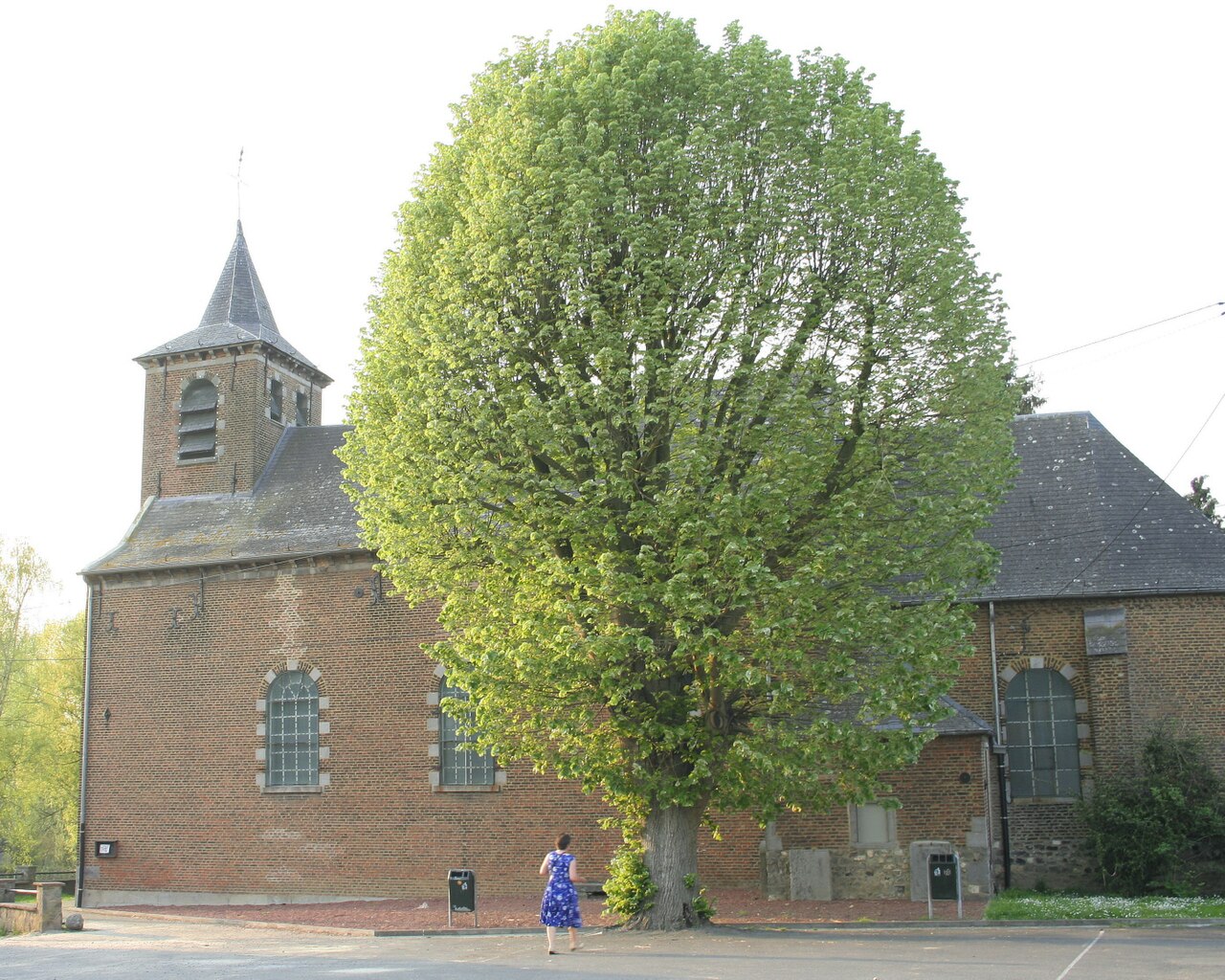
The Neolithic Flint Mines at Spiennes, on the outskirts of Mons in Hainaut province, are the oldest and largest complex of prehistoric flint mines in north-western Europe, covering approximately 100 hectares and containing an estimated 100,000 mine shafts dug between 4,300 and 2,800 BCE. They are a UNESCO World Heritage Site since 2000, and the flint axes produced here have been found as far away as southern England and the Rhine Valley — evidence of organised trade networks operating 6,000 years before the current era.
Industrial Mining Before Agriculture Was Universal Spiennes, 5 km southeast of Mons city centre
The Neolithic settlement at Spiennes began extracting flint from the chalk bedrock at a date now estimated at approximately 4,300 BCE, during the Michelsberg culture phase of the western European Neolithic. Flint — a form of silica that fractures along predictable planes to produce sharp cutting edges — was the primary material for tools and weapons in this period, and the chalk hills of Hainaut contained seams of exceptionally high-quality flint at depths of between 8 and 16 metres below the surface. Surface flint, exposed to repeated freeze-thaw cycles over centuries, becomes brittle and unsuitable for fine toolwork. The miners at Spiennes understood this: they dug vertically through the chalk to reach unweathered seams, then extended horizontal galleries following the flint layer in multiple directions from the base of each shaft.
The scale of the operation distinguishes Spiennes from all other known Neolithic flint extraction sites in the region. Approximately 100,000 vertical shafts have been identified across the 100-hectare site. Around 10,000 of these have been excavated by archaeologists since systematic investigation began in the 1860s. Each shaft required the removal of several tonnes of chalk overburden using antler picks and ox-scapula shovels — the standard Neolithic mining toolkit found consistently across northern European flint mine sites from Grimes Graves in Norfolk to Rijckholt in the Netherlands. At Spiennes, the shafts average 1.4 metres in diameter, sufficient for one miner to work the face while another hauled the extracted material to the surface in leather or woven containers.
The production volume implied by 100,000 shafts over approximately 1,500 years is industrial in a meaningful sense. This was not a community producing tools for its own use: the output at Spiennes was organised mass production of standardised flint blanks — axe heads, scrapers, and blades — distributed through exchange networks across a radius of hundreds of kilometres. Archaeologists have identified Spiennes flint by its geochemical signature (the trace element composition of Hainaut chalk flint is distinctive) at sites in the Paris Basin, the Rhine Valley, and at multiple locations in southern and eastern England. The axes crossed the Channel in a period when Britain was not yet an island — or rather, in a period when the Channel was shallow enough to be crossed by log boat — demonstrating that long-distance specialised trade preceded writing, metalworking, and urban settlement by several millennia.
The miners who worked Spiennes are not directly documented. They left no written records, no burial monuments immediately adjacent to the mining area, and no structures above ground. What the archaeology reveals is the organisation of their work: the consistent shaft diameter, the systematic exploitation of the flint seam by horizontal galleries rather than random excavation, and the standardisation of the finished tool forms all indicate a stable, specialised workforce applying technical knowledge transmitted across multiple generations. The site was in continuous use for approximately 1,500 years — longer than the entire history of European printing.
The Battle of Mons and Six Millennia of History in One District Hainaut province, 60 km south of Brussels
The village of Spiennes sits immediately southeast of Mons, the capital of Hainaut province and a city with a UNESCO-listed belfry that was inscribed as part of the Belfries of Belgium and France in 1999 (and extended in 2005). The coincidence of a Neolithic mine complex and a medieval city belfry within 5 kilometres of each other is not accidental: Mons and its surroundings have been a crossroads of human activity for at least 6,000 years, positioned at the point where the chalk hills of Hainaut give way to the Sambre-Meuse river valley. The flint seams that attracted Neolithic miners, the river access that attracted medieval merchants, and the coal seams that powered the Belgian Industrial Revolution are all products of the same underlying geology.
The district added a third layer of historical significance on 23 August 1914, when the British Expeditionary Force fought the Battle of Mons against the German First Army — the first major British engagement of the First World War. The BEF, outnumbered approximately three to one, conducted a fighting withdrawal that lasted two weeks and covered over 200 kilometres to the Marne. The battle produced one of the war’s most durable myths: soldiers in the retreat reported seeing angelic figures on the battlefield, an account that circulated widely in British newspapers and became known as the Angels of Mons. The In Flanders Fields Museum in nearby Ieper (Ypres) provides the fullest regional documentation of the 1914-1918 campaigns, though Mons itself has a dedicated memorial site at the St. Symphorien Military Cemetery, where British and German soldiers from the opening and closing battles of the war are buried together.
The Major Mining Sites of Wallonia, a UNESCO World Heritage Site inscribed in 2012, lie approximately 15 kilometres northeast of Spiennes in the Charleroi and Liège area. The four 19th-century coal mining complexes — Grand-Hornu, Bois-du-Luc, Bois du Cazier, and Blegny-Mine — represent the industrial continuation of a mining tradition that began in this chalk landscape 6,000 years earlier. The connection is geological rather than technological: Neolithic flint miners and 19th-century coal miners worked the same Hainaut and Sambre-Meuse geology, 6,000 years apart, with extraction methods that were both organised at industrial scale for their respective periods.
The ArchéoSite du Moulin visitor centre at Spiennes, operated by the municipality of Mons, provides access to one of the original Neolithic shafts, lowered by wooden ladder to the gallery level. The descent is approximately 10 metres. The visitor experience is physically immediate in a way that no museum reconstruction achieves: the chalk walls of the gallery retain tool marks from antler picks used approximately 5,000 years ago. The gallery is dry, cool, and narrow — approximately 80 centimetres wide at the flint seam — consistent with what the archaeological evidence indicates about the working conditions of the original miners.
Practical information
The ArchéoSite du Moulin (Musée du Malgré-Tout) visitor centre for the Spiennes flint mines is located at Rue de Spinois, 7032 Mons (Spiennes). The site is open daily from April to October, 10:00 to 17:00; in winter months (November to March) it operates on weekends only. Adult admission is €9; reduced tickets for seniors and students are €7; children under 12 enter free. Guided tours of the underground shaft and galleries depart at fixed times and must be booked in advance, as group sizes are limited by the shaft’s capacity. The visitor centre includes a small museum of excavated flint tools and an explanation of Neolithic trade networks.
To reach Spiennes from Mons city centre (5 kilometres), take bus 2 from Place du Parc in Mons towards Harmignies; the stop at Spiennes-Carrière is a 10-minute walk from the ArchéoSite entrance. Mons is served by direct trains from Brussels-Midi (40 minutes) and Charleroi (30 minutes). By car, Spiennes is signposted from the E19 motorway (Brussels-Paris) at the Mons exit.
The Mons belfry, in the city centre, is a UNESCO-listed belfry of the Belfries of Belgium and France, open for guided climbs on weekends. The Grand-Place of Brussels is 60 kilometres north and reachable by train from Mons in under 45 minutes. The Major Mining Sites of Wallonia — the nearest other UNESCO site — are 15 kilometres northeast, centred on Charleroi and accessible by direct train from Mons (20 minutes to Charleroi-Sud).
Frequently Asked Questions
How were the Neolithic miners at Spiennes able to dig 16-metre shafts without metal tools?
The miners used antler picks — the shed antlers of red deer, which are dense and impact-resistant — to fracture and lever blocks of chalk from the shaft walls. Excavated antler picks at Spiennes and at comparable sites such as Grimes Graves in Norfolk (UK) show wear patterns consistent with repeated percussive use against chalk faces. The shoulder blades (scapulae) of cattle and aurochs were used as shovels to shift the broken chalk. Flint nodules extracted from the seam were used as wedges to split larger chalk blocks. This toolkit — antler, bone, flint — is sufficient to excavate chalk at a rate estimated by experimental archaeologists at approximately one cubic metre per person per day, which means a shaft 16 metres deep and 1.4 metres in diameter (volume approximately 25 cubic metres) required roughly 25 person-days to excavate. With a workforce of ten miners, a single shaft could be completed in under three days. The organisation implied by 100,000 shafts over 1,500 years — roughly 67 new shafts per year, or approximately one new shaft every 5 days — is consistent with a permanent specialised mining community of several dozen workers, not an occasional seasonal activity.
How do archaeologists know that Spiennes flint axes were traded to England?
The identification relies on geochemical fingerprinting. Flint from different chalk formations contains different trace element compositions — varying ratios of elements including strontium, barium, and rare earth elements that reflect the specific chemical environment in which the silica was deposited. Belgian chalk flint from Hainaut has a distinctive geochemical signature that can be measured by X-ray fluorescence (XRF) spectroscopy and neutron activation analysis. When archaeologists analyse polished flint axes found at Neolithic sites in southern England or the Paris Basin, they can compare the trace element profile of the artefact against a reference database of European chalk flint sources. Multiple axes with the Hainaut geochemical signature have been identified at sites in Kent, Essex, and the Thames Valley, at distances of 300-400 kilometres from Spiennes. The axes in question are polished — a finished product rather than a raw flint nodule — indicating that the exchange involved completed tools, not raw material. This means specialised production at Spiennes and long-distance distribution of the finished product, not local export of raw flint for local manufacture elsewhere.
What is the difference between the Spiennes flint mines and Grimes Graves in Norfolk?
Grimes Graves in Norfolk, England, is the most famous Neolithic flint mine in Britain and was in active production from approximately 3,000 to 1,900 BCE — somewhat later than Spiennes, which began around 4,300 BCE. Both sites used the same extraction technique: vertical shafts through chalk overburden to reach deep unweathered flint seams, with horizontal galleries following the seam at the base. Both have yielded comparable antler pick and bone shovel assemblages. The principal differences are scale and accessibility. Spiennes covers approximately 100 hectares with an estimated 100,000 shafts; Grimes Graves covers approximately 37 hectares with approximately 433 identifiable shafts, of which around 30 have been excavated. Spiennes is therefore roughly eight times larger by area. In terms of public access, Grimes Graves (managed by English Heritage) allows visitors to descend into one excavated shaft by metal ladder, a similar experience to the ArchéoSite du Moulin at Spiennes. Grimes Graves is not a UNESCO World Heritage Site. The Belgian nomination for Spiennes in 2000 cited the site’s greater scale and earlier date as primary grounds for the UNESCO designation, and UNESCO specifically noted that Spiennes represents the oldest known example of large-scale organised flint extraction in north-western Europe.
Sources
- S1 — Collet, Hélène. Les minières néolithiques de silex de Spiennes. Agence Wallonne du Patrimoine, 2014. ISBN 978-2-930466-78-1.
- S2 — Deslex, Corinne. L'exploitation préhistorique du silex en Europe. Errance, 2008. ISBN 978-2-87772-371-8.
Spotted an error? Write to editorial@culturalheritageonline.com and we correct it the same day.