

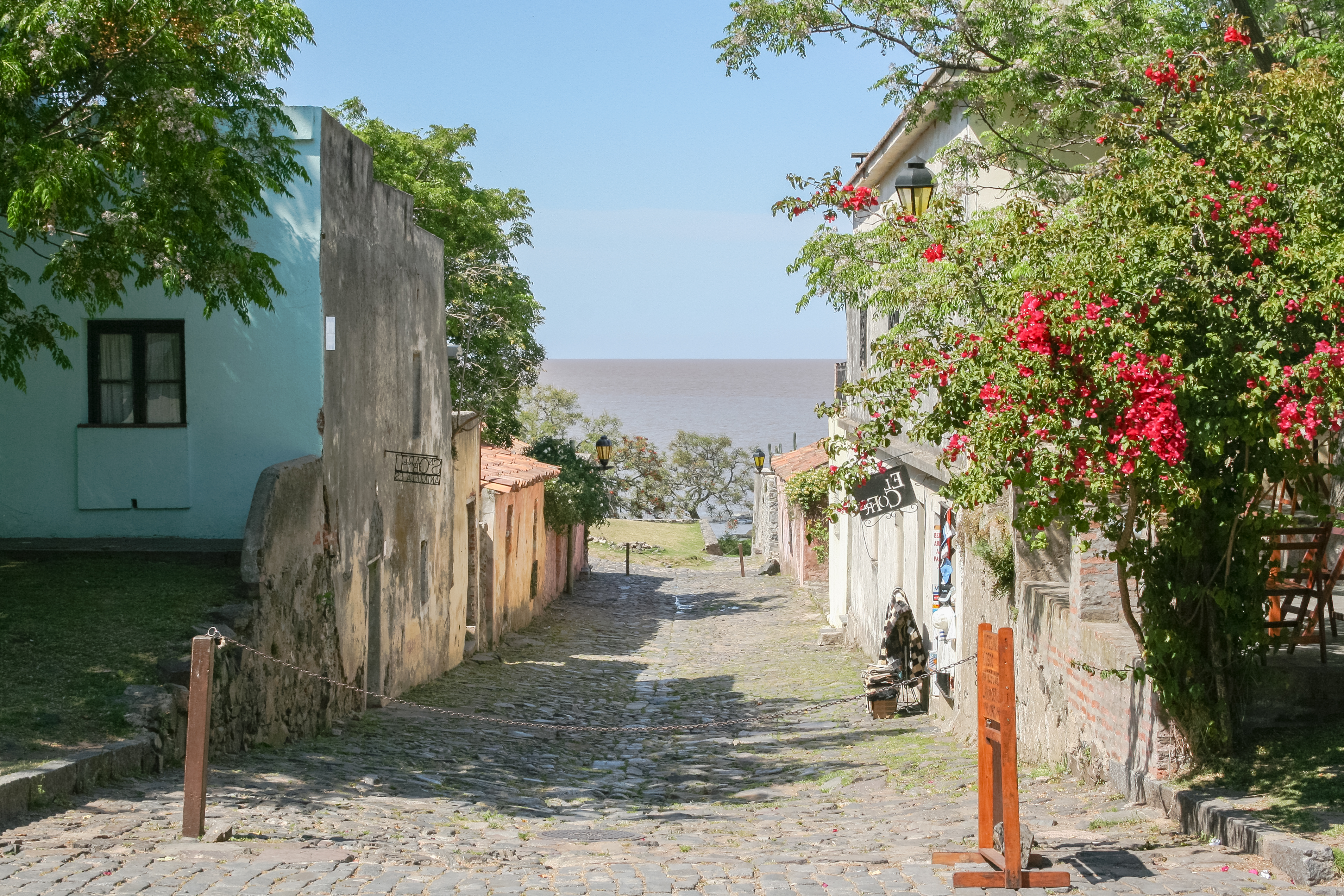
Uruguay’s sole UNESCO World Heritage Site sits just 177 kilometres west of Montevideo, on a compact peninsula where the Río de la Plata meets the Argentine shore. The Historic Quarter of Colonia del Sacramento distils three centuries of colonial rivalry into a few dozen streets — and rewards a day trip from the Uruguayan capital with some of the most coherent colonial fabric in South America. From Cultural Heritage Online.
Historic Quarter of the City of Colonia del Sacramento 177 km · 2.5 hr by road · 1 hr by ferry from Buenos Aires
The Portuguese established Nova Colónia do Sacramento in 1680 on the eastern bank of the Río de la Plata, directly opposite Buenos Aires. The location was strategic rather than accidental: the Portuguese crown wanted a foothold inside what Spain considered its exclusive sphere. Over the next century the town changed hands multiple times — Spanish sieges, Portuguese restorations, a brief British interlude — and each transfer left architectural sediment. The result is a built environment that belongs to both colonial empires without quite belonging to either.
The Barrio Histórico occupies the tip of a small peninsula and is compact enough to walk end to end in under twenty minutes. Its street grid follows the Portuguese original, but the buildings layer successive regimes: the Puerta de la Ciudadela, the only surviving gate of the 18th-century Spanish fortifications, opens onto narrow lanes shaded by jacaranda and ombú. The Basílica del Santísimo Sacramento dates to the 17th century in its foundations and was rebuilt after Spanish bombardment; it faces a quiet plaza that sees more pigeons than tour groups on weekday mornings. The Casa del Virrey and the Portuguese Museum occupy adjacent blocks, their low whitewashed walls contrasting with the warm ironwork of colonial-era balconies.
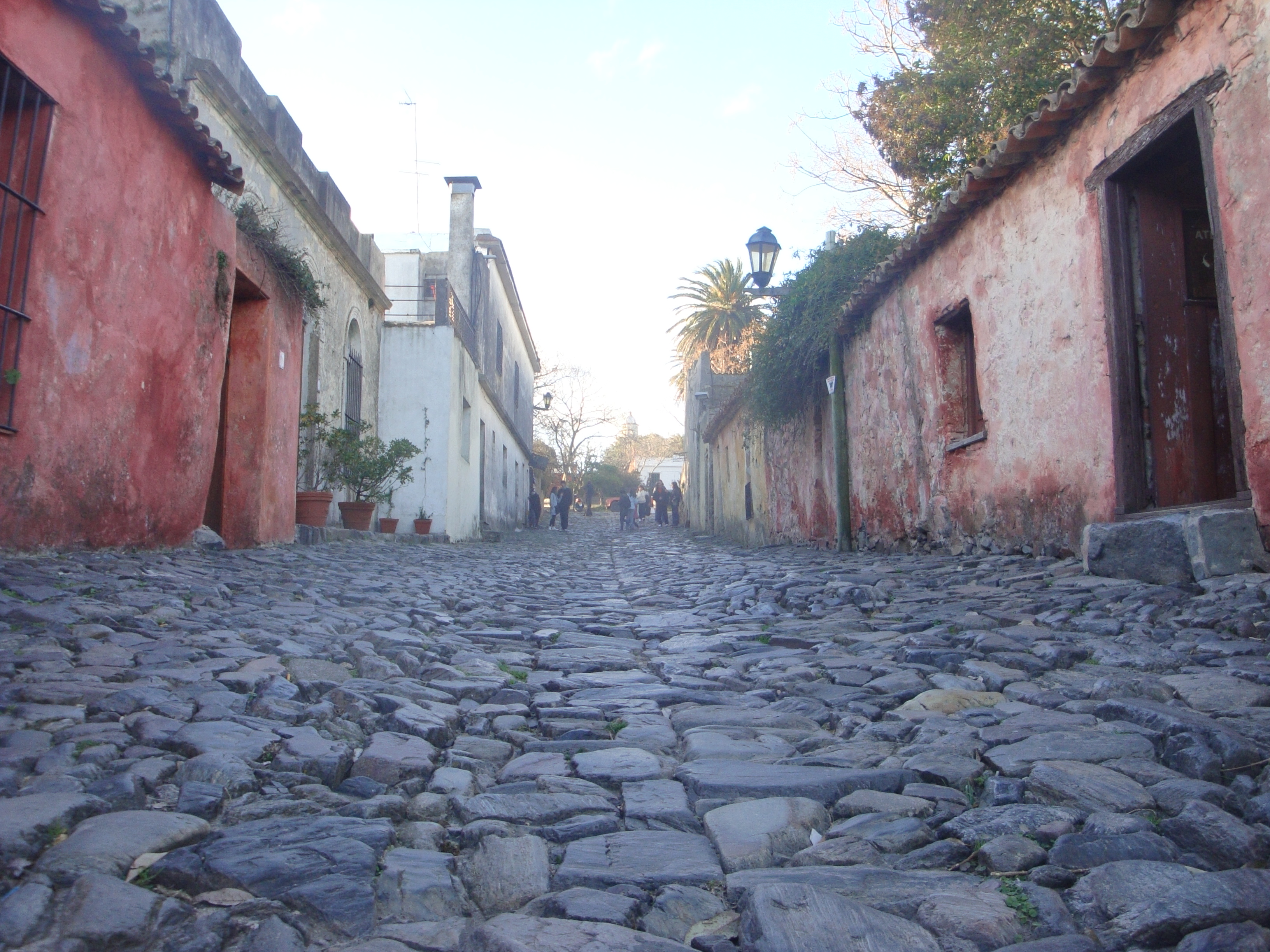
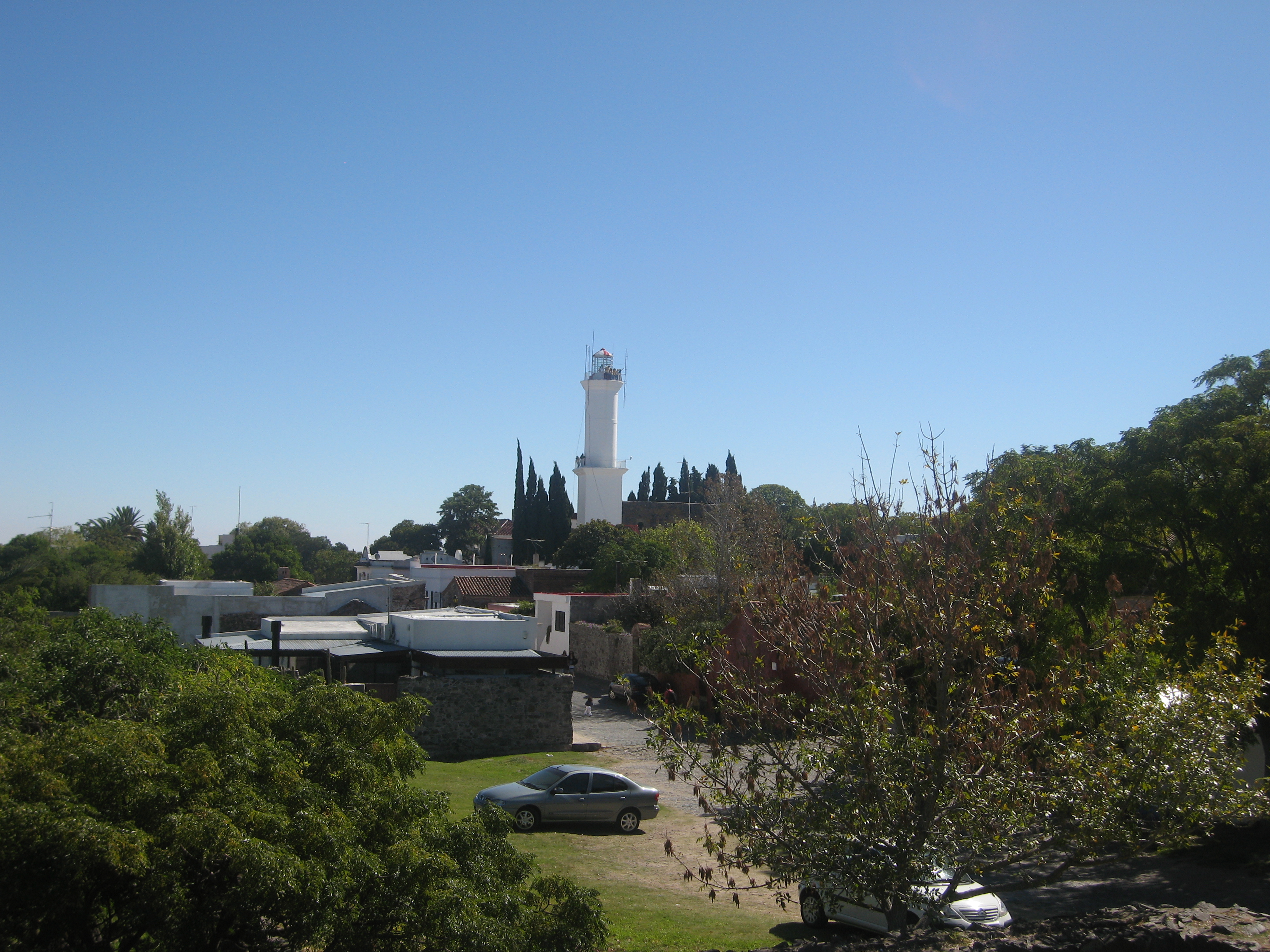
Calle de los Suspiros — the Street of Sighs — has become the quarter’s visual shorthand, and with reason: the rounded cobblestones, the single-storey houses painted in ochre and terracotta, and the glimpse of the estuary at the far end compose exactly the kind of streetscape that colonial planners never designed deliberately but that time and repetition sometimes produce. The colonial lighthouse (Faro) stands at the peninsula’s edge; it was built into the ruins of an older convent and still marks the channel where the Buenos Aires ferry crosses. On clear days the Argentine coast is visible from the ramparts, which makes the history of contestation between the two empires feel immediate rather than textbook.
Getting there: From Montevideo, direct buses (Copsa, COT, Turil) cover the 177 km in approximately 2.5 hours; the terminal in Colonia is a short walk from the historic gate. Alternatively, combine with a visit to Buenos Aires: the Buquebus or Colonia Express high-speed ferries cross in 1 hour from the Argentine capital, making Colonia a practical day trip from either side of the estuary. Allow: Half a day is enough to walk the entire Barrio Histórico; a full day adds lunch along the waterfront and a climb of the lighthouse. Best for: Travellers combining Uruguay and Argentina; history and architecture visitors; photographers seeking colonial streetscapes without large crowds.
Frequently Asked Questions
How many UNESCO World Heritage Sites are near Montevideo?
Uruguay has one UNESCO World Heritage Site: the Historic Quarter of the City of Colonia del Sacramento, inscribed in 1995. It is located 177 kilometres west of Montevideo.
How do you get from Montevideo to Colonia del Sacramento?
Direct intercity buses (Copsa, COT, Turil) depart from Montevideo’s Tres Cruces terminal and reach Colonia in approximately 2.5 hours. The bus station in Colonia sits a short walk from the Puerta de la Ciudadela. There is no passenger ferry service directly between Montevideo and Colonia; the ferry connection operates between Buenos Aires and Colonia (1 hour, Buquebus or Colonia Express), making the site easy to reach from either city in a single day.
What is the best time of year to visit Colonia del Sacramento?
Spring (September to November) and autumn (March to May) offer mild temperatures and lower visitor numbers than the summer peak of December to February, when Argentines cross from Buenos Aires in large numbers and accommodation fills quickly. The historic quarter is small and walkable in any weather, and the estuary light tends to be best in the cooler months. Midweek visits at any season are quieter than weekends.
Why did Colonia del Sacramento change hands so many times between Portugal and Spain?
The town’s strategic position — directly across the Río de la Plata from Buenos Aires, at the mouth of trade routes into the interior — made it too valuable for either empire to concede permanently. Founded by the Portuguese in 1680 in defiance of the 1494 Treaty of Tordesillas, which had assigned the territory to Spain, Colonia changed hands at least five times over the following century through sieges, treaties, and diplomatic trades. The 1777 Treaty of San Ildefonso finally transferred it to Spain, which held it until Uruguayan independence in the early 19th century. This layered history of contestation is precisely what UNESCO recognised: the surviving architecture is a physical record of two colonial systems colliding and coexisting in the same streets.
Sources
- S1 — Finch, M. H. J. A Political Economy of Uruguay Since 1870. Macmillan, 1981. ISBN 978-0-333-28841-2.
- S2 — Bethell, Leslie, ed. Argentina, Uruguay, and Paraguay Since Independence. Cambridge University Press, 1993. ISBN 978-0-521-43376-1.
Spotted an error? Write to editorial@culturalheritageonline.com and we correct it the same day.


.jpg)