Equatorial Guinea has no inscribed UNESCO World Heritage Sites. Malabo, on Bioko Island 40 km off the Cameroon coast, is a gateway to the extraordinary Congo Basin forests — the nearest UNESCO inscribed site, Cameroon’s Dja Faunal Reserve, lies approximately 450 km away by air and road. From Cultural Heritage Online.
Dja Faunal Reserve, Cameroon 450 km northeast — domestic flight to Douala, then road transfer
The Dja Faunal Reserve covers 526,000 hectares of lowland tropical rainforest in southern Cameroon, inscribed as a UNESCO World Heritage Site in 1987 for its outstanding biodiversity and the exceptional integrity of its forest ecosystem. The Dja River loops around approximately 90 percent of the reserve’s perimeter, creating a natural boundary that has helped to limit human encroachment. The forest is one of the largest and best-protected areas of tropical rainforest in Africa outside the Congo Basin core, and harbours an exceptional assemblage of large mammals: western lowland gorilla, chimpanzee, forest elephant, bongo, giant pangolin, mandrill, and more than 320 bird species.
The reserve is predominantly inhabited by the Baka people, one of the few remaining hunter-gatherer communities of the Central African forest. Baka communities have lived within the Dja forest for millennia and hold knowledge of the forest’s ecology and medicinal plants that has no written equivalent. The relationship between the Baka and the Dja Faunal Reserve management has been a subject of ongoing debate in conservation policy: the Baka’s rights to continue subsistence hunting within the reserve has been recognised in principle but has been contested in practice by conservation restrictions.
The nearest access point to the Dja Reserve from Malabo requires a flight to Douala (approximately 1 hour from Malabo) and then a road transfer of about 6–7 hours southeast toward Lomié and Meyomessala. Organised wildlife tours in the reserve are limited; the Dja is primarily accessed by conservation researchers and specialist ecotourism operators.
Getting there: Flight from Malabo to Douala (approx. 1 hour), then road transfer southeast approximately 350 km to the reserve area near Lomié (6–7 hours). Access to the forest interior requires a guide and permit from the Dja Reserve management. Allow: 3–4 days minimum. Best for: Wildlife and conservation specialists; serious rainforest ecotourism.
Lopé-Okanda Ecosystem and Relict Cultural Landscape, Gabon 500 km south — domestic flight to Libreville, then road or small aircraft
The Lopé-Okanda National Park in central Gabon, inscribed as a UNESCO World Heritage Site in 2007, is exceptional for combining one of the last large areas of intact rainforest in Central Africa with a cultural landscape that documents early human occupation of the Congo Basin. Rock engravings and Neolithic and Iron Age archaeological sites within the park demonstrate human presence here from at least 400,000 years ago, and the open savannah mosaic — a relict of cooler, drier climatic periods that contracted the forest — has been maintained by the movement of forest elephants and buffaloes into the present. The park also provides critical habitat for the critically endangered western lowland gorilla and forest elephant.
Getting there: From Malabo, fly to Libreville (2–3 hours, regional connections), then road transfer south to Lopé (about 350 km, 5–6 hours on the Trans-Gabon Highway), or take the Transgabonais railway from Libreville to Lopé station (approx. 12 hours). Accommodation available at the Lopé Hotel. Allow: 3–4 days minimum. Best for: Primate conservation and rainforest ecotourism.
Frequently Asked Questions
Does Equatorial Guinea have any UNESCO World Heritage Sites?
No. As of 2026, Equatorial Guinea has no inscribed UNESCO World Heritage Sites. The nearest inscribed sites are in Cameroon (Dja Faunal Reserve, approximately 450 km from Malabo) and Gabon (Lopé-Okanda National Park, approximately 500 km south via Libreville).
Where is Malabo in relation to the African continent?
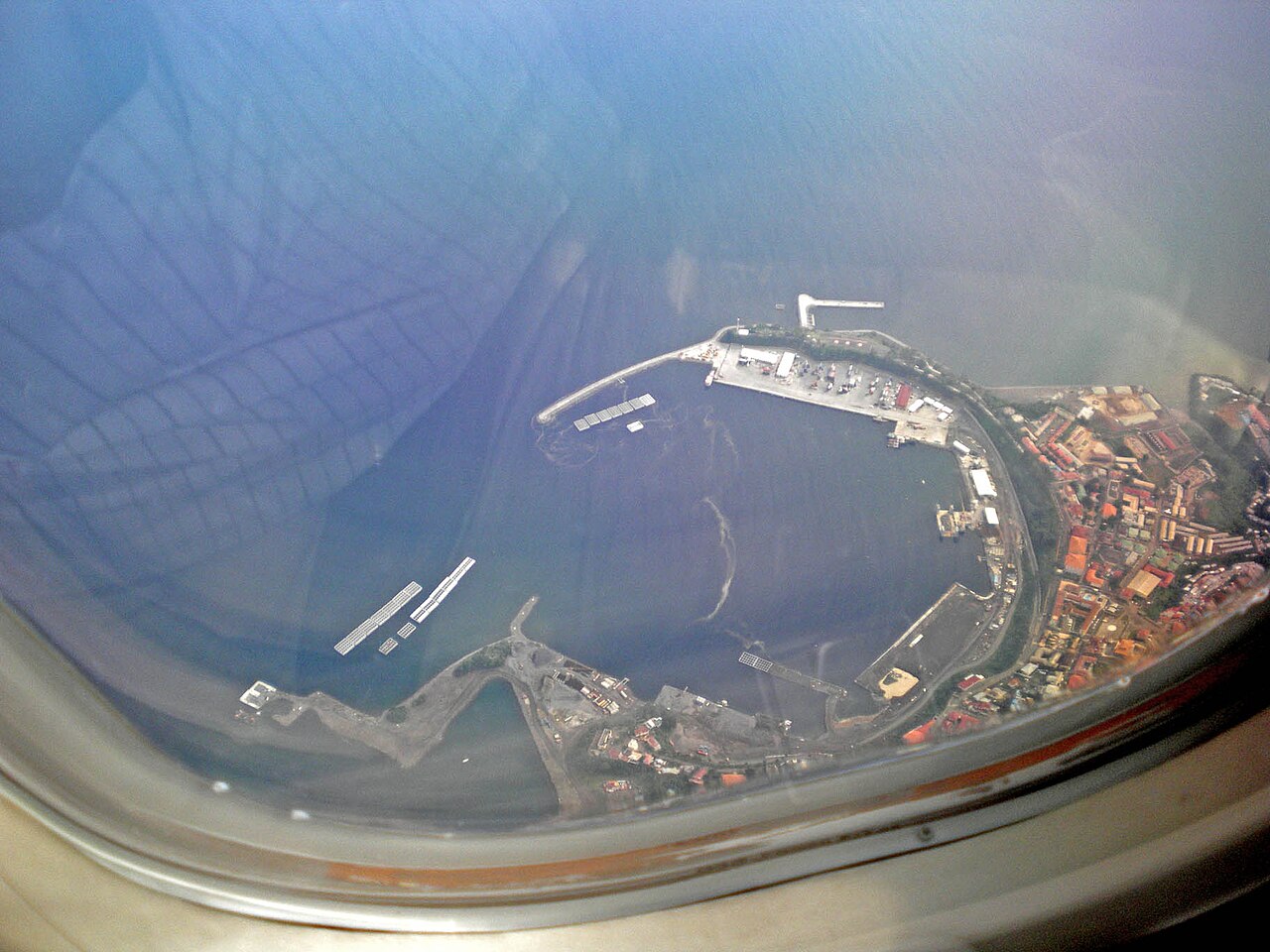
Malabo is the capital of Equatorial Guinea and is located on Bioko Island in the Gulf of Guinea, approximately 40 km off the coast of Cameroon near Limbe and Douala. Bioko Island is a volcanic island with a mountainous interior rising to 3,011 metres at Pico Basile; the mainland portion of Equatorial Guinea (Mbini/Río Muni) is on the African continent, bordered by Cameroon to the north and Gabon to the south and east.
What wildlife can be found in the Dja Faunal Reserve?
The Dja Faunal Reserve holds one of the most significant assemblages of large mammals in Central Africa: western lowland gorilla, central chimpanzee, forest elephant, bongo, giant pangolin, mandrill, red colobus, Guereza colobus, and numerous smaller primates and carnivores. Over 320 bird species have been recorded. The reserve is also one of the few places in Central Africa with a significant population of the giant pangolin.
Who are the Baka people and what is their relationship to the Dja Reserve?
The Baka are a Pygmy hunter-gatherer people who have inhabited the Central African forest for millennia. Several Baka communities live within and around the Dja Faunal Reserve in southern Cameroon. Their subsistence practices — hunting, gathering, fishing — have shaped the forest ecology over generations. Since the reserve’s creation, their rights to continue traditional hunting within the protected area have been contested; conservation management has at times restricted Baka access to forest areas they regard as ancestral land.
Sources
- S1 — Schaller, George B. The Mountain Gorilla: Ecology and Behavior. University of Chicago Press, 1963. ISBN 978-0-226-73649-5.
- S2 — Reader, John. Africa: A Biography of the Continent. Alfred A. Knopf, 1998. ISBN 978-0-679-40979-3.
Spotted an error? Write to editorial@culturalheritageonline.com and we correct it the same day.